Category Archives: Probate Law

Probate Attorney

Probate Attorney

Last Updated: June 11, 2026

Are you facing the daunting task of navigating the legal complexities surrounding the probate process? Look no further than our skilled Probate Attorney, who possesses a wealth of knowledge and expertise in this field. With a deep understanding of the intricacies involved, our attorney is prepared to guide you through every step, ensuring a smooth and successful resolution. Whether you are in need of assistance with wills, trusts, estate administration, or estate litigation, our Probate Attorney is committed to providing personalized and effective legal representation that will alleviate your burden and provide peace of mind. Don’t face the challenges of probate alone – contact our attorney today and entrust your case to the hands of an experienced professional.

Click Here To Buy

What is Probate

Probate is the legal process that ensures a deceased person’s assets are distributed according to their will or state law. It involves validating the will, inventorying assets, paying debts and taxes, and ultimately distributing the remaining assets to the beneficiaries. This process is overseen by a probate court and often requires the assistance of a probate attorney to navigate the complex legal requirements.

When is Probate Required?

Probate is typically required when a person dies with assets that are solely in their name, without any beneficiaries or joint owners designated. If the deceased person had a will, probate is necessary to ensure that their wishes are carried out. In cases where there is no will, probate is needed to distribute the assets according to the state’s intestacy laws. Certain assets, such as those held in a trust or with designated beneficiaries, may not go through probate.

Probate Attorney

Purchase Now

Estate Planning

Estate planning is an important step to take to ensure that your assets are distributed according to your wishes and to minimize the burden on your loved ones. There are several key components of estate planning, including wills, trusts, power of attorney, and healthcare directives.

Wills

A will is a legally binding document that outlines how your assets should be distributed after your death. It allows you to name beneficiaries and designate an executor to carry out your wishes. Without a will, your assets may be subject to intestacy laws, which may not align with your intentions.

Trusts

A trust is a legal arrangement that allows a trustee to hold and manage assets on behalf of beneficiaries. Trusts can be an effective tool for avoiding probate, reducing estate taxes, and providing for the ongoing care and support of loved ones. There are various types of trusts, each serving different purposes, so it is essential to consult with a qualified probate attorney to determine the most appropriate option for your needs.

Power of Attorney

A power of attorney is a legal document that grants someone the authority to make financial or legal decisions on your behalf if you become incapacitated. This allows for the smooth management of your affairs and can help avoid the need for a court-appointed guardian.

Healthcare Directives

Healthcare directives, such as a living will or a healthcare power of attorney, allow you to specify your healthcare preferences and designate someone to make medical decisions on your behalf if you are unable to do so. These documents provide clarity and peace of mind during challenging times and ensure that your wishes regarding medical treatment are respected.

Probate Process

The probate process can be complex and time-consuming, involving several key steps that must be followed to ensure a smooth distribution of assets.

Filing the Petition

The first step in the probate process is to file a petition with the probate court. This petition initiates the probate proceedings and formally requests the court’s approval to probate the will and appoint an executor or personal representative.

Inventory and Appraisal

Once the court approves the petition, the executor or personal representative must compile a complete inventory of the deceased person’s assets and have them appraised. This inventory and appraisal serve as a baseline for determining the value of the estate and the distribution of assets.

Paying Debts and Taxes

Before assets can be distributed to beneficiaries, all outstanding debts and taxes must be paid. The executor or personal representative is responsible for identifying and notifying creditors, evaluating claims, and settling any outstanding obligations.

Distribution of Assets

Once all debts and taxes have been settled, the remaining assets can be distributed to the beneficiaries according to the terms of the will or state law. The executor or personal representative is responsible for ensuring that the distribution is carried out accurately and in a timely manner.

Probate Attorney

Probate Court

The probate court plays a crucial role in overseeing and managing the probate process. It serves as the legal authority that validates the will, appoints the executor or personal representative, and resolves any disputes or conflicts that may arise.

Role of the Probate Court

The probate court’s primary role is to ensure that the deceased person’s assets are distributed according to their wishes or state law. It provides oversight and guidance to the executor or personal representative throughout the probate process, ensuring compliance with legal requirements.

Appointment of Personal Representative

The probate court is responsible for appointing a personal representative or executor to administer the estate. This person is entrusted with the responsibility of managing the probate process, including providing notice to creditors, paying debts and taxes, and distributing assets to beneficiaries.

Court Hearings and Proceedings

The probate court may hold hearings and proceedings to address any contested matters or disputes that arise during the probate process. These hearings allow interested parties to voice their concerns, present evidence, and seek resolution under the court’s supervision.

Contesting a Will

In certain circumstances, interested parties may contest the validity or provisions of a will. Contesting a will is a legal process that involves disputing the legitimacy of the document or challenging specific provisions.

Grounds for Contesting

There are various grounds on which a will can be contested, including lack of testamentary capacity, undue influence, fraud, duress, or improper execution. Contesting a will requires careful consideration and a thorough understanding of the legal requirements, so it is essential to consult with a knowledgeable probate attorney.

Time Limits

There are specific time limits for contesting a will, and they vary from state to state. It is crucial to act promptly if you believe there are legitimate grounds for contesting a will to ensure your rights are protected.

Legal Process

The legal process for contesting a will typically involves filing a petition with the probate court and presenting evidence and arguments to support the contestation. The probate court will then hear the case, evaluate the evidence, and make a determination on the contested issues.

Choosing the Right Probate Attorney

Choosing the right probate attorney is essential to ensure a smooth probate process and protect your interests. Here are some key factors to consider when selecting a probate attorney:

Experience and Expertise

Look for a probate attorney with extensive experience in probate law and estate planning. A knowledgeable attorney can anticipate potential challenges, navigate complex legal requirements, and provide sound advice tailored to your specific situation.

Communication Skills

Effective communication is crucial when working with a probate attorney. Look for an attorney who listens attentively, explains legal concepts clearly, and responds promptly to your inquiries. A reliable attorney will keep you informed throughout the probate process and guide you through each step seamlessly.

Professionalism

Professionalism is essential when dealing with sensitive family matters and complex legal issues. Choose a probate attorney who conducts themselves with integrity, treats all parties with respect, and maintains confidentiality throughout the process.

Client Recommendations

Seek recommendations from trusted sources, such as family, friends, or other professionals, who have had positive experiences with a probate attorney. Reading client testimonials or reviews can provide valuable insights into an attorney’s reputation and the level of service they provide.

Benefits of Hiring a Probate Attorney

Hiring a probate attorney offers numerous benefits, making the probate process more manageable and ensuring your interests are protected.

Legal Knowledge and Guidance

A probate attorney has extensive knowledge of probate laws and procedures. They can provide valuable guidance and ensure that all legal requirements are met, minimizing the risk of errors or disputes during the probate process.

Navigating Complex Laws

Probate laws can be complex and vary from state to state. A probate attorney can navigate these laws, interpret legal documents, and provide clear explanations of your rights and obligations throughout the probate process.

Efficient Probate Process

An experienced probate attorney understands the intricacies of the probate process and can help streamline the proceedings. They can help expedite the process, minimize delays, and ensure the timely distribution of assets to beneficiaries.

Peace of Mind

Dealing with the loss of a loved one is already challenging enough. Hiring a probate attorney can provide peace of mind, knowing that a knowledgeable professional is handling the complex legal matters and protecting your interests during this difficult time.

Probate Attorney

Frequently Asked Questions

What is the role of a probate attorney?

A probate attorney assists with the legal aspects of the probate process, including filing court documents, providing legal advice, representing clients in court proceedings, and ensuring compliance with probate laws.

How long does the probate process take?

The duration of the probate process can vary depending on the complexity of the estate, the presence of disputes or challenges, and the efficiency of the probate court. It can range from several months to over a year in some cases.

Can I avoid probate with a will?

No, a will does not help you avoid probate. Instead, a will ensures that your assets go through the probate process, but it allows you to specify how you want them to be distributed.

What happens if someone contests a will?

If someone contests a will, it can lead to legal proceedings and delays in the probate process. The probate court will evaluate the validity of the contestation and make a determination based on the evidence and legal requirements.

How much does it cost to hire a probate attorney?

The cost of hiring a probate attorney can vary depending on the complexity of the estate, the attorney’s experience and expertise, and local market rates. It is best to consult with an attorney to discuss their fees and payment structure.

Contact Us

If you require assistance with probate or estate planning matters, do not hesitate to contact our experienced probate attorneys. We are here to provide expert guidance and support during this challenging time, ensuring your interests are protected and the probate process is handled efficiently and effectively. Call us today to schedule a consultation.

Get It Here

Probate Court

Table of Contents

Probate Court

Last Updated: June 11, 2026

Probate court is a vital component of the legal system that deals with the administration of a deceased person’s estate. It is where the distribution of assets, payment of debts, and resolution of any disputes take place. With its complex and intricate procedures, navigating probate court without professional guidance can be overwhelming. Seeking the expertise of an experienced attorney will provide individuals with the assurance and support they need during this time of emotional and legal complexity. By leveraging their knowledge and understanding of probate court, an attorney can alleviate the burden and ensure a smooth and efficient process for their clients. Allow our attorney to guide you through the probate court system with confidence and empathy, as we strive to deliver exceptional representation tailored to your unique circumstances.

Probate Court

Click Here To Buy

What is Probate Court?

Probate Court is a specialized court system that deals with the legal process of handling a deceased person’s estate. When someone passes away, their assets and debts need to be managed and distributed according to the law. Probate Court oversees this process to ensure that it is carried out properly and in accordance with the deceased person’s wishes.

Definition of Probate Court

Probate Court is a court of law that has jurisdiction over the probate process. It is responsible for validating and executing the last will and testament of the deceased individual, appointing someone to oversee the estate, resolving any disputes or challenges that may arise, and ensuring that the assets are distributed to the rightful beneficiaries.

Purpose of Probate Court

The purpose of Probate Court is to ensure that the deceased person’s assets are distributed in an orderly and legal manner. It serves as a forum for resolving disputes among family members or other interested parties, and it provides a legal framework for managing and closing the estate. By overseeing the probate process, Probate Court plays a vital role in protecting the rights and interests of all parties involved.

Probate Process

The probate process can be complex and involve several steps. Understanding the various stages of probate is essential for anyone involved in an estate administration or inheritance situation.

Initiating the Probate Process

The first step in the probate process is to initiate it by filing a petition with the Probate Court. The petition generally includes information about the deceased person, the assets and debts of the estate, and any named beneficiaries or heirs. It is crucial to follow the proper legal procedures and provide all necessary documentation to the court to begin the probate process smoothly.

Appointment of Executor or Administrator

Once the probate process is initiated, the court will appoint an executor or administrator to oversee the estate. The executor is typically named in the deceased person’s will, while an administrator is appointed when there is no will or appointed executor. The executor or administrator is responsible for managing the estate throughout the probate process, including gathering and inventorying assets, paying debts and taxes, and distributing assets to beneficiaries.

Identification and Inventory of Assets

The executor or administrator must identify and inventory all the assets and property belonging to the deceased person. This may include bank accounts, real estate, investments, vehicles, personal belongings, and other valuable items. A thorough and accurate inventory is crucial to ensure that all assets are accounted for and properly distributed.

Payment of Debts and Taxes

Before distributing assets to beneficiaries, it is essential to settle any outstanding debts and taxes owed by the estate. The executor or administrator must notify creditors of the probate proceedings and provide them with an opportunity to file claims against the estate. Once the debts and taxes are paid, the remaining assets can be distributed according to the probate court’s instructions.

Distribution of Assets

After all debts and taxes have been settled, the executor or administrator can distribute the remaining assets to the beneficiaries as specified in the will or, in the absence of a will, according to state laws of intestacy. This may involve transferring ownership of property, selling assets, or dividing assets among multiple beneficiaries. The probate court oversees this process to ensure it is carried out fairly and in accordance with the law.

Closing the Estate

Once all the assets have been distributed and the probate process is complete, the executor or administrator must file a final report with the probate court. This report provides a detailed account of how the estate was managed and distributed. After reviewing and approving the report, the court will issue an order to formally close the estate, releasing the executor or administrator from their duties.

Purchase Now

Jurisdiction and Types of Cases

Probate Court has jurisdiction over a range of cases related to estate administration and inheritance matters. Understanding the different types of cases handled by Probate Court is essential for anyone involved in the probate process.

Jurisdiction of Probate Court

Probate Court has jurisdiction over matters related to the distribution of a deceased person’s estate. This includes validating wills, appointing executors or administrators, overseeing the administration of estates, resolving disputes or challenges to wills or distributions, and protecting the rights of all parties involved. The specific jurisdiction of Probate Court may vary by state, but it generally covers the broad scope of estate administration.

Types of Cases Handled in Probate Court

Probate Court handles various types of cases, including but not limited to:

1. Will Validation: When someone passes away, the court validates the deceased person’s will to ensure its authenticity and enforceability.

2. Estate Administration: The court oversees the administration of estates, including the identification and inventory of assets, payment of debts and taxes, and distribution of assets to beneficiaries.

3. Guardianship and Conservatorship: Probate Court may appoint guardians or conservators for minors or incapacitated adults who are unable to manage their financial and personal affairs.

4. Trust Administration: If a deceased person had a trust, the court may oversee the administration of the trust, ensuring that the trustee fulfills their fiduciary duties and follows the terms outlined in the trust document.

Common Issues Addressed in Probate Court

Probate Court also addresses common issues that may arise during the probate process, such as:

1. Disputes or Challenges to Wills: Family members or other interested parties may dispute the validity of a will, alleging fraud, undue influence, or lack of capacity on the part of the deceased person.

2. Claims Against the Estate: Creditors may file claims against the estate to recover outstanding debts owed by the deceased person. The court reviews these claims and determines their validity.

3. Surcharge Actions: Beneficiaries or interested parties may file surcharge actions against executors or administrators, alleging mismanagement, self-dealing, or other breaches of fiduciary duty.

4. Creditor Disputes: Disputes may arise between creditors over the priority of their claims and the distribution of assets.

5. Family Conflicts: Family members may disagree on how the estate should be administered or how assets should be distributed, leading to conflicts that require resolution by the probate court.

6. Fraud or Undue Influence: Allegations of fraud or undue influence in the execution of a will or the administration of an estate may require intervention by the probate court to protect the interests of the deceased person and their rightful beneficiaries.

Roles and Responsibilities

Various individuals play important roles in the probate process. Understanding these roles and responsibilities is crucial for anyone involved in probate proceedings.

Judge

The judge presides over Probate Court and has the authority to make legal decisions, interpret the law, and ensure that the probate process is carried out in a fair and lawful manner. The judge’s role is to provide guidance, resolve disputes, and ensure that the rights and interests of all parties involved are protected.

Executor or Administrator

The executor or administrator is responsible for managing the estate, carrying out the probate process, and distributing assets to the beneficiaries. Their duties include identifying and inventorying assets, paying debts and taxes, filing necessary legal documents, and ensuring that the probate process is completed efficiently and in compliance with the law.

Beneficiaries

Beneficiaries are the individuals or entities named in the will or determined by state laws to inherit the deceased person’s assets. Their role is to receive the assets and property as directed by the will or state laws. Beneficiaries may have rights and interests that need to be protected during the probate process, which may lead to their involvement in court proceedings.

Attorneys

Attorneys play a crucial role in probate proceedings. They provide legal advice and guidance to executors or administrators, beneficiaries, and other interested parties. Attorneys can help navigate the complex probate process, ensure compliance with legal requirements, advocate for their client’s interests, and represent them in court if disputes or challenges arise.

Creditors

Creditors are individuals or entities to whom the deceased person owed debts or obligations. They have the right to file claims against the estate to recover the money owed to them. Creditors’ claims must be reviewed and approved by the probate court before they can be paid from the deceased person’s assets.

Surviving Spouse and Children

If the deceased person has a surviving spouse and/or children, they may have specific rights and interests in the estate. Surviving spouses may be entitled to a portion of the estate as determined by state laws, regardless of what is stated in the will. Children may have a claim to a portion of the estate if they were omitted from the will or if certain conditions are met. The probate court ensures that the rights of surviving spouses and children are respected during the probate process.

Probate Court

Challenges and Disputes in Probate

The probate process is not without its challenges and potential disputes. Various issues can arise that may lead to conflicts between interested parties. Understanding these challenges is essential to navigate the probate process effectively.

Will Contests

One of the most common challenges in probate is a will contest. This occurs when a person challenges the validity of the deceased person’s will, alleging fraud, undue influence, lack of capacity, or improper execution. Will contests can lead to lengthy court proceedings and delays in the distribution of assets.

Disputed Claims

Creditors or interested parties may dispute the validity or priority of claims against the estate. This can result in litigation, where the probate court determines the validity and amount of the claims.

Surcharge Actions

Beneficiaries or interested parties may file surcharge actions against executors or administrators, alleging mismanagement, breach of fiduciary duty, or self-dealing. Surcharge actions aim to hold the executor or administrator accountable and recover damages caused by their actions or omissions.

Creditor Disputes

Disputes can arise between creditors regarding the priority of their claims and the distribution of assets. The probate court adjudicates these disputes to ensure fair treatment of all creditors involved.

Family Conflicts

Family conflicts often arise during the probate process, especially when there are disputes over the distribution of assets or disagreements regarding the administration of the estate. These conflicts can be emotionally charged and require the intervention of the probate court to resolve them.

Fraud or Undue Influence

Allegations of fraud or undue influence in the execution of a will or administration of an estate can lead to contentious litigation. These allegations often surface when family members or other interested parties believe that their rights or interests have been compromised. The probate court plays a crucial role in determining the validity of such claims and ensuring a fair resolution.

Probate vs. Non-Probate Assets

When it comes to estate administration, it is important to understand the distinction between probate and non-probate assets. This distinction has significant implications for the probate process and the distribution of assets.

Definition of Probate Assets

Probate assets are those owned solely by the deceased person without any designated beneficiary or joint owner. These assets are subject to the probate process and must go through the court for distribution. Examples of probate assets include real estate held solely in the deceased person’s name, bank accounts without a designated payable-on-death beneficiary, and personal belongings.

Definition of Non-Probate Assets

Non-probate assets are those that pass directly to a designated beneficiary or joint owner upon the deceased person’s death, without the need for probate court involvement. These assets do not go through the probate process and are distributed according to the beneficiary designations or joint ownership arrangements. Examples of non-probate assets include life insurance policies with designated beneficiaries, retirement accounts with named beneficiaries, and property held in joint tenancy with rights of survivorship.

Examples of Probate and Non-Probate Assets

To illustrate the distinction between probate and non-probate assets, here are some examples:

Probate Assets:

  • Real estate owned solely in the deceased person’s name
  • Bank accounts without a payable-on-death beneficiary designation
  • Personal belongings such as furniture, jewelry, and artwork

Non-Probate Assets:

  • Life insurance policies with designated beneficiaries
  • Retirement accounts with named beneficiaries
  • Property owned jointly with rights of survivorship

Understanding the difference between probate and non-probate assets is essential for effective estate planning and the efficient administration of an estate.

Probate Court Costs and Fees

Like any legal process, the probate process incurs costs and fees. It is important to understand the various expenses associated with probate to properly plan for them.

Filing Fees

Probate Court typically charges filing fees for initiating the probate process. These fees vary by state and depend on the value of the estate. Filing fees help cover the administrative costs of the court.

Attorney Fees

Hiring an attorney to guide you through the probate process is highly recommended. Attorney fees for probate can vary depending on the complexity of the estate, the tasks involved, and the attorney’s expertise. It is important to discuss and clarify the attorney’s fees upfront to avoid any surprises.

Executor or Administrator Fees

The executor or administrator is entitled to receive compensation for their services. The fees for executors or administrators are usually set by state law or the will, but they can be negotiated in some cases. The fees are typically a percentage of the estate’s value or based on an hourly rate.

Appraisal Fees

In some cases, it may be necessary to appraise certain assets, such as real estate, artwork, or collectibles, to determine their value accurately. Appraisal fees can vary depending on the complexity and nature of the assets being appraised.

Accounting Fees

The executor or administrator may need to hire an accountant to assist with financial record-keeping, tax preparation, and other accounting tasks. Accounting fees can vary depending on the complexity of the estate and the time required to complete the accounting tasks.

Other Miscellaneous Costs

Other miscellaneous costs that may arise during the probate process include court costs for attending hearings or filing documents, publication fees for notifying creditors or interested parties, and costs associated with asset transfers or liquidations.

It is important to consult with an attorney or estate planning professional to estimate the potential costs and fees associated with the probate process based on the specific circumstances of your situation.

Avoiding Probate

While probate is a necessary process for many estates, there are ways to minimize or even avoid probate altogether. Engaging in proactive estate planning can help simplify the transfer of assets and reduce the costs and time associated with probate.

Estate Planning

Effective estate planning is key to avoiding the complexities of probate and ensuring that your assets are distributed smoothly according to your wishes. Estate planning involves creating a comprehensive plan that includes a will, trust, power of attorney, and other necessary legal documents. By engaging in estate planning, you can specify how your assets should be distributed and designate beneficiaries without the need for court intervention.

Revocable Living Trusts

One powerful tool for avoiding probate is establishing a revocable living trust. A revocable living trust allows you to transfer your assets to the trust during your lifetime, with yourself as the initial trustee. By doing so, your assets are no longer considered probate assets, and upon your death, they can be distributed directly to the beneficiaries specified in the trust, without the need for court involvement.

Joint Ownership

Joint ownership can also be used to avoid probate for certain assets. By adding a joint owner to bank accounts, real estate, or other property, ownership can pass directly to the surviving joint owner without the need for court intervention. However, it is crucial to consider the potential drawbacks and complications that may arise with joint ownership.

Beneficiary Designations

Designating beneficiaries for assets such as life insurance policies, retirement accounts, and payable-on-death bank accounts ensures that these assets bypass probate and go directly to the designated beneficiaries upon your death. Keeping beneficiary designations up to date is essential to ensure that your assets are distributed according to your wishes.

Gifts and Transfers

Gifting assets during your lifetime can also help reduce the size of your estate and the need for probate. However, gifting strategies must be carefully planned and executed to minimize potential tax implications and ensure that your overall estate planning goals are met.

Payable-on-Death Accounts

Establishing payable-on-death (POD) accounts allows you to name beneficiaries who will inherit the account’s balance upon your death. These accounts bypass probate and can be an effective tool for transferring assets to loved ones.

When considering strategies to avoid probate, it is important to seek professional advice from an attorney or estate planning expert who can assess your unique circumstances and help create a tailored plan.

Probate Court

Benefits of Hiring an Attorney

Navigating the probate process can be overwhelming and complex. Hiring an attorney who specializes in probate law can provide numerous benefits and greatly simplify the process.

Legal Expertise and Knowledge

Attorneys specializing in probate law have in-depth knowledge and understanding of the legal complexities and requirements associated with the probate process. Their expertise ensures that all legal obligations are met, documents are properly filed, and deadlines are adhered to.

Guidance Through the Probate Process

An attorney can guide you through each step of the probate process, providing clear explanations of the requirements and procedures involved. They can help you understand your rights and obligations, answer any questions you may have, and provide guidance on making important decisions.

Reducing Errors and Delays

Mistakes and errors in the probate process can lead to significant delays, additional costs, and potential legal disputes. An attorney can help minimize the risk of errors by ensuring that all necessary documents are accurately completed, filed correctly, and in compliance with the law.

Protection of Interests

When dealing with complex family dynamics, multiple beneficiaries, or disputes, an attorney can protect your interests and advocate on your behalf. They can ensure that your rights are respected and that your wishes are followed during the probate process.

Resolution of Disputes

If disputes or challenges arise during the probate process, an attorney can provide effective representation and guide you through the resolution process. They can negotiate on your behalf, attempt mediation or alternative dispute resolution, and, if necessary, represent you in court.

Peace of Mind

Probate can be a stressful and emotional process, especially when dealing with the loss of a loved one. Hiring an attorney allows you to focus on grieving and healing while entrusting the legal aspects of probate to a professional. The peace of mind that comes with knowing your interests are protected and the process is being handled correctly is invaluable.

Conclusion

Probate Court plays a vital role in overseeing the legal process of managing and distributing a deceased person’s estate. Understanding the various aspects of the probate process, the jurisdiction and types of cases handled by Probate Court, the roles and responsibilities of key individuals, the challenges and disputes that may arise, and the possibilities for avoiding probate can empower individuals to navigate the probate process more effectively.

By engaging the services of an experienced probate attorney, individuals can benefit from legal expertise, guidance, and protection of their interests throughout the probate process. Whether it is validating a will, inventorying assets, paying debts and taxes, resolving disputes, or managing complex family dynamics, an attorney specializing in probate law can ensure a smoother and more efficient administration of the estate.

Probate Court should not be seen as a burden, but rather as an essential means of safeguarding the deceased person’s wishes and protecting the rights and interests of everyone involved. By understanding the probate process and seeking professional guidance, individuals can navigate this legal journey with confidence and peace of mind.

Get It Here

Probate Process

Probate Process

Last Updated: June 11, 2026

If you find yourself navigating the complex world of probate, seeking the guidance of an experienced attorney can prove invaluable. The probate process serves as a critical framework for the legal distribution of assets and settling of debts after an individual’s passing. Understanding the intricacies of probate can be overwhelming, but with the right legal counsel by your side, you can confidently navigate each step of the process. By entrusting your probate matters to a trusted attorney, you can ensure that your loved one’s final wishes are fulfilled and that their estate is secure. Take the first step towards a successful probate process by contacting our law firm today.

Buy Now

What is Probate Process

The probate process is a legal procedure that takes place after someone passes away. It involves the court system and the distribution of a deceased person’s assets to their beneficiaries. This process ensures that the deceased person’s debts are paid and their property is transferred to the appropriate legal heirs or beneficiaries.

When Does Probate Process Occur

The probate process occurs when someone passes away and leaves behind assets that require distribution. It is necessary when the deceased person owned assets solely in their name, without any beneficiaries or co-owners designated. If the deceased person had a valid will, the probate process will still take place to validate the will and ensure its proper execution. However, if there is no will, the probate process becomes even more important in determining how the assets will be distributed according to state laws.

Probate Process

Purchase Here

Probate Process Overview

The probate process consists of several steps that need to be followed in order to administer the estate and distribute the assets. While the specific procedures may vary depending on the state in which the probate takes place, here is a general overview of the steps involved:

1. Filing a Petition

The probate process typically begins with the filing of a petition with the probate court. This petition is filed by someone who has an interest in the estate, such as a family member or the nominated executor. The court then reviews the petition and appoints an executor or administrator to oversee the probate process.

2. Validating the Will

If there is a valid will, the court will review its contents to ensure its authenticity and validity. This involves verifying that the will was properly executed, and that the deceased person had the mental capacity to make decisions at the time of its creation. The court may also require witnesses to testify regarding the will’s validity.

3. Appointment of an Executor

Once the will is validated, the court will appoint an executor to manage and distribute the assets of the estate. The executor is responsible for carrying out the wishes of the deceased as stated in the will. They are also responsible for handling any debts or claims against the estate and ensuring that the assets are distributed to the rightful beneficiaries.

4. Inventory of Assets

The executor is required to create an inventory of all the assets owned by the deceased person. This includes documenting the value of each asset, such as real estate properties, bank accounts, investments, personal belongings, and any other assets that need to be included in the estate. The inventory provides a comprehensive overview of the estate’s assets for the benefit of the court and the beneficiaries.

5. Paying Debts and Taxes

Before the assets can be distributed to the beneficiaries, the executor must settle any outstanding debts and taxes owed by the estate. This includes paying off creditors, filing tax returns, and paying any estate taxes that may be applicable. It is crucial for the executor to diligently manage these financial obligations to ensure that the estate is properly administered.

6. Distribution of Assets

Once all debts and taxes have been settled, the executor can proceed with the distribution of the remaining assets to the beneficiaries as outlined in the will. This involves transferring ownership of real estate properties, distributing funds from bank accounts, and transferring ownership of any other assets to the designated beneficiaries.

7. Final Accounting

The executor is responsible for preparing a final accounting of the estate’s financial transactions. This includes providing a detailed report of all income, expenses, and distributions made throughout the probate process. The final accounting provides transparency and accountability, allowing the court and beneficiaries to review the executor’s actions during the administration of the estate.

8. Closing the Estate

Once the final accounting is approved by the court and all distributions have been made, the executor can request the court to close the estate. The court will review the executor’s actions and ensure that all necessary procedures have been followed. Once the estate is officially closed, the probate process is considered complete.

Probate vs. Non-Probate Assets

During the probate process, it is important to distinguish between probate assets and non-probate assets. Probate assets are those assets that are owned solely by the deceased and do not have a designated beneficiary or co-owner. Non-probate assets, on the other hand, bypass the probate process and are transferred directly to the designated beneficiaries outside of court supervision. Here’s a closer look at both types of assets:

1. Probate Assets

Probate assets include real estate properties solely owned by the deceased, bank accounts without designated beneficiaries, stocks and investments in the deceased person’s name, personal belongings, and any other assets that do not have a designated beneficiary or joint ownership. These assets are subject to the probate process and distributed according to the will or state laws if there is no will.

2. Non-Probate Assets

Non-probate assets, also known as “will substitutes,” are assets that pass directly to designated beneficiaries without going through probate. Examples of non-probate assets include assets held in a living trust, life insurance policies with designated beneficiaries, retirement accounts with designated beneficiaries, and jointly owned assets with rights of survivorship. These assets are excluded from the probate process and are distributed according to the beneficiary designations or joint ownership arrangements.

Probate Process

Understanding the Role of the Executor

The executor plays a crucial role in the probate process, ensuring that the deceased person’s wishes are carried out and overseeing the administration of the estate. Understanding the responsibilities, compensation, and selection process of an executor is important when going through the probate process.

1. Executor’s Responsibilities

The executor’s responsibilities include filing the initial petition with the probate court, validating the will, managing the estate’s assets, paying debts and taxes, distributing assets to beneficiaries, and preparing the final accounting. The executor acts as a fiduciary, meaning they have a legal obligation to act in the best interests of the estate and its beneficiaries. It is important for the executor to be organized, diligent, and knowledgeable about the probate process.

2. Executor’s Compensation

Executors are entitled to receive compensation for their services in managing the estate. The amount of compensation varies depending on state laws and the complexity of the estate. Compensation can be a fixed fee or a percentage of the estate’s value. It is important to discuss the compensation arrangements with the nominated executor in advance to avoid any misunderstandings or conflicts.

3. Selecting an Executor

When selecting an executor, it is essential to choose someone who is trustworthy, responsible, and capable of handling the duties associated with the role. Many people choose a family member or close friend as their executor, but it is also possible to appoint a professional executor or a trust company. It is advisable to select an executor who has a good understanding of the deceased person’s wishes, financial matters, and who is willing to commit to the role.

How Long Does Probate Process Take

The duration of the probate process can vary depending on several factors, including the complexity of the estate, the number of beneficiaries involved, and any potential challenges that may arise. On average, the probate process can take anywhere from several months to over a year. Complications such as will contests, creditor claims, or disputes among beneficiaries can significantly prolong the probate process.

Potential Challenges in the Probate Process

The probate process can sometimes face certain challenges that may delay its completion or result in additional legal proceedings. The following are some potential challenges that can arise during the probate process:

1. Will Contest

A will contest occurs when a beneficiary or interested party challenges the validity of the will. This can happen if they believe the will was not properly executed, the deceased person did not have the mental capacity to make decisions, or if there is evidence of fraud, duress, or undue influence. Will contests can lead to lengthy court battles and significant delays in the probate process.

2. Creditor Claims

Creditors have the right to make claims against the estate to recover any outstanding debts owed by the deceased person. It is the executor’s responsibility to review and evaluate these claims to determine their validity. If there are disputes over the validity or priority of creditor claims, it may require court intervention to resolve the issues.

3. Estate Taxes

Depending on the size of the estate, estate taxes may need to be paid to the federal government or the state. Calculating and paying estate taxes can be a complex process and may require the services of an accountant or tax professional. If there are disputes over the valuation of the estate or any tax-related issues, it can further complicate the probate process.

How to Avoid Probate Process

While the probate process is necessary in many cases, some individuals may want to explore options to avoid probate for various reasons. Here are some strategies that can be used to bypass or minimize the probate process:

1. Establishing a Living Trust

A living trust is a legal arrangement where the individual transfers their assets into a trust during their lifetime. They can serve as the trustee and manage the assets while they are alive, and designate a successor trustee to carry out their wishes upon their death. Assets held in a living trust bypass probate and are distributed according to the trust document.

2. Gifting Assets

Another way to avoid probate is by gifting assets to beneficiaries during the individual’s lifetime. By transferring ownership of assets to beneficiaries before death, these assets do not need to go through probate. However, it is important to consider any potential tax implications and consult with a professional to ensure that gifting is done correctly.

3. Joint Ownership

Assets held in joint ownership with rights of survivorship automatically transfer to the surviving co-owner upon the death of the other owner. This is a common method used for real estate properties and bank accounts. Joint ownership allows the assets to pass directly to the surviving co-owner without the need for probate.

4. Beneficiary Designations

Certain assets, such as life insurance policies, retirement accounts, and payable-on-death bank accounts, allow for the designation of beneficiaries. By naming beneficiaries, these assets can pass directly to the designated individuals outside of probate.

Probate Process

Benefits of Hiring an Attorney for Probate Process

Navigating the probate process can be complex and challenging, especially if you are unfamiliar with legal procedures and requirements. Hiring an attorney who specializes in probate law can provide several benefits:

  1. Legal Expertise: An attorney who is well-versed in probate law can guide you through the process and ensure that all legal requirements are met. They can offer advice on navigating potential challenges and help you avoid costly mistakes.

  2. Time and Stress Savings: Managing the probate process can be time-consuming and emotionally draining. By hiring an attorney, you can alleviate the burden and focus on grieving and other important matters. The attorney will handle the necessary paperwork, court filings, and communications on your behalf.

  3. Objective Guidance: An attorney can provide unbiased advice and act as a neutral party in situations where there may be disagreements among beneficiaries or creditors. They can help mediate disputes and work towards a fair resolution.

  4. Avoiding Legal Pitfalls: Probate law is intricate and can be fraught with legal pitfalls. An experienced attorney can help you navigate the process, identify potential issues, and ensure that you are in compliance with all applicable laws and regulations.

Costs Involved in the Probate Process

While the costs associated with the probate process can vary depending on the complexity of the estate and the specific circumstances, here are some common expenses you may incur:

1. Court Fees

Filing fees and court costs are incurred when initiating the probate process and requesting various court actions. These fees vary depending on the size of the estate and the jurisdiction in which the probate takes place.

2. Attorney Fees

Attorney fees are typically charged on an hourly basis or as a percentage of the estate’s value. The exact fees will depend on the complexity of the case, the attorney’s experience, and the specific services provided. It is important to discuss fee arrangements with your attorney in advance to have a clear understanding of the costs involved.

3. Accountant Fees

If the estate requires complex tax planning or preparation, you may need to hire an accountant or tax professional to assist with the financial aspects of the probate process. Accountant fees can vary depending on the services required.

4. Appraisal Fees

If the estate includes valuable assets such as real estate, jewelry, or artwork, it may be necessary to obtain professional appraisals to determine their fair market value. Appraisal fees can vary depending on the nature and complexity of the assets being appraised.

5. Miscellaneous Costs

Additional costs associated with the probate process may include mailing fees, publication fees for legal notices, fees for obtaining copies of documents, and any other miscellaneous expenses that arise during the administration of the estate.

In conclusion, the probate process is a necessary legal procedure that ensures the orderly distribution of a deceased person’s assets. While it can be complex and time-consuming, understanding the steps involved, the role of the executor, and potential challenges can help navigate the process more effectively. Exploring options to avoid probate or hiring an attorney who specializes in probate law can provide valuable guidance and ensure a smoother probate experience.

Get Your Copy

Areas We Serve

We serve individuals and businesses in the following locations:

Salt Lake City Utah
West Valley City Utah
Provo Utah
West Jordan Utah
Orem Utah
Sandy Utah
Ogden Utah
St. George Utah
Layton Utah
South Jordan Utah
Lehi Utah
Millcreek Utah
Taylorsville Utah
Logan Utah
Murray Utah
Draper Utah
Bountiful Utah
Riverton Utah
Herriman Utah
Spanish Fork Utah
Roy Utah
Pleasant Grove Utah
Kearns Utah
Tooele Utah
Cottonwood Heights Utah
Midvale Utah
Springville Utah
Eagle Mountain Utah
Cedar City Utah
Kaysville Utah
Clearfield Utah
Holladay Utah
American Fork Utah
Syracuse Utah
Saratoga Springs Utah
Magna Utah
Washington Utah
South Salt Lake Utah
Farmington Utah
Clinton Utah
North Salt Lake Utah
Payson Utah
North Ogden Utah
Brigham City Utah
Highland Utah
Centerville Utah
Hurricane Utah
South Ogden Utah
Heber Utah
West Haven Utah
Bluffdale Utah
Santaquin Utah
Smithfield Utah
Woods Cross Utah
Grantsville Utah
Lindon Utah
North Logan Utah
West Point Utah
Vernal Utah
Alpine Utah
Cedar Hills Utah
Pleasant View Utah
Mapleton Utah
Stansbury Par Utah
Washington Terrace Utah
Riverdale Utah
Hooper Utah
Tremonton Utah
Ivins Utah
Park City Utah
Price Utah
Hyrum Utah
Summit Park Utah
Salem Utah
Richfield Utah
Santa Clara Utah
Providence Utah
South Weber Utah
Vineyard Utah
Ephraim Utah
Roosevelt Utah
Farr West Utah
Plain City Utah
Nibley Utah
Enoch Utah
Harrisville Utah
Snyderville Utah
Fruit Heights Utah
Nephi Utah
White City Utah
West Bountiful Utah
Sunset Utah
Moab Utah
Midway Utah
Perry Utah
Kanab Utah
Hyde Park Utah
Silver Summit Utah
La Verkin Utah
Morgan Utah

Probate Process Consultation

When you need help with the probate process, call Jeremy D. Eveland, MBA, JD (801) 613-1472 for a consultation.

Jeremy Eveland
17 North State Street
Lindon UT 84042
(801) 613-1472

Home

Related Posts

Business Lawyer Hurricane Utah

Business License Attorney

Business Lawyer South Ogden Utah

Last Will and Testament Lawyer

Business Lawyer Heber City Utah

Business Lawyer Hurricane Utah

Business License Attorney

Commercial Contract Attorney

Business Lawyer West Haven Utah

Do I Need A License To Start A Business?

Business Lawyer Bluffdale Utah

Business Consultants

Business Lawyer Santaquin Utah

Legal Implications of Cryptocurrency in Business Transactions

Business Lawyer Smithfield Utah

Restoration Company Lawyer

Structuring A Flow Through Entity

Business Lawyer Woods Cross Utah

Assignment of Rights

Business Lawyer Grantsville Utah

Common Stock

Business Lawyer Lindon Utah

Structuring Turn Around Investments

Business Lawyer North Logan Utah

How Many Types of Business Law Are There?

Business Lawyer West Point Utah

Sales Tax Law

Business Lawyer Vernal Utah

Private International Law

Business Lawyer Alpine Utah

LLC Formation

Valuation Discounts on the Transfer of a Business

Business Lawyer Cedar Hills Utah

Probate Process

Jeremy Eveland, Probate Lawyer Jeremy Eveland, Jeremy Eveland Utah Attorney, Probate Lawyer Murray Utah, probate, law, lawyers, estate, city, attorney, lawyer, firm, planning, attorneys, murray, family, clients, wills, county, services, administration, trusts, business, office, consultation, state, process, plan, client, pllc, review, court, divorce, ratings, issues, litigation, service, trust, call, esq, practice, areas, profiles, stars, lake city, probate lawyers, lake county, estate administration lawyers, law firm, estate planning, legal services, estate plan, llc probate lawyers, main street, free consultation, probate process, eveland murray law, ethical standards, personal injury, legal issues, probate lawyer, pllc probate, pllc probate lawyers, elder law, professional corporation probate, law probate lawyers, wills, undue influence, fraud, mistake, jurisdiction, estates law, stars attorney ratings, pleasant grove, loved ones, initial consultation, united states, lawyers, probate, attorney, estate planning, trusts, murray, ut, salt lake city, ut, murray, estate, assets, divorce, utah, laws, discipline, real estate, litigation, salt, family law, sugar house, attorneys, probated, probate law, guardianship, law firm, will, executor, complaints, litigation, conservatorship, yelp, estate law, laws, personal injury, legal services, insurance, asset protection, marriages, attention, reasons, life insurance, Joint Probate, Appeals, Estates of Children, Estate of Incompetents, Intestate succession,

Probate Lawyer Murray Utah

A Probate Lawyer Murray Utah residents hire opens the estate in Salt Lake County’s Third District Court, gets a personal representative appointed, handles creditor notice, and closes the case. Most Murray estates are informal, unsupervised, and can be closed no earlier than four months after appointment under Utah Code 75-3-1003.

Last updated: August 2026

Key Takeaways

  • Venue for a Murray probate is Salt Lake County, because Utah Code 75-3-201 fixes venue in the county where the decedent was domiciled at death. Filing happens at the Matheson Courthouse, 450 South State Street in Salt Lake City.
  • Utah has three tracks: informal, formal, and supervised. A Probate Lawyer Murray Utah families work with will push for informal administration whenever the will is clean and the heirs agree, because it avoids hearings entirely.
  • If the entire estate subject to administration is $100,000 or less, is personal property only, and 30 days have passed since death, Utah Code 75-3-1201 lets a successor collect by affidavit with no court case at all.
  • The published creditor notice runs once a week for three successive weeks and bars claims three months after first publication. Known creditors get a mailed notice with its own 60 and 90 day clocks under 75-3-801.
  • An estate cannot be closed by sworn statement earlier than four months after the personal representative is appointed, and probate must be commenced within three years of death under 75-3-107.
  • Utah imposes no state estate tax and no inheritance tax. Most Murray estates owe nothing at the federal level either, because the 2026 federal basic exclusion is $15,000,000 per person.
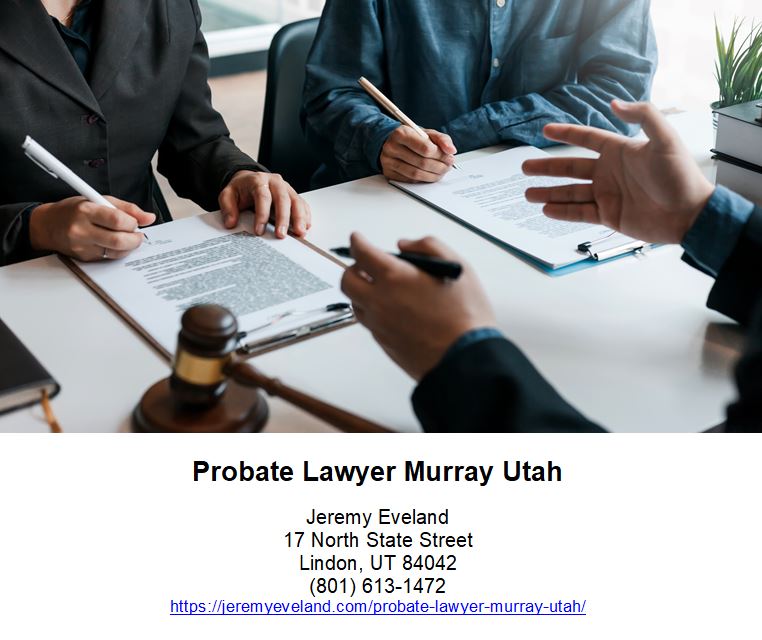
Probate Lawyer Murray Utah, attorney Jeremy Eveland reviewing a Utah estate administration file

What a Probate Lawyer Murray Utah Residents Hire Actually Does

Probate is the court process that moves a dead person’s assets to the living people entitled to them, and that pays the debts on the way through. Utah runs its version under Title 75, the Utah Uniform Probate Code. The work itself is procedural rather than dramatic. Someone has to be appointed, someone has to inventory the assets, creditors have to be told, taxes have to be filed, and the leftover has to be handed out in the right shares.

The practical job of a Probate Lawyer Murray Utah families call looks like this, and it is the same list in every case. Read the will, if there is one. Decide whether probate is actually required or whether a shortcut applies. Pick the right track. Draft the application or petition. Get the personal representative appointed and issue letters. Publish and mail creditor notice. Prepare the inventory. Deal with the house. Resolve claims. Distribute. File the closing statement. Then answer the question everyone asks at the beginning and nobody believes: yes, this really does take months.

Murray sits in the middle of Salt Lake County, so a Murray estate lands in the same courthouse as a Salt Lake City, Millcreek, Holladay, or Taylorsville estate. What varies is not the county. It is the asset mix. A Murray decedent who owned a home near Fashion Place, a small business, a 401(k), and a bank account has four assets that travel four different legal routes, and only one of them goes through probate court at all.

Where a Probate Lawyer Murray Utah Files Your Case

Venue is set by statute, not by preference. Utah Code 75-3-201 puts the first informal or formal testacy or appointment proceeding in the county where the decedent was domiciled at death. Murray is in Salt Lake County, so the case belongs to the Third Judicial District. If the decedent was not domiciled in Utah but owned Utah property, venue is any county where that property sat at death.

Filings go to the Matheson Courthouse at 450 South State Street, Salt Lake City, UT 84114, main number (801) 238-7300. Nearly everything is filed electronically now, which means the practical value of a local Probate Lawyer Murray Utah residents can meet is not proximity to the clerk’s window. It is knowing what the Third District expects in an application before it gets rejected.

The filing fee for a probate petition is $375 under Utah Code 78A-2-301(1)(a), the catch-all rate for a civil complaint or petition invoking the jurisdiction of a court of record that is not governed by another subsection. That single fee covers the case, not each step in it.

Do You Even Need Probate? Murray Assets That Skip the Court

This is the first question worth asking, and it is the one that saves the most money. Probate only reaches assets that were titled in the decedent’s sole name with no beneficiary attached. Everything else moves by contract or by operation of law.

Asset Goes through probate? What actually moves it
Home held in joint tenancy with right of survivorship No Survivorship, documented by an affidavit recorded with the county recorder
Home held in the decedent’s sole name Yes Personal representative’s deed after appointment
Home covered by a recorded transfer on death deed No Utah Code Title 75, Chapter 6, Part 4, if the deed was recorded before death
Life insurance, IRA, 401(k) with a living named beneficiary No Beneficiary designation on file with the company
Bank account with a payable on death designation No POD designation
Assets already titled to a revocable living trust No The trust instrument and the successor trustee
Sole-name bank account, vehicle, brokerage account, personal property Yes, unless the small estate affidavit applies Letters testamentary or letters of administration

The Utah small estate affidavit

Utah Code 75-3-1201 is the shortcut. Thirty days after death, anyone holding tangible personal property of the decedent must release it to a claiming successor who presents an affidavit stating that the entire estate subject to administration, wherever located and net of liens and encumbrances, does not exceed $100,000, that 30 days have passed, that no personal representative has been appointed or is pending anywhere, and that the person signing is entitled to the property.

Three limits kill this option more often than the dollar cap does. It reaches personal property only, so a house never qualifies. Water shares are expressly excluded. And if anyone has already applied for appointment, the affidavit route is closed. When it does fit, it removes the court entirely, which is why any competent Probate Lawyer Murray Utah families consult should test it before drafting anything else.

Thirty days after the death of a decedent, any person indebted to the decedent or having possession of tangible personal property belonging to the decedent shall pay the indebtedness or deliver the tangible personal property upon being presented with an affidavit stating that the value of the entire estate subject to administration, less liens and encumbrances, does not exceed $100,000.

Utah Code 75-3-1201

Informal, Formal, and Supervised: How a Probate Lawyer Murray Utah Picks the Track

Utah gives you three routes, and picking the wrong one is the single most expensive early mistake in estate administration.

Track Who decides Hearings Best for
Informal probate A court registrar reviews the application on the papers None A valid original will, cooperating heirs, no anticipated contest. The default for most Murray estates.
Formal testacy or appointment A district judge, after notice and hearing Yes A missing or damaged will, competing wills, a disputed heir, an objection to who serves, or a title issue that needs an adjudication.
Supervised administration A judge, continuously, until an order approves distribution and discharges the representative Yes, ongoing Distrust between beneficiaries, a representative who needs a leash, or an estate a judge wants to watch.

Informal probate is conclusive as to all persons until superseded by an order in a formal testacy proceeding, and no defect in the application renders an informal probate void. That is unusually forgiving language, and it is why the informal track carries so much of the volume.

Timing matters at the front end. Under 75-3-307, the registrar appoints only after at least 10 days have passed since the required notice, or after at least 120 hours since death if everyone entitled to notice has waived it in writing. If the decedent was a nonresident, the registrar waits 30 days.

Supervised administration is described by statute as a single in rem proceeding that runs under the continuing authority of the court until an order approves distribution and discharges the personal representative. It is thorough and it is slow. A Probate Lawyer Murray Utah beneficiaries retain will usually treat supervision as a remedy for a specific problem rather than a default setting.

The Murray Probate Timeline, Deadline by Deadline

Clients want a date, and a Probate Lawyer Murray Utah should be able to give a range at the first meeting. The honest answer is that a clean, uncontested Murray estate typically runs somewhere between five months and a year, and the statutory floor is four months from appointment. Here is what actually drives the clock.

Deadline Rule Statute
120 hours after death Earliest informal appointment, and only if every person entitled to notice waived in writing 75-3-307
30 days after death Earliest use of the small estate affidavit 75-3-1201
45 days after death Any creditor may petition for appointment as personal representative 75-3-203(1)(f)
3 months after appointment Personal representative must prepare the inventory and appraisement 75-3-705
3 months after first publication Published creditor claims are barred 75-3-801(1)
Later of 90 days from publication or 60 days from mailing Bar for creditors given actual written notice 75-3-801(2)
12 months after death Outer bar for claims that arose before death, and the floor for the decedent’s own surviving causes of action 75-3-803(1)(a), 75-3-108
4 months after appointment Earliest a personal representative may close by sworn statement 75-3-1003
6 months after the closing statement is filed Claims against the representative for breach of fiduciary duty are barred, except for fraud or inadequate disclosure 75-3-1005
3 years after death Outer limit to commence probate, after which intestacy is presumed 75-3-107

Note the Utah-specific detail in that table. The model Uniform Probate Code and most national articles say six months for the earliest closing. Utah says four. A Probate Lawyer Murray Utah clients hire should be closing at four months when the facts allow it, not repeating a number copied from a Kansas form book.

Who Gets Appointed Personal Representative

Appointment is where most cases start, and it is the first thing a Probate Lawyer Murray Utah families call will sort out before anything else is filed.

Utah Code 75-3-203 sets a strict priority order that applies in both formal and informal proceedings:

  1. The person with priority under a probated will, including anyone nominated by a power conferred in the will.
  2. The surviving spouse, if the spouse is a devisee.
  3. Other devisees.
  4. The surviving spouse, if not a devisee.
  5. Other heirs.
  6. Forty-five days after death, any creditor.

Objections to an appointment can only be raised in a formal proceeding. If the estate looks adequate for exemptions and costs but too thin to pay unsecured claims, the court may appoint any qualified person on a creditor’s petition. Utah calls this role the personal representative rather than executor or administrator, though the older words still show up in wills. If you were named in a will and are wondering what you signed up for, the executor’s role is a fiduciary one, not an honorary one.

What the Personal Representative Has to Do

The duties below are what a Probate Lawyer Murray Utah walks a new personal representative through in the first meeting. Under 75-3-703, a personal representative is a fiduciary who must observe the standard of care applicable to trustees, and must settle and distribute the estate as expeditiously and efficiently as is consistent with the estate’s best interests. That is the legal frame. The task list underneath it:

  • Accept the appointment and obtain letters from the clerk.
  • Secure the property, including the Murray house, the vehicles, and anything portable.
  • Open an estate bank account and stop commingling immediately.
  • Obtain an EIN for the estate and file the decedent’s final income tax return.
  • Prepare the inventory and appraisement within three months of appointment, listing each item with its fair market value at the date of death and any encumbrance, and send a copy to interested persons who request it.
  • Publish the creditor notice and mail notice to known creditors.
  • Evaluate, allow, or disallow claims.
  • Sell what needs selling, with a defensible process.
  • Distribute in the shares the will or the intestacy statute requires.
  • File the closing statement.

Representatives who get sued generally did one of three things: they paid themselves or a favored heir first, they let an asset lose value while doing nothing, or they went quiet. The related duties of a trustee under a family trust are similar in character, and the overlap is covered in more depth in this discussion of trustee powers and duties.

Creditor Claims: the Rule That Ends Most Estates

Creditor notice is the piece a Probate Lawyer Murray Utah clients rely on most, because getting it wrong is what keeps an estate open for years.

Utah Code 75-3-801 gives the personal representative a choice, and it is a real choice. Publication is optional. If the representative does publish, the notice must run once a week for three successive weeks in a newspaper of general circulation in the county and also be posted under Section 45-1-101 for three weeks. Claims not presented within three months of first publication are forever barred.

Creditors the representative actually knows about are different. They get written notice by mail or other delivery, and their deadline is the later of 90 days from the published notice or 60 days from mailing. The statute also protects the representative, who is not liable to any creditor or successor for giving or failing to give the notice.

Behind both clocks sits 75-3-803: claims that arose before death are barred no later than one year after death regardless of notice. The one-year wall is why a family that quietly sits on an estate for two years is usually in better shape on old debts than they expect, and in much worse shape on the three-year probate deadline.

When There Is No Will: Utah Intestate Succession

Roughly half of the estates a Probate Lawyer Murray Utah handles arrive with no will at all, and the statute then supplies the plan.

Dying without a will does not send anything to the state in any normal case. It substitutes the legislature’s plan for the decedent’s plan. Under Utah Code 75-2-102, the surviving spouse takes the entire intestate estate if there are no surviving descendants, or if all surviving descendants are also descendants of that spouse. If the decedent left descendants who are not descendants of the surviving spouse, the spouse takes the first $75,000 plus one half of the balance, and the descendants take the rest.

That fact pattern is common in Murray. A second marriage plus children from a first marriage is the standard way a family ends up litigating a house. The full mechanics are worked through in this explanation of intestate succession, and the cure is not litigation, it is a last will and testament or a funded trust.

Spousal and family protections

Utah layers three allowances on top of whatever the will or the intestacy statute says. The homestead allowance is $22,500 under 75-2-402. Exempt property is $15,000 under 75-2-403. The family allowance under 75-2-404 supports the spouse and minor children during administration and is capped at one year if the estate cannot pay claims. A disinherited spouse also has the elective share under 75-2-202, which is one third of the augmented estate with a $75,000 supplemental floor.

Contesting a Will in Murray, Utah

A contest is the one situation where hiring a Probate Lawyer Murray Utah early changes the outcome, because the deadlines and the notice list are unforgiving.

Will contests get filed on four theories in practice: lack of testamentary capacity, undue influence, fraud, and improper execution. Execution is the easiest to check. Under Utah Code 75-2-502, a valid will is in writing, signed by the testator, and signed by two witnesses. Utah also recognizes holographic wills, valid without witnesses, so long as the signature and the material portions are in the testator’s own handwriting. A self-proving affidavit under 75-2-504 is what lets a will be admitted without hunting down witnesses years later.

A contest converts an informal case into a formal testacy proceeding, which triggers notice under 75-3-403 to the surviving spouse, children, other heirs, devisees, named executors, and anyone who filed a demand for notice. Costs are not automatically borne by the loser. Under 75-3-719, the court may award costs and reasonable attorney fees as justice and equity require, from a party or from the estate, and a representative who defends or prosecutes in good faith is entitled to necessary expenses and fees from the estate whether or not they win. If you are heading into that territory, read more about contested probate before you file anything.

Real Estate in a Murray Probate

Title work is where a Probate Lawyer Murray Utah earns the fee, since a defective deed can sit unnoticed until a buyer’s title company refuses to close.

The house is usually the reason the case exists. A property in the decedent’s sole name cannot be sold or refinanced until someone holds letters. Once appointed, the personal representative conveys by a personal representative’s deed, and the document is recorded with the Salt Lake County Recorder at 2001 South State Street, Suite N1-600, Salt Lake City, phone 385-468-8145.

Three recurring Murray title problems are worth naming. First, a survivorship deed that was never followed by a recorded affidavit of death, which leaves a dead owner on title decades later. Second, a quitclaim deed signed during a final illness that the other heirs did not know about. Third, a transfer on death deed that names a class such as “my children,” which Utah Code 75-6-405(2) does not permit. Any of these can force a quiet title action alongside the probate, and each is more of a real estate law problem than a probate problem.

Taxes on a Murray Estate

Tax exposure is the first thing a Probate Lawyer Murray Utah rules out, and for nearly every local estate it is ruled out quickly.

Utah repealed its state estate tax, and there is no Utah inheritance tax, so a Murray family is dealing with federal rules and income tax, not a state death tax. For 2026 the federal basic exclusion amount is $15,000,000 per person under Public Law 119-21 as implemented by Revenue Procedure 2025-32, the annual gift exclusion is $19,000, and the annual exclusion for gifts to a non-citizen spouse is $194,000. The overwhelming majority of estates in Murray owe no federal estate tax at all.

What does come up: the decedent’s final Form 1040, a Form 1041 for the estate if it earns income during administration, and the stepped-up basis question when the house sells. For families above the exclusion, the planning tools are different in kind, and belong in a conversation about high asset estate planning, irrevocable life insurance trusts, or charitable trusts. A beneficiary who does not want an inheritance for tax or creditor reasons should look at disclaimers before accepting anything, since accepting a benefit usually destroys the option.

What Probate Costs, and What a Probate Lawyer Murray Utah Charges

Utah does not use a statutory percentage of the estate. Utah Code 75-3-718 entitles both the personal representative and the attorney to reasonable compensation. If a petition seeks approval of that compensation and no interested person objects, the amount sought is reasonable by definition. If someone objects, the court decides.

Cost Typical range Notes
District court filing fee $375 Set by 78A-2-301(1)(a)
Newspaper publication of creditor notice Varies by publication Three successive weeks, optional but usually worth it
Certified copies of letters Small per-copy fee Banks and title companies each want their own
Appraisal Varies 75-3-706 allows hiring a qualified, disinterested appraiser
Attorney fees Reasonable compensation under 75-3-718 Flat fee for an uncontested informal case, hourly once anyone objects
Personal representative compensation Reasonable compensation under 75-3-718 Family members frequently waive it, sometimes for tax reasons

The dominant cost variable is not the size of the estate. It is conflict. An uncontested informal Murray probate is a predictable, quotable piece of work. The same estate with one objecting sibling is litigation, and litigation is priced like litigation.

Mistakes That Turn a Simple Murray Probate Into a Fight

Every item below is something a Probate Lawyer Murray Utah sees repeatedly, and every one of them is avoidable with a phone call before the fact rather than after.

  • Distributing before the creditor window closes. The representative who hands out cash in month two and meets a hospital claim in month five pays it personally often enough to be a real risk.
  • Missing the three-year deadline. After three years, 75-3-107 presumes intestacy, and the will you were saving for later may no longer control.
  • Skipping the inventory. It is required within three months and it is the single best defense against a later accusation of self-dealing.
  • Using the small estate affidavit on real property. It does not reach real estate. Ever.
  • Emptying the decedent’s bank account before appointment. Convenient, common, and the fastest route to a surcharge claim.
  • Treating a payable on death designation as though the will overrides it. It does not. A stale beneficiary form beats the newest will every time.
  • Letting a vacant Murray house go uninsured. Most homeowner policies limit or void coverage once a house is vacant beyond a stated period.

How to Choose a Probate Lawyer Murray Utah Families Can Work With

Ask four questions. First, will this estate qualify for informal administration, and if not, exactly why not? Second, what is the fee arrangement, and what event converts a flat fee into an hourly matter? Third, who does the actual work, the attorney or a paralegal, and who answers the phone in month six? Fourth, what is the realistic close date given the four-month floor in 75-3-1003 and this estate’s asset mix?

An answer of “it depends” to all four is a signal. A Probate Lawyer Murray Utah families should hire can look at a will, a deed, and a list of accounts and tell you in one meeting which assets are probate assets, which track fits, and what the calendar looks like. Utah’s informal probate self-help page also publish the official forms, and there is a plain-language overview of the general concept on Wikipedia if you want the background before the first call.

Probate Is the Symptom. Planning Is the Cure.

The best outcome a Probate Lawyer Murray Utah can deliver is the case that never gets filed, because the documents were signed and funded while everyone was healthy.

Every hour a family spends in a Murray probate traces back to a document that was never signed or never funded. A revocable living trust that actually holds title avoids the court entirely. A power of attorney and an advance health care directive handle the incapacity years that come first. A special needs trust protects a beneficiary whose inheritance would otherwise cost them benefits. Choosing among the different trust types is a one-meeting conversation with a trust lawyer, and it is far cheaper than the alternative.

If an incapacitated adult is involved rather than a decedent, the tools are guardianship and conservatorship, which are separate Title 75 proceedings with their own rules. If a business interest is in the estate, the succession question needs its own plan, which is the subject of business succession planning in Murray. And if none of the documents exist yet, start with the basics covered under estate planning documents and estate planning, or with an estate planning lawyer in Murray.

Areas We Serve

A Probate Lawyer Murray Utah practice is not limited to the city line. Probate work is filed in Salt Lake County for every one of these communities, so the process described above is the same whether the decedent lived in Murray or a few miles in any direction: West Jordan, West Valley City, Sandy, Taylorsville, Holladay, South Jordan, Draper, Midvale, Millcreek, Cottonwood Heights, Riverton, Herriman, Bluffdale, South Salt Lake, Kearns, Magna, and Salt Lake City. Estates outside the county follow the same statutes in a different district, including Provo, Orem, and Ogden.

Frequently Asked Questions

How long does probate take in Murray, Utah?

A clean informal estate handled by a Probate Lawyer Murray Utah usually runs five months to a year. The floor is fixed: a personal representative cannot close by sworn statement earlier than four months after appointment under Utah Code 75-3-1003. Real estate sales, tax filings, and disputes extend it from there.

Do I need a Probate Lawyer Murray Utah residents recommend, or can I file myself?

Utah permits self-representation, and the courts publish forms. Simple informal estates with one heir and no real property are sometimes handled alone. Once there is a house, a business, a blended family, or an objecting relative, the personal liability exposure makes counsel the cheaper choice.

What if the estate is small?

If the entire estate subject to administration is $100,000 or less net of liens, is personal property only, and 30 days have passed since death, Utah Code 75-3-1201 lets a successor collect by affidavit without opening a case. Water shares and real estate never qualify.

Is there a deadline to start probate in Utah?

Yes. Utah Code 75-3-107 sets a three-year outer limit from the date of death to commence testacy or appointment proceedings. After three years the presumption is intestacy, which means the will may no longer control who inherits.

How much does probate cost in Murray?

The district court filing fee is $375 under 78A-2-301(1)(a). A Probate Lawyer Murray Utah normally quotes a flat fee for an uncontested informal case. Attorney and personal representative compensation is whatever is reasonable under 75-3-718, not a statutory percentage. Publication, certified copies, and appraisals add modest amounts. Conflict is what makes the number grow.

Does a will avoid probate?

No. A will directs who receives the probate estate and names a personal representative, but it only operates through the court. Avoiding probate takes non-probate transfers: a funded revocable trust, beneficiary designations, joint tenancy, or a recorded transfer on death deed.

Who can serve as personal representative of a Murray estate?

Utah Code 75-3-203 sets the order: the person named in the will, then a spouse who is a devisee, then other devisees, then the spouse, then other heirs, and 45 days after death any creditor. Objections can only be raised in a formal proceeding.

Does Utah have an estate tax or inheritance tax?

No. Utah imposes neither. Only the federal estate tax can apply, and the 2026 basic exclusion is $15,000,000 per person, so the great majority of Murray estates owe nothing. The estate may still need to file income tax returns during administration.

Where do I file a Murray probate case?

A Probate Lawyer Murray Utah files in Salt Lake County, because Utah Code 75-3-201 places venue in the county of the decedent’s domicile at death. That is the Third District Court at the Matheson Courthouse, 450 South State Street, Salt Lake City, UT 84114.

Looking for a Probate Lawyer Murray Utah can rely on, and not sure whether the estate needs probate at all? A short conversation usually answers that in one call.

Request a consultation or call (801) 613-1472.

Written by Jeremy Eveland, an attorney practicing business, estate, and probate law in Utah, including work as a Probate Lawyer Murray Utah residents and families across Salt Lake County retain.

This article is general information about Utah law, not legal advice, and statutes change. Reading it does not create an attorney-client relationship. Consult a licensed Utah attorney about your specific estate.


Executor Lawyer, Jeremy Eveland, Lawyer Jeremy Eveland, Jeremy Eveland Utah Attorney, Lawyer for an Executor of an Estate, executor, estate, probate, executors, person, administration, solicitor, attorney, tax, money, court, solicitors, death, beneficiaries, assets, role, someone, time, duties, family, property, advice, grant, law, letters, people, inheritance, application, debts, bank, form, calculator, insurance, rights, services, practice, example, power, service, administrator, inheritance tax, legal rights, professional executor, legal advice, probate registry, personal liability, family members, deceased person, personal representative, family member, many people, estate administration, potential claimants, residuary beneficiaries, death certificate, law agent, law society, many executors, loved ones, irwin mitchell, good practice, bank accounts, tool calculator tool, legal document, good idea, public trustee, legal authority, enough money, estate assets, funeral arrangements, executor, probate, solicitor, letters of administration, inheritance tax, assets, calculator, tax, attorney, tool, debts, mortgage, power of attorney, legal advice, fee, scotland, pension, property, deceased, estate, intestacy, credit, money, grant of probate, tenants in common, joint tenants, universal credit, executrix, trust, payment protection insurance, insolvent, executorship, national insurance, wills, legacy, debt, council tax, life insurance policy, valuation, next-of-kin

Executor Lawyer

Executor Lawyer

“Your Estate, Your Peace of Mind – Let a Lawyer for an Executor of an Estate Help You.”

Introduction

A lawyer for an executor of an estate is a legal professional who provides legal advice and assistance to the executor of an estate. The executor is the person responsible for carrying out the wishes of the deceased, as outlined in the will. The lawyer for an executor of an estate helps the executor to understand their legal obligations and to ensure that the estate is administered in accordance with the law. The lawyer can provide advice on the best way to manage the estate, including the distribution of assets, the payment of debts, and the filing of taxes. The lawyer can also help the executor to resolve any disputes that may arise during the administration of the estate.

What are the Legal Rights and Responsibilities of an Executor of an Estate?

As an executor of an estate, you have a number of legal rights and responsibilities. It is important to understand these rights and responsibilities in order to properly fulfill your role.

Legal Rights

As an executor, you have the right to access the deceasedโ€™s assets and records. This includes bank accounts, investments, and other financial documents. You also have the right to hire professionals to assist you in the administration of the estate, such as attorneys, accountants, and appraisers.

Legal Responsibilities

As an executor, you are responsible for managing the estateโ€™s assets and distributing them according to the deceasedโ€™s wishes. This includes paying any outstanding debts, filing taxes, and distributing assets to beneficiaries. You are also responsible for ensuring that all legal requirements are met, such as obtaining court approval for certain actions.

In addition, you are responsible for keeping accurate records of all transactions and filing the necessary paperwork with the court. You must also keep beneficiaries informed of the progress of the estate and any changes that may occur.

Finally, you are responsible for ensuring that the estate is properly administered and that all assets are distributed according to the deceasedโ€™s wishes. This includes ensuring that all taxes are paid and that all debts are settled.

It is important to understand your legal rights and responsibilities as an executor of an estate. By understanding these rights and responsibilities, you can ensure that the estate is properly administered and that all assets are distributed according to the deceasedโ€™s wishes.

What are Letters of Administration for an Executor of an Estate?

Letters of Administration are documents issued by a court that grant an executor the authority to manage the estate of a deceased person. The executor is responsible for collecting and distributing the assets of the estate, paying any debts, and filing the necessary tax returns.

Executor Lawyer, Jeremy Eveland, Lawyer Jeremy Eveland, Jeremy Eveland Utah Attorney, Lawyer for an Executor of an Estate, executor, estate, probate, executors, person, administration, solicitor, attorney, tax, money, court, solicitors, death, beneficiaries, assets, role, someone, time, duties, family, property, advice, grant, law, letters, people, inheritance, application, debts, bank, form, calculator, insurance, rights, services, practice, example, power, service, administrator, inheritance tax, legal rights, professional executor, legal advice, probate registry, personal liability, family members, deceased person, personal representative, family member, many people, estate administration, potential claimants, residuary beneficiaries, death certificate, law agent, law society, many executors, loved ones, irwin mitchell, good practice, bank accounts, tool calculator tool, legal document, good idea, public trustee, legal authority, enough money, estate assets, funeral arrangements, executor, probate, solicitor, letters of administration, inheritance tax, assets, calculator, tax, attorney, tool, debts, mortgage, power of attorney, legal advice, fee, scotland, pension, property, deceased, estate, intestacy, credit, money, grant of probate, tenants in common, joint tenants, universal credit, executrix, trust, payment protection insurance, insolvent, executorship, national insurance, wills, legacy, debt, council tax, life insurance policy, valuation, next-of-kin

The executor must first apply to the court for Letters of Administration. This application must include a copy of the death certificate, a list of the deceased’s assets and liabilities, and a list of the heirs and beneficiaries. The court will review the application and, if approved, will issue the Letters of Administration.

Once the executor has the Letters of Administration, they can begin the process of administering the estate. This includes collecting and distributing assets, paying debts, filing tax returns, and distributing the remaining assets to the heirs and beneficiaries.

The executor must also keep accurate records of all transactions and provide regular updates to the court. The executor is also responsible for filing the final estate tax return and distributing any remaining assets to the heirs and beneficiaries.

Letters of Administration are an important part of the estate administration process and are necessary for an executor to properly manage the estate of a deceased person.

What is the Process for Applying for Letters of Administration for an Executor of an Estate?

The process for applying for Letters of Administration for an Executor of an Estate involves several steps. First, the Executor must obtain a copy of the death certificate and any other documents that may be required by the court. Next, the Executor must file a Petition for Letters of Administration with the probate court in the county where the deceased resided. The Petition must include the name of the deceased, the names of the heirs, and the Executor’s name and address.

Once the Petition is filed, the Executor must provide notice to all interested parties, such as the heirs and creditors of the estate. The Executor must also provide proof of publication of the notice in a local newspaper. After the notice period has expired, the Executor must appear in court for a hearing. At the hearing, the Executor must present evidence to the court that they are qualified to serve as Executor of the estate.

If the court finds that the Executor is qualified, the court will issue Letters of Administration. The Letters of Administration are a legal document that grants the Executor the authority to manage the estate. The Executor must then use the Letters of Administration to open a probate estate and begin the process of settling the estate.

What are the Tax Implications for an Executor of an Estate?

As an executor of an estate, it is important to understand the tax implications associated with the role. Executors are responsible for filing the final income tax return of the deceased, as well as any other tax returns that may be required. Depending on the size of the estate, the executor may also be responsible for filing estate tax returns.

Income tax returns must be filed for the period from the beginning of the year up to the date of death. The executor must also report any income earned by the estate after the date of death. This includes any income from investments, rental properties, or other sources.

Estate tax returns must be filed if the estate is valued at more than the federal estate tax exemption amount. The executor must also pay any estate taxes due.

The executor is also responsible for filing any gift tax returns that may be required. This includes any gifts made by the deceased during their lifetime, as well as any gifts made by the estate after the date of death.

Finally, the executor must ensure that all taxes due are paid in a timely manner. Failure to do so can result in penalties and interest charges.

It is important for executors to understand the tax implications associated with their role. It is also important to seek professional advice to ensure that all taxes are paid correctly and on time.

What is an Inventory of An Estate?

An inventory of an estate is a comprehensive list of all the assets owned by a deceased individual at the time of their death. This list is typically compiled by an executor or administrator of the estate and is used to determine the value of the estate for tax and probate purposes. The inventory should include all tangible assets such as real estate, vehicles, jewelry, furniture, artwork, and other personal property, as well as intangible assets such as bank accounts, stocks, bonds, and other investments. It should also include any debts owed by the deceased, such as mortgages, loans, and credit card balances. The inventory should be as detailed and accurate as possible, as it will be used to determine the value of the estate and the distribution of assets to heirs.

What are the Duties of an Executor of an Estate?

An executor of an estate is responsible for carrying out the wishes of the deceased as outlined in their will. This includes collecting and managing the assets of the estate, paying any debts or taxes, and distributing the remaining assets to the beneficiaries.

The executor must first obtain a grant of probate from the court, which is a legal document that confirms the executorโ€™s authority to act on behalf of the estate. The executor must then locate and secure all of the assets of the estate, including real estate, bank accounts, investments, and personal property.

The executor must also pay any outstanding debts or taxes of the estate, including any income taxes due. This may involve filing tax returns and paying any taxes due.

The executor must also manage the assets of the estate, including any investments, until the estate is ready to be distributed. This may involve making decisions about the sale of assets or the reinvestment of funds.

Finally, the executor must distribute the remaining assets of the estate to the beneficiaries as outlined in the will. This may involve transferring assets to the beneficiaries or distributing funds to them.

The executor is responsible for ensuring that all of these tasks are completed in a timely and accurate manner. They must also keep detailed records of all transactions and provide regular updates to the beneficiaries.

What is the Role of a Lawyer for an Executor of an Estate?

A lawyer plays an important role in assisting an executor of an estate. An executor is responsible for carrying out the wishes of the deceased as outlined in the will. The executor is responsible for ensuring that the estate is distributed according to the will, and that all taxes and debts are paid. A lawyer can provide guidance and advice to the executor throughout the process.

A lawyer can help the executor understand their legal obligations and ensure that they are met. They can provide advice on the best way to manage the estate, including how to handle assets, debts, and taxes. They can also help the executor navigate the probate process, which can be complex and time-consuming.

A lawyer can also help the executor with any disputes that may arise. They can provide advice on how to handle any disagreements between beneficiaries or creditors, and can represent the executor in court if necessary.

Finally, a lawyer can help the executor with any legal paperwork that needs to be completed. This includes filing the will with the court, preparing tax returns, and filing any other necessary documents.

Overall, a lawyer can provide invaluable assistance to an executor of an estate. They can provide guidance and advice throughout the process, and help ensure that the wishes of the deceased are carried out.

How to Choose the Right Lawyer for an Executor of an Estate?

When an individual is appointed as an executor of an estate, they are responsible for managing the estate and ensuring that the wishes of the deceased are carried out. This can be a complex and time-consuming process, and it is important to choose the right lawyer to help with the process. Here are some tips for choosing the right lawyer for an executor of an estate:

1. Research: Before selecting a lawyer, it is important to research the lawyerโ€™s qualifications and experience. Look for a lawyer who specializes in estate law and has experience in dealing with executors.

2. Ask for Referrals: Ask family and friends for referrals to lawyers who have experience in estate law. This can help narrow down the list of potential lawyers.

3. Interview: Once you have a list of potential lawyers, it is important to interview them to ensure that they are the right fit for the job. Ask questions about their experience, fees, and any other relevant information.

4. Check References: Ask the lawyer for references from past clients. This can help you get a better understanding of the lawyerโ€™s experience and how they handle cases.

5. Consider Cost: It is important to consider the cost of hiring a lawyer. Make sure to ask about the lawyerโ€™s fees and any other costs associated with the case.

By following these tips, you can ensure that you choose the right lawyer for an executor of an estate. A good lawyer can help make the process of managing an estate easier and ensure that the wishes of the deceased are carried out.

Q&A

1. What is the role of a lawyer for an executor of an estate?

A lawyer for an executor of an estate provides legal advice and guidance to the executor throughout the estate administration process. The lawyer helps the executor understand their legal obligations and responsibilities, and assists with the preparation of documents, such as wills, trusts, and other estate planning documents. The lawyer also helps the executor navigate the probate process, ensuring that all legal requirements are met.

2. What are the duties of an executor of an estate?

The duties of an executor of an estate include: collecting and managing the assets of the estate; paying any debts and taxes; distributing the assets to the beneficiaries; and filing the necessary paperwork with the court.

3. What is probate?

Probate is the legal process of administering a deceased person’s estate. This includes collecting and managing the assets of the estate, paying any debts and taxes, and distributing the assets to the beneficiaries.

4. What is a will?

A will is a legal document that outlines a person’s wishes regarding the distribution of their assets after their death. It is important to have a valid will in place in order to ensure that your wishes are carried out.

5. What is a trust?

A trust is a legal arrangement in which a person (the grantor) transfers ownership of their assets to another person (the trustee) to manage and distribute according to the grantor’s wishes. Trusts can be used to manage assets during a person’s lifetime, or to distribute assets after their death.

6. What is a power of attorney?

A power of attorney is a legal document that allows a person (the principal) to appoint another person (the agent) to act on their behalf in legal and financial matters. The agent is legally authorized to make decisions and take actions on behalf of the principal.

7. What is an estate tax?

An estate tax is a tax imposed on the transfer of assets from a deceased person to their beneficiaries. The amount of the tax depends on the value of the estate and the laws of the state in which the deceased person resided.

8. What is an estate plan?

An estate plan is a set of documents that outlines a person’s wishes regarding the distribution of their assets after their death. It typically includes a will, trust, and power of attorney. An estate plan can help ensure that a person’s wishes are carried out and that their assets are distributed according to their wishes.

Areas We Serve

We serve individuals and businesses in the following locations:

Salt Lake City Utah
West Valley City Utah
Provo Utah
West Jordan Utah
Orem Utah
Sandy Utah
Ogden Utah
St. George Utah
Layton Utah
South Jordan Utah
Lehi Utah
Millcreek Utah
Taylorsville Utah
Logan Utah
Murray Utah
Draper Utah
Bountiful Utah
Riverton Utah
Herriman Utah
Spanish Fork Utah
Roy Utah
Pleasant Grove Utah
Kearns Utah
Tooele Utah
Cottonwood Heights Utah
Midvale Utah
Springville Utah
Eagle Mountain Utah
Cedar City Utah
Kaysville Utah
Clearfield Utah
Holladay Utah
American Fork Utah
Syracuse Utah
Saratoga Springs Utah
Magna Utah
Washington Utah
South Salt Lake Utah
Farmington Utah
Clinton Utah
North Salt Lake Utah
Payson Utah
North Ogden Utah
Brigham City Utah
Highland Utah
Centerville Utah
Hurricane Utah
South Ogden Utah
Heber Utah
West Haven Utah
Bluffdale Utah
Santaquin Utah
Smithfield Utah
Woods Cross Utah
Grantsville Utah
Lindon Utah
North Logan Utah
West Point Utah
Vernal Utah
Alpine Utah
Cedar Hills Utah
Pleasant View Utah
Mapleton Utah
Stansbury Par Utah
Washington Terrace Utah
Riverdale Utah
Hooper Utah
Tremonton Utah
Ivins Utah
Park City Utah
Price Utah
Hyrum Utah
Summit Park Utah
Salem Utah
Richfield Utah
Santa Clara Utah
Providence Utah
South Weber Utah
Vineyard Utah
Ephraim Utah
Roosevelt Utah
Farr West Utah
Plain City Utah
Nibley Utah
Enoch Utah
Harrisville Utah
Snyderville Utah
Fruit Heights Utah
Nephi Utah
White City Utah
West Bountiful Utah
Sunset Utah
Moab Utah
Midway Utah
Perry Utah
Kanab Utah
Hyde Park Utah
Silver Summit Utah
La Verkin Utah
Morgan Utah

Executor Lawyer Consultation

When you need help from an Executor Lawyer call Jeremy D. Eveland, MBA, JD (801) 613-1472 for a consultation.

Jeremy Eveland
17 North State Street
Lindon UT 84042
(801) 613-1472

Business Lawyer in West Jordan, Utah

Related Posts

Legal Requirements To Form A Trust

High Asset Estate Lawyer

International Business Lawyer

Corporate Lawyer Orem Utah

Business Private Loans

Charitable Estate Planning Trusts

Estate Planning Lawyer Sandy Utah

Probate

Preferred Stock

Business Lawyer Orem Utah

Using Disclaimers In Estate Planning

Business Contract Attorney

Legal Compliance

Joint Tenancy

Strategic Business Plan

Quiet Title

Construction Disputes

Exit Strategies

Business Succession Lawyer Spanish Fork Utah

Sale of Company

Corporate Attorney St. George Utah

Asset Protection

Corporate Attorney Ogden Utah

Utah Code 76-10-2402

What Is Utah Code 34-56-101

What Is Utah Code 39-1-36(1)

What Is Utah Code 48-3a-409?

Executor Lawyer

Visit USA.gov for official resources.

For legal assistance, contact Jeremy Eveland, Attorney at Law — 8833 S Redwood Rd #A, West Jordan, UT 84088 · (801) 613-1472.

Probate, Jeremy Eveland, Lawyer Jeremy Eveland, Jeremy Eveland Utah Attorney, probate, estate, person, executor, grant, administration, assets, property, process, money, tax, someone, letters, death, application, court, executors, service, solicitor, services, inheritance, fee, advice, administrator, beneficiaries, bank, position, value, rules, example, work, time, fees, people, intestacy, debts, help, wills, insurance, costs, deceased person, probate process, inheritance tax, probate registry, estate administration, personal representative, probate court, money podcast, northern ireland, legal document, probate application, legal services, legal authority, death certificate, legal advice, probate specialist, legal right, financial institution, high court, bank accounts, real estate, shorts podcast, probate record, professional executor, probate office, building societies, sole name, estate planning trust, probate fees, irwin mitchell, executor, assets, letters of administration, solicitor, will, deceased, fee, caveat, grant of probate, inheritance tax, which?, tax, podcast, debts, intestacy, beneficiaries, decedent, money, probate court, northern ireland, mortgage, probate, trust, testator, right of survivorship, probated, joint property, intestacy, trust, testate, tenancy by the entireties, probating, probate lawyers, grants of probate, probare, joint tenants, survivorship, last testament, probate administration, intestate estates, irrevocable trust, will, payment protection insurance, intestacy laws

Probate

Probate

Probate is the legal process by which an individual’s estate is administered after they have passed away. In Utah, probate is governed by both case law and the Utah Code, which establish the rules and procedures that govern the process. This article will explain the probate process as it relates to Utah law, including the types of probate proceedings, the parties involved, and the timeline for the administration of an estate. The article will also discuss the recent changes to the Utah probate laws and the impact they may have on the process.

Types of Probate Proceedings

Under Utah law, there are two types of probate proceedings: formal and informal. Formal proceedings are overseen by a probate court and involve the appointment of a personal representative who is responsible for administering the estate. Informal proceedings, on the other hand, allow the estate to be administered without the involvement of a court. In informal proceedings, the personal representative is appointed by the decedent’s will and is responsible for collecting and distributing the assets of the estate.

Parties Involved

The parties involved in a Utah probate proceeding are the decedent, the personal representative, and any creditors or beneficiaries of the estate. The personal representative is the individual who is appointed by the probate court or by the decedent’s will to administer the estate. They are responsible for gathering the assets of the estate, paying any outstanding debts, and distributing the remaining assets in accordance with the decedent’s wishes. The creditors of the estate are any individuals or organizations who are owed money by the estate. The beneficiaries of the estate are any individuals or organizations who are entitled to receive a portion of the estate.

Timeline for Administration

The timeline for the administration of an estate in Utah depends on the type of probate proceeding that is chosen. In the case of a formal proceeding, the court will issue an order appointing the personal representative, who must then file an inventory of the assets of the estate within 60 days. The personal representative must then give notice to any creditors of the estate, who have 90 days to file a claim against the estate. After the claim period has passed, the personal representative can begin to distribute the assets of the estate in accordance with the decedent’s wishes.

In an informal proceeding, the personal representative must still file an inventory of the assets and give notice to the creditors, but the timeline is more flexible. The personal representative can begin distributing the assets of the estate once all of the creditors have been paid and the claims period has passed.

Utah Code 75-2-101 – Definitions.

Utah Code 75-2-101 defines the meaning of several key terms for the purpose of interpreting the Utah Trust Code. The terms โ€œtrustโ€ and โ€œtrusteeโ€ are defined as a fiduciary relationship in which one person holds title to property for another personโ€™s benefit. A โ€œtrusteeโ€ is defined as a person who holds title to property for the benefit of another person, and a โ€œbeneficiaryโ€ is the person for whose benefit the trustee holds title to the property. โ€œPropertyโ€ is defined as anything that can be owned, and it includes real estate, personal property, money, and intangible property such as stocks, bonds, and other investments. The term โ€œprincipalโ€ is defined as the total amount of trust property, including income and appreciation. Finally, โ€œinterestโ€ is defined as any right or benefit that a beneficiary has in the trust property or its income.

The definitions provided in Utah Code 75-2-101 are fundamental to understanding the Utah Trust Code. The definitions provide a clear understanding of the roles of the various parties involved in a trust, as well as the types of property that may be held in a trust. By understanding the definitions provided in this code, individuals can more accurately interpret the regulations and laws that govern trusts in Utah.

Probate, Jeremy Eveland, Lawyer Jeremy Eveland, Jeremy Eveland Utah Attorney, probate, estate, person, executor, grant, administration, assets, property, process, money, tax, someone, letters, death, application, court, executors, service, solicitor, services, inheritance, fee, advice, administrator, beneficiaries, bank, position, value, rules, example, work, time, fees, people, intestacy, debts, help, wills, insurance, costs, deceased person, probate process, inheritance tax, probate registry, estate administration, personal representative, probate court, money podcast, northern ireland, legal document, probate application, legal services, legal authority, death certificate, legal advice, probate specialist, legal right, financial institution, high court, bank accounts, real estate, shorts podcast, probate record, professional executor, probate office, building societies, sole name, estate planning trust, probate fees, irwin mitchell, executor, assets, letters of administration, solicitor, will, deceased, fee, caveat, grant of probate, inheritance tax, which?, tax, podcast, debts, intestacy, beneficiaries, decedent, money, probate court, northern ireland, mortgage, probate, trust, testator, right of survivorship, probated, joint property, intestacy, trust, testate, tenancy by the entireties, probating, probate lawyers, grants of probate, probare, joint tenants, survivorship, last testament, probate administration, intestate estates, irrevocable trust, will, payment protection insurance, intestacy laws

Utah Code 75-2-102 – Construction of act

Utah Code 75-2-102 states that probate is the legal process of administering a deceased person’s estate. This includes validating a will, if there is one, as well as collecting assets, paying debts, and distributing assets to the rightful heirs. The purpose of probate is to ensure that the decedent’s wishes are carried out, and that the estate is properly managed and dispersed. Probate is a process that must be initiated by the executor of the will, or if there is no will, the court will appoint an administrator to oversee the process.

The first step in probate is to determine the validity of the will. This includes making sure that the will is properly signed and witnessed, as well as determining whether any changes or modifications have been made since the will was created. Once the will is deemed valid, the executor must then inventory and evaluate the decedent’s assets. This includes collecting the assets, paying any outstanding debts, and distributing the remainder to the beneficiaries. In some cases, the executor may need to seek court approval for certain decisions, such as the sale of property.

The probate process can be a lengthy one, and it is important for the executor to remain organized and diligent. It is also important to be aware of any applicable laws or regulations that may impact the process. If the process is handled properly, it can provide peace of mind to the family and heirs of the deceased and ensure that the decedent’s wishes are carried out.

Utah Code 75-2-103 – Probate court jurisdiction.

Utah Code 75-2-103 outlines the jurisdiction of probate courts in the state of Utah. This code states that a probate court has jurisdiction over all matters pertaining to the administration of decedents’ estates, guardianships, conservatorships, trusts, adoptions, and other related proceedings. In addition, probate courts have exclusive jurisdiction over the settlement of estates, appointment of guardians and conservators, determination of heirship, and the granting of letters testamentary or of administration.

The probate court is responsible for the protection of the rights of the deceased and those parties involved with the estate. This includes safeguarding the assets of the estate, ensuring that creditors are paid, and that the deceased’s wishes are carried out according to the terms of the will, if there is one. The court also ensures that the parties involved in a probate process act in an ethical and responsible manner, in accordance with state and federal laws.

In addition, the probate court has the authority to make decisions concerning the appointment of guardians and conservators, and to determine heirship when there are disputes between family members. It can also adjudicate disputes between creditors and the estate, and between family members concerning the deceased’s assets. When necessary, the court may also order an inventory of the estate, and can order the sale of estate property to satisfy outstanding debts.

Other sections of the Utah Probate Code are as follows:

Utah Code 75-2-104 – Personal representative
Utah Code 75-2-105 – Appointment of personal representative
Utah Code 75-2-106 – Letters testamentary or of administration
Utah Code 75-2-107 – Bond of personal representative
Utah Code 75-2-108 – Exempt property
Utah Code 75-2-109 – Rights and duties of personal representative
Utah Code 75-2-110 – Rights of persons interested in estate
Utah Code 75-2-111 – Collection of assets
Utah Code 75-2-112 – Payment of debts
Utah Code 75-2-113 – Disposition of property
Utah Code 75-2-114 – Closing estate
Utah Code 75-2-115 – Petition for discharge
Utah Code 75-2-116 – Distribution of estate
Utah Code 75-2-117 – Payment of taxes
Utah Code 75-2-118 – Accounting
Utah Code 75-2-119 – Allowance and compensation of personal representative
Utah Code 75-2-120 – Removal of personal representative
Utah Code 75-2-121 – Appointment of guardian ad litem
Utah Code 75-2-122 – Power of court
Utah Code 75-2-123 – Suit by or against personal representative
Utah Code 75-2-124 – Descent and distribution
Utah Code 75-2-125 – Inventories
Utah Code 75-2-126 – Administration of foreign estates
Utah Code 75-2-127 – Intestate succession
Utah Code 75-2-128 – Homestead allowance
Utah Code 75-2-129 – Exoneration of personal representative
Utah Code 75-2-130 – Additional court powers
Utah Code 75-2-131 – Immunity from liability

Recent Changes to Utah Probate Law

In recent years, Utah has made several changes to its probate laws in order to make the process more efficient and cost-effective. One of the most notable changes is the introduction of a simplified probate process for estates worth less than $100,000. This process eliminates the need for a court hearing and allows the personal representative to administer the estate without the involvement of the court. Additionally, the state has recently passed a law that allows certain assets to pass directly to the beneficiaries of an estate without the need for probate. Finally, the state has adopted a probate code that provides a comprehensive overview of the probate process and sets out the rights and responsibilities of all parties involved.

Probate in Utah is governed by both case law and the Utah Code. The probate process in the state can be either formal or informal, and the timeline for the administration of an estate depends on the type of proceeding chosen. In recent years, the state has made several changes to its probate laws in order to make the process more efficient and cost-effective. These changes have made it easier for individuals to administer an estate without the involvement of a court, and have ensured that the rights and responsibilities of all parties involved in the process are clearly outlined.

Areas We Serve

We serve individuals and businesses in the following locations:

Salt Lake City Utah
West Valley City Utah
Provo Utah
West Jordan Utah
Orem Utah
Sandy Utah
Ogden Utah
St. George Utah
Layton Utah
South Jordan Utah
Lehi Utah
Millcreek Utah
Taylorsville Utah
Logan Utah
Murray Utah
Draper Utah
Bountiful Utah
Riverton Utah
Herriman Utah
Spanish Fork Utah
Roy Utah
Pleasant Grove Utah
Kearns Utah
Tooele Utah
Cottonwood Heights Utah
Midvale Utah
Springville Utah
Eagle Mountain Utah
Cedar City Utah
Kaysville Utah
Clearfield Utah
Holladay Utah
American Fork Utah
Syracuse Utah
Saratoga Springs Utah
Magna Utah
Washington Utah
South Salt Lake Utah
Farmington Utah
Clinton Utah
North Salt Lake Utah
Payson Utah
North Ogden Utah
Brigham City Utah
Highland Utah
Centerville Utah
Hurricane Utah
South Ogden Utah
Heber Utah
West Haven Utah
Bluffdale Utah
Santaquin Utah
Smithfield Utah
Woods Cross Utah
Grantsville Utah
Lindon Utah
North Logan Utah
West Point Utah
Vernal Utah
Alpine Utah
Cedar Hills Utah
Pleasant View Utah
Mapleton Utah
Stansbury Par Utah
Washington Terrace Utah
Riverdale Utah
Hooper Utah
Tremonton Utah
Ivins Utah
Park City Utah
Price Utah
Hyrum Utah
Summit Park Utah
Salem Utah
Richfield Utah
Santa Clara Utah
Providence Utah
South Weber Utah
Vineyard Utah
Ephraim Utah
Roosevelt Utah
Farr West Utah
Plain City Utah
Nibley Utah
Enoch Utah
Harrisville Utah
Snyderville Utah
Fruit Heights Utah
Nephi Utah
White City Utah
West Bountiful Utah
Sunset Utah
Moab Utah
Midway Utah
Perry Utah
Kanab Utah
Hyde Park Utah
Silver Summit Utah
La Verkin Utah
Morgan Utah

Probate Consultation

When you need help with Probate call Jeremy D. Eveland, MBA, JD (801) 613-1472 for a consultation.

Jeremy Eveland
17 North State Street
Lindon UT 84042
(801) 613-1472

Home

Related Posts

Non-Profit Organizations

Creation of Trusts

Business Risk Management

Legal System

Trust Lawyer

Business Succession Lawyer Eagle Mountain Utah

Business Formation

Different Trust Types

Business Financial Management

Special Needs Trust

Estate Planning Lawyer West Jordan Utah

Business Strategies

Real Estate Law Firm

Corporate Law Firms

Business Acquisition Lawyer Sandy Utah

LLC Formation Lawyer Near Me

Legal Services

Estate Planning Lawyer Orem Utah

Modern Franchising Practice

Business Law Firm

Legal Requirements To Form A Trust

High Asset Estate Lawyer

International Business Lawyer

Corporate Lawyer Orem Utah

Business Private Loans

Charitable Estate Planning Trusts

Estate Planning Lawyer Sandy Utah

Probate

Visit USA.gov for official resources.

Law Firm

Law Firm

Table of Contents

Law Firm

Last Updated: July 20, 2026

A law firm is an integral part of the legal industry in the United States. According to the National Law Journal’s report, there were 1,232 law firms across the nation in a recent survey year, with combined gross revenue of $262.97 billion. New York City-based firms make up the majority of this revenue, with the top ten grossing law firms in the United States reaching a combined total of $52.2 billion. Whether you need a small local practice or one of the world’s largest partnerships, understanding how a law firm works helps you choose the right legal representation for your matter.

The law firm landscape has changed dramatically over the years. There are now firms of all sizes and with a wide range of specialties, from business law to real estate law, estate planning, probate law, criminal defense, contract law, and injury law. With this diversity comes a wide range of business models, strategies, rankings, revenues, and other metrics used to measure success. This article discusses the various aspects of a law firm, including size, software, rankings, revenue, attorneys, management, practice areas, and lawyers. It also explains how the world’s leading law firms are changing to meet the needs of their clients. For a definition and history of the term, see the overview of the law firm on Wikipedia.

Key Takeaways

  • A law firm is a business entity formed by one or more lawyers to practice law and advise clients.
  • Firms range from solo practices to global partnerships with more than 500 attorneys.
  • Most firms are organized as limited liability partnerships (LLPs), LLCs, professional corporations, or sole proprietorships.
  • Practice areas include business, contract, real estate, estate planning, probate, and personal injury law.
  • Technology and practice-management software increasingly shape how modern firms serve clients.

Jeremy Eveland Law Firm - Business Law, Estate Planning, and Probate Attorney serving West Jordan and Lindon Utah

What Is a Law Firm?

A law firm is a business entity formed by one or more lawyers to engage in the practice of law. The primary service a law firm delivers is advising clients about their legal rights and responsibilities and representing them in civil, criminal, and business matters. Clients may be individuals, families, small businesses, or large corporations. When you hire a firm, you are retaining the collective knowledge, resources, and experience of every attorney who works there, not just a single lawyer.

Size and Software

Law firms come in all shapes and sizes. According to the National Law Journal (NLJ) survey, the largest firms have more than 500 attorneys, while the smallest firms have fewer than 10. Some firms operate multiple offices in multiple states, while others have only one office. Some specialize in a single practice area, while others offer a broad range of services.

The size of a firm often affects the type of software it uses. Larger firms may rely on sophisticated document-management systems, billing systems, and case-management systems, while smaller firms may not need such elaborate tools. Regardless of size, the goal of a well-run law firm is the same: to serve clients efficiently and protect their interests.

Ranking and Revenue

Law firms are ranked based on a number of criteria, such as total revenue and the number of attorneys. The NLJ survey ranks the 250 largest law firms in the U.S. by revenue, as well as the top 100 firms by number of attorneys. The survey also ranks firms by practice areas, including business, real estate, estate planning, probate, criminal defense, contract, and injury law. These rankings help clients and recruits compare firms, but revenue alone does not measure how well a firm serves an individual client.

Attorneys and Management

A law firm is made up of attorneys who are licensed to practice law in a particular jurisdiction. Attorneys are typically organized into teams, which may be led by a partner or a senior associate. Partners are usually the most senior attorneys in the firm and are responsible for managing practice areas and client relationships. Associates are typically the junior attorneys who research legal issues and prepare cases. To learn more about the profession itself, review the general overview of a lawyer on Wikipedia.

Practice Areas and Lawyers

Law firms typically specialize in one or more practice areas. Common practice areas include business law, real estate law, estate planning, probate law, criminal defense, contract law, and injury law. Each practice area has its own set of rules and regulations, as well as its own set of lawyers.

For example, a firm that focuses on business law may employ corporate lawyers, mergers-and-acquisitions lawyers, and securities lawyers, while a firm that concentrates on injury law may have medical-malpractice lawyers and personal-injury lawyers. Choosing a law firm whose experience matches your legal need is one of the most important decisions a client makes.

LLP and Menu of Services

Many law firms are organized as limited liability partnerships, or LLPs. An LLP is a business structure that lets the firm offer a variety of services to clients while limiting each partner’s personal liability. LLPs also give partners flexibility, allowing them to choose from a “menu” of services to provide.

For example, a law firm might offer corporate formation, contract negotiation, intellectual-property protection, mergers and acquisitions, and litigation. Some law firms are instead organized as LLCs (limited liability companies), professional corporations, or even sole proprietorships. If you are forming your own company and comparing entity types, our guide to Utah business law explains the options.

World’s Leading Law Firms

The world’s leading law firms are those with the most revenue, the most attorneys, and the most clients. According to the NLJ survey, the top 10 largest law firms in the world are based in the United States, with two based in the United Kingdom and one based in Germany. These firms have combined revenue of over $100 billion and employ more than 55,000 attorneys.

Law firms come in all shapes and sizes and offer a wide range of services to their clients. The size of the firm, the software it uses, the practice areas it specializes in, and the number of attorneys it employs all contribute to its success. As the legal landscape continues to change, every law firm must adapt and evolve to meet the needs of its clients.

The American Lawyer’s report shows that many of the largest law firms in the country are located in New York, with the top ten grossing firms reaching a combined total of $84.3 billion in revenue. These firms specialize in many different areas of law, including personal injury, corporate, tax, and intellectual property.

Technology Based Law Firms

The legal profession has seen the rapid emergence of technology-based solutions, with many law firms now using legal software and document-management systems to run their practices. These tools allow firms to take on larger cases, provide better service, and improve efficiency. One of the most popular categories is cloud-based software, which enables a firm to store and manage legal documents online so files are accessible wherever they are needed.

Practice-management software has also become a common tool for law firms. This type of software helps firms track time, organize client files, and manage billing, among other features. Many firms combine practice management with legal document management to streamline everyday work.

The profession has also seen growth in legal-studies programs. These programs help students understand the legal system and learn to draft legal documents, research legal topics, and represent clients effectively. As technology and legal education continue to evolve, law firms are able to serve clients more efficiently and handle increasingly complex cases.

Business Law Firm

Business law is an essential aspect of the legal system in Utah and covers a broad range of topics, including contract law, bankruptcy, intellectual property, corporate and securities law, antitrust, business organizations, and taxation. Businesses operating in Utah must follow a complex set of laws, regulations, and procedures set by the legislature, courts, and federal agencies. To navigate these matters, it helps to work with a knowledgeable business law firm that understands the nuances of Utah business law.

One key aspect of business law in Utah is contract law. The Utah Supreme Court has established rules that people entering into contracts must follow. In cases such as Weber v. Deseret Book Co., 725 P.2d 1090 (Utah 1986), the court held that contract terms must be clear and mutually agreed upon by both parties. Contracts must also be supported by consideration, meaning each party must receive something of value, and no party may be held to an agreement obtained through fraud or duress.

Other areas of business law in Utah include corporate and securities law, bankruptcy, and intellectual property. In R.F. Brinkley Corp. v. First Security Bank of Utah, 959 P.2d 1378 (Utah 1998), the court held that corporations must follow specific procedures when issuing securities. In In re B.W.L. Corp., 816 P.2d 1218 (Utah 1991), the court confirmed that bankruptcy proceedings must follow a set of specific rules. You can read Utah’s statutes directly at the Utah State Legislature website.

Contract Law Firm

Contract law is an important part of the legal system in Utah. It involves the formation and enforcement of contracts between parties. A contract is an agreement between two or more parties that is enforceable in a court of law. It can be oral or written, and it must be made with the intent to be legally binding. In Utah, the Uniform Commercial Code (UCC) governs contracts for the sale of goods; you can review the full Uniform Commercial Code at Cornell Law School.

To be enforceable, a contract generally must include an offer, acceptance, consideration, and legal capacity. The Utah Supreme Court has held that parties may enter into oral contracts and that such contracts are often enforceable, although contracts for the sale of goods above a certain value must be in writing. Legal capacity means the parties must be of legal age and mentally competent. Our article on offer and acceptance explains these elements in more detail.

Contracts can be modified or terminated through mutual agreement, as well as through rescission, which is the legal process of canceling a contract. For a contract to be legally binding, the parties must intend to be bound and the agreement must satisfy every legal requirement. Understanding the requirements of contract formation and enforcement is essential for any business or individual entering an agreement.

Real Estate Law Firm

Real estate law is an important element of legal practice in Utah. It covers a wide range of issues, including property ownership, zoning, contracts, title insurance, and financing. Real estate law in Utah combines state and federal law with local ordinances.

Much of real estate practice draws on the Uniform Commercial Code and on the common-law principles of contract and tort. In addition, the Utah Supreme Court has built a body of case law that guides how real estate law is applied in the state. One significant area is title insurance, which protects a purchaser’s interest by confirming there are no liens, encumbrances, or competing claims that could prevent the buyer from taking ownership. In Utah, title insurance is governed by the Utah Title Insurance Act.

Utah case law also defines the rights and responsibilities of parties to real estate transactions. For example, a seller is generally required to disclose known defects and to provide an accurate representation of the property’s condition before a sale is finalized. Because these rules are detailed, it is wise to consult a real estate law firm familiar with Utah law before buying or selling property.

Estate Planning Law Firm

Estate planning is an important area of law practice, and it can be especially important in Utah. Estate planning involves structuring the transfer of property and assets from one generation to the next in an efficient, legally sound manner. Utah case law sets several precedents in this area.

In In re Estate of Moore, the Utah Supreme Court determined that a property owner’s estate plan must comply with the Utah Uniform Probate Code to be valid. In In re Estate of Hines, the court found that a trust must follow its own terms to be enforceable. And in In re Estate of Clark, the court determined that an estate plan must be reasonable and understandable to the beneficiaries. Together, these cases demonstrate the importance of creating accurate, legally sound estate plans with the help of an experienced law firm.

Personal Injury Law Firm

When people are injured in a car or 18-wheeler accident, it can be a traumatic, life-altering experience. In addition to physical and emotional trauma, there are often financial costs from medical bills, lost wages, and other damages. In such cases it is important to seek the assistance of a personal injury attorney.

A personal injury law firm can help injured individuals navigate the legal system and maximize their financial recovery. An attorney can investigate the facts, identify liable parties, and negotiate with insurance companies to secure fair compensation. A firm also has access to expert witnesses, investigators, and other resources that are not available to the general public, which can be invaluable when proving fault.

Having a personal injury law firm on your side also provides peace of mind. The attorney handles the legal work so you can focus on recovery, reducing the stress of dealing with insurance companies while protecting your rights.

Probate Law Firm

The practice of probate involves the administration of a deceased person’s estate. This process includes distributing assets to heirs, paying creditors, and collecting taxes. In Utah, probate matters are handled by the probate court, which is part of the district court system. For court forms and procedures, see the official Utah State Courts website.

Under Utah law, the probate court determines the validity of wills, appoints executors, oversees management of the estate, collects taxes, and supervises the distribution of assets. The court also ensures that all parties are treated fairly and may appoint guardians for a minor or incapacitated person.

In Utah, the probate process must generally be completed within a set period after the death of the testator, though complex or contested estates can take longer. Because probate can be lengthy and complicated, a probate law firm helps executors and families follow the court’s requirements so the estate is handled properly.

How to Choose the Right Law Firm

Choosing the right law firm starts with matching the firm’s experience to your specific legal need. A firm that concentrates on business and estate matters may not be the best fit for a complex criminal case, and vice versa. Ask about the firm’s experience with matters like yours, who will actually handle your file, how the firm communicates, and how fees are structured.

It also helps to read reviews, ask for referrals, and meet with the attorney before deciding. A good law firm will explain your options clearly, set realistic expectations, and treat you as a partner in your own case. Many firms, including ours, offer an initial consultation so you can decide whether the relationship is a good fit before committing.

Frequently Asked Questions About Law Firms

What is a law firm?
A law firm is a business entity formed by one or more lawyers to practice law, advise clients about their legal rights, and represent them in court and in transactions.

What is the difference between a law firm and a lawyer?
A lawyer is an individual licensed to practice law. A law firm is the business organization through which one or more lawyers offer their services, share resources, and serve clients.

How are law firms structured?
Most law firms are organized as limited liability partnerships (LLPs), limited liability companies (LLCs), professional corporations, or sole proprietorships, each of which affects liability, taxation, and management.

How do I choose the right law firm?
Match the firm’s practice areas and experience to your legal need, confirm who will handle your case, review the fee structure, and meet with the attorney before you decide.

What practice areas do law firms handle?
Common practice areas include business law, contract law, real estate law, estate planning, probate, and personal injury law, among many others.

Utah Law Firm Consultation

When you need legal help from a law firm, call Jeremy D. Eveland, MBA, JD (801) 613-1472.

Jeremy Eveland
17 North State Street
Lindon UT 84042
(801) 613-1472

Home

Recent Posts

Business Law

Business Lawyer

Contract Law

Offer and Acceptance

The Utah Uniform Partnership Act

The 10 Essential Elements of Business Succession Planning

Business Succession Law

Estate Planning

Utah Business Law

Advertising Law

Real Estate Law

Business Succession Lawyer Salt Lake City Utah

Business Succession Lawyer West Jordan Utah

Business Succession Lawyer St. George Utah

Business Succession Lawyer West Valley City Utah

Business Succession Lawyer Provo Utah

Business Succession Lawyer Sandy Utah

Business Succession Lawyer Orem Utah

Business Succession Lawyer Ogden Utah

Business Succession Lawyer Layton Utah