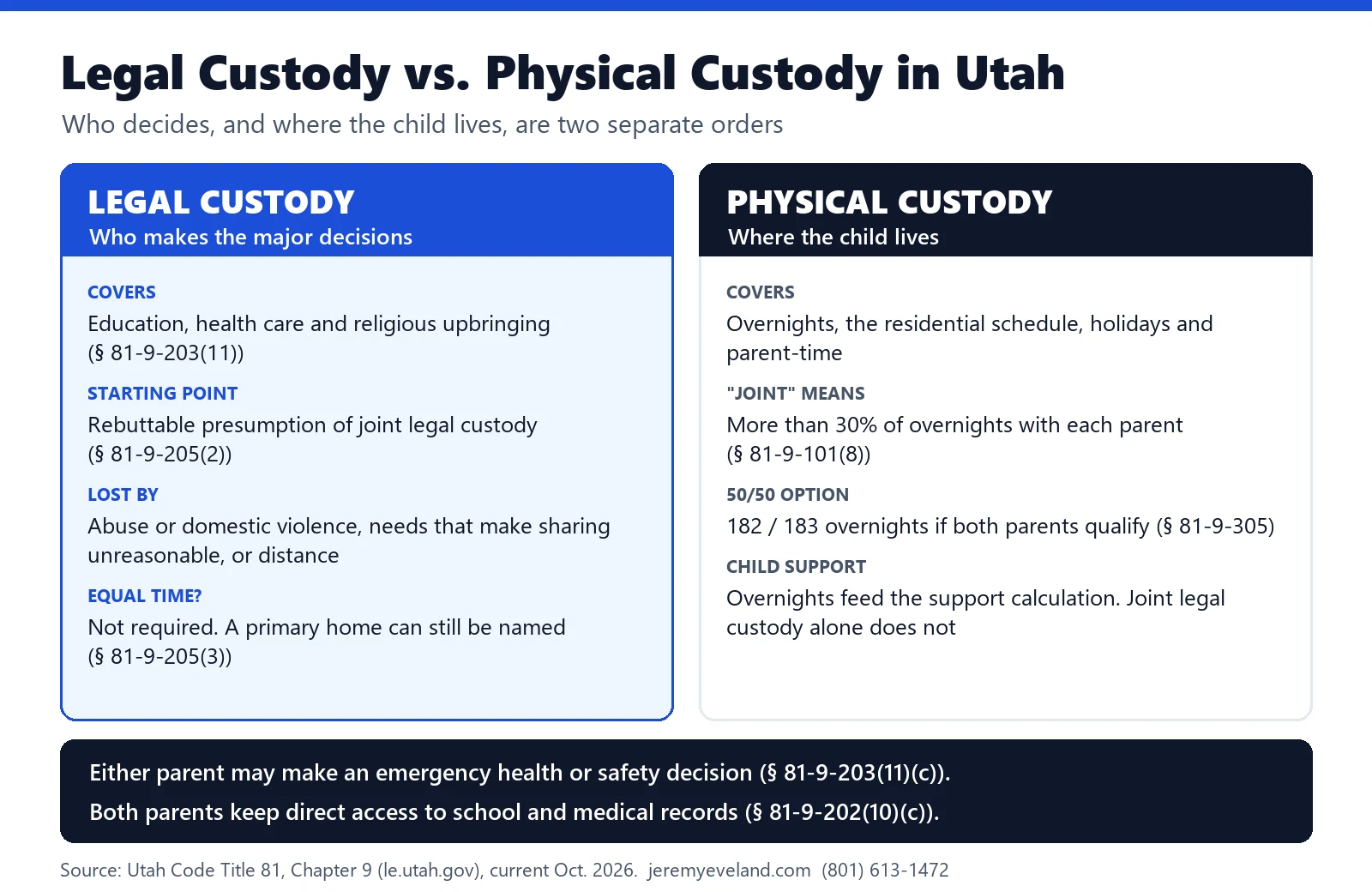
This guide covers Physical Custody Utah and what you need to know. When it comes to matters of physical custody in Utah, it’s important to have a clear understanding of your rights and options. The process can seem daunting and overwhelming, but there’s no need to worry. In this article, we’ll provide you with the information and guidance you need to navigate this complex legal landscape. From addressing common concerns to offering reassurance, we’re here to help you every step of the way. So, whether you’re a parent seeking custody or simply looking for more information, we encourage you to read on and take the first step towards seeking the assistance you deserve.
Physical custody refers to the responsibility and right to have a child physically reside with a specific parent or guardian. It involves determining where the child will live and how much time they will spend with each parent. In Utah, physical custody can be awarded to one parent (sole physical custody) or shared between both parents (joint physical custody).
Types of Physical Custody in Utah
In Utah, there are two primary types of physical custody: joint physical custody and sole physical custody.
Joint Physical Custody
With joint physical custody, both parents share the physical care and custody of the child. This means that the child will spend significant time with each parent. Joint physical custody ensures that both parents have a meaningful and ongoing relationship with the child. It promotes cooperation and collaboration between parents in making important decisions regarding the child’s upbringing.
Sole Physical Custody
Sole physical custody, on the other hand, grants one parent the primary responsibility for the child’s physical care and custody. The child primarily resides with this parent, while the other parent may have visitation rights. Sole physical custody is typically awarded when it is determined to be in the child’s best interest or when one parent is deemed unfit to have joint physical custody.
Factors Considered in Determining Physical Custody
When determining physical custody in Utah, the court takes several factors into consideration to ensure the child’s best interests are met. These factors include:
Child’s Best Interest
The court’s main priority is ensuring the child’s physical and emotional well-being. It considers factors such as the child’s age, health, relationships with each parent, and the ability of each parent to meet the child’s needs.
Parent-Child Relationship
The quality of the parent-child relationship is crucial in determining physical custody. The court examines the bond between each parent and the child, their involvement in the child’s life, and their ability to provide nurturing and support.
Child’s Preference
If the child is of sufficient age and maturity, their preference may be taken into account when deciding physical custody. However, the court ultimately determines what is in the child’s best interest, even if it differs from the child’s expressed preference.
Parent’s Ability to Provide Care and Stability
The court evaluates the ability of each parent to provide a stable and nurturing environment for the child. This includes factors such as housing, healthcare, education, and the ability to meet the child’s emotional and physical needs.
Parent’s Physical and Mental Health
The physical and mental health of each parent is considered. The court examines any relevant medical records, history of substance abuse, mental health issues, or any other factors that may impact the parent’s ability to care for the child.
Determining Factors in Allocating Physical Custody
To allocate physical custody, Utah courts consider various factors and encourage parents to develop a parenting plan that outlines the day-to-day care of the child. This plan includes:
Parenting Plan
A parenting plan is a written agreement that details the division of parenting responsibilities and time between the parents. Parents are encouraged to work together to create a plan that considers the child’s best interests and provides for their physical and emotional needs.
Visitation Schedule
The court may establish a visitation schedule for the noncustodial parent, outlining specific times and dates for visitation. This schedule ensures regular and consistent contact between the child and the noncustodial parent.
Parenting Time
The court examines each parent’s availability and ability to provide care. It considers factors such as work schedules, proximity to the child’s school, and the ability to provide transportation for parenting time.
Joint Physical Custody
Benefits of Joint Physical Custody
Joint physical custody offers numerous benefits for both parents and children. It allows the child to maintain strong relationships with both parents, reduces the impact of divorce or separation on the child, and promotes cooperation and shared decision-making between parents. It also provides a sense of stability and security for the child by allowing them to spend significant time with each parent.
Factors Considered in Granting Joint Physical Custody
To grant joint physical custody, the court considers the ability of both parents to work together and make joint decisions in the child’s best interest. The court evaluates their level of cooperation, communication, and willingness to prioritize the child’s needs. It also considers each parent’s ability to provide a stable and supportive environment for the child.
Sole Physical Custody
Rights and Responsibilities of Sole Physical Custody
When a parent is granted sole physical custody, they have the primary responsibility for the child’s physical care and custody. This means that the child primarily resides with them, and they have the authority to make important decisions regarding the child’s upbringing, such as education, healthcare, and extracurricular activities. The noncustodial parent may be granted visitation rights.
Factors Considered in Granting Sole Physical Custody
Sole physical custody is typically granted when it is determined to be in the child’s best interest or if one parent is deemed unfit to have joint physical custody. The court examines factors such as domestic violence, substance abuse, neglect, or any other circumstances that may pose a risk to the child’s well-being.
Modifying Physical Custody Orders
Physical custody orders can be modified if there has been a substantial change in circumstances that impacts the child’s best interest. Some common reasons for modification include:
Substantial Change in Circumstances
A substantial change in circumstances may arise due to a parent’s relocation, change in work schedule, remarriage, or other factors that significantly affect the child’s life. The court evaluates whether the change is substantial and how it may impact the child’s well-being before considering a modification.
Parent’s Relocation
If a custodial parent wishes to relocate with the child, they must obtain permission from the court or the noncustodial parent. The court must determine if the relocation is in the child’s best interest and whether it will significantly impact their relationship with the noncustodial parent.
Enforcing Physical Custody Orders
When a physical custody order is in place, both parents are obligated to abide by its terms. If a parent fails to comply with the order, several enforcement options are available, including:
Contempt of Court
If a parent willfully disobeys a physical custody order, they can be held in contempt of court. This may result in fines, modifications to the custody order, or even jail time. Contempt of court is taken seriously and serves as a means to ensure compliance with the court’s orders.
Modification of Custody Order
If one parent consistently fails to adhere to the physical custody order, the court may consider modifying the order to better protect the child’s best interests. This can involve adjustments to parenting time, visitation schedules, or even a change in custody arrangements.
Legal Assistance for Physical Custody Cases
Seeking legal assistance is crucial when dealing with physical custody cases in Utah. A family law attorney can provide guidance, support, and legal expertise throughout the process. They can help ensure that your rights are protected and advocate for the best interests of your child. It is important to have an experienced attorney who understands the complexities of physical custody laws and can help you navigate through mediation or litigation.
Importance of Hiring a Family Law Attorney
A family law attorney specializes in matters related to divorce, custody, and child support. They have in-depth knowledge of Utah’s physical custody laws and can provide you with personalized advice based on your unique circumstances. Having a skilled attorney by your side can help you make informed decisions and increase your chances of obtaining a favorable custody outcome.
Understanding Your Rights and Options
A family law attorney can help you understand your rights and options when it comes to physical custody. They will assess your specific situation, discuss potential outcomes, and guide you on the best course of action. They can also represent your interests in negotiations or court proceedings, ensuring that your voice is heard and your child’s best interests are prioritized.
Going through Mediation or Litigation
An experienced attorney can assist you in choosing the most suitable method to resolve physical custody disputes – mediation or litigation. Mediation involves working with a neutral third party to reach a mutually agreeable custody arrangement. Litigation, on the other hand, involves presenting your case in court for a judge to make a decision. Your attorney will advise you on the best approach based on your circumstances and goals.
FAQs about Physical Custody in Utah
Can physical custody be changed after it is determined?
Yes, physical custody can be changed if there is a substantial change in circumstances that warrants modification. The court will evaluate the change and determine if it is in the child’s best interest to modify the custody arrangement.
What factors does the court consider when deciding physical custody?
The court considers factors such as the child’s best interest, parent-child relationship, child’s preference (if of sufficient age and maturity), parent’s ability to provide care and stability, and parent’s physical and mental health.
Can grandparents be granted physical custody in Utah?
In certain circumstances, grandparents may be granted physical custody if it is determined to be in the child’s best interest. The court evaluates several factors, including the child’s relationship with the grandparents and any potential harm that may arise from granting physical custody to the parents.
This guide covers Corporate Attorney West Point Utah and what you need to know. Are you seeking legal counsel for your business in West Point, Utah? Look no further. Our Corporate Attorney in West Point is equipped with the knowledge and expertise to guide and represent you in all matters related to business law. With a deep understanding of the legal landscape and a commitment to achieving the best outcomes for our clients, our corporate attorney is ready to provide you with the comprehensive assistance you need. Whether you require assistance with contracts, compliance, or any other aspect of business law, our attorney is here to help. Trust us to protect your interests and support your business goals.
Corporate Attorney West Point Utah
In West Point, Utah, having a competent and experienced corporate attorney is crucial for businesses of all sizes. Whether you are a small startup or a large corporation, a corporate attorney can provide you with the legal support and guidance you need to navigate the complex world of business law. This article aims to give you an in-depth understanding of the role of a corporate attorney and why hiring one is essential for your business in West Point, Utah.
A corporate attorney is a legal professional who specializes in business law and provides legal counsel and representation to corporations, businesses, and entrepreneurs. Their primary role is to ensure that businesses comply with laws and regulations while also protecting their rights and interests. Corporate attorneys handle a wide range of legal matters, including contract drafting and negotiation, intellectual property protection, employment disputes, mergers and acquisitions, and corporate governance.
Why do you need a corporate attorney?
Having a corporate attorney on your side can provide numerous benefits and help safeguard your business from legal risks. A corporate attorney possesses the knowledge and expertise to navigate the intricate landscape of business law, ensuring that your business operates in compliance with all regulations. They can also help you draft and review contracts, negotiate deals, and protect your intellectual property, saving you from potential legal pitfalls that can be expensive and time-consuming.
When seeking a corporate attorney in West Point, Utah, it is essential to consider certain qualities that make them well-suited for your business. First and foremost, your attorney should have extensive experience in corporate law, specifically in West Point, Utah, as laws and regulations can vary from one jurisdiction to another. They should possess excellent analytical skills, attention to detail, and the ability to think critically to provide reliable legal counsel. Additionally, effective communication, negotiation, and problem-solving skills are crucial for a corporate attorney to represent your business effectively.
Benefits of hiring a corporate attorney
Hiring a corporate attorney in West Point, Utah, can provide several advantages to your business. Firstly, they ensure legal compliance by staying updated with the ever-changing business laws and regulations, preventing any potential legal issues. They can also help protect your intellectual property, such as trademark and copyright, by providing guidance on registration and enforcement. A corporate attorney’s expertise in contract drafting and negotiation can help secure favorable terms and protect your interests in business transactions. Moreover, having a corporate attorney on retainer ensures that you have access to immediate legal advice during critical situations, such as disputes or legal negotiations.
Corporate attorney’s role in West Point, Utah
In West Point, Utah, a corporate attorney plays a vital role in supporting businesses and entrepreneurs in various legal matters. They provide comprehensive legal counsel tailored to the unique needs of each client. This can include advising companies on corporate structuring, business formation, and compliance with state and federal regulations. Corporate attorneys in West Point, Utah, also assist in drafting and reviewing contracts, negotiating deals, and handling disputes and litigation when necessary. Additionally, they can provide guidance on employment law, intellectual property protection, and corporate governance, ensuring that businesses remain legally sound and protected.
Understanding business law in West Point, Utah
Understanding the specific business laws and regulations in West Point, Utah, is crucial for businesses to operate smoothly and within legal boundaries. A knowledgeable corporate attorney in West Point, Utah, can guide you through the complexities of state and local laws, ensuring your compliance and mitigating legal risks. Business owners should familiarize themselves with important aspects of business law, including entity formation, tax regulations, employment law, contract enforcement, and intellectual property rights. By partnering with a corporate attorney in West Point, Utah, you can navigate these legal intricacies with confidence and avoid costly legal consequences.
Services offered by a corporate attorney in West Point, Utah
Corporate attorneys in West Point, Utah, offer a wide range of services to assist businesses in their legal needs. These services encompass various aspects of corporate law, including:
Business formation and structuring: Corporate attorneys can help you decide the most suitable legal structure for your business, such as sole proprietorship, partnership, limited liability company (LLC), or corporation. They can assist with the necessary paperwork and ensure compliance with the applicable laws and regulations.
Contract drafting and review: Whether it’s supplier agreements, licensing agreements, or employment contracts, a corporate attorney can draft, review, and negotiate contracts on your behalf. They ensure that your interests are protected and that the agreements are legally sound and enforceable.
Intellectual property protection: Corporate attorneys can guide you through the process of protecting your intellectual property, including copyrights, trademarks, and patents. They can help with registration, enforcement, and defense against infringement.
Employment law guidance: Corporate attorneys advise businesses on various employment law matters, such as hiring practices, employee contracts, non-disclosure agreements, and non-compete agreements. They can also assist with resolving employment disputes and ensuring compliance with labor laws.
Mergers and acquisitions: When engaging in mergers, acquisitions, or other business transactions, a corporate attorney can provide legal counsel, conduct due diligence, draft agreements, and guide you through the entire process to protect your interests.
Steps to hiring a corporate attorney in West Point, Utah
Finding the right corporate attorney for your business in West Point, Utah, requires careful consideration. Here are the steps to guide you in the hiring process:
Identify your needs: Determine the specific legal needs of your business, whether it’s drafting contracts, intellectual property protection, regulatory compliance, or employment law matters.
Research and shortlist potential attorneys: Look for experienced corporate attorneys in West Point, Utah, who specialize in business law and have a track record of success. Consider their expertise, qualifications, and client reviews.
Schedule consultations: Contact the shortlisted attorneys and schedule initial consultations. Discuss your business needs, ask about their experience in West Point, Utah, and assess their communication and problem-solving skills.
Evaluate communication and compatibility: A good attorney must be an effective communicator and someone you can work well with. Evaluate how well the attorney listens to your concerns, explains complex legal matters, and assess whether their working style aligns with yours.
Consider fees and billing structures: Discuss the attorney’s fees and billing structures upfront to ensure they align with your budget and business requirements.
Make a decision: After considering all the above factors, select the corporate attorney who best meets your business’s legal needs and objectives.
Choosing the right corporate attorney in West Point, Utah
Choosing the right corporate attorney is crucial to ensure that your business receives effective legal representation and guidance. Here are some key factors to consider when selecting a corporate attorney in West Point, Utah:
Experience: Look for an attorney with substantial experience in corporate law, particularly in West Point, Utah. They should have a proven track record of success and a deep understanding of local business laws and regulations.
Specialization: Choose an attorney who specializes in corporate law and has extensive knowledge of the specific legal matters your business may encounter.
Reputation: Research the attorney’s reputation by reviewing client testimonials, online reviews, and any disciplinary actions or accolades they may have received.
Communication and responsiveness: Effective communication and responsiveness are vital. Ensure the attorney promptly responds to your inquiries, listens attentively to your concerns, and explains legal matters in a clear and understandable manner.
Fees and billing structure: Consider the attorney’s fees and billing structure to ensure they align with your budget and business requirements. Transparency in fee arrangements is essential to avoid any surprises.
By carefully considering these factors, you can choose a corporate attorney in West Point, Utah, who will provide reliable legal support and be a valuable asset to your business.
Frequently Asked Questions
What is the role of a corporate attorney? A corporate attorney provides legal counsel and representation to businesses and corporations, handling various legal matters such as contracts, intellectual property protection, employment law, and mergers and acquisitions.
Why do I need a corporate attorney for my business in West Point, Utah? A corporate attorney ensures legal compliance, protects your business interests, and provides guidance in complex legal matters. They can help mitigate legal risks and save your business from costly legal consequences.
How do I choose the right corporate attorney in West Point, Utah? Consider factors such as experience, specialization, reputation, communication skills, and fees when selecting a corporate attorney. Choose an attorney who understands the local business laws and regulations in West Point, Utah, and can meet your specific legal needs.
What services does a corporate attorney in West Point, Utah, offer? Corporate attorneys in West Point, Utah, offer services such as business formation, contract drafting and review, intellectual property protection, employment law guidance, and assistance with mergers and acquisitions.
How can a corporate attorney help protect my intellectual property in West Point, Utah? A corporate attorney can guide you through the process of registering and enforcing your intellectual property rights, including trademarks, copyrights, and patents. They can also assist in defending your intellectual property against infringement.
Remember, when it comes to legal matters for your business in West Point, Utah, a professional and experienced corporate attorney can be your greatest ally, ensuring that your business remains legally compliant and protected.
This guide covers Corporate Attorney North Logan Utah and what you need to know. Are you in need of a knowledgeable and experienced corporate attorney in North Logan, Utah? Look no further. With a deep understanding of business law in the state, our attorney has the expertise to guide you through any legal matters you may encounter. Whether you need assistance with contracts, compliance issues, or resolving disputes, our attorney can provide you with comprehensive and personalized legal representation. Attracting potential clients with valuable insights and information, this blog article aims to highlight the expertise and services offered by our corporate attorney in North Logan, Utah.
A corporate attorney is a legal professional who specializes in providing legal advice and representation to corporations and businesses. They are well-versed in various aspects of business law and have a deep understanding of the legal complexities associated with corporate operations. Corporate attorneys play a crucial role in helping businesses navigate the legal landscape, ensuring compliance with laws and regulations, and protecting the company’s interests.
Definition of a Corporate Attorney
A corporate attorney is an attorney who focuses on providing legal services to corporations and businesses. They handle a wide range of legal matters, including contract drafting and negotiation, business formation, mergers and acquisitions, compliance issues, and resolving disputes. These attorneys are skilled in interpreting complex laws and regulations, and they provide legal advice to help businesses make informed decisions while minimizing legal risks.
Roles and Responsibilities of a Corporate Attorney
A corporate attorney carries out a multitude of roles and responsibilities to ensure that a company operates within the framework of the law. They provide guidance and assistance in legal matters pertaining to contract management, compliance, mergers and acquisitions, intellectual property protection, and employment law. Their primary responsibilities include:
Advising on legal issues: Corporate attorneys provide legal advice to businesses on a wide range of matters, including corporate governance, legal disputes, and regulatory compliance.
Drafting and reviewing contracts: They are responsible for drafting and reviewing various contracts, such as employment agreements, vendor contracts, and client agreements, to ensure that the company’s interests are protected.
Business structure and formation: Corporate attorneys assist businesses in choosing the appropriate legal structure for their organization, such as forming a corporation or a limited liability company (LLC), and guide them through the legal requirements associated with business formation.
Mergers and acquisitions: These attorneys play a vital role in facilitating mergers, acquisitions, and other business transactions. They conduct due diligence, negotiate contracts, and ensure legal compliance throughout the process.
Compliance with laws and regulations: Corporate attorneys help businesses stay compliant with relevant laws and regulations in their industry. They monitor changes in legislation, advise on compliance issues, and develop strategies to minimize legal risks.
Representing clients in legal proceedings: When disputes arise, corporate attorneys may represent their clients in various legal proceedings, including negotiations, mediation, arbitration, and, if necessary, litigation.
Overall, a corporate attorney serves as a legal advisor, strategist, and advocate for businesses, working diligently to protect their interests and ensure legal compliance.
Why Do You Need a Corporate Attorney?
Hiring a corporate attorney is essential for any business, regardless of its size or industry. They play a crucial role in ensuring legal compliance, protecting the company’s interests, and providing expert guidance in complex legal matters. Here are several reasons why you need a corporate attorney:
Legal Expertise
Corporate attorneys possess a deep knowledge of business law and keep themselves updated on the latest legal developments. They have the expertise to interpret complex laws and regulations, enabling them to provide accurate and reliable legal advice. By having a corporate attorney on your team, you can navigate legal complexities with confidence.
Drafting and Reviewing Contracts
Contracts are an integral part of any business. A corporate attorney is adept at drafting, reviewing, and negotiating contracts to protect your interests and minimize potential risks. They ensure that all contractual terms are fair and favorable to your business, reducing the likelihood of disputes and ensuring compliance with legal requirements.
Business Structure and Formation
Choosing the right legal structure for your business is crucial for its success. A corporate attorney can guide you through the process of business formation, helping you understand the implications of each structure and assisting you in making informed decisions. They will ensure that all necessary legal requirements are fulfilled, providing a solid foundation for your business.
Mergers and Acquisitions
If your business is involved in mergers, acquisitions, or other major transactions, a corporate attorney is indispensable. They will conduct due diligence, negotiate contracts, and help you navigate complex legal issues. Their expertise in mergers and acquisitions ensures that your interests are protected, and the transaction is completed smoothly.
Compliance with Laws and Regulations
Navigating the legal landscape can be challenging, especially with the ever-changing laws and regulations. A corporate attorney ensures that your business remains compliant with all applicable laws and regulations. They stay updated on legal developments, advise on compliance issues, and help implement effective compliance strategies, minimizing the risk of legal complications and penalties.
By having a corporate attorney by your side, you can focus on running your business with peace of mind, knowing that your legal matters are in capable hands.
Choosing the right corporate attorney for your business is crucial for building a strong legal foundation and ensuring effective legal representation. Here are some important qualities to look for when selecting a corporate attorney:
Experience and Expertise
One of the most important qualities to consider in a corporate attorney is their experience and expertise in the field of corporate law. Look for an attorney with a proven track record in handling similar legal matters and a deep understanding of business law. Their experience will enable them to provide practical advice and navigate complex legal issues effectively.
Good Communication Skills
Effective communication is key to a successful attorney-client relationship. Look for a corporate attorney who can explain legal concepts in clear and understandable language. They should be able to communicate legal advice, strategies, and potential risks to you in a way that you can easily comprehend, enabling you to make informed decisions for your business.
Analytical and Problem-Solving Skills
A skilled corporate attorney should possess strong analytical and problem-solving skills. They need to analyze complex legal issues, identify potential risks, and develop effective strategies to mitigate those risks. Look for an attorney who can think critically, assess various perspectives, and provide creative solutions to legal challenges.
Attention to Detail
Attention to detail is crucial in corporate law, as even the slightest oversight can have significant legal consequences. A reputable corporate attorney pays meticulous attention to detail, ensuring that all legal documents and contracts are accurate, comprehensive, and enforceable, thereby protecting your business from potential legal pitfalls.
Ability to Negotiate
Negotiation skills are essential for a corporate attorney, especially when it comes to contract negotiation and resolving disputes. Look for an attorney who is a skilled negotiator and can effectively advocate for your interests. A strong negotiator can secure favorable terms for your business and help resolve conflicts amicably, saving you time and resources.
Confidentiality
Confidentiality is a fundamental aspect of the attorney-client relationship. When hiring a corporate attorney, ensure that they understand and uphold strict confidentiality standards. Your attorney should prioritize protecting sensitive information and trade secrets, ensuring that your business’s confidential information remains secure.
Good Reputation
A corporate attorney’s reputation is an important factor to consider when making your selection. Look for an attorney with a solid reputation in the legal community and positive reviews from past clients. A good reputation is indicative of their professionalism, ethical conduct, and ability to provide high-quality legal representation.
While these qualities are essential to consider, it is crucial to assess them in the context of your specific needs and requirements. Take the time to thoroughly research and evaluate potential corporate attorneys to find the best fit for your business.
How to Choose the Right Corporate Attorney
Choosing the right corporate attorney is a critical decision that can significantly impact your business’s success. Here are some steps to help you choose the right corporate attorney:
Assess Your Legal Needs
Before starting your search for a corporate attorney, assess your legal needs and determine the specific areas of expertise required. Identify potential legal issues and challenges your business may face, such as contract negotiations, compliance concerns, or mergers and acquisitions. This assessment will help you find an attorney with the relevant experience and expertise to address your specific legal needs.
Research and Shortlist Potential Attorneys
Researching potential corporate attorneys is an essential step in finding the right fit for your business. Seek recommendations from trusted sources, such as other business owners, industry associations, or legal directories. Shortlist attorneys who specialize in corporate law and have a track record of success in handling similar cases or representing businesses in your industry.
Meet and Interview Attorneys
Schedule meetings or consultations with the shortlisted attorneys to assess their suitability for your business. Prepare a list of questions beforehand to ensure you gather all the necessary information. Inquire about their experience, areas of specialization, approach to problem-solving, and their understanding of your industry. Use this opportunity to evaluate their communication style and assess if you feel comfortable working with them.
Consider Experience and Specialization
When selecting a corporate attorney, consider their experience and specialization in corporate law. Look for an attorney who has a proven track record in handling cases similar to yours. Assess their experience in areas such as contract drafting and negotiation, mergers and acquisitions, compliance, and litigation. An attorney with experience in your specific industry can also bring valuable industry knowledge to the table.
Review Client Testimonials and Case Histories
Take the time to review client testimonials and case histories of the attorneys you are considering. This will provide insights into their previous successes and client satisfaction levels. Look for testimonials that highlight their ability to navigate complex legal issues, provide strategic advice, and achieve favorable outcomes for their clients.
Evaluate Communication and Rapport
Effective communication and a good rapport between you and your corporate attorney are crucial for a successful relationship. During the initial meetings or consultations, pay attention to their communication style, responsiveness to your inquiries, and willingness to listen to your concerns. Evaluate whether they can explain legal concepts in a clear and straightforward manner that you can understand.
Discuss Fees and Payment Arrangements
It is essential to have a transparent discussion about fees and payment arrangements with your potential corporate attorney. Inquire about their fee structure, billing methods, and any additional costs involved. Ensure that you have a clear understanding of what services are included in their fee and any potential additional charges that may arise.
By following these steps and carefully evaluating potential corporate attorneys, you can make an informed decision and select a legal partner who will meet your business’s specific needs.
Corporate Attorney vs. Business Lawyer
Understanding the difference between a corporate attorney and a business lawyer is important when seeking legal representation for your business.
Understanding the Difference
The terms “corporate attorney” and “business lawyer” are often used interchangeably, but they do have some subtle differences. While both corporate attorneys and business lawyers handle legal matters related to businesses, their specific areas of focus may vary.
Specialization and Expertise
Corporate attorneys primarily focus on legal issues related to corporations and large businesses. They have specialized knowledge in corporate law, including areas such as mergers and acquisitions, compliance, corporate governance, and securities law. On the other hand, business lawyers may have a broader practice area that encompasses both small and large businesses, covering a wide range of legal matters, including contracts, employment law, commercial transactions, and intellectual property.
Scope of Legal Services
Corporate attorneys typically handle more complex and specialized legal matters, such as drafting and negotiating intricate contracts, facilitating mergers and acquisitions, and advising on corporate governance. Business lawyers, while still providing legal advice and representation, may also address more general legal matters, such as business formation, contract review, employment disputes, and intellectual property protection.
Industry Knowledge
Corporate attorneys often develop industry-specific knowledge and understand the unique legal challenges faced by businesses in particular sectors. They stay updated on industry trends, regulations, and legal developments that may impact their clients’ businesses. Business lawyers, on the other hand, may work with clients across industries and may not have the same level of industry-specific knowledge as corporate attorneys.
Clientele
Corporate attorneys typically represent large corporations, publicly traded companies, and other businesses with complex legal needs. They work closely with executives, board members, and shareholders to provide legal advice and representation. Business lawyers, on the other hand, may serve a broader client base, including small businesses, startups, entrepreneurs, and individuals seeking legal assistance for their business-related matters.
Ultimately, the distinction between a corporate attorney and a business lawyer may vary based on individual practices and regions. It is essential to assess the specific expertise and experience of an attorney to ensure they align with your business’s legal needs.
How a Corporate Attorney Can Help Your Business
A corporate attorney can provide valuable legal assistance and guidance to help your business navigate various legal challenges. Here are some ways a corporate attorney can support your business:
Legal Advice and Counsel
One of the primary roles of a corporate attorney is to provide legal advice and counsel to businesses. They can help you understand the legal implications of your actions, assess potential risks, and develop strategies to mitigate those risks. From day-to-day legal matters to complex issues, a corporate attorney can guide you through the legal landscape and enable you to make informed decisions for your business.
Contract Drafting and Negotiation
Contracts form the foundation of business relationships, and a corporate attorney can assist in drafting, reviewing, and negotiating contracts on behalf of your business. They ensure that contracts are comprehensive, tailored to your specific needs, and protect your interests. With their expertise, you can navigate the complexities of contract law, minimize potential risks, and secure favorable terms.
Risk Assessment and Management
Identifying and managing legal risks is crucial for any business. A corporate attorney can conduct risk assessments, analyze potential legal pitfalls, and help you develop risk management strategies. They can anticipate legal issues that may arise in your business operations and provide proactive advice to minimize the likelihood of disputes or legal complications.
Compliance with Regulations
Staying compliant with laws and regulations is vital to the success and reputation of your business. A corporate attorney will ensure that your business operates within the legal framework of your jurisdiction and industry. They stay updated on relevant laws and regulations, provide guidance on compliance issues, and help you establish effective processes and policies to meet legal requirements.
Mergers, Acquisitions, and Partnerships
Corporate attorneys play a crucial role in facilitating mergers, acquisitions, and partnerships. They guide you through each stage of the transaction, including due diligence, structuring the deal, negotiating contracts, and ensuring compliance with legal requirements. With their expertise in corporate law, they help you navigate complex legal issues and maximize the value of the transaction.
Resolving Disputes and Litigation
Disputes are an inevitable part of business, and when they arise, a corporate attorney can help you navigate the dispute resolution process. They will explore negotiation and mediation options to resolve conflicts amicably. If litigation becomes necessary, a corporate attorney can represent your interests in court, ensuring that your rights are protected and advocating for the best possible outcome.
Intellectual Property Protection
Protecting intellectual property is crucial in today’s competitive business environment. A corporate attorney can help safeguard your intellectual property assets, such as trademarks, copyrights, patents, and trade secrets. They can assist with the registration process, enforce your intellectual property rights, and advise on strategies to prevent infringement.
Employment and Labor Matters
Employment and labor laws can be complex, and a corporate attorney can help ensure that your business complies with these laws. They can assist with drafting employment agreements, non-disclosure agreements, and other employment-related contracts. In the event of employment disputes, a corporate attorney can provide legal representation and help you navigate the legal process.
By leveraging the expertise of a corporate attorney, your business can proactively manage legal risks, make informed decisions, and protect your interests.
Choosing a Corporate Attorney in North Logan Utah
Selecting a corporate attorney who is local to North Logan, Utah, can offer significant advantages for your business. Here are the reasons why local representation is important:
Importance of Local Representation
Having a corporate attorney based in the same community as your business provides several benefits. They have a deep understanding of the local legal landscape and are familiar with the specific laws and regulations that may impact your business in North Logan, Utah. Local representation enables your attorney to provide tailored advice and make informed decisions based on their knowledge of the local legal environment.
Knowledge of Local Laws and Regulations
The legal framework can vary from state to state, and having a corporate attorney who is well-versed in Utah laws is crucial. A local attorney in North Logan, Utah, has an intimate understanding of the state’s laws and regulations, ensuring that your business remains compliant and minimizes legal risks. They can navigate these laws effectively, provide accurate advice, and help you maintain a strong legal footing.
Experience with Local Businesses
A corporate attorney who has experience working with businesses in North Logan, Utah, brings valuable insights and knowledge of the local business landscape. They may have established relationships with key stakeholders or industry professionals that can benefit your business. Their familiarity with local business practices and challenges enables them to provide strategic advice tailored to your specific circumstances.
Accessibility and Availability
Choosing a corporate attorney in North Logan, Utah, ensures easy accessibility and availability when you need legal assistance. Being in close proximity allows for in-person meetings and facilitates effective communication. In urgent situations or when time-sensitive matters arise, having a local attorney means they can respond promptly, reducing potential delays and ensuring timely legal guidance.
When selecting a corporate attorney in North Logan, Utah, consider their local knowledge, experience, and accessibility to ensure they are well-positioned to meet your business’s legal needs effectively.
Key Considerations for Businesses in North Logan Utah
Businesses operating in North Logan, Utah, should be aware of several key legal considerations to ensure compliance and protect their interests. Here are some areas to focus on:
Local Laws and Regulations
Understanding and adhering to local laws and regulations is imperative for businesses in North Logan, Utah. Ensure that you are familiar with state-specific business requirements, licensing, permits, zoning regulations, and tax obligations. Consulting with a corporate attorney who has local expertise can help you navigate the nuances of these laws and ensure compliance.
Industry-Specific Legal Requirements
Different industries may have specific legal requirements that businesses need to meet. It is crucial to understand the legal obligations and regulations relevant to your industry in North Logan, Utah. Whether it is healthcare, real estate, construction, or any other sector, consult with a corporate attorney who has experience in your industry to ensure compliance and minimize legal risks.
Contracts and Agreements
Contracts play a vital role in business operations, and it is essential to have well-drafted agreements that protect your interests. From vendor contracts to client agreements, consult with a corporate attorney to ensure that all contracts are properly drafted, reviewed, and negotiated. An attorney familiar with North Logan, Utah, can help incorporate relevant state-specific clauses, terms, and provisions into your contracts.
Employment Law
Complying with employment laws is fundamental for businesses to maintain a healthy and legally compliant workforce. Ensure that your hiring practices, employment contracts, employee benefits, and workplace policies align with federal and state labor laws in North Logan, Utah. A corporate attorney can help you navigate the complexities of employment law and mitigate potential legal risks.
Intellectual Property Rights
Safeguarding your intellectual property is crucial for protecting your business’s competitive advantage. Consult with a corporate attorney to ensure that your trademarks, copyrights, patents, and trade secrets are adequately protected. They can assist with intellectual property registration, enforcement, and provide guidance on strategies to prevent infringement and unauthorized use.
By paying attention to these key legal considerations and seeking guidance from a corporate attorney with local expertise, businesses in North Logan, Utah, can operate with confidence, knowing that they are compliant with the law and adequately protecting their interests.
FAQs
What services does a corporate attorney provide?
Corporate attorneys provide a wide range of legal services to businesses, including legal advice on compliance, contract drafting and negotiation, mergers and acquisitions, intellectual property protection, employment law matters, and representing businesses in legal disputes and litigation.
How much does a corporate attorney charge?
The fees charged by corporate attorneys can vary depending on factors such as their experience, complexity of the legal matter, and the scope of services required. Some attorneys may charge an hourly rate, while others may offer flat fees or retainer-based arrangements. It is important to discuss fees and payment arrangements with your potential corporate attorney to have a clear understanding of the cost involved.
What should I consider when hiring a corporate attorney?
When hiring a corporate attorney, consider their experience, expertise in corporate law, communication skills, problem-solving abilities, attention to detail, negotiation skills, confidentiality, and reputation. Assessing these qualities will help you find the right attorney who can effectively represent your business’s legal interests.
What is the difference between a corporate attorney and an in-house counsel?
A corporate attorney typically works for a law firm and provides legal representation and advice to multiple clients, including corporations and businesses. An in-house counsel, on the other hand, is a lawyer who is employed by a specific corporation or business to provide legal services exclusively for that organization.
Can a corporate attorney represent me in court?
Yes, a corporate attorney can represent businesses in court, if necessary. They can advocate for your business’s interests in various legal proceedings, such as negotiations, mediation, arbitration, and litigation.
This guide covers Construction Lawyer Maeser Utah and what you need to know. Looking for a construction lawyer in Maeser, Utah? Look no further! In this article, we will address common legal concerns that may arise in the construction industry and provide you with reassurance and guidance. Whether you’re dealing with contract disputes, construction defects, or any other legal issues, our experienced attorney is here to help. We understand the importance of prompt assistance, so don’t hesitate to give us a call and take the next step in resolving your construction-related legal matters. With our expertise and dedication, you can trust that you’re in good hands. Contact our construction lawyer in Maeser, Utah today and let us help you navigate the complexities of construction law.
When it comes to construction projects, contracts play a crucial role in outlining the rights and obligations of all parties involved. A construction lawyer can assist you in drafting clear and enforceable contracts that protect your interests. They will carefully review the terms and conditions to identify any potential risks and negotiate favorable contract terms on your behalf. By ensuring that your contracts are legally sound, a construction lawyer can help minimize the likelihood of disputes arising in the future.
Dispute resolution
Construction projects can often be complex and involve numerous parties, making disputes a common occurrence. Whether it’s a disagreement over payment, contract terms, or quality of work, a construction lawyer can provide expert guidance in resolving these disputes. They possess extensive knowledge of various dispute resolution methods such as mediation, arbitration, and litigation. By advocating for your rights, a construction lawyer can help you navigate the legal complexities and reach a favorable resolution.
Insurance claims
Accidents and unforeseen events can happen at any construction site, leading to damage or injuries. A construction lawyer can assist you in navigating the insurance claims process to ensure that you receive maximum compensation for your losses. They will assess your insurance coverage, file claims, negotiate with insurance companies, and even litigate insurance disputes if necessary. By relying on their expertise, you can maximize your insurance settlements and minimize the financial impact on your project.
Construction defects
Construction projects may sometimes result in defects or flaws that compromise the integrity or safety of the structure. A construction lawyer can help you identify and address these defects, investigate their cause and extent, and evaluate liability for the damages. They will assist you in pursuing compensation for necessary repairs and navigating insurance coverage related to construction defects. In the event of a dispute, a construction lawyer can also provide expert testimony and negotiate settlements on your behalf.
Mechanic’s liens
If you are a contractor or supplier, mechanic’s liens can be an important tool to secure payment for your work or materials. A construction lawyer can guide you through the process of filing and enforcing mechanic’s liens, protecting your rights and ensuring that you receive the compensation you deserve. They can also assist you in defending against unjust liens, resolving lien priority disputes, and handling lien release and bond claims. By working with a construction lawyer, you can navigate the complexities of mechanic’s liens and protect yourself from financial losses.
Breach of contract
When one party fails to fulfill their obligations under a contract, it constitutes a breach of contract. A construction lawyer can help you identify breaches, enforce contract terms and obligations, and defend against breach allegations. They will calculate damages resulting from the breach and negotiate settlement agreements to protect your interests. In the event that litigation becomes necessary, a construction lawyer will advocate for your rights and remedies in court proceedings.
Delay claims
Construction delays can have significant financial consequences for all parties involved in a project. A construction lawyer can assist you in resolving delay claims by evaluating the circumstances and contractual obligations, and determining liability for the delays. They will work to secure compensation for the additional costs incurred due to the delays and provide expert guidance on navigating the legal complexities of delay claims.
Payment disputes
Payment disputes are a common concern in the construction industry, often causing financial strain for contractors and subcontractors. A construction lawyer can help you resolve non-payment issues and pursue remedies to ensure prompt payment for your work. They will enforce mechanic’s lien rights, handle payment bond claims, and, if necessary, secure payment through litigation. By navigating contractual payment provisions and advising on lien releases and waivers, a construction lawyer can help you protect your financial interests and maintain a healthy cash flow.
Construction accidents
Construction sites can be hazardous, and accidents resulting in injuries can occur despite the best safety measures. A construction lawyer can assist you in navigating the legal complexities of construction accidents by assessing liability for the injuries and pursuing compensation for the injured parties. They will handle worker’s compensation disputes, ensuring that injured workers receive the benefits they deserve. By protecting your interests and providing expert guidance, a construction lawyer can help minimize your liability risks and ensure compliance with legal obligations.
Regulatory compliance
The construction industry is subject to numerous regulations and requirements at the federal, state, and local levels. A construction lawyer can help you navigate these complex regulations to ensure compliance and avoid potential legal pitfalls. They will provide guidance on license and permit obligations, environmental compliance, and homeowner warranty claims. By staying informed and working with a construction lawyer, you can ensure that your projects are conducted in accordance with applicable laws and regulations, mitigating the risk of legal consequences.
Importance of Hiring a Construction Lawyer
Protecting your rights and interests
Construction projects involve significant investments of time, money, and resources. Hiring a construction lawyer can provide you with the necessary legal representation to protect your rights and interests throughout the entire construction process. From contract negotiations to dispute resolution, a construction lawyer will advocate for you and ensure that your best interests are safeguarded.
Avoiding legal pitfalls
The construction industry is filled with potential legal pitfalls that can arise at any stage of a project. By hiring a construction lawyer, you gain access to their knowledge and expertise, allowing you to navigate these pitfalls with confidence. They can provide guidance on regulatory compliance, contract drafting, and risk management, helping you avoid costly legal disputes and regulatory penalties.
Navigating complex regulations
Complying with the myriad of regulations and requirements in the construction industry can be overwhelming. A construction lawyer can help you navigate these complex regulations, ensuring that you are in full compliance. They will stay up-to-date with changes in the law, advise you on license and permit obligations, and assist with environmental compliance. By relying on their expertise, you can focus on your construction projects while having peace of mind that you are operating within legal boundaries.
Ensuring contract compliance
Construction contracts are the cornerstone of any project, outlining the rights and obligations of each party involved. However, understanding and enforcing these contracts can be challenging. A construction lawyer can ensure contract compliance by providing thorough contract drafting and review, identifying potential risks, and negotiating favorable contract terms. Their expertise will help you navigate any contractual disputes that may arise and protect your rights as outlined in the contract.
Expert guidance in dispute resolution
Disputes are an unfortunate reality in the construction industry. However, with the assistance of a construction lawyer, you can receive expert guidance in resolving these disputes. Whether through negotiation, mediation, arbitration, or litigation, a construction lawyer will advocate for your interests and work towards finding a fair and favorable resolution. Their experience and knowledge of construction laws and regulations will strengthen your position and give you confidence in navigating the dispute resolution process.
Maximizing insurance claims
Insurance coverage is essential in the construction industry to protect against unforeseen events and potential liabilities. A construction lawyer can help you navigate the complexities of insurance claims, ensuring that you receive the maximum compensation for your losses. They will assess your insurance coverage, file claims, negotiate with insurance companies, and even litigate insurance disputes if necessary. By relying on their expertise, you can maximize your insurance settlements and mitigate the financial impact on your project.
Minimizing liability risks
The construction industry carries inherent risks, such as accidents, injuries, and property damage. A construction lawyer can assist you in minimizing these liability risks by ensuring regulatory compliance, implementing comprehensive risk management strategies, and providing expert guidance on insurance coverage. They will also help you navigate payment and collection issues, protecting you from unnecessary financial burden and legal consequences.
Negotiating favorable settlements
When disputes arise in the construction industry, a construction lawyer can negotiate favorable settlements on your behalf. Their expertise in construction laws and regulations, combined with their negotiation skills, can help you achieve the best possible outcome in a dispute. By working with a construction lawyer, you can avoid lengthy and costly litigation while still securing a settlement that protects your interests.
Assistance with regulatory compliance
Complying with the ever-changing regulations in the construction industry can be a complex task. A construction lawyer can provide valuable assistance in navigating these regulations and ensuring your projects are in full compliance. They will advise you on license and permit obligations, environmental compliance, and homeowner warranty claims, giving you peace of mind that your projects are conducted within legal boundaries.
Providing peace of mind
Perhaps the most important aspect of hiring a construction lawyer is the peace of mind they can provide. Construction projects involve significant investments and risks, and having a legal professional by your side can alleviate stress and uncertainty. From contract drafting to dispute resolution, a construction lawyer will ensure that your rights and interests are protected, allowing you to focus on what you do best – successfully completing your construction projects.
One of the most common legal concerns in the construction industry is contract disputes. These disputes can arise due to disagreements over terms, scope of work, or non-performance by one party. A construction lawyer can help you navigate these disputes by thoroughly reviewing the contract, identifying breaches, and enforcing contract terms and obligations. They will work towards a resolution that protects your rights, whether through negotiation or litigation.
Project delays
Delays in construction projects can result in significant financial and contractual consequences. Whether caused by unforeseen circumstances or a party’s failure to meet deadlines, project delays can lead to disputes and financial losses. A construction lawyer can assist you in resolving delay claims by evaluating the circumstances, determining liability, and seeking compensation for the additional costs incurred due to the delays. They will work diligently to protect your interests and ensure that your project stays on track.
Construction defects
Construction defects can be a nightmare for all parties involved in a construction project. These defects can range from minor cosmetic issues to major structural problems, compromising the integrity and safety of the building. A construction lawyer can help you identify these defects, investigate their cause and extent, and evaluate liability. They will assist you in resolving warranty claims, pursuing compensation for necessary repairs, and navigating insurance coverage for defects. By relying on their expertise, you can ensure that the defects are addressed promptly and that your financial interests are protected.
Liability for accidents or injuries
Construction sites are inherently dangerous, and accidents resulting in injuries can occur despite the best safety measures. When these accidents happen, liability for the injuries can become a legal concern. A construction lawyer can assess the circumstances surrounding the accident, determine liability, and advocate for your interests. They will handle worker’s compensation disputes, if applicable, to ensure that injured workers receive the benefits they deserve. By working with a construction lawyer, you can minimize your liability risks and ensure compliance with legal obligations.
Payment and collection issues
Payment disputes and collection issues are recurring problems in the construction industry. Contractors and subcontractors often face non-payment or delayed payment for their work and services. A construction lawyer can assist you in resolving these issues by pursuing prompt payment remedies, enforcing mechanic’s lien rights, and handling payment bond claims. They can also advise you on lien releases and waivers, ensuring that your financial interests are protected. With their assistance, you can navigate through payment disputes and maintain a healthy cash flow for your construction projects.
Property damage claims
Construction projects entail the risk of property damage, which can lead to disputes and legal consequences. Whether it’s damage caused to neighboring properties or accidental damage to existing structures, a construction lawyer can help you address these claims. They will assess liability for the damages, negotiate settlements, and represent your interests in litigation if necessary. With their expertise, you can protect yourself from unwarranted claims and ensure that any valid claims are resolved in a fair and reasonable manner.
Worker’s compensation disputes
In the construction industry, worker’s compensation disputes can arise if an employee is injured on the job and seeks compensation for their medical expenses and lost wages. A construction lawyer can assist you in handling these disputes by ensuring compliance with worker’s compensation laws, advocating for your rights, and negotiating settlements. They will handle the legal complexities of worker’s compensation claims, protecting your interests and ensuring that you fulfill your legal obligations as an employer.
License and permit violations
Construction projects require various licenses and permits to ensure compliance with building codes and regulations. Failure to obtain or maintain these licenses and permits can result in legal consequences and project delays. A construction lawyer can provide guidance on license and permit obligations, ensuring that you are in full compliance. They will help you navigate the application process, address any violations, and protect your interests in the event of disputes or penalties.
Environmental compliance
The construction industry is subject to various environmental regulations and requirements aimed at protecting the environment and public health. Failure to comply with these regulations can lead to legal consequences and reputational damage. A construction lawyer can assist you in navigating the complexities of environmental compliance, ensuring that your projects meet the necessary standards. They will advise you on environmental permits, waste management, and mitigation measures, helping you minimize the risk of environmental violations and associated legal issues.
Homeowner warranty claims
Homeowners often rely on warranties to protect them from construction defects or faulty workmanship. When these defects or issues arise, homeowners may file warranty claims seeking compensation for the necessary repairs or replacements. A construction lawyer can help you navigate these warranty claims by investigating the issues, assessing liability, and negotiating settlements. They will ensure that your rights and obligations under the warranty are protected, minimizing your financial liabilities and maintaining your reputation as a reputable construction professional.
Contract Drafting and Review
Ensuring clear and enforceable contracts
Contracts are the foundation of any construction project and govern the rights and obligations of each party involved. A construction lawyer can ensure that your contracts are clear, comprehensive, and enforceable. They will thoroughly review the contract terms and conditions, identifying any potential ambiguities or gaps that could lead to disputes. By drafting and reviewing contracts with precision, a construction lawyer can protect your interests and minimize the risk of legal conflicts.
Identifying and addressing potential risks
Construction contracts can contain numerous risks that may not be apparent at first glance. A construction lawyer can identify these potential risks and advise you on mitigating measures. They will analyze the project specifications, scope of work, and indemnity provisions to determine any problematic areas that could lead to disputes or liabilities. By addressing these risks early on and incorporating protective clauses into the contract, a construction lawyer can help safeguard your interests.
Reviewing contract terms and conditions
The terms and conditions of a construction contract are crucial in determining the rights and obligations of all parties involved. A construction lawyer will thoroughly review these terms and conditions, ensuring that they accurately reflect the parties’ intentions and adequately protect your interests. They will pay close attention to provisions related to payment terms, change orders, dispute resolution, and termination rights. By reviewing these contract terms in detail, a construction lawyer can assist you in negotiation and ensure that your rights are fully accounted for.
Negotiating favorable contract terms
Contract negotiations can be complex and require a thorough understanding of construction law and industry practices. A construction lawyer can act as your advocate during these negotiations, working to secure the most favorable terms and conditions on your behalf. They will leverage their knowledge and experience to ensure that your interests are protected and that you enter into contracts that are fair and equitable. Whether it’s negotiating pricing, scheduling, or dispute resolution procedures, a construction lawyer will work diligently to secure the best possible outcome for you.
Protecting your interests in contract disputes
Contract disputes can put your project and financial interests at risk. When disputes arise, a construction lawyer can help protect your rights and vigorously advocate for the enforcement of contract terms and obligations. They will analyze the contract provisions, evidence, and relevant laws to assess the strength of your position. By leveraging their expertise in construction law, a construction lawyer will help you navigate the dispute resolution process, whether through negotiation, mediation, arbitration, or litigation.
Assisting with contract modifications
Throughout the course of a construction project, changes and modifications to the original contract may become necessary. A construction lawyer can assist you in making these modifications to ensure that they are properly documented and legally enforceable. They will review change orders, amend existing contracts, and advise you on the potential impact of these modifications. By working with a construction lawyer, you can navigate these contract modifications smoothly and mitigate any potential disputes that may arise from changes in the project scope or specifications.
Dispute Resolution
Mediation
Mediation is a voluntary and non-binding form of dispute resolution where a neutral third party, the mediator, assists the parties in reaching a mutually acceptable resolution. A construction lawyer can guide you through the mediation process, representing your interests and working towards an agreeable outcome. They will prepare you for mediation sessions, assist in presenting your position, and advocate for your rights. By taking advantage of mediation, parties can avoid the costs and uncertainties of litigation while still seeking a favorable resolution.
Arbitration
Arbitration is another form of alternative dispute resolution, often used in the construction industry due to its efficiency and flexibility. In arbitration, an impartial arbitrator or panel of arbitrators is selected to review the evidence, hear arguments, and render a binding decision. A construction lawyer can represent you throughout the arbitration process, ensuring that your interests are effectively presented. They will prepare your case, present evidence, and advocate for a favorable outcome. By engaging in arbitration, parties can receive a legally binding decision without the need for traditional courtroom litigation.
Litigation
In some cases, traditional litigation may be necessary to resolve construction disputes. Litigation involves presenting your case in court and relying on the legal system to determine the outcome. A construction lawyer can provide representation and guidance throughout the litigation process, from the initial filing of the complaint to the final resolution. They will assess the strengths and weaknesses of your case, gather evidence, and present arguments in court. A construction lawyer’s extensive knowledge of construction laws and regulations equips them to effectively advocate for your rights and remedies in the courtroom.
Negotiation
Negotiation is a crucial skill in resolving construction disputes, as it allows parties to reach a mutually beneficial resolution without resorting to formal legal proceedings. A construction lawyer can leverage their negotiation skills and industry knowledge to guide you through the negotiation process. They will advocate for your interests, present compelling arguments, and work towards finding common ground with the other party. By engaging in negotiation, parties can preserve their relationship, save time and costs, and reach a resolution that meets their respective needs.
Expert witness testimony
In construction disputes, expert witness testimony can play a critical role in providing persuasive evidence to support your position. A construction lawyer can work with industry experts to obtain the necessary testimonies and opinions to strengthen your case. They will identify qualified and credible expert witnesses, prepare them for testimony, and ensure that their evidence is effectively presented. By utilizing expert witness testimony, parties can bolster their arguments and increase their chances of achieving a favorable outcome in dispute resolution proceedings.
Alternative dispute resolution methods
Apart from mediation, arbitration, and litigation, other alternative dispute resolution methods may be suitable depending on the circumstances of the construction dispute. These methods can include mini-trials, early neutral evaluation, and summary jury trials, among others. A construction lawyer can assess your situation and advise you on the most appropriate method to resolve your dispute. By leveraging these alternative methods, parties can achieve efficient and cost-effective resolutions while still protecting their interests.
Enforcing legal rights
In any construction dispute, enforcing your legal rights is crucial to protect your interests. A construction lawyer can assist you in enforcing your rights by evaluating the strength of your legal position, identifying available legal remedies, and pursuing the appropriate course of action. Whether it’s seeking specific performance, monetary damages, or injunctive relief, a construction lawyer will advocate for the enforcement of your legal rights and ensure that you receive the appropriate remedy under the law.
Advocacy in court proceedings
When litigation becomes necessary, a construction lawyer can provide skilled advocacy in court proceedings. They will draft and file legal documents, present evidence and arguments, and cross-examine witnesses. A construction lawyer’s courtroom experience and knowledge of construction laws and regulations equip them to effectively represent your interests before the court. By engaging in skilled advocacy, parties can ensure that their positions are zealously advocated for and that the court has a clear understanding of their legal rights and remedies.
Settlement negotiations
Settlement negotiations can be a viable option for resolving construction disputes and avoiding the uncertainties and costs of litigation. A construction lawyer can negotiate on your behalf, seeking a favorable settlement that protects your interests. They will assess the strengths and weaknesses of your case, identify potential settlement options, and engage in meaningful negotiations with the other party. A construction lawyer’s expertise in negotiation strategies and construction laws equips them to secure the best possible settlement for you.
Appeals
In the event that a final judgment is issued in a construction dispute and you believe there are grounds for appeal, a construction lawyer can guide you through the appellate process. They will assess the merits of an appeal, prepare the necessary legal briefs, and present your case to the appellate court. A construction lawyer’s experience in appellate advocacy will ensure that your appellate briefs are persuasive and that your oral arguments are effectively presented. By pursuing an appeal, parties can seek a review of a lower court decision and potentially obtain a more favorable outcome.
Insurance Claims
Assessing insurance coverage
Construction projects require insurance coverage to protect against unforeseen events and potential liabilities. A construction lawyer can assess your insurance policies to determine their coverage and applicability to your specific project. They will evaluate the terms, exclusions, and limits of your policies to ensure that you have adequate coverage. By relying on their expertise, you can have confidence in the insurance protection you have in place for your construction projects.
Filing insurance claims
In the event of accidents, property damage, or injuries occurring at a construction site, a construction lawyer can assist you in filing insurance claims. They will prepare the necessary documentation, gather evidence, and submit the claim to your insurance company. By working with a construction lawyer, you can ensure that your claim is filed accurately and within the required timelines, maximizing your chances of receiving the compensation you are entitled to under your insurance policies.
Negotiating with insurance companies
Insurance companies may try to minimize their liability or provide inadequate compensation for your losses. A construction lawyer can negotiate on your behalf to ensure that you receive a fair settlement. They will leverage their knowledge of insurance law and the construction industry to present a compelling case to the insurance company. By engaging in negotiations, a construction lawyer can work towards a resolution that maximizes your insurance coverage and compensates you for your losses.
Maximizing insurance settlements
Insurance settlements can provide the necessary funds to cover the costs of property damage, injuries, or other losses incurred during a construction project. A construction lawyer can help you maximize your insurance settlements by assessing the full extent of the damages and losses, and ensuring that you provide the necessary evidence to support your claim. With their expertise and negotiation skills, a construction lawyer can work towards achieving a fair and comprehensive settlement for you.
Litigating insurance disputes
In some cases, insurance disputes may arise, requiring litigation to resolve the issues. A construction lawyer can represent you in litigating insurance disputes, working to protect your rights and ensure that you receive the coverage you deserve. They will assess the strength of your insurance claim, gather evidence, and present compelling arguments in court. By engaging in litigation, a construction lawyer can advocate for the enforcement of your insurance rights and maximize your chances of obtaining a favorable outcome.
Handling subrogation matters
Subrogation refers to the right of an insurance company to seek reimbursement from a responsible party after paying out an insurance claim. A construction lawyer can assist you in handling subrogation matters, ensuring that your rights and obligations are protected. They will negotiate with the insurance company and any third parties involved to secure the best possible outcome for you. By relying on their expertise, you can navigate the subrogation process effectively and minimize any financial liabilities.
Coverage analysis
Insurance policies can be complex and may contain various provisions, exclusions, and conditions that affect coverage. A construction lawyer can provide coverage analysis to help you understand the extent and limitations of your insurance policies. They will review the terms and conditions, exclusions, and endorsements to determine the scope of coverage and advise you accordingly. By conducting a thorough coverage analysis, a construction lawyer can ensure that you have adequate insurance protection for your construction projects.
Policy interpretation and advice
Insurance policies often contain complex language and legal terms that can be difficult to interpret. A construction lawyer can help you understand the terms of your insurance policies and their implications for your construction projects. They will provide advice on how the policy provisions apply to your situation and guide you in fulfilling your obligations under the policy. By relying on their expertise, you can ensure that you make informed decisions regarding insurance coverage and leverage your policies to protect your interests.
Claim investigations
When filing an insurance claim, conducting a thorough investigation is essential to support your claim and maximize your chances of receiving compensation. A construction lawyer can assist you in conducting claim investigations by gathering evidence, interviewing witnesses, and assessing the damages. They will ensure that all relevant information is collected and properly documented to support your claim. By engaging in comprehensive claim investigations, a construction lawyer can strengthen your case and help you obtain the compensation you deserve.
Appellate advocacy
If you believe that an insurance claim has been wrongly denied or that the amount of compensation offered is inadequate, a construction lawyer can advocate for you in the appellate process. They will review the claim denial or settlement offer, assess the merits of an appeal, and prepare the necessary legal briefs. By engaging in appellate advocacy, a construction lawyer can present a persuasive case to the appellate court, seeking a reversal of the decision or a higher compensation amount.
Construction Defects
Identifying construction defects
Construction defects can be visible or hidden and may impact various components of a structure. A construction lawyer can help you identify construction defects through thorough inspections and evaluations. They will assess the quality of workmanship, materials used, and compliance with applicable building codes and industry standards. By identifying these defects early on, you can take the necessary steps to mitigate the damages and seek appropriate remedies.
Investigating the cause and extent of defects
Once construction defects have been identified, it is crucial to investigate their cause and extent. A construction lawyer can work with experts such as engineers, architects, and contractors to conduct thorough investigations. They will examine the construction plans, specifications, and industry standards to determine the cause of the defects. By understanding the underlying issues, you can take appropriate actions to rectify the defects and pursue compensation for the damages.
Evaluating liability for defects
Establishing liability for construction defects is a complex task that requires a deep understanding of construction laws and regulations. A construction lawyer can assess the potential liability of various parties involved in the construction project, including contractors, subcontractors, architects, and suppliers. They will review the contracts, warranties, and applicable laws to determine the responsibilities and obligations of each party. By evaluating liability for the defects, a construction lawyer can help you pursue compensation from the responsible parties.
Resolving warranty claims
Many construction projects come with warranties that guarantee the quality and performance of the work. If construction defects arise within the warranty period, a construction lawyer can help you resolve warranty claims. They will review the warranty terms and conditions, assess the defects, and negotiate with the warrantor for appropriate repairs, replacements, or compensation. With their guidance, you can ensure that the warranty is honored and that the necessary remedial actions are taken.
Pursuing compensation for repairs
Construction defects can lead to additional costs for repairs, replacements, or remedial actions. A construction lawyer can assist you in pursuing compensation for these necessary expenses. They will evaluate the damages caused by the defects, assess the financial impact on your project, and seek appropriate compensation from the responsible parties. By relying on their expertise in construction law and negotiations, you can obtain the funds needed to rectify the defects and complete your project successfully.
Navigating insurance coverage for defects
Insurance coverage is often a crucial aspect of addressing construction defects, as it can provide the necessary funds to cover repair and remediation costs. A construction lawyer can help you navigate the complexities of insurance coverage and ensure that you receive maximum compensation for the damages. They will assess your insurance policies, file claims, negotiate with insurance companies, and even litigate insurance disputes if necessary. By leveraging their expertise, you can secure the insurance coverage required to address the defects and protect your financial interests.
Litigating construction defect claims
In some cases, litigation may be necessary to resolve construction defect claims. A construction lawyer can represent you in litigating these claims, advocating for your rights and remedies. They will gather evidence, prepare legal arguments, and present your case in court. A construction lawyer’s extensive knowledge of construction laws and regulations equips them to effectively navigate the complexities of construction defect litigation. By engaging in litigation, you can seek compensation for the damages caused by the defects and hold the responsible parties accountable.
Negotiating settlements for defect issues
Litigation can be time-consuming and costly, making settlement negotiations an attractive option for resolving construction defect issues. A construction lawyer can negotiate on your behalf, seeking a fair and reasonable settlement that addresses the damages caused by the defects. They will assess the strengths and weaknesses of your case, engage in meaningful negotiations with the other party, and work towards a mutually agreeable resolution. By engaging in settlement negotiations, you can potentially avoid the uncertainties and costs associated with litigation while still obtaining compensation for the damages.
Expert testimony on construction defects
In construction defect disputes, expert testimony can provide valuable evidence to support your claims or defenses. A construction lawyer can work with industry experts, such as engineers or architects, to obtain their professional opinions and testimony. They will analyze the expert reports, prepare them for testimony, and present their evidence in court. By leveraging expert testimony, a construction lawyer can strengthen your case and increase your chances of obtaining a favorable outcome in litigation or settlement negotiations.
Obtaining building code compliance
Construction defects may arise due to non-compliance with applicable building codes and standards. A construction lawyer can help you obtain building code compliance by reviewing the construction plans, specifications, and industry standards. They will identify any code violations and work with you to rectify the non-compliance issues. By ensuring building code compliance, you can minimize the risk of construction defects and legal disputes, ensuring that your project meets the necessary safety and quality standards.
This guide covers Prenuptial Lawyers Near Me and what you need to know. If you’re looking for prenuptial lawyers near you, you’ve come to the right place. Our website is designed to provide you with valuable information about the importance of prenuptial agreements and connect you with experienced attorneys who can help draft the agreement that suits your needs. Our blog posts offer comprehensive insights into common legal concerns, offering reassurance and guidance. We strive to create an emotional connection with our readers, understanding the complexities and sensitivities surrounding prenuptial agreements. With a clear call-to-action in each blog post, we encourage you to take the next step and seek assistance promptly. So, let us guide you through this journey and help you make informed decisions about protecting your future.
Getting married is an exciting time in your life, but it’s also crucial to consider the legal aspects of your union. One way to protect your assets and ensure a smooth resolution in case of a future divorce is by hiring a prenuptial lawyer. These legal professionals specialize in drafting and negotiating prenuptial agreements, which can provide you with peace of mind and financial security. Let’s explore the top reasons why you should consider hiring a prenuptial lawyer.
One of the primary reasons to hire a prenuptial lawyer is to protect your assets. A prenuptial agreement allows you and your future spouse to outline how your assets should be divided in the event of a divorce. By clearly defining what belongs to each party before getting married, you can eliminate potential disputes and save yourself a lot of trouble and heartache. A skilled prenuptial lawyer will guide you through the process of determining which assets should be protected and how to best protect them.
Legal Expertise
Navigating the legal landscape can be tricky, especially when it comes to matters of marriage and divorce. Hiring a prenuptial lawyer gives you access to their expertise and knowledge in this area of law. They understand the intricacies of prenuptial agreements and can ensure that your contract complies with all relevant laws and regulations. Having a legal professional by your side will give you confidence that your agreement is legally sound and enforceable.
Avoiding Mistakes
Prenuptial agreements are legally binding contracts that require careful consideration and attention to detail. A minor oversight or mistake in the agreement could render it invalid or unenforceable. By working with a prenuptial lawyer, you can significantly reduce the risk of errors and ensure that your agreement accurately reflects your intentions. These lawyers have the experience and expertise necessary to identify potential pitfalls and avoid common mistakes that could jeopardize the validity of your prenuptial agreement.
Now that you understand the importance of hiring a prenuptial lawyer, let’s explore how you can find one in your area. It’s essential to choose a lawyer who is familiar with the laws and regulations in your jurisdiction and who can provide you with personalized guidance. Here are some effective ways to find prenuptial lawyers near you.
Online Search
The internet has made it incredibly easy to find information about legal professionals in your area. Conducting an online search for prenuptial lawyers near you is a great starting point. Look for lawyers or law firms that specialize in family law or matrimonial law, as they are more likely to have experience in drafting prenuptial agreements. Take the time to read reviews and testimonials from previous clients to get a sense of their expertise and reputation.
Another effective way to find a reliable prenuptial lawyer is by seeking referrals and recommendations from friends, family, or colleagues who have gone through a similar process. Personal recommendations can provide valuable insight into the lawyer’s professionalism, communication skills, and overall satisfaction with their services. Don’t hesitate to ask your trusted circle for their recommendations, as they can help steer you in the right direction.
Local Bar Association
The local bar association is an excellent resource for finding prenuptial lawyers near you. They can provide you with a list of qualified lawyers in your area who specialize in family law. The bar association’s website or directory will often include detailed information about each lawyer’s experience, areas of practice, and contact information. Don’t hesitate to reach out to the bar association for assistance in finding a prenuptial lawyer who suits your needs.
Choosing the right prenuptial lawyer is a crucial step in the process of drafting your agreement. There are several important factors to consider to ensure that you select a lawyer who understands your needs and will work diligently to protect your interests. Here are some key factors to keep in mind when choosing a prenuptial lawyer.
Experience and Expertise
When it comes to legal matters, experience counts. Look for a prenuptial lawyer who has a solid track record of successfully drafting and negotiating prenuptial agreements. An experienced lawyer will be familiar with the intricacies of this area of law, understand the potential challenges that may arise, and know how to navigate them. Additionally, consider the lawyer’s expertise in family law and their knowledge of local laws and regulations to ensure they are well-suited to handle your case.
Communication and Rapport
Open and effective communication is essential when working with a prenuptial lawyer. You want a lawyer who is responsive, attentive, and listens to your concerns. During the initial consultation, pay attention to how the lawyer communicates with you and whether they take the time to understand your individual needs and goals. Building a rapport with your lawyer is crucial, as it will ensure a smooth and collaborative working relationship throughout the process.
Availability and Accessibility
Before hiring a prenuptial lawyer, consider their availability and accessibility. Find out if they have the capacity to take on your case and if they will be personally handling your matter or delegating it to other members of their team. It’s important to have a lawyer who will prioritize your case and be available to answer your questions or address any concerns that may arise. A responsive and accessible lawyer will provide you with the support and guidance you need during this critical time.
When meeting with potential prenuptial lawyers, it’s essential to come prepared with a list of questions to ensure you gather all the necessary information. Asking the right questions will help you assess whether the lawyer is the right fit for your needs and whether they have the experience and expertise to handle your case effectively. Here are some important questions to ask a prenuptial lawyer during your initial consultation.
What is Your Experience with Prenuptial Agreements?
Understanding the lawyer’s level of experience with prenuptial agreements is crucial. Inquire about the number of prenuptial agreements they have drafted, negotiated, and successfully enforced. A lawyer with extensive experience in this area will be better equipped to handle the complexities that may arise during the process.
How Long Will the Process Take?
The timeline for drafting a prenuptial agreement can vary depending on various factors. Ask the lawyer for an estimate of how long the process typically takes. This will give you an idea of what to expect and help you plan accordingly. Keep in mind that rushing the process may lead to errors, so it’s important to strike a balance between efficiency and thoroughness.
What Are Your Fees and Payment Structure?
Discussing fees and payment structures with your potential prenuptial lawyer is essential to avoid any surprises down the line. Ask for a breakdown of their fees and whether they charge a flat fee or an hourly rate. Additionally, inquire about any additional costs that may arise during the process. Understanding the financial aspect of working with a prenuptial lawyer will help ensure a transparent and mutually beneficial working relationship.
Now that you have selected a prenuptial lawyer, it’s time to familiarize yourself with the process of creating a prenuptial agreement. This process typically involves three main stages: the initial consultation, gathering information, and drafting the agreement. Let’s dive into each of these stages in more detail.
Initial Consultation
The initial consultation is an opportunity for you and your lawyer to get to know each other better. During this meeting, you will discuss your goals, concerns, and the specific provisions you would like to include in your prenuptial agreement. The lawyer will explain the legal requirements and limitations, answer any questions you may have, and provide guidance on the best approach for your situation.
Gathering Information
Once you have established a clear understanding of your goals and intentions, your lawyer will begin gathering the necessary information to draft your prenuptial agreement. This involves reviewing your financial documents, identifying your assets and liabilities, and understanding your current and future income streams. It’s essential to provide accurate and comprehensive information to ensure the agreement reflects your financial circumstances accurately.
Drafting the Agreement
With all the necessary information at hand, your prenuptial lawyer will draft the agreement based on your specific needs and goals. They will carefully outline the provisions regarding the division of property, debts, spousal support, and other relevant matters. It’s crucial to review the draft thoroughly and to communicate any suggested revisions or clarifications to your lawyer. Once the final version is agreed upon, both parties will sign the agreement, and it will become legally binding.
When considering a prenuptial agreement, it’s common to have concerns related to protecting individual assets, determining alimony and spousal support, and addressing custody and support of children. Let’s address each of these concerns and understand how prenuptial lawyers can help navigate these issues.
Protecting Individual Assets
A prenuptial agreement can provide a clear framework for protecting individual assets acquired before the marriage. By outlining the ownership and division of property, businesses, investments, and other assets, you can ensure that your separate assets remain intact in the event of a divorce. Prenuptial lawyers specialize in creating agreements that safeguard your interests and protect your assets.
Determining Alimony and Spousal Support
Alimony and spousal support can be challenging to navigate during divorce proceedings. Your prenuptial lawyer can help ensure that the agreement includes provisions addressing these matters. By establishing clear guidelines for the determination of alimony or spousal support, you and your spouse can avoid potential disputes and ensure a fair and equitable resolution.
Custody and Support of Children
While a prenuptial agreement cannot dictate child custody arrangements or child support, it can address financial matters related to children. Prenuptial lawyers can help you and your spouse outline the financial responsibilities, such as college expenses or medical insurance, to ensure the well-being of your children is prioritized even in the event of a divorce.
To ensure that your prenuptial agreement is valid and enforceable, certain requirements must be met. A prenuptial lawyer will guide you through the process and help ensure that your agreement complies with all necessary legal standards. Here are three key elements that contribute to the validity and enforceability of a prenuptial agreement.
Full and Fair Disclosure
It’s crucial that both parties provide full and fair disclosure of their assets, debts, and financial circumstances when entering into a prenuptial agreement. Failure to disclose all relevant information can lead to challenges to the agreement’s validity. A prenuptial lawyer will guide you in collecting and disclosing the necessary information to protect the integrity of your agreement.
Voluntary Agreement
A prenuptial agreement must be entered into voluntarily by both parties. Coercion, duress, or undue influence can potentially invalidate the agreement. Your prenuptial lawyer will ensure that both you and your spouse understand the terms and enter into the agreement willingly, without any external pressures or influence.
Independent Legal Representation
For a prenuptial agreement to be considered valid and enforceable, it’s generally recommended that each party has independent legal representation. This means that both you and your spouse should have your respective prenuptial lawyers who can advocate for your individual interests and ensure that the agreement is fair and reasonable. Independent legal representation adds an extra layer of protection and contributes to the overall validity of the agreement.
Working with a prenuptial lawyer can provide you with personalized guidance, negotiation and mediation support, and a thorough review and revision of your agreement. Let’s take a closer look at what you can expect from the process of working with a prenuptial lawyer.
Personalized Guidance
A prenuptial lawyer will offer personalized guidance based on your specific needs and circumstances. They will take the time to understand your goals and concerns, explain the legal implications, and provide you with the information you need to make informed decisions. You can rely on their expertise to navigate the process and ensure that your interests are protected.
Negotiation and Mediation
Prenuptial agreements often require negotiation and mediation between you, your spouse, and your respective lawyers. Your prenuptial lawyer will advocate for your interests during these discussions, ensuring that the agreement is fair and balanced. Having a skilled negotiator by your side can help you achieve a mutually satisfactory outcome and minimize potential conflicts.
Review and Revision of Agreement
Once the initial draft of your prenuptial agreement is prepared, your lawyer will carefully review it with you. They will explain the terms, answer any questions you may have, and make any necessary revisions based on your input. It’s crucial to review the agreement thoroughly and communicate any concerns or desired changes to your lawyer. Their expertise will ensure that the final agreement reflects your intentions accurately.
Having a prenuptial agreement in place offers several benefits, beyond protection of assets. Let’s explore some of the key advantages of having a prenuptial agreement.
Protection of Assets
One of the primary benefits of a prenuptial agreement is the protection of assets acquired before and during the marriage. By clearly defining what belongs to each party, you can avoid potential disputes and ensure that your assets are preserved in case of divorce.
Clarity in Financial Matters
Prenuptial agreements provide clarity and transparency in financial matters. By outlining the division of property, debts, and other financial aspects, you and your spouse can have a clear understanding of your rights and responsibilities. This clarity can lead to smoother decision-making and minimize potential conflicts.
Peace of Mind
Having a prenuptial agreement in place can provide you with peace of mind. Knowing that your financial interests are protected and that potential disputes are minimized can alleviate stress and help you focus on building a strong and healthy marriage. A prenuptial agreement can give you the confidence and security you need to enter into your union with peace of mind.
Can a Prenuptial Agreement Be Challenged?
While prenuptial agreements are legally binding contracts, they can be challenged under certain circumstances. For example, if one party can demonstrate that they signed the agreement under duress or coercion, a court may consider the agreement invalid. Additionally, if the agreement is determined to be unconscionable or unfair, a court may modify or disregard certain provisions. To ensure the enforceability of your prenuptial agreement, it’s essential to work with a skilled prenuptial lawyer who can guide you through the process and ensure that all legal requirements are met.
What if My Spouse Doesn’t Want a Prenuptial Agreement?
It’s not uncommon for one party to be hesitant or resistant to the idea of a prenuptial agreement. In such situations, open and honest communication is key. It may be helpful to explain the benefits and purpose of a prenuptial agreement and address any concerns your spouse may have. In some cases, couples may be able to reach a compromise or find alternative solutions that provide the necessary protection. However, if both parties cannot come to an agreement, it may be advisable to seek independent legal advice to understand your options and protect your interests.
Can a Prenuptial Agreement Be Changed or Revoked?
Yes, a prenuptial agreement can be modified or revoked under certain circumstances. If both parties agree to make changes to the original agreement, they can execute an amendment or enter into a new agreement altogether. It’s crucial to consult with a prenuptial lawyer to ensure that any modifications comply with legal requirements and are properly documented. Additionally, a prenuptial agreement may be deemed unenforceable if the parties decide to get a postnuptial agreement after the marriage. Postnuptial agreements serve a similar purpose as prenuptial agreements, but they are executed after the marriage has taken place. As with any legal matter, seeking the guidance of a prenuptial lawyer is essential to navigate these processes effectively.
In conclusion, hiring a prenuptial lawyer is an important step in protecting your assets and ensuring a smooth resolution in case of a future divorce. By understanding the legal landscape, finding the right lawyer, and going through the prenuptial agreement process, you can establish a solid foundation for your marriage and gain peace of mind. Remember to ask the right questions, consider all factors, and work closely with your lawyer to create an agreement that reflects your intentions and protects your interests.
This guide covers Contract Lawyer La Verkin Utah and what you need to know. Are you in need of legal assistance in La Verkin, Utah? Look no further than our experienced and knowledgeable contract lawyers. Whether you’re dealing with contract disputes, drafting agreements, or seeking advice on legal matters, we are here to help. Our team is dedicated to providing reassurance and guidance, addressing common legal concerns and creating emotional connections. With our expertise and personalized approach, you can trust that we will protect your interests and ensure a favorable outcome. Don’t hesitate to reach out to us today.
A contract lawyer is a legal professional who specializes in contract law. Their primary role is to provide guidance and assistance in matters relating to contracts. Whether you need help drafting, reviewing, negotiating, or resolving disputes related to contracts, a contract lawyer can be your trusted advisor throughout the process.
Definition
A contract lawyer is an attorney who focuses on the creation, interpretation, and enforcement of contracts. They possess extensive knowledge and understanding of contract law, allowing them to provide expert advice and representation in contractual matters.
Role and Responsibilities
The role of a contract lawyer covers a wide range of responsibilities. These may include:
Drafting and reviewing contracts: Contract lawyers are skilled at creating legally binding agreements that protect the interests of their clients. They carefully review existing contracts to ensure that all terms and conditions are fair and advantageous.
Negotiation and mediation: A contract lawyer can negotiate on your behalf to secure favorable terms and conditions. They have excellent negotiation skills and can mediate any related disputes that may arise during the contract negotiation process.
Dispute resolution and litigation: If a contract dispute escalates to legal action or requires formal resolution, a contract lawyer can provide representation throughout the litigation process. They will work to protect your rights and obtain the best possible outcome for your case.
Protection and risk management: Contract lawyers help ensure that your contracts are robust and comprehensive, minimizing the risk of potential legal issues. They identify any ambiguous or unfavorable clauses that could pose a risk and offer guidance on how to mitigate those risks.
Why do you need a contract lawyer?
When dealing with contracts, having a contract lawyer by your side is essential for several reasons. Let’s explore some of the key advantages of engaging a contract lawyer for your legal needs.
Protection and Risk Management
Contracts can be complex and full of legal language that may be difficult to understand. A contract lawyer ensures that your rights and interests are protected by carefully reviewing and identifying any potential risks or hidden consequences in the contract.
By working with a contract lawyer, you can minimize the chances of unknowingly accepting unfavorable terms or conditions. They have the expertise to spot potential pitfalls and advise you on the best course of action to minimize your risk exposure.
Legal Expertise
One of the primary advantages of hiring a contract lawyer is their deep understanding of contract law. They have in-depth knowledge of the legal requirements and implications associated with different types of contracts.
Contract lawyers stay up to date with any changes in contract law and have a solid understanding of precedents set by court cases. This knowledge empowers them to provide accurate advice tailored to your specific situation, ensuring that your contracts are legally sound and enforceable.
Drafting and Reviewing Contracts
Drafting a contract can be a complex task, as it requires a meticulous understanding of legal language and the ability to accurately reflect the parties’ intentions. A contract lawyer has experience in drafting contracts that are clear, concise, and indisputable.
Likewise, contract review is crucial to ensure that your rights and interests are adequately protected. A contract lawyer carefully examines all terms and conditions, identifies any potential red flags, and advises you on necessary amendments or negotiation points.
Negotiation and Mediation
Negotiating contracts can be a challenging process, as both parties often have conflicting interests and objectives. A contract lawyer acts as your advocate during negotiations, ensuring that your best interests are represented.
They possess exceptional negotiation skills and use their legal expertise to secure favorable terms and conditions on your behalf. Additionally, if disputes arise during negotiations, a contract lawyer can mediate and help find mutually acceptable solutions.
Dispute Resolution and Litigation
Even with solid contracts and careful negotiations, contract disputes can sometimes occur. In such cases, having a contract lawyer is invaluable.
A contract lawyer will guide you through dispute resolution processes, such as negotiation, mediation, and arbitration, to help you resolve the issue without resorting to litigation. However, if litigation becomes necessary, they will provide skilled representation to protect your rights and achieve the best possible outcome in court.
Selecting the right contract lawyer is crucial to ensuring a successful legal experience. Here are some key factors to consider when choosing a contract lawyer:
Experience and Expertise
Look for a contract lawyer with extensive experience in contract law. Ideally, they should have worked on cases similar to yours and possess a deep understanding of contracts within your specific industry.
An experienced contract lawyer can navigate complex legal issues, anticipate potential risks, and provide valuable insights that less experienced attorneys may overlook.
Reputation and Reviews
Research the reputation of the contract lawyer you are considering. Look for testimonials or client reviews on their website or third-party review platforms. Positive feedback from previous clients is a strong indication of the lawyer’s competence and professionalism.
Additionally, consider reaching out to colleagues or business contacts who may have worked with the lawyer before. Their firsthand experiences can provide valuable insights into the lawyer’s expertise and work ethic.
Industry Knowledge
Contract law can vary depending on the industry or sector involved. It is important to choose a contract lawyer who is familiar with the specific legal nuances and requirements of your industry.
A contract lawyer with industry knowledge can better understand your unique needs and tailor their advice accordingly. They are also more likely to be well-versed in relevant regulations and best practices specific to your field.
Fees and Payment Structure
Discuss the lawyer’s fees and payment structure upfront to ensure transparency and avoid any surprises down the line. Some contract lawyers charge an hourly rate, while others may offer fixed fees for specific services.
Consider your budget and the complexity of your legal needs when discussing fees. It’s important to strike a balance between affordability and the quality of legal representation you require.
Communication and Availability
Effective communication and accessibility are key when working with a contract lawyer. Choose a lawyer who is attentive, responsive, and readily available to address your questions and concerns.
During the initial consultation or interview, pay attention to how the lawyer communicates and whether they explain legal concepts in a clear and understandable manner. This can indicate their ability to effectively communicate throughout the legal process.
Common legal concerns related to contracts
Contracts involve various legal concerns that individuals and businesses commonly encounter. Understanding these concerns can help you be proactive and seek the assistance of a contract lawyer when needed. Let’s explore some of these common legal concerns:
Breach of Contract
A breach of contract occurs when one party fails to fulfill its obligations as outlined in the contract. This can include not delivering goods or services, not meeting payment obligations, or not performing within the agreed-upon timeframe.
In such cases, a contract lawyer can help you understand your rights and pursue legal remedies, such as seeking damages or specific performance, to rectify the breach.
Contract Interpretation
Contract interpretation issues can arise when there is ambiguity or disagreement regarding the meaning of certain contract terms or clauses. These disputes can be stressful and may require legal intervention to ensure a fair and accurate interpretation.
A contract lawyer can analyze the contract language and relevant legal principles to provide a clear interpretation and guide you on the best course of action.
Contractual Disputes
Disputes between parties to a contract can occur for various reasons, such as alleged breaches, disagreements over performance, or dissatisfaction with contract terms. Resolving these disputes in a fair and efficient manner is essential to protect your interests.
A contract lawyer can represent you during negotiations, mediations, or arbitrations to advocate for your rights and interests, helping to find a mutually agreeable solution.
Contract Termination
Sometimes, circumstances change, and parties may need to terminate a contract before its stated expiration date. However, premature contract termination can have legal consequences and financial implications.
A contract lawyer can guide you in understanding the grounds for termination, any potential penalties or liabilities involved, and the appropriate steps to take to minimize legal risks.
Non-Compete Agreements
Non-compete agreements are contracts in which one party agrees not to compete with another party in a specified market or geographic area for a certain period. These agreements are often used to protect businesses’ trade secrets, customer lists, or confidential information.
A contract lawyer can assist in drafting, reviewing, or negotiating non-compete agreements to ensure they are legally valid, enforceable, and in your best interest.
Confidentiality and Non-Disclosure Agreements
Confidentiality and non-disclosure agreements (NDAs) are contracts that protect sensitive information shared between parties and prevent it from being disclosed to third parties.
A contract lawyer can help you draft or review NDAs to ensure that your confidential information is adequately protected, limiting potential legal risks and safeguarding your business’s competitive advantage.
Benefits of hiring a contract lawyer
Hiring a contract lawyer offers numerous benefits for individuals and businesses alike. Let’s explore some of the advantages you can expect when working with a contract lawyer:
Expert Legal Advice
Contract lawyers possess specialized knowledge and expertise in contract law. They can provide legal advice tailored to your specific needs, guiding you through complex legal issues and ensuring your contracts are legally sound.
With a contract lawyer’s advice, you can make informed decisions that protect your rights and interests.
Reduced Risk of Legal Issues
By engaging a contract lawyer, you minimize the risk of encountering legal issues related to your contracts. They can identify potential pitfalls, ambiguous language, or unfair terms, helping you avoid disputes or legal problems in the future.
Prevention is often more cost-effective than litigation, making the expertise of a contract lawyer invaluable in mitigating potential risks.
Effective Contract Preparation
Creating a well-drafted contract is essential for protecting your interests and avoiding future conflicts. Contract lawyers are skilled in contract drafting, ensuring that all necessary clauses are included, and the language is clear and unambiguous.
An effectively prepared contract addresses potential concerns upfront, saving you time, money, and stress down the line.
Negotiation and Mediation Skills
Negotiating favorable terms and conditions in a contract can greatly impact your future business relationships. Contract lawyers excel in negotiation skills, advocating on your behalf and striving to secure the best possible outcome for your interests.
Additionally, if disputes arise during negotiations, a contract lawyer’s mediation skills can help find mutually acceptable solutions, preventing conflicts from escalating into costly legal battles.
Litigation Support
In cases where contract disputes cannot be resolved through negotiation or mediation, a contract lawyer can provide robust representation in court. They possess the necessary litigation skills and expertise to present your case effectively and protect your rights.
Having a contract lawyer by your side during the litigation process increases your chances of achieving a favorable outcome and minimizing potential damages or losses.
Contract lawyer vs. DIY contract templates
While DIY contract templates may be tempting, they come with certain limitations that make hiring a contract lawyer a more prudent choice in most cases. Let’s compare the advantages and limitations of both options:
Advantages of a Contract Lawyer
Expertise: A contract lawyer possesses specialized knowledge and experience in contract law. They are well-versed in the complexities of legal language and can navigate contracts effectively.
Customization: Contract lawyers can tailor contracts to your specific needs and circumstances. They ensure that all necessary clauses are included and that the contract reflects your unique requirements.
Risk mitigation: Contract lawyers identify potential risks and advise you on how to minimize them effectively. They understand the legal implications of various clauses and can protect your interests throughout the contracting process.
Legal support: Contract lawyers provide ongoing legal support beyond the contract’s creation. They can help you understand your rights and obligations and offer guidance in case of disputes or changes in circumstances.
Limitations of DIY Contract Templates
Lack of customization: DIY contract templates may not address your specific needs or business situation. They often offer a one-size-fits-all approach that fails to consider the nuances of your industry or personal circumstances.
Ambiguity: DIY contract templates can be ambiguous and open to interpretation. Legal language is precise and can have significant implications. A poorly worded or ambiguous contract can lead to disputes or unintended consequences.
Inadequate protection: Using a DIY contract template without legal expertise may leave you vulnerable to potential risks. Without a contract lawyer’s guidance, you may inadvertently accept unfavorable terms or fail to protect your interests adequately.
Limited scope: DIY contract templates do not offer the same level of expertise and ongoing support as a contract lawyer. They provide a basic framework but lack the nuanced understanding and guidance that a contract lawyer can provide.
Importance of Customization
Customization is a critical aspect of creating effective contracts. Each contract should be tailored to the specific needs and circumstances of the parties involved.
A contract lawyer ensures that the contract accurately represents your intentions while protecting your rights. They can customize clauses, insert industry-specific provisions, and identify potential risks or contractual loopholes that may arise.
Customized contracts offer greater protection and clarity, reducing the risk of disputes and providing peace of mind.
How to work with a contract lawyer effectively
Collaborating effectively with your contract lawyer is essential to maximize the benefits of their expertise. Here are some tips for working with a contract lawyer:
Clearly Define Your Needs
Before engaging a contract lawyer, clearly define your needs and objectives. Outline your expectations, desired outcomes, and any specific concerns you may have. This will help your lawyer understand your requirements and tailor their advice accordingly.
Provide Complete Information
To ensure accurate and comprehensive legal advice, provide your contract lawyer with all the necessary information. Share relevant documents, correspondence, and any other details related to the contract. This will enable your lawyer to fully understand the context and provide you with the best possible guidance.
Maintain Open and Honest Communication
Effective communication is key to a successful attorney-client relationship. Be open and honest with your contract lawyer about your concerns, questions, or any changes in circumstances that may impact the contract.
Promptly respond to their requests for information or clarification to ensure smooth progress throughout the contract process.
Review and Understand the Contract
When your contract lawyer presents a draft for your review, take the time to carefully read through the entire document. Seek clarification for any clauses or language that you do not fully understand.
Your contract lawyer is there to explain the contract and its implications in clear terms. Ask questions and address any concerns before moving forward. Understanding the contract is crucial to making informed decisions and protecting your rights.
Role of a contract lawyer in business transactions
Contract lawyers play a pivotal role in business transactions, assisting with various legal aspects related to contracts. Let’s explore some specific responsibilities of contract lawyers in business transactions:
Drafting and Negotiating Business Contracts
A contract lawyer’s expertise is particularly valuable when it comes to drafting and negotiating business contracts. Whether you are establishing partnerships, engaging in joint ventures, or entering into agreements with suppliers or clients, a contract lawyer can ensure that your interests are protected and that the contract reflects your desired objectives.
They will draft contracts that address all essential terms, such as pricing, deliverables, timelines, and intellectual property rights. Additionally, they will negotiate on your behalf to secure favorable terms consistent with your business objectives.
Ensuring Compliance with Legal Requirements
Business contracts are subject to various legal requirements and regulations. A contract lawyer helps ensure that your contracts comply with applicable laws, industry-specific regulations, and any other legal obligations or restrictions.
They will advise you on legal requirements specific to your industry, such as consumer protection laws or data privacy regulations. This ensures that your contracts are legally enforceable and that your business’s activities remain within the boundaries of the law.
Structuring and Protecting Deals
Contract lawyers play a crucial role in structuring business deals to maximize benefits and minimize risks. They assist in analyzing the commercial aspects of a transaction, identifying potential pitfalls, and structuring the deal in a way that safeguards your interests.
Whether it involves mergers and acquisitions, investments, or licensing agreements, a contract lawyer can negotiate and draft contracts that provide the necessary protections and benefits for your business.
Resolving Contractual Disputes
Contractual disputes can arise at any stage of a business transaction. When disputes occur, a contract lawyer becomes instrumental in finding resolution and protecting your interests.
A contract lawyer can employ various dispute resolution techniques, such as negotiation, mediation, or arbitration, to help you reach a resolution without resorting to litigation. Should litigation become necessary, they can provide skilled representation and advocate for your rights in court.
Finding a contract lawyer in La Verkin, Utah
If you are in La Verkin, Utah, and in need of a contract lawyer, there are several methods you can use to find the right legal professional for your needs:
Online Directories and Reviews
Search online directories that specialize in listing attorneys in your area. These directories often provide information about the lawyer’s experience, practice areas, and contact details.
Additionally, review websites and platforms can provide valuable insights into the reputation and quality of service provided by contract lawyers in La Verkin, Utah. Read client reviews and testimonials to gauge the lawyer’s credibility and client satisfaction.
Local Bar Associations
Contact your local bar association or state bar for a list of contract lawyers practicing in La Verkin, Utah. They often maintain directories or referral services that can connect you with experienced and qualified contract lawyers in your area.
Bar associations can also provide information on a lawyer’s credentials, disciplinary history, and membership status, helping you make an informed decision.
Referrals and Recommendations
Seek recommendations from friends, family members, or business colleagues who may have worked with contract lawyers in the past. Personal referrals based on firsthand experiences can be valuable in finding a reliable and trustworthy contract lawyer.
Reach out to those in your network who have had positive experiences with contract lawyers, and ask for their recommendations. This can save you time and effort in searching for the right contract lawyer for your needs.
Initial Consultation
Once you have identified potential contract lawyers in La Verkin, Utah, schedule an initial consultation to discuss your legal needs and evaluate their suitability for your case.
During the consultation, consider factors such as their expertise, communication style, and whether you feel comfortable working with them. This meeting allows you to assess whether the contract lawyer is the right fit for your specific requirements.
Conclusion
Consulting a contract lawyer is essential when dealing with contracts to ensure that your rights and interests are protected. A contract lawyer’s expertise can help mitigate risks, resolve disputes, and provide valuable legal advice throughout the contracting process.
By choosing the right contract lawyer, you gain access to specialized knowledge and tailored guidance that can save you time, money, and stress in the long run. Take the next step and seek the assistance of a contract lawyer in La Verkin, Utah, to ensure your contracts are legally sound and enforceable. Contact [insert lawyer’s contact information] today to discuss your legal needs and receive expert assistance from a dedicated contract lawyer.
To talk through a contract matter in La Verkin with Jeremy Eveland, get in touch through the contact page or call (801) 613-1472. Consultations are handled statewide.
For legal assistance, contact Jeremy Eveland, Attorney at Law — 8833 S Redwood Rd #A, West Jordan, UT 84088 · (801) 613-1472.
When it comes to navigating the legal landscape, understanding your fiduciary duties is essential. In Utah, fiduciary duties are a set of legal obligations that one party owes to another in a professional or personal relationship. Whether you are a trustee, executor, agent, or guardian, it is crucial to have a clear understanding of your responsibilities and the potential ramifications for breaching these duties. In this article, we will explore the concept of Utah fiduciary duties, address common concerns, provide guidance, and ultimately empower you to make informed decisions. So, let’s dive in and shed light on what it means to fulfill your fiduciary duties in Utah.
When it comes to managing someone else’s affairs, it is important to understand and uphold certain responsibilities known as fiduciary duties. These duties are legal obligations that require individuals in positions of trust to act in the best interest of those they serve. Fiduciaries are expected to prioritize the welfare of others over their own personal interests, ensuring transparency and accountability in their actions. Whether you are a trustee, director, attorney, or financial advisor, understanding the nature and significance of fiduciary duties is essential to fulfilling your role effectively.
Fiduciary duties encompass a set of legal and ethical obligations that individuals must adhere to when managing assets or making decisions on behalf of others. These duties require fiduciaries to act in good faith, exercise skill and care, and avoid conflicts of interest. Fiduciary duty is based on trust and confidence, and the breach of these duties can carry significant legal consequences.
Importance of Fiduciary Duties
Fiduciary duties play a crucial role in ensuring the proper management and protection of assets. By placing the interests of others above their own, fiduciaries foster trust and confidence in the individuals or organizations they serve. These duties help prevent abuse of power, mismanagement of funds, and other unethical behaviors. Upholding fiduciary duties is not only a legal obligation but also a moral imperative to act with integrity and safeguard the well-being of those who rely on your judgment.
Various roles and positions involve fiduciary duties. Here are some examples:
Trustees
Trustees are entrusted with managing and administering trusts for the benefit of beneficiaries. They have a fiduciary duty to act in the best interest of the beneficiaries and follow the terms of the trust.
Directors and Officers
Directors and officers of corporations owe fiduciary duties to the company and its shareholders. They must make decisions that promote the best interests of the company and its stakeholders.
Attorneys
Attorneys have a fiduciary duty to act in the best interest of their clients, maintaining confidentiality and providing competent and diligent representation.
Financial Advisors
Financial advisors, such as investment managers or brokers, owe fiduciary duties to their clients. They must prioritize the client’s financial well-being and provide suitable advice and recommendations.
Executors and Administrators
Executors and administrators of estates have fiduciary duties to manage and distribute estate assets according to the wishes of the deceased and in the best interest of the beneficiaries.
Types of Fiduciary Duties
Fiduciary duties can vary depending on the specific role and jurisdiction. While the exact responsibilities may differ, there are common types of fiduciary duties that most individuals in positions of trust must uphold:
Duty of Loyalty
The duty of loyalty requires fiduciaries to act in the best interest of those they serve and avoid conflicts of interest. Fiduciaries must prioritize the interests of the beneficiaries and not engage in self-dealing or acts that could compromise their duty.
Duty of Care
The duty of care obligates fiduciaries to exercise reasonable care and skill in carrying out their responsibilities. This includes making informed decisions, conducting due diligence, and seeking professional advice when needed.
Duty of Disclosure
Fiduciaries have a duty to provide accurate and timely information to those they serve. This includes disclosing all relevant facts, risks, and conflicts of interest so that the beneficiaries can make informed decisions.
Duty of Confidentiality
Fiduciaries are entrusted with sensitive information and must maintain the confidentiality of such information. This duty extends beyond their tenure and requires them to protect the privacy and interests of those they serve.
Duty of Prudence
The duty of prudence requires fiduciaries to act with reasonable care and caution. They must exercise sound judgment, consider relevant factors, and make decisions that a prudent person would make under similar circumstances.
Duty of Fairness
Fiduciaries must act impartially and fairly, avoiding any favoritism or discrimination. They must ensure that all beneficiaries or stakeholders are treated equitably and that their rights are protected.
Duty of Obedience
Some fiduciaries, particularly trustees, have a duty to follow the terms and instructions outlined in the governing documents, such as trusts or wills. They must abide by the wishes and intentions of the settlor or testator.
Duty of Accountability
Fiduciaries have a duty to keep accurate records, maintain documentation, and provide an account of their actions when required. They must be transparent and open to scrutiny, demonstrating their accountability in fulfilling their duties.
Fiduciary Duties in Utah
In Utah, fiduciary duties are governed by both statutes and common law principles. The Utah Uniform Trust Code (UUTC) provides a comprehensive framework for trust administration, while common law decisions and interpretations further shape the application of fiduciary duties in the state.
Utah Statutes and Common Law
The Utah Code includes provisions related to fiduciary duties for various roles, such as trustees, directors, and attorneys. These statutes outline the expected standards of conduct and consequences for breach of fiduciary duties. Additionally, common law principles established through court decisions provide guidance and interpretation in specific cases.
Role of the Utah Uniform Trust Code
The UUTC is a significant legal framework governing the administration and operation of trusts in Utah. It sets forth the duties and responsibilities of trustees, including the duty of loyalty, duty of care, and duty of impartiality, among others. The UUTC also provides guidelines on trust investments, accounting, and distribution of trust assets.
Interpretation and Enforcement in Utah
The interpretation and enforcement of fiduciary duties in Utah can vary based on the specific circumstances and legal precedents. Courts rely on statutes, case law, and equitable principles to determine whether a breach of fiduciary duty has occurred and to determine the appropriate remedies for such breaches. Seeking legal advice and guidance from an experienced attorney can help navigate the complexities of fiduciary duties in the state.
Personal Liability for Breaching Fiduciary Duties
When fiduciaries fail to fulfill their obligations, they can face personal liability for their actions or inactions. Breaching fiduciary duties can result in legal consequences and the imposition of various remedies to rectify the harm caused.
Legal Consequences
Breaching fiduciary duties can result in civil lawsuits filed against the fiduciary. Courts may order the fiduciary to compensate the affected parties for any losses suffered due to the breach. In some cases, criminal charges and penalties may be applicable if the breach involves fraud, embezzlement, or other illegal activities.
Remedies for Breach
The legal remedies available for breach of fiduciary duties depend on the nature and extent of the breach. Possible remedies include monetary damages, injunctive relief to prevent further harm, removal of the fiduciary from their position, and disgorgement of any profits gained.
Damages and Penalties in Utah
In Utah, courts have the authority to award compensatory damages to aggrieved parties as a result of fiduciary breaches. The amount of damages awarded can vary based on the specific circumstances and the extent of harm suffered. Additionally, courts may impose punitive damages, interest, and attorneys’ fees in cases involving malicious or intentional misconduct.
Avoiding Breach of Fiduciary Duties
Preventing breaches of fiduciary duties is essential to maintain trust, protect assets, and avoid legal repercussions. Here are some strategies for avoiding breaches:
Educating and Training
Fiduciaries should stay updated on the latest laws, regulations, and ethical standards relevant to their role. Regular education and training programs can enhance their understanding of fiduciary duties and help them make informed decisions.
Establishing Clear Policies and Procedures
To ensure compliance with fiduciary duties, it is important to establish clear policies and procedures. These guidelines should outline expectations, conflict-of-interest protocols, decision-making processes, and mechanisms for accountability.
Maintaining Documentation and Records
Keeping accurate records and documentation of all activities related to fiduciary duties is crucial. This includes financial statements, communications, meeting minutes, and any other relevant information. Proper documentation can serve as evidence of prudent actions and transparency.
Seeking Legal Advice and Guidance
When in doubt about fiduciary responsibilities, fiduciaries should seek legal advice from qualified attorneys who specialize in fiduciary law. Attorneys can provide guidance, review actions for compliance, offer risk assessment, and help navigate legal issues that may arise.
Common Issues and Challenges
While fiduciary duties aim to protect the interests of those being served, challenges and issues can arise. It is important to be aware of these potential pitfalls and take proactive measures to address them.
Conflicts of Interest
Conflicts of interest occur when fiduciaries have personal interests that may compromise their ability to act in the best interest of those they serve. Identifying and managing conflicts of interest is crucial to maintain the integrity of fiduciary duties.
Self-Dealing
Self-dealing refers to situations where fiduciaries benefit personally from transactions or decisions made on behalf of others. Fiduciaries must avoid self-dealing and act solely in the interests of those they serve.
Improper Use of Assets
Fiduciaries must use the assets entrusted to them for the intended purposes and in accordance with the applicable laws and regulations. Any improper use or diversion of assets may constitute a breach of fiduciary duties.
Mismanagement of Funds
Proper financial management is essential for fiduciaries. Mismanagement of funds, such as commingling assets, inadequate recordkeeping, or failure to invest prudently, can lead to breaches of fiduciary duties.
Fraud and Misrepresentation
Engaging in fraudulent activities or misrepresenting facts is a serious breach of fiduciary duties. Fiduciaries must always act honestly, disclose material information truthfully, and avoid misleading others.
Fiduciary Duties in Different Situations
Fiduciary duties can vary depending on the specific role and context. Here is an overview of the fiduciary duties associated with different positions:
Fiduciary Duties of Trustees
Trustees have a duty to manage trust assets with care and skill, act in the best interest of the beneficiaries, avoid conflicts of interest, and follow the terms of the trust.
Fiduciary Duties of Directors and Officers
Directors and officers owe fiduciary duties to the company and its shareholders. They must act in the best interest of the corporation, exercise reasonable care, and make informed decisions.
Fiduciary Duties of Attorneys
Attorneys have a fiduciary duty to act in the best interest of their clients, maintain confidentiality, provide competent representation, and avoid conflicts of interest.
Fiduciary Duties of Financial Advisors
Financial advisors owe fiduciary duties to their clients and must prioritize the client’s financial well-being. They must provide suitable advice, disclose any conflicts of interest, and act in good faith.
Fiduciary Duties of Executors and Administrators
Executors and administrators of estates have fiduciary duties to manage and distribute estate assets according to the wishes of the deceased and in the best interest of the beneficiaries.
Legal Trends and Developments
Fiduciary duty laws and interpretations evolve over time based on legal precedents and changing societal norms. Here are some legal trends and developments to be aware of:
Recent Cases and Rulings in Utah
Utah courts continually shape the application and interpretation of fiduciary duties through their decisions. Staying informed about recent cases and rulings can provide insights into the evolving legal landscape in Utah.
Proposed Changes to Fiduciary Duty Laws
Legislative bodies may propose changes or amendments to fiduciary duty laws, aiming to enhance protections or address emerging challenges. Keeping track of proposed changes can help fiduciaries understand potential impacts on their legal responsibilities.
Implications for Fiduciaries in Utah
Legal trends and developments can have significant implications for fiduciaries in Utah. It is essential to stay informed and adapt to changes in order to fulfill fiduciary duties effectively and mitigate legal risks.
Role of Legal Professionals
Navigating the complexities of fiduciary duties can be challenging without proper legal guidance. Here is the role legal professionals play in assisting fiduciaries:
Importance of Legal Counsel
Legal counsel is crucial in understanding the intricacies of fiduciary duties and ensuring compliance with applicable laws and regulations. Attorneys can provide expertise, guidance, and representation in legal matters related to fiduciary duties.
How Attorneys Can Assist with Fiduciary Duties
Attorneys specializing in fiduciary law can help draft and review governing documents, provide advice on decision-making processes, assist in mitigating risks, and offer representation in fiduciary disputes or litigation.
Choosing the Right Attorney in Utah
When seeking legal counsel for fiduciary matters in Utah, it is important to choose an attorney with expertise in fiduciary law, knowledge of Utah statutes and case law, and a proven track record in successfully handling fiduciary disputes.
Frequently Asked Questions
What happens if a fiduciary breaches their duties?
When a fiduciary breaches their duties, the affected party can file a civil lawsuit seeking compensation for any losses suffered. Courts may enforce remedies such as monetary damages, injunctive relief, removal of the fiduciary, or disgorgement of profits gained.
Can a fiduciary be held personally liable?
Yes, a fiduciary can be held personally liable for breaching their duties. Depending on the circumstances, a fiduciary may be required to compensate the affected parties for any losses incurred due to the breach. In extreme cases, criminal charges may be applicable.
What should I do if I suspect a breach of fiduciary duties?
If you suspect a breach of fiduciary duties, it is advisable to consult with a qualified attorney experienced in fiduciary law. They can assess the situation, provide guidance on your legal options, and help you take appropriate actions to protect your interests.
This guide covers Family Law Attorney La Verkin and what you need to know. Are you facing legal issues within your family and in need of expert advice and guidance? Look no further than the Family Law Attorney in La Verkin, Utah. With their extensive knowledge and experience in family law, they are dedicated to helping you navigate through your legal concerns with compassion and precision. From divorce and child custody matters to adoption and prenuptial agreements, this article will address common concerns and provide reassurance and guidance for those seeking assistance. Don’t hesitate to reach out to the attorney listed on our website and take the next step towards resolving your family law issues promptly.
What is Family Law?
Definition
Family law refers to the branch of law that deals with legal issues and disputes related to families and domestic relationships. It encompasses a wide range of matters, including divorce, child custody, child support, spousal support, adoption, and property division. Family law governs the legal rights and obligations of family members, providing a framework for resolving conflicts and ensuring the well-being and best interests of all parties involved.
Scope of Family Law
The scope of family law is comprehensive, covering various aspects of familial relationships and concerns. It includes everything from the process of obtaining a divorce and navigating child custody arrangements to determining child and spousal support payments. Family law also addresses legal procedures related to adoption and handles matters concerning property division in the event of a divorce. In summary, family law addresses the legal rights and responsibilities that arise within the context of family relationships.
Why You Need a Family Law Attorney
Complexity of Family Law
Family law cases can be highly complex and emotionally charged, requiring sound legal advice and guidance. The intricate legal procedures, extensive paperwork, and specific requirements involved in these cases can be overwhelming for individuals without proper legal training. A family law attorney can provide the expertise necessary to navigate through the complexities of family law, ensuring that your rights and interests are protected throughout the legal process.
Legal Expertise and Guidance
A family law attorney possesses in-depth knowledge and experience in handling a wide range of family law matters. They understand the intricacies of the legal system and can provide you with accurate legal advice tailored to your specific situation. Whether you are going through a divorce, seeking custody of your child, or need assistance with child or spousal support, a family law attorney can guide you through each step, ensuring that you make informed decisions and achieve the best possible outcome.
Choosing a Family Law Attorney
Experience and Specialization
When selecting a family law attorney, it is crucial to consider their experience and specialization in family law. Look for an attorney who has extensive experience handling cases similar to yours. A specialist in family law will have in-depth knowledge of the relevant laws, rules, and procedures specific to this field. Their expertise can significantly increase your chances of a successful outcome in your case.
Reputation and Client Reviews
Research and seek recommendations to ensure the reputation and credibility of a family law attorney. Read online reviews and testimonials from previous clients to gain insights into their track record and level of client satisfaction. A reputable attorney will have positive feedback and a strong reputation within the legal community. Additionally, consider scheduling a consultation to discuss your case and get a sense of their communication style and approach to handling your legal matter.
Areas of Practice in Family Law
Divorce
Divorce is a significant area of practice within family law. It involves legally dissolving a marriage and addressing various issues such as child custody, property division, and spousal support. A family law attorney can guide you through the divorce process, protecting your rights and advocating for your best interests.
Child Custody and Visitation
Child custody and visitation matters involve determining where a child will live and how they will spend time with each parent after a divorce or separation. A family law attorney can help you navigate the complexities of child custody laws, assist in developing parenting plans, and advocate for the best interests of your child.
Child Support
Child support refers to the financial support provided by one parent to the other for the upbringing and care of their child. A family law attorney can assist with determining child support amounts, enforcing payment obligations, and modifying child support orders when necessary.
Spousal Support
Spousal support, also known as alimony, involves the financial assistance provided by one spouse to the other during and after a divorce. A family law attorney can help negotiate fair spousal support agreements or advocate for your rights in court if a resolution cannot be reached.
Property Division
During a divorce, property division involves the equitable distribution of marital assets and debts between the spouses. A family law attorney can assist in determining what property is considered marital or separate, valuing assets, and negotiating a fair division of property.
Adoption
Adoption is a legal process that establishes a permanent and legal parent-child relationship between individuals who are not biologically related. A family law attorney can guide you through the adoption process, ensuring compliance with all legal requirements and assisting with any necessary court proceedings.
Divorce Process in La Verkin, Utah
Filing for Divorce
To initiate the divorce process in La Verkin, Utah, one spouse must file a petition for divorce with the appropriate court. A family law attorney can assist in preparing and filing the necessary paperwork, ensuring that all relevant information and supporting documents are included.
Mediation and Negotiation
Once the divorce petition is filed, mediation and negotiation may be utilized to reach agreements on various issues such as child custody, visitation, and property division. A family law attorney can represent your interests during these discussions, ensuring that your rights and interests are protected.
Court Proceedings
In cases where mediation and negotiation are unsuccessful, court proceedings may be necessary to resolve disputes and make determinations regarding child custody, support, and property division. A family law attorney can advocate for you in court, presenting your case and seeking a favorable outcome on your behalf.
Child Custody and Visitation
Determining Custody
When determining child custody, the court considers the best interests of the child, taking into account factors such as the child’s relationship with each parent, the ability of each parent to provide for the child’s physical and emotional needs, and the child’s own preferences. A family law attorney can present evidence and arguments to support your desired custody arrangement.
Parenting Plans and Schedules
Parenting plans and schedules outline how parents will share custody and make decisions regarding their child’s upbringing. A family law attorney can help you develop a comprehensive parenting plan that addresses all necessary aspects and ensure that custody schedules are fair and workable for both parents.
Modifications and Enforcement
As circumstances change, modifications to existing custody and visitation orders may be necessary. A family law attorney can assist in filing a petition for modification, demonstrating a significant change in circumstances that warrants a revision of the custody arrangement. Additionally, if one parent fails to comply with the custody or visitation order, a family law attorney can help you seek enforcement of the court’s order.
Child Support Guidelines
Calculation of Child Support
The calculation of child support in Utah follows specific guidelines that take into account factors such as each parent’s income, the number of children involved, and the custodial arrangement. A family law attorney can ensure that child support is calculated accurately and advocate for your rights regarding support payments.
Modification and Enforcement
If there is a substantial change in circumstances that affects the need for child support, a family law attorney can help you seek a modification of the child support order. Additionally, if the non-custodial parent fails to make payments as required, a family law attorney can assist in seeking enforcement and collection of the unpaid support.
Non-Payment Issues
In cases where the non-custodial parent consistently fails to pay child support, legal action may be necessary to address the issue. A family law attorney can guide you through the process of enforcing child support payments, ensuring that your child’s financial needs are met.
Spousal Support
Alimony Laws in Utah
The state of Utah recognizes the concept of spousal support, also known as alimony, to provide financial assistance to a spouse who may have a lower income or be economically disadvantaged after a divorce. A family law attorney can help you understand the specific alimony laws in Utah and advocate for a fair spousal support arrangement.
Duration and Amount
The duration and amount of spousal support depend on various factors, including the length of the marriage, the financial resources and earning capacity of each spouse, and the standard of living established during the marriage. A family law attorney can assess these factors and help negotiate an appropriate amount and duration of spousal support.
Modification and Termination
In certain circumstances, spousal support orders may be modified or terminated. If there is a significant change in either spouse’s circumstances, such as a change in income or the remarriage of the recipient spouse, a family law attorney can help you seek a modification or termination of the spousal support order.
Property Division in Divorce
Equitable Distribution
Utah follows the principle of equitable distribution when dividing marital property in a divorce. This means that property acquired during the marriage is divided fairly, but not necessarily equally, between the spouses. A family law attorney can advocate for your rights during property division proceedings, ensuring that assets and debts are distributed in a manner that is just and equitable.
Separate vs. Marital Property
Differentiating between separate and marital property is crucial in property division. Separate property refers to assets acquired before the marriage or through inheritance or gifts, while marital property includes assets acquired during the marriage. A family law attorney can assist in identifying and properly classifying separate and marital property, protecting your rights to your individual assets.
Asset Valuation and Division
Determining the value of assets is essential for equitable property division. A family law attorney can help identify and value all marital assets, including real estate, investments, businesses, and personal property. They can also work with financial experts to ensure an accurate assessment of the value of complex assets. With this information, your attorney can negotiate a fair division of assets that considers your financial needs and future well-being.
Prenuptial Agreements
Prenuptial agreements are legal documents created before marriage that outline how certain assets will be divided in the event of a divorce. A family law attorney can help you create or review a prenuptial agreement to ensure that it accurately reflects your intentions and protects your interests in the event of a divorce.
Contact a Family Law Attorney in La Verkin, Utah
Call for a Consultation
If you are facing a family law matter in La Verkin, Utah, it is crucial to consult with a knowledgeable and experienced family law attorney. Contacting a family law attorney for a consultation allows you to discuss your specific situation and receive legal advice tailored to your needs. They can assess the details of your case and provide guidance on the best course of action to achieve a favorable outcome.
Get Expert Legal Advice and Support
Navigating the complexities of family law can be challenging, but with the assistance of a skilled family law attorney, you can proceed with confidence. Their expertise and guidance can help you protect your rights and secure the best possible outcome in your family law matter. Don’t hesitate to reach out to a family law attorney in La Verkin, Utah, to ensure that your legal needs are met and your interests are represented effectively.
Schedule a divorce consultation with Jeremy Eveland’s office. Call (801) 613-1472 or use the contact page to request a time.
This guide covers Corporate Attorney Lindon Utah and what you need to know. When it comes to navigating the complexities of business law in the state of Utah, you need a knowledgeable and experienced corporate attorney by your side. Look no further than our team of experts in Lindon, Utah. With a deep understanding of the legal landscape and a commitment to excellence, our corporate attorneys are dedicated to providing top-notch services tailored to the unique needs and goals of our clients. Whether you are starting a new business, facing regulatory challenges, or seeking guidance on contracts and agreements, we are here to offer reliable advice and vigorous representation. Trust us to protect your interests and help you achieve success in your corporate endeavors.
A corporate attorney plays a crucial role in the business world, providing legal advice and guidance to corporations and businesses. They specialize in corporate law, which focuses on the formation, governance, and operation of corporations. In the State of Utah, businesses in Lindon can benefit greatly from the expertise of a corporate attorney.
Key Skills and Qualities of a Corporate Attorney
To excel in their role, corporate attorneys need to possess a specific set of skills and qualities. First and foremost, they must have a deep understanding of corporate law and stay up-to-date with the latest changes and developments in the field. They should also have excellent analytical and problem-solving abilities, as they often have to navigate complex legal issues and find effective solutions.
Effective communication and negotiation skills are also essential for corporate attorneys. They need to communicate clearly with clients and stakeholders, both in writing and verbally. Additionally, they often engage in negotiations on behalf of their clients, requiring strong negotiation skills to achieve favorable outcomes.
Ethical considerations and confidentiality are of utmost importance for corporate attorneys. They must adhere to ethical codes and maintain client confidentiality, ensuring the trust and privacy of their clients.
The Importance of Hiring a Corporate Attorney
When it comes to running a business, legal matters are bound to arise. From drafting contracts to resolving disputes, corporate attorneys play a vital role in ensuring businesses operate within the confines of the law. Hiring a corporate attorney can help protect your business from legal risks and provide valuable guidance in important decision-making processes. They can also assist with compliance and regulatory matters, ensuring your business operates in accordance with applicable laws and regulations.
Corporate Attorney vs. Business Lawyer: What’s the Difference?
While the terms “corporate attorney” and “business lawyer” are often used interchangeably, there are slight differences between the two. Corporate attorneys primarily focus on the legal matters specific to corporations, such as mergers and acquisitions, governance issues, and securities law. On the other hand, business lawyers have a broader scope and may handle legal matters for various types of businesses, including partnerships, LLCs, and sole proprietorships.
It’s important to note that corporate attorneys possess a deep understanding of corporate law and often have more specialized knowledge in this particular area. Therefore, if you are operating as a corporation in Lindon, Utah, it is beneficial to seek the expertise of a corporate attorney who can provide specialized advice tailored to your business structure.
Services Offered by a Corporate Attorney
Corporate attorneys offer a wide range of services to businesses. These may include:
Entity Formation: They assist with forming and organizing corporations, ensuring compliance with legal requirements.
Contract Drafting and Review: Corporate attorneys help draft and review contracts to protect your interests and ensure compliance with applicable laws.
Mergers and Acquisitions: They assist with complex transactions involving the acquisition or merger of businesses, ensuring legal compliance and protecting your interests.
Corporate Governance: Corporate attorneys advise on governance matters, helping establish proper structures and policies within the organization.
Securities Law Compliance: They assist with compliance matters related to the issuance and sale of securities, ensuring your business meets regulatory requirements.
Employment Law: Corporate attorneys provide guidance on employment contracts, workplace policies, and compliance with employment laws.
Intellectual Property: They help protect your business’s intellectual property rights through trademark registration, copyright protection, and advice on licensing agreements.
These are just a few examples of the services offered by corporate attorneys. Their expertise extends to various areas of corporate law, providing comprehensive legal support to businesses.
How to Choose the Right Corporate Attorney in Lindon, Utah
When it comes to choosing a corporate attorney in Lindon, Utah, it is crucial to select one who will best meet the needs of your business. Here are some factors to consider:
Experience and Expertise: Look for an attorney who specializes in corporate law and has significant experience working with businesses similar to yours.
Reputation and Professional Network: Check for reviews and recommendations from clients who have worked with the attorney. Additionally, consider their professional network, as connections and relationships can be valuable resources.
Availability and Responsiveness: Ensure the attorney is available to address your concerns and provide timely advice when needed.
Compatibility and Communication Style: It is essential to have a good working relationship with your attorney. Choose someone with whom you feel comfortable communicating and who understands your goals and values.
Local Knowledge and Understanding: Hiring a local corporate attorney familiar with the legal landscape in Lindon, Utah can provide valuable insights and understanding of local regulations and business practices.
By considering these factors, you can make an informed decision and select a corporate attorney who will be a valuable asset to your business.
The Benefits of Local Representation
While it may be tempting to seek legal representation from a large corporate law firm, there are several benefits to choosing a local attorney in Lindon, Utah. A local attorney will have a deep understanding of the local legal landscape and regulations specific to the area. They may also have established relationships with local courts, judges, and other legal professionals, which can benefit your case or transaction.
Furthermore, a local attorney can provide more personalized attention and accessibility. They are often more available for face-to-face meetings and can quickly respond to any urgent legal matters that may arise. By choosing a local attorney, you can benefit from their local knowledge and commitment to serving the businesses in your community.
The Cost of Hiring a Corporate Attorney
The cost of hiring a corporate attorney can vary based on several factors, including the complexity of the legal matter, the attorney’s level of experience, and the fee structure employed. Different attorneys may charge fees on an hourly basis, while others may use a flat fee structure for specific services.
Before engaging the services of a corporate attorney, it is essential to have a clear understanding of their fee structure and any potential additional costs. Discussing and agreeing upon the fees upfront can help avoid any unexpected financial burdens.
Common Legal Issues Corporate Attorneys Handle
Corporate attorneys handle a wide range of legal issues that commonly arise in the business world. Some examples include:
Contract Disputes: Corporate attorneys assist in resolving contract disputes, ensuring that both parties’ rights and obligations are upheld.
Corporate Governance: They provide guidance on corporate governance issues and help draft bylaws, shareholder agreements, and board resolutions.
Compliance Matters: Corporate attorneys assist with compliance issues, ensuring businesses adhere to applicable laws, rules, and regulations.
Intellectual Property Protection: They help protect a business’s intellectual property by registering trademarks, copyrights, and patents, and enforcing those rights when necessary.
Employment Law: Corporate attorneys provide guidance on employment contracts, workplace policies, ADA compliance, and other employment-related legal matters.
Mergers and Acquisitions: They assist in navigating complex transactions involving the purchase or sale of businesses, ensuring legal compliance and protecting clients’ interests.
Tax Matters: Corporate attorneys provide advice on tax planning and help businesses navigate tax regulations to minimize liability.
These are just a few examples of the legal issues that corporate attorneys commonly handle. Their expertise allows them to address complex legal matters, protecting businesses from potential legal risks.
What to Expect During Your Initial Consultation
During your initial consultation with a corporate attorney, several key steps will typically be taken to evaluate your case or legal matter. These may include:
Preparation and Document Review: The attorney will review any documents or information you provide, gaining a comprehensive understanding of your situation.
Discussion of Legal Issues and Concerns: You will have the opportunity to discuss your legal concerns and ask any questions you may have.
Case Evaluation and Strategy: The attorney will evaluate the viability of your case or legal matter and develop a strategy that aligns with your goals.
Exploration of Options and Recommendations: Based on the evaluation, the attorney will provide recommendations and discuss the available options for addressing your legal needs.
The initial consultation is an essential step in the attorney-client relationship. It allows you to assess the attorney’s expertise and approach while enabling the attorney to understand your specific needs fully. It is also an opportunity to establish mutual trust and rapport, which is crucial for a successful attorney-client partnership.
Who is responsible for covering the costs associated with hiring a corporate attorney? As a client, you are responsible for covering the costs associated with hiring a corporate attorney. However, the fees and fee structure should be discussed and agreed upon before engaging their services.
What should I do if I have a legal issue or need advice for my business? If you have a legal issue or need advice for your business, it is recommended to seek the assistance of a corporate attorney. They can provide the necessary guidance and legal expertise specific to your situation.
What makes a local corporate attorney in Lindon, Utah, the right choice for my business? A local corporate attorney in Lindon, Utah, offers several advantages, including their understanding of local regulations, personalized attention, accessibility, and established networks within the local legal community.
How do corporate attorneys charge for their services? Corporate attorneys may charge fees on an hourly basis or employ a flat fee structure for specific services. The fee structure will be discussed and agreed upon before engaging their services.
What can I expect during an initial consultation with a corporate attorney? During an initial consultation, you can expect the attorney to review any documents or information you provide, discuss your legal concerns and questions, evaluate your case or legal matter, and provide recommendations and options based on their evaluation.
Legal custody in Utah is the right to make the major decisions in your child’s life: where they go to school, what medical care they receive, and how they are raised in matters of faith. It is separate from where the child sleeps at night. Utah law starts from a presumption that both parents share it, and most parents who lose that presumption lose it for a reason they could have seen coming.
Last updated: October 26, 2026. Written by Jeremy D. Eveland, MBA, JD, a Utah attorney who handles divorce and custody cases from offices in West Jordan and Lindon. Every statute below was checked against the current text of the Utah Code on le.utah.gov on that date.
Legal custody is decision-making authority over education, health care, and religious upbringing. Physical custody is where the child lives. A Utah court decides them separately.
Utah presumes that joint legal custody is in the child’s best interest under Utah Code § 81-9-205(2). The other parent has to rebut that presumption by a preponderance of the evidence.
Domestic violence, abuse, special needs that make shared decisions unreasonable, and distance between homes are the listed reasons a court will depart from joint legal custody.
Joint legal custody does not mean equal time. The statute says so directly, and a court can still name one parent as primary caretaker and one home as the primary residence.
Even with joint legal custody, a judge can give one parent the final say on specific decisions, and either parent can make an emergency decision about health or safety.
A noncustodial parent keeps direct access to school, daycare, and medical records under Utah Code § 81-9-202(10), whatever the legal custody label says.
To change legal custody later you must show a substantial and material change in circumstances. For custody orders entered on or after May 6, 2026, a child turning five counts as one unless the order already planned for it.
Utah’s custody statutes moved from Title 30 to Title 81 in 2024. If a website cites a “30-3” section for custody, it is quoting the old numbering.
Legal custody vs. physical custody in Utah, with the controlling sections of Utah Code Title 81, Chapter 9.
What Is Legal Custody in Utah?
Legal custody in Utah is the authority to make the major decisions about a child’s upbringing. The Utah Code does not use a single sentence to define it, but it describes it in three places. Utah Code § 81-9-101 defines “joint legal custody” as “the sharing of the rights, privileges, duties, and powers of a parent by both parents, where specified.” The same section lists legal custody as one part of a parent’s broader “custodial responsibility,” alongside physical custody and parent-time. And Utah Code § 81-9-203(11) tells parents what the decision-making has to cover: every parenting plan must allocate authority over the child’s education, health care, and religious upbringing.
In practice, legal custody controls questions like these:
Which school the child attends, whether to enroll in special education or an IEP, and whether to change schools.
Non-emergency medical and dental treatment, counseling and therapy, medication, and elective procedures.
Religious instruction, baptism or other religious ceremonies, and religious schooling.
Other significant choices the parents write into their plan, such as a driver’s license, a passport, or major extracurricular commitments.
Legal custody does not control the ordinary daily decisions. Under Utah Code § 81-9-203(12), each parent decides the day-to-day care and control of the child while the child is at that parent’s home. Bedtime, chores, screen time, and what is for dinner belong to whoever has the child that day.
Legal Custody vs. Physical Custody in Utah
Legal custody is about who decides. Physical custody is about where the child lives and how overnights are divided. A Utah court can order any combination of the two, and the most common outcome is joint legal custody paired with a schedule where one parent has more overnights.
Legal custody
Physical custody
What it controls
Major decisions: education, health care, religious upbringing
Where the child lives and which parent has which overnights
“Joint” means
Both parents share the rights, privileges, duties, and powers of a parent, Utah Code § 81-9-101(7)
The child stays with each parent overnight for more than 30% of the year and both parents contribute to expenses beyond child support, Utah Code § 81-9-101(8)
No presumption of equal time. The court sets a schedule in the child’s best interest, with statutory minimum schedules in Part 3 of Chapter 9
Affects child support?
No. An order of joint legal custody is not, by itself, grounds to modify support, Utah Code § 81-9-205(12)
Yes. The number of overnights feeds into the child support calculation
Equal is required?
Joint legal custody is not based on equal or nearly equal time, Utah Code § 81-9-205(3)(b)
Equal 50/50 time is available under Utah Code § 81-9-305 if the court finds both parents actively involved and able to make it work
One consequence surprises many parents. Joint legal custody is fully compatible with a schedule where the child lives mostly with one parent. Utah Code § 81-9-205(3)(c) lets the court order joint legal custody and still specify one parent as the primary caretaker and one home as the primary residence.
The Presumption of Joint Legal Custody
Utah law presumes that joint legal custody is in the child’s best interest. That presumption, in Utah Code § 81-9-205(2)(a), is the single most important rule for any parent asking about legal custody in Utah. It means the parent who wants sole legal custody carries the burden of showing why sharing decisions would not serve the child.
The statute lists the situations where the presumption does not apply:
Evidence of domestic violence, neglect, physical abuse, sexual abuse, or emotional abuse involving the child, a parent, or a household member of the parent.
Special physical or mental needs of a parent or the child that make joint legal custody unreasonable.
Physical distance between the parents’ homes that makes joint decision-making impractical.
Any other factor the court considers relevant, including the best-interest factors in Utah Code § 81-9-204 and the joint custody factors in Utah Code § 81-9-205(5).
Under Utah Code § 81-9-205(2)(b), the presumption is rebutted by showing, by a preponderance of the evidence, that joint legal custody is not in the child’s best interest. Preponderance means more likely than not. It is the ordinary civil standard, not the higher “clear and convincing” standard that applies, for example, when a grandparent challenges a parent’s decisions under Utah Code § 81-9-403.
There is also a filing requirement that trips up self-represented parents. A parent who wants joint legal custody must file a proposed parenting plan under Utah Code § 81-9-203(2)(c), and the court may order joint custody only when one or both parents have filed one, under Utah Code § 81-9-205(1)(a). If you file a plan and the other parent does not, Utah Code § 81-9-203(3) lets you ask the court to adopt your plan by default.
When Does a Utah Court Award Sole Legal Custody?
A Utah court awards sole legal custody when the evidence shows that shared decision-making would hurt the child or simply cannot work. Sole legal custody gives one parent the authority to make the major decisions without the other parent’s agreement. It is not a punishment, and it does not end the other parent’s parent-time.
The cases where I see sole legal custody ordered usually involve one of these facts:
Documented domestic violence or abuse.Utah Code § 81-9-204(3) requires the court to consider evidence of domestic violence, physical abuse, or sexual abuse, and Utah Code § 81-9-104 requires it to consider past protective orders and any charge, arrest, or conviction for domestic violence.
A record of the parents being unable to decide anything together.Utah Code § 81-9-205(5) asks about the parents’ past and present ability to cooperate, to put the child first, and to shield the child from their conflict.
Coercive control.Utah Code § 81-9-101 now defines coercive control, and Utah Code § 81-9-204(4)(a) lets the court consider it. A parent who uses joint decision-making as a way to control the other parent is giving the court a reason to end it.
Substance abuse or emotional instability that affects the parent’s ability to function as a parent, under Utah Code § 81-9-204(4)(f) and (g).
Distance. When one parent lives far away and has little contact with the child’s school or doctors, joint decision-making can become impractical.
Disagreement alone is rarely enough. Most separating parents disagree about something. Courts look for a pattern that shows the disagreements are hurting the child or that one parent cannot be trusted to take part in good faith.
How Do Utah Judges Decide Legal Custody?
Every Utah custody decision is made on the best interests of the child, proven by a preponderance of the evidence, under Utah Code § 81-9-204(1) and (2). The statute divides the factors into ones the court must weigh and ones it may weigh.
Evidence of domestic violence, physical abuse, or sexual abuse involving the child, the parent, or a household member.
Whether the parent has intentionally exposed the child to pornography or material harmful to minors.
Whether custody would endanger the child’s health or physical or psychological safety.
Factors the court may consider, under Utah Code § 81-9-204(4), include the parent’s understanding of the child’s developmental, educational, and medical needs; parenting and co-parenting skills; willingness to allow frequent and continuing contact with the other parent; who has been the primary caretaker; moral character; emotional stability; financial responsibility; the benefit of keeping siblings together; the strength of the child’s bond with each parent; and the child’s own wishes.
When joint custody is on the table, Utah Code § 81-9-205(5) adds factors that go straight to decision-making: whether both parents took part in raising the child before the divorce, whether they can reach shared decisions in the child’s best interest, how close their homes are, and their past and present ability to cooperate.
The parent who looks most like a reliable co-decision-maker usually wins the legal custody argument. Judges read emails and texts. A record of courteous, child-focused messages is worth more than any declaration you sign later.Jeremy D. Eveland, Utah family law attorney
Does the child get a say?
Yes, but not the final say. Under Utah Code § 81-9-204(5), a judge may ask about the child’s wishes, and the wishes of a child who is 14 or older receive added weight. They are still not the single controlling factor. A child cannot be required to testify unless there is no other reasonable way to hear from the child, and if the judge interviews the child, the interview happens in chambers.
Does a parent’s disability count against them?
Not by itself. Utah Code § 81-9-204(6) bars the court from discriminating against a parent because of a disability. The court may consider a disability only if it makes specific findings that it substantially inhibits the parent’s ability to meet the child’s needs and that the parent lacks the resources to make up for it.
What Joint Legal Custody Looks Like Day to Day
Joint legal custody works through the parenting plan. Utah law requires the plan to spell out who decides what and what happens when the parents disagree. The details below are where most legal custody disputes are actually won or lost.
Tie-breaker authority. In ordering joint legal custody, the court may give one parent exclusive authority to make specific decisions, under Utah Code § 81-9-205(3)(c). A common arrangement is joint legal custody with one parent holding the final say on education after good faith consultation.
Emergencies. Whatever the plan says, either parent may make emergency decisions affecting the child’s health or safety, under Utah Code § 81-9-203(11)(c). Each parent must also notify the other immediately of a medical emergency, under Utah Code § 81-9-202(10)(d).
School. The education plan must name the home residence for school purposes, the parent who decides education questions if the parents cannot agree, and whether both parents can see the child at school and check the child out, under Utah Code § 81-9-203(11)(d). If the plan is silent, Utah Code § 81-9-203(11)(e) fills the gap based on the physical custody arrangement.
Dispute resolution first. An order of joint legal custody must require a dispute resolution procedure, such as counseling, mediation, or arbitration, that the parents use before going back to court, except in emergencies, under Utah Code § 81-9-205(8) and Utah Code § 81-9-203(10). A parent who uses or frustrates that process without good reason can be ordered to pay attorney fees and sanctions.
Anything the order does not address. Parental rights the court order does not specifically cover may be exercised by the parent who has physical custody the majority of the time, under Utah Code § 81-9-205(10). On the equal 182/183 overnight schedule, neither parent counts as having the majority, under Utah Code § 81-9-305(2)(c), which is one reason a 50/50 plan needs especially clear decision-making terms.
Rights Every Parent Keeps, Even Without Legal Custody
A parent who does not have legal custody is still a parent. Utah’s advisory guidelines in Utah Code § 81-9-202 give both parents baseline rights that do not depend on the legal custody label:
Direct access to all school reports, including preschool and daycare reports, and to medical records, under Utah Code § 81-9-202(10)(c).
Notice within 24 hours of significant school, social, sports, and community functions, and the right to attend and participate fully, under Utah Code § 81-9-202(10)(a) and (b).
Reasonable and uncensored communication with the child, including virtual parent-time where the equipment is reasonably available, under Utah Code § 81-9-202(12).
Current address, phone, and email for the other parent, and the names and contact information of child care providers, under Utah Code § 81-9-202(11) and (14).
A travel itinerary and emergency contact information when the child travels with the other parent, under Utah Code § 81-9-202(19).
Schools and medical offices do not always know these rules. Bringing a copy of the decree and the statute usually solves the problem at the front desk.
How to Ask for Legal Custody in Utah
You ask for legal custody inside a court case. For married parents, that is a divorce or legal separation case. For unmarried parents, it is a parentage (paternity) case. If an order already exists, it is a petition to modify. The steps look like this:
Open the right case in district court. The filing fee for a divorce petition is $350 under Utah Code § 78A-2-301(1)(b)(iv), and the fee for a petition to modify a domestic relations order is $100 under Utah Code § 78A-2-301(1)(q). The Utah courts’ free MyPaperwork program, which replaced OCAP, generates many of the forms. Start at the courts’ child custody and parent-time page.
File a proposed parenting plan with your petition, answer, or counterclaim, with a verified statement that it is proposed in good faith, under Utah Code § 81-9-203(2) and (5). Say exactly how education, health care, and religious decisions will be made, and name the dispute resolution process.
Complete the mandatory parenting course.Utah Code § 81-9-103 requires a court-approved course for parents in both divorce and parentage cases that decide custody.
Try to settle.Utah Code § 81-9-202(2) says a schedule both parents agree on is preferable to a court-imposed one. A mediated agreement also lets you write decision-making terms that fit your family instead of a judge’s default. If you agree, both parents sign the plan and attach a verified statement under Utah Code § 81-9-203(6).
Prepare for a contested hearing if needed. If the parents file inconsistent plans, the court may appoint a guardian ad litem to represent the child’s interests, under Utah Code § 81-9-203(7). Evidence about the factors in Utah Code § 81-9-204 and Utah Code § 81-9-205(5) decides the case.
If your child is in immediate danger, a regular custody petition is too slow. Read our guide to emergency custody in Utah, and call 911 if anyone is at risk right now.
Changing a Legal Custody Order
A Utah court can modify legal custody only after a showing of a substantial and material change in circumstances since the last order, under Utah Code § 81-9-208(1)(a). That bar is deliberately higher than the “change in circumstances” needed to adjust parent-time under Utah Code § 81-9-208(1)(b).
Recent amendments added two important rules:
The age-five rule. For a custody order entered on or after May 6, 2026, the child turning five years old is itself a substantial and material change, unless the order already addresses custody at age five, under Utah Code § 81-9-208(3). If you are negotiating a plan for a young child now, write the age-five terms into it.
Registered offenders in the home. A parent who lives with, or gives access to the child to, someone required to register as a sex, kidnap, or child abuse offender for an offense against a minor, knowing it, has created a substantial and material change under Utah Code § 81-9-208(2).
To modify or end joint legal custody, the petition must allege a substantial and material change, the change must be an improvement in the child’s best interest, and the parents must first have used the dispute resolution procedure in their order, under Utah Code § 81-9-208(4). When the child is thriving, happy, and well-adjusted, the court gives substantial weight to the existing joint custody order, under Utah Code § 81-9-208(5)(c). A parent moving from sole custody to joint legal custody must file and serve a proposed parenting plan with the petition, under Utah Code § 81-9-208(8).
Be careful with weak petitions. If a petition to modify custody is denied and the court finds it was without merit and not brought in good faith, the court shall order the petitioner to pay the other side’s reasonable attorney fees, under Utah Code § 81-9-208(11).
When the Other Parent Ignores Your Joint Decision-Making Rights
A parent who changes the child’s school, starts or stops medical treatment, or makes another major decision without the required consultation is violating the order. Your options, in rough order of escalation:
Use the dispute resolution process in the plan. The statute generally requires it before litigation, and a parent who frustrates it without good reason can be sanctioned under Utah Code § 81-9-203(10)(c)(v).
Ask the court to enforce the order or hold the parent in contempt.Utah Code § 81-9-203(15)(b) states that failure to comply with a parenting plan may result in a finding of contempt.
Petition to modify. A sustained pattern of shutting the other parent out of decisions is evidence that joint decision-making is not working, and it reflects on the factors in Utah Code § 81-9-205(5).
One thing you may not do is retaliate. Under Utah Code § 81-9-202(9), a parent may not withhold parent-time or child support because the other parent failed to follow the order, and under Utah Code § 81-9-203(15)(a) one parent’s violation does not excuse the other’s obligations.
Relocation and Legal Custody
Moving does not end joint legal custody, but it often reopens it. Under Utah Code § 81-9-209, a parent who plans to move 150 miles or more from the other parent must give written notice at least 60 days before the move. Either parent can ask for a hearing, and if the court finds the move is not in the child’s best interest and the custodial parent moves anyway, the court may change custody. Distance is also one of the listed reasons to depart from the joint legal custody presumption in Utah Code § 81-9-205(2)(a)(iii). More on making it work across state lines is in divorce and long-distance parenting.
A Note on Old Utah Custody Citations
In 2024 the Utah Legislature moved the domestic relations statutes, including custody and parent-time, out of Title 30, Chapter 3 and into the new Title 81, Utah Domestic Relations Code (Chapter 366, 2024 General Session). The custody chapter is now Title 81, Chapter 9. Many websites, forms, and even recent articles still cite the old “30-3” numbers. Those citations point to the pre-2024 law and may miss later amendments, such as the 2026 changes on coercive control and the age-five modification rule. When you read about Utah custody law, check that the source cites Title 81.
Frequently Asked Questions About Legal Custody in Utah
What does legal custody mean in Utah?
Legal custody in Utah is the authority to make the major decisions about a child, mainly education, health care, and religious upbringing. Utah Code § 81-9-203(11) requires every parenting plan to allocate those decisions. It is separate from physical custody, which decides where the child lives and how overnights are divided.
What is the difference between legal and physical custody in Utah?
Legal custody is who decides; physical custody is where the child lives. Joint physical custody in Utah means the child stays overnight with each parent for more than 30% of the year, under Utah Code § 81-9-101(8). A court can order joint legal custody while one parent has most of the overnights.
Is joint legal custody automatic in Utah?
No, but it is presumed. Utah Code § 81-9-205(2) creates a rebuttable presumption that joint legal custody is in the child’s best interest. The presumption does not apply where there is evidence of abuse or domestic violence, and a parent who wants joint legal custody must file a proposed parenting plan.
How hard is it to get sole legal custody in Utah?
You must overcome the joint legal custody presumption by a preponderance of the evidence, meaning it is more likely than not that sharing decisions is not in the child’s best interest. Evidence of abuse, domestic violence, coercive control, or a long record of failed co-parenting is usually what carries that burden.
Is it hard to get 50/50 custody in Utah?
Equal parent-time is available under Utah Code § 81-9-305 when the court finds it is in the child’s best interest, both parents have been actively involved in the child’s life, and both can make the schedule work. The equal schedule is 182 overnights for one parent and 183 for the other.
What happens when parents with joint legal custody cannot agree?
They follow the dispute resolution process in their parenting plan, such as mediation, before going to court, except in emergencies. A judge can also give one parent the final say on specific decisions under Utah Code § 81-9-205(3)(c), which is a common way to break ties on education or medical care.
Can one parent make medical decisions without the other in Utah?
Either parent may make an emergency decision affecting the child’s health or safety, whatever the parenting plan says, under Utah Code § 81-9-203(11)(c), and must notify the other parent immediately. Non-emergency treatment is a legal custody decision and follows the allocation in the parenting plan.
Does the noncustodial parent have access to school and medical records in Utah?
Yes. Under Utah Code § 81-9-202(10)(c), the noncustodial parent has direct access to all school reports, including preschool and daycare reports, and to medical records. That right does not depend on having legal custody.
At what age can a child choose which parent to live with in Utah?
There is no age at which a Utah child decides. Under Utah Code § 81-9-204(5), the court may consider the child’s wishes, and the wishes of a child 14 or older get added weight, but they are never the single controlling factor.
How do I change legal custody in Utah?
File a petition to modify in the court that entered the order and show a substantial and material change in circumstances since the order, under Utah Code § 81-9-208. The filing fee is $100. To change joint legal custody you generally must try the dispute resolution procedure in your order first.
Does joint legal custody change child support in Utah?
Not by itself. Utah Code § 81-9-205(12) says an order of joint legal custody is not, in itself, grounds for modifying a support order. Child support turns on income and the number of overnights each parent has, which is the physical custody side.
Can grandparents get legal custody in Utah?
Sometimes. A grandparent or other relative can seek custody under Utah Code § 81-9-402 but must overcome the presumption favoring the parent’s decisions by clear and convincing evidence, including showing a parent-like relationship and that the parent is absent, unable to exercise custody, or has abused or neglected the child.
Is Utah custody law still in Title 30?
No. In 2024 Utah moved its custody statutes from Title 30, Chapter 3 to Title 81, the Utah Domestic Relations Code. Custody and parent-time are now in Title 81, Chapter 9. Sources that cite 30-3 sections for custody are using the old numbering.
Talk with a Utah custody attorney. If you are negotiating a parenting plan, facing a request for sole legal custody, or dealing with a parent who makes major decisions without you, a short consultation can tell you where you stand under Title 81.
This article is general information only and is not legal advice. Laws change on a regular basis. Speak with a licensed attorney for legal advice about your situation. Reading this article does not create an attorney-client relationship.
Jeremy Eveland
17 North State Street
Lindon UT 84042
(801) 613-1472
Jeremy Eveland
8833 S Redwood Road
West Jordan UT 84088
(801) 613-1472