laws and regulations that govern employee benefits. Many employers have had to reduce or eliminate certain benefits in order to remain financially viable during the pandemic. However, employers must be aware of the various laws and regulations that govern employee benefits, such as the Consolidated Omnibus Budget Reconciliation Act (COBRA), which requires employers to provide certain benefits to employees who are laid off or furloughed.
Third, employers must be aware of the various laws and regulations that govern employee wages. Many employers have had to reduce or eliminate wages in order to remain financially viable during the pandemic. However, employers must be aware of the various laws and regulations that govern employee wages, such as the Fair Labor Standards Act (FLSA), which requires employers to pay certain minimum wages and overtime wages.
Finally, employers must be aware of the various laws and regulations that govern workplace safety. As businesses have reopened, employers must ensure that their workplaces are safe for employees and customers. This includes following applicable laws and regulations, such as the Occupational Safety and Health Act (OSHA), which requires employers to provide a safe and healthy work environment.
The COVID-19 pandemic has had a significant impact on employment law. Employers must be aware of the various laws and regulations that govern layoffs, furloughs, employee benefits, wages, and workplace safety in order to remain compliant and protect their employees.
essential tools for any business. They provide a comprehensive overview of the company’s expectations and rules, and they help ensure that employees understand their rights and responsibilities. By having a clear set of policies and procedures in place, businesses can ensure that their employees are treated fairly and that their operations run smoothly.
Employee handbooks and policies can help to create a positive work environment. They provide employees with a clear understanding of the company’s expectations and rules, which can help to reduce confusion and conflict. They also provide a reference point for employees to refer to when they have questions or need clarification on a particular issue.
Employee handbooks and policies can also help to improve employee morale. By providing employees with a clear understanding of the company’s expectations and rules, they can feel more secure in their roles and more confident in their ability to do their jobs. This can lead to increased productivity and job satisfaction.
Finally, employee handbooks and policies can help to create a sense of unity among employees. By having a clear set of policies and procedures in place, employees can feel like they are part of a team and that their contributions are valued. This can lead to increased loyalty and commitment to the company.
In summary, employee handbooks and policies are essential tools for any business. They provide a comprehensive overview of the company’s expectations and rules, and they help ensure that employees understand their rights and responsibilities. By having a clear set of policies and procedures in place, businesses can ensure that their employees are treated fairly and that their operations run smoothly. Additionally, employee handbooks and policies can help to protect the company from legal issues, improve employee morale, and create a sense of unity among employees.
Contract Negotiation Consultation
When you need legal help with contract negotiation, call Jeremy D. Eveland, MBA, JD (801) 613-1472 for a consultation.
Jeremy Eveland
17 North State Street
Lindon UT 84042
(801) 613-1472
For the full statutory picture behind everything on this page, see Utah contract law — the pillar guide covering formation, enforceability, the statute of frauds, remedies and limitation deadlines under Utah law.
This guide covers Negotiation and what you need to know. “Negotiate with Confidence – Get the Best Deal!”
portant part of any business transaction. It is the process of negotiating the terms and conditions of a contract between two or more parties. It involves the exchange of information, the identification of common interests, and the resolution of differences in order to reach an agreement. Contract negotiation is a critical skill for any business professional, as it can help to ensure that all parties involved are satisfied with the outcome of the agreement. It is important to understand the basics of contract negotiation in order to ensure that the best possible outcome is achieved.
How to Develop Effective Negotiation Skills for Contract Negotiations
Negotiating contracts is a critical skill for any business professional. It requires a combination of knowledge, preparation, and effective communication. Here are some tips to help you develop effective negotiation skills for contract negotiations.
1. Research: Before entering into any negotiation, it is important to do your research. Understand the terms of the contract, the industry, and the other party’s interests. This will help you to identify areas of potential agreement and areas of potential conflict.
2. Prepare: Once you have done your research, it is important to prepare for the negotiation. Develop a strategy and plan for the negotiation. Identify your goals and objectives, and develop a list of potential solutions.
3. Listen: During the negotiation, it is important to listen to the other party. Listen to their concerns and interests, and try to understand their perspective. This will help you to identify areas of agreement and potential solutions.
4. Communicate: Effective communication is key to successful negotiations. Speak clearly and concisely, and be sure to explain your position and interests.
5. Negotiate: Negotiations are a give-and-take process. Be prepared to compromise and be flexible. Be willing to make concessions in order to reach an agreement.
6. Document: Once an agreement is reached, it is important to document the terms of the agreement. This will help to ensure that both parties understand and agree to the terms of the contract.
By following these tips, you can develop effective negotiation skills for contract negotiations. With the right preparation and communication, you can reach successful agreements that benefit both parties.
What to Look for in a Contract Negotiation Proposal
1. Clear and concise language: A contract negotiation proposal should be written in clear and concise language that is easy to understand. Avoid using overly technical or legal jargon.
2. Relevant information: Make sure the proposal includes all relevant information, such as the parties involved, the terms of the agreement, and any other pertinent details.
3. Negotiation objectives: Clearly state the objectives of the negotiation and the desired outcome.
4. Alternatives: Provide alternative solutions to the proposed agreement, if applicable.
5. Timelines: Include timelines for when the agreement should be finalized and any deadlines for responding to the proposal.
6. Legal considerations: Make sure the proposal takes into account any applicable laws or regulations.
7. Signatures: Include a signature line for each party to sign the agreement.
8. Review process: Outline a review process for the proposal, including who will review it and when.
9. Follow-up: Include a plan for follow-up after the agreement is signed.
The Role of the Contracting Officer in Contract Negotiation
The contracting officer plays a critical role in contract negotiation. The contracting officer is responsible for ensuring that the contract is fair and equitable to both parties, and that it meets the needs of the government. The contracting officer is responsible for negotiating the terms of the contract, including the price, delivery schedule, and other contractual provisions.
The contracting officer must also ensure that the contract is properly drafted and that all of the terms and conditions are clearly stated. The contracting officer must also ensure that the contract is properly executed and that all of the parties are in agreement with the terms and conditions of the contract.
The contracting officer must also ensure that the contract is properly monitored and that all of the parties are in compliance with the terms and conditions of the contract. The contracting officer must also ensure that the contract is properly enforced and that all of the parties are held accountable for their actions.
The contracting officer is responsible for ensuring that the contract is properly administered and that all of the parties are in compliance with the terms and conditions of the contract. The contracting officer must also ensure that the contract is properly managed and that all of the parties are in compliance with the terms and conditions of the contract.
The contracting officer is responsible for ensuring that the contract is properly negotiated and that all of the parties are in agreement with the terms and conditions of the contract. The contracting officer must also ensure that the contract is properly executed and that all of the parties are in agreement with the terms and conditions of the contract.
The contracting officer plays a critical role in contract negotiation and is responsible for ensuring that the contract is fair and equitable to both parties, and that it meets the needs of the government. The contracting officer must ensure that the contract is in compliance with all applicable laws and regulations, and that it is in the best interest of the government. The contracting officer must also ensure that the contract is properly drafted, executed, monitored, enforced, administered, and managed.
How to Use Data to Your Advantage in Contract Negotiation
Data is an invaluable tool in contract negotiation. By leveraging data, you can make informed decisions and ensure that you get the best deal possible. Here are some tips for using data to your advantage in contract negotiation.
1. Research the Market: Before entering into negotiations, it’s important to understand the market. Research the industry and the competition to get an idea of what is considered a fair price. This will help you determine what you should be asking for and what you should be willing to accept.
2. Gather Data: Collect data on the other party’s past contracts and performance. This will give you an idea of what they are likely to accept and what they are likely to reject.
3. Analyze the Data: Once you have gathered the data, analyze it to identify trends and patterns. This will help you understand the other party’s negotiating style and what they are likely to accept.
4. Use the Data: Use the data to your advantage during negotiations. For example, if you know that the other party has accepted a certain price in the past, you can use that information to your advantage.
5. Negotiate: Once you have gathered and analyzed the data, it’s time to negotiate. Be prepared to make concessions and be willing to compromise.
By using data to your advantage in contract negotiation, you can ensure that you get the best deal possible. Research the market, gather data, analyze it, and use it to your advantage during negotiations. With the right data, you can make informed decisions and get the best deal possible.
Understanding the Contract Negotiation Process: A Step-by-Step Guide
The contract negotiation process is an important part of any business transaction. It is a complex process that requires careful consideration and preparation. To ensure a successful outcome, it is important to understand the steps involved in the process. This guide will provide a step-by-step overview of the contract negotiation process.
Step 1: Identify the Parties Involved. Before beginning the negotiation process, it is important to identify all of the parties involved in the transaction. This includes the buyer, seller, and any other parties that may be involved in the negotiation.
Step 2: Establish the Negotiation Goals. Once the parties involved have been identified, it is important to establish the negotiation goals. This includes determining the desired outcome of the negotiation, as well as any potential areas of compromise.
Step 3: Prepare for Negotiations. Before beginning the negotiation process, it is important to prepare for the negotiations. This includes researching the other party’s interests and objectives, as well as gathering any relevant information that may be useful during the negotiation.
Step 4: Begin Negotiations. Once the parties have prepared for the negotiation, it is time to begin the negotiation process. This includes discussing the terms of the agreement, as well as any potential areas of compromise.
Step 5: Finalize the Agreement. Once the parties have reached an agreement, it is important to finalize the agreement. This includes drafting a contract that outlines the terms of the agreement, as well as any other relevant information.
Step 6: Sign the Agreement. Once the agreement has been finalized, it is important to sign the agreement. This is the final step in the contract negotiation process and is necessary to ensure that the agreement is legally binding.
The contract negotiation process is an important part of any business transaction. By following these steps, you can ensure that the negotiation process is successful and that the agreement is legally binding.
Why A Lawyer Should Be With You In Contract Negotiation
Contract negotiation is a complex process that requires a great deal of knowledge and expertise. Having a lawyer present during contract negotiations can be invaluable in ensuring that your interests are protected and that the agreement is fair and equitable. Here are some of the reasons why a lawyer should be with you during contract negotiations:
2. Negotiation Skills: Lawyers are experienced negotiators and can help you get the best deal possible. They can help you understand the other party’s position and negotiate a favorable outcome.
4. Dispute Resolution: If a dispute arises, a lawyer can help you resolve it quickly and efficiently. They can provide advice on the best course of action and represent you in court if necessary.
Having a lawyer present during contract negotiations can be invaluable in ensuring that your interests are protected and that the agreement is fair and equitable. A lawyer can provide you with the knowledge, skills, and expertise necessary to ensure that the contract is legally binding and enforceable.
Q&A
Q1: What is contract negotiation?
A1: Contract negotiation is the process of discussing and agreeing on the terms of a contract between two or more parties. It involves understanding the needs of each party, finding common ground, and coming to an agreement that is beneficial to all involved.
Contract Negotiation Consultation
When you need legal help with contract negotiation, call Jeremy D. Eveland, MBA, JD (801) 613-1472 for a consultation.
Jeremy Eveland
17 North State Street
Lindon UT 84042
(801) 613-1472
“Unlock the power of Artificial Intelligence to transform your business.”
Inta rapidly growing field of computer science that focuses on creating intelligent machines that can think and act like humans. AI has the potential to revolutionize the way we interact with technology, from self-driving cars to virtual assistants. AI can be used to automate mundane tasks, improve decision-making, and even create new products and services. AI is already being used in a variety of industries, from healthcare to finance, and its potential applications are only beginning to be explored.
Artificial Intelligence and Deep Learning
Artificial Intelligence (AI) and Deep Learning are two of the most important technologies of the 21st century. AI is a broad term that refers to the ability of machines to perform tasks that normally require human intelligence. Deep Learning is a subset of AI that uses algorithms to learn from large amounts of data.
AI has been around for decades, but it has recently become more powerful and accessible due to advances in computing power and the availability of large datasets. AI is used in a variety of applications, from self-driving cars to medical diagnosis. AI can be used to automate mundane tasks, such as data entry, or to provide insights into complex problems, such as predicting customer behavior.
Deep Learning is a type of AI that uses neural networks to learn from data. Neural networks are algorithms that are modeled after the human brain and are capable of learning from large amounts of data. Deep Learning is used in a variety of applications, from image recognition to natural language processing.
Deep Learning has become increasingly popular in recent years due to its ability to learn from large datasets and its ability to make accurate predictions. Deep Learning is used in a variety of applications, from facial recognition to autonomous vehicles.
AI and Deep Learning are two of the most important technologies of the 21st century. AI is used to automate mundane tasks and provide insights into complex problems, while Deep Learning is used to make accurate predictions from large datasets. Both technologies are becoming increasingly important as the world becomes more data-driven and automated.
What are Neural Networks?
Neural networks are a type of artificial intelligence (AI) that is modeled after the human brain. They are composed of interconnected nodes, or neurons, that process information and learn from it. Neural networks are used to solve complex problems that are too difficult for traditional computing methods. They are used in a variety of applications, such as image recognition, natural language processing, and robotics. Neural networks are able to learn from data and make predictions based on the patterns they detect. This makes them a powerful tool for solving complex problems.
Understanding the Different Types of Artificial Intelligence: Machine Learning
Artificial Intelligence (AI) is a rapidly growing field of technology that has the potential to revolutionize many aspects of our lives. One of the most important components of AI is Machine Learning (ML). Machine Learning is a type of AI that enables computers to learn from data and make decisions without being explicitly programmed.
Machine Learning is based on the idea that machines can learn from data, identify patterns, and make decisions with minimal human intervention. It is used in a variety of applications, such as image recognition, natural language processing, and robotics.
At its core, Machine Learning is a set of algorithms that are used to analyze data and make predictions. These algorithms are designed to identify patterns in data and use them to make decisions. For example, a Machine Learning algorithm might be used to identify objects in an image or to recognize spoken words.
The most common types of Machine Learning algorithms are supervised learning, unsupervised learning, and reinforcement learning. Supervised learning algorithms are used when the data is labeled and the desired output is known. Unsupervised learning algorithms are used when the data is unlabeled and the desired output is unknown. Reinforcement learning algorithms are used when the desired output is known but the data is not labeled.
Machine Learning is an important part of AI and is used in a variety of applications. It is a powerful tool that can be used to automate tasks, improve decision-making, and create new products and services. As the technology continues to evolve, it will become increasingly important in our lives.
The History of Artificial Intelligence: From John McCarthy to Project Maven
The history of artificial intelligence (AI) is a long and complex one, beginning with the work of John McCarthy in the 1950s. McCarthy, a computer scientist and cognitive scientist, is widely credited as the father of AI. He coined the term “artificial intelligence” in 1956 and developed the first AI programming language, Lisp, in 1958.
In the 1960s, AI research began to focus on the development of expert systems, which are computer programs designed to mimic the decision-making processes of human experts. This research led to the development of the first AI-based computer game, “Nim”, in 1967.
In the 1970s, AI research shifted to the development of natural language processing (NLP) systems, which are computer programs designed to understand and respond to human language. This research led to the development of the first AI-based chatbot, ELIZA, in 1966.
In the 1980s, AI research shifted to the development of machine learning algorithms, which are computer programs designed to learn from data. This research led to the development of the first AI-based computer vision system, the “Neural Network”, in 1982.
In the 1990s, AI research shifted to the development of autonomous agents, which are computer programs designed to act independently in an environment. This research led to the development of the first AI-based autonomous vehicle, the “Robot Car”, in 1995.
In the 2000s, AI research shifted to the development of deep learning algorithms, which are computer programs designed to learn from large amounts of data. This research led to the development of the first AI-based facial recognition system, the “DeepFace”, in 2014.
Today, AI research is focused on the development of AI-based systems for a variety of applications, from autonomous vehicles to medical diagnosis. One of the most recent developments in this field is Project Maven, a US Department of Defense initiative to develop AI-based systems for military applications.
The history of AI is a long and complex one, and it is clear that the field has come a long way since John McCarthy first coined the term “artificial intelligence” in 1956. As AI research continues to advance, it is likely that we will see even more exciting developments in the years to come.
Exploring the Possibilities of Autonomous Vehicles
Autonomous vehicles, also known as driverless or self-driving cars, are rapidly becoming a reality. Autonomous vehicles are equipped with a variety of sensors and advanced software that allow them to navigate roads and highways without the need for a human driver. This technology has the potential to revolutionize the way we travel, providing increased safety, convenience, and efficiency.
The development of autonomous vehicles is being driven by advances in artificial intelligence, computer vision, and machine learning. Autonomous vehicles are equipped with a variety of sensors, including cameras, radar, and lidar, which allow them to detect and respond to their environment. This data is then processed by powerful computers, which use algorithms to make decisions about how the vehicle should navigate the road.
The potential benefits of autonomous vehicles are numerous. Autonomous vehicles are expected to reduce the number of traffic accidents, as they are able to detect and respond to potential hazards more quickly than a human driver. Autonomous vehicles are also expected to reduce traffic congestion, as they are able to drive more efficiently than human drivers. Additionally, autonomous vehicles could provide increased mobility for those who are unable to drive, such as the elderly or disabled.
Despite the potential benefits, there are still many challenges that must be addressed before autonomous vehicles can become a reality. One of the biggest challenges is ensuring the safety of autonomous vehicles. Autonomous vehicles must be able to detect and respond to potential hazards in a variety of conditions, including inclement weather and low-light environments. Additionally, autonomous vehicles must be able to interact safely with other vehicles and pedestrians.
Another challenge is ensuring that autonomous vehicles are secure from cyberattacks. Autonomous vehicles are equipped with a variety of sensors and computers, which could be vulnerable to malicious actors. To ensure the safety of autonomous vehicles, it is essential that they are equipped with robust security measures.
Finally, there are legal and regulatory challenges that must be addressed before autonomous vehicles can become a reality. Governments must develop regulations that ensure the safety of autonomous vehicles and protect the public from potential risks. Additionally, governments must develop regulations that ensure the privacy of autonomous vehicle users.
Autonomous vehicles have the potential to revolutionize the way we travel, providing increased safety, convenience, and efficiency. However, there are still many challenges that must be addressed before autonomous vehicles can become a reality. With continued advances in technology and the development of robust regulations, autonomous vehicles could soon become a reality.
The Impact of Artificial Intelligence on Human Rights
The emergence of artificial intelligence (AI) has revolutionized the way humans interact with technology. AI has the potential to improve the quality of life for many people, but it also raises important questions about the impact of AI on human rights. This article will explore the potential implications of AI on human rights, including privacy, autonomy, and freedom of expression.
AI has the potential to improve the accuracy and efficiency of decision-making processes, but it also raises concerns about privacy and autonomy. AI systems are often designed to collect and analyze large amounts of data, which can be used to make decisions about individuals without their knowledge or consent. This raises questions about the right to privacy and the right to control one’s own data. Additionally, AI systems can be used to make decisions about individuals without their input or consent, which raises questions about autonomy and the right to make decisions about one’s own life.
AI also has the potential to impact freedom of expression. AI systems can be used to monitor and censor online content, which can limit the ability of individuals to express themselves freely. Additionally, AI systems can be used to target individuals with specific messages or content, which can lead to the manipulation of public opinion and the spread of misinformation.
In addition, AI has the potential to impact the labor market. AI systems can be used to automate certain tasks, which can lead to job losses and increased inequality. Additionally, AI systems can be used to make decisions about hiring and promotion, which can lead to discrimination against certain groups of people.
Finally, AI has the potential to improve the quality of life for many people, but it also raises important questions about the impact of AI on human rights. It is important to consider the potential implications of AI on privacy, autonomy, freedom of expression, and the labor market in order to ensure that AI is used responsibly and ethically.
How Artificial Intelligence is Changing the Way We Work
Artificial Intelligence (AI) is revolutionizing the way we work. AI is a form of technology that enables machines to think and act like humans. It is being used in a variety of industries to automate processes, improve efficiency, and increase productivity.
AI is being used to automate mundane tasks, such as data entry and customer service. This allows employees to focus on more complex tasks that require more creativity and problem-solving skills. AI can also be used to analyze large amounts of data quickly and accurately, allowing businesses to make better decisions.
AI is also being used to improve customer service. AI-powered chatbots can provide customers with quick and accurate answers to their questions. This can help reduce customer wait times and improve customer satisfaction.
AI is also being used to improve the accuracy of predictions. AI-powered algorithms can analyze large amounts of data to make predictions about future trends and customer behavior. This can help businesses make better decisions about marketing, product development, and pricing.
Finally, AI is being used to improve employee productivity. AI-powered tools can help employees stay organized and on task. AI can also be used to automate repetitive tasks, freeing up employees to focus on more important tasks.
AI is changing the way we work in a variety of ways. It is automating mundane tasks, improving customer service, making better predictions, and increasing employee productivity. As AI continues to evolve, it will continue to revolutionize the way we work.
The Future of Artificial Intelligence: What to Expect
The future of artificial intelligence (AI) is an exciting prospect. AI has the potential to revolutionize the way we live, work, and interact with the world around us. As AI technology continues to advance, we can expect to see more applications of AI in our everyday lives.
AI is already being used in a variety of ways, from self-driving cars to virtual assistants. In the future, AI will become even more sophisticated and capable of performing complex tasks. AI will be able to understand natural language, recognize patterns, and make decisions based on data. AI will also be able to interact with humans in a more natural way, allowing us to communicate with machines in a more intuitive manner.
AI will also be used to automate mundane tasks, freeing up time for more creative pursuits. AI-powered robots will be able to perform tasks such as cleaning, cooking, and even providing medical care. AI will also be used to improve the efficiency of businesses, allowing them to make better decisions and increase their profits.
AI will also be used to improve the safety of our environment. AI-powered robots will be able to detect and respond to environmental hazards, such as oil spills or air pollution. AI will also be used to monitor and protect endangered species, as well as to monitor and protect our oceans and forests.
Finally, AI will be used to improve our quality of life. AI-powered robots will be able to provide companionship and emotional support, as well as help us with everyday tasks. AI will also be used to improve healthcare, allowing us to diagnose and treat diseases more quickly and accurately.
The future of AI is an exciting prospect, and one that will bring about many changes to our lives. As AI technology continues to advance, we can expect to see more applications of AI in our everyday lives.
Exploring the Ethical Implications of Artificial Intelligence
The development of artificial intelligence (AI) has been a major breakthrough in the field of technology, and its potential applications are vast. However, the ethical implications of AI are often overlooked. This article will explore the ethical implications of AI and discuss the potential risks and benefits of its use.
First, it is important to understand the concept of AI. AI is a form of computer technology that is designed to mimic human intelligence and behavior. AI systems are capable of learning from their environment and making decisions based on the data they receive. This technology has the potential to revolutionize many aspects of our lives, from healthcare to transportation.
With that in mind, there are also ethical implications associated with AI. For example, AI systems are often used to make decisions that could have a significant impact on people’s lives. This raises questions about who is responsible for the decisions made by AI systems and whether or not they should be held accountable for their actions. Additionally, AI systems can be used to collect and analyze large amounts of data, which raises concerns about privacy and data security.
Another ethical issue associated with AI is the potential for bias. AI systems are often trained using data sets that may contain biases, which can lead to decisions that are unfair or discriminatory. This is especially concerning when AI systems are used to make decisions about people’s lives, such as in healthcare or criminal justice.
Finally, there is the potential for AI to be used for malicious purposes. AI systems can be used to create autonomous weapons or to manipulate public opinion. This raises questions about who is responsible for the actions of AI systems and how to ensure that they are used responsibly.
Overall, the ethical implications of AI are complex and far-reaching. It is important to consider the potential risks and benefits of AI before implementing it in any context. Additionally, it is essential to ensure that AI systems are designed and used responsibly, with appropriate safeguards in place to protect people’s rights and privacy.
Why you Want a Business Lawyer Working With you on Artificial Intelligence
As artificial intelligence (AI) continues to become more prevalent in the business world, it is important to have a business lawyer working with you to ensure that your company is compliant with all applicable laws and regulations. AI is a rapidly evolving technology, and the legal landscape surrounding it is constantly changing. A business lawyer can help you navigate this complex legal environment and ensure that your company is in compliance with all applicable laws and regulations.
A business lawyer can help you understand the legal implications of using AI in your business. They can advise you on the best way to structure your contracts and agreements with AI vendors, and they can help you understand the potential risks associated with using AI. They can also help you develop policies and procedures to ensure that your company is compliant with all applicable laws and regulations.
A business lawyer can also help you protect your intellectual property rights when using AI. They can advise you on the best way to protect your proprietary algorithms and data, and they can help you understand the potential risks associated with using AI. They can also help you develop policies and procedures to ensure that your company is compliant with all applicable laws and regulations.
Finally, a business lawyer can help you understand the potential liability associated with using AI. They can advise you on the best way to protect your company from potential legal claims, and they can help you understand the potential risks associated with using AI. They can also help you develop policies and procedures to ensure that your company is compliant with all applicable laws and regulations.
In summary, having a business lawyer working with you on artificial intelligence is essential to ensure that your company is compliant with all applicable laws and regulations. A business lawyer can help you understand the legal implications of using AI, protect your intellectual property rights, and understand the potential liability associated with using AI. They can also help you develop policies and procedures to ensure that your company is compliant with all applicable laws and regulations.
Q&A
Q1: What is Artificial Intelligence (AI)?
A1: Artificial Intelligence (AI) is a branch of computer science that focuses on creating intelligent machines that can think and act like humans. AI systems are designed to learn from their environment and experiences, and to make decisions based on the data they have collected.
Artificial Intelligence Consultation
When you need business help with Artificial Intelligence, call Jeremy D. Eveland, MBA, JD (801) 613-1472 for a consultation.
Jeremy Eveland
17 North State Street
Lindon UT 84042
(801) 613-1472
“Secure Your Payment with a Utah Mechanic’s Lien!”
Intal tool that allows contractors, subcontractors, and suppliers to secure payment for their work on a construction project. It is a powerful tool that can be used to ensure that contractors and suppliers are paid for their work on a construction project. In Utah, a Mechanic’s Lien is a lien on the property that is being improved by the contractor or supplier. This lien gives the contractor or supplier a legal right to the property until they are paid for their work. This article will provide an overview of Mechanic’s Lien in Utah, including the requirements for filing a lien, the process for filing a lien, and the consequences of not filing a lien.
Understanding the Rights of a Lien Claimant in Utah: What You Need to Know
When a creditor has a claim against a debtor, they may file a lien against the debtor’s property in Utah. A lien is a legal claim that gives the creditor the right to take possession of the debtor’s property if the debt is not paid. As a lien claimant in Utah, it is important to understand your rights and the process for filing a lien.
In Utah, a lien claimant must file a lien with the county recorder in the county where the debtor’s property is located. The lien must include the name of the debtor, the amount of the debt, and a description of the property that is subject to the lien. The lien must also be signed by the lien claimant or their authorized representative.
Once the lien is filed, the lien claimant has the right to take possession of the property if the debt is not paid. The lien claimant must give the debtor written notice of the lien and the amount of the debt. The lien claimant must also provide the debtor with a copy of the lien.
The lien claimant also has the right to foreclose on the property if the debt is not paid. The lien claimant must give the debtor written notice of the foreclosure and the amount of the debt. The lien claimant must also provide the debtor with a copy of the foreclosure notice.
In Utah, a lien claimant has the right to receive payment for the debt from the proceeds of the sale of the property. The lien claimant must also be paid any costs associated with the foreclosure, such as court costs and attorney’s fees.
It is important for lien claimants in Utah to understand their rights and the process for filing a lien. By understanding the process and knowing their rights, lien claimants can ensure that they are properly protected and that their rights are respected.
What is a Preconstruction Lien and How Does it Work in Utah?
A preconstruction lien is a legal tool used in the state of Utah to protect contractors, subcontractors, and suppliers from nonpayment on construction projects. It is a form of security that allows them to place a lien on the property being improved in order to secure payment for their services.
In Utah, a preconstruction lien must be filed before any work is done on the property. The lien must be filed with the county recorder’s office and must include the name of the contractor, subcontractor, or supplier, the name of the property owner, and the amount of the lien. Once the lien is filed, the contractor, subcontractor, or supplier is protected from nonpayment.
If the property owner fails to pay the contractor, subcontractor, or supplier, the lien can be enforced by filing a lawsuit in court. The court will then determine the amount of money owed and order the property owner to pay the contractor, subcontractor, or supplier. If the property owner fails to pay, the court can order the property to be sold in order to satisfy the lien.
Preconstruction liens are an important tool for contractors, subcontractors, and suppliers in Utah. They provide a way to secure payment for their services and protect them from nonpayment.
How to File a Mechanics Lien Claim in Utah
A mechanics lien is a legal tool that allows contractors, subcontractors, and suppliers to secure payment for services rendered on a construction project. In Utah, a mechanics lien can be filed against a property owner if they fail to pay for services rendered.
Filing a mechanics lien in Utah requires the lien claimant to follow a specific set of steps. The following is a guide to filing a mechanics lien in Utah.
Step 1: Determine Eligibility
In order to file a mechanics lien in Utah, the lien claimant must meet certain eligibility requirements. The lien claimant must be a contractor, subcontractor, or supplier who has provided labor or materials to a construction project. The lien claimant must also have a valid contract with the property owner or general contractor.
Step 2: Calculate the Amount of the Lien
The lien claimant must calculate the amount of the lien. This amount should include the cost of labor and materials provided, as well as any interest or other fees that may be due.
Step 3: Prepare the Lien
The lien claimant must prepare the lien document. This document should include the name and address of the lien claimant, the name and address of the property owner, the amount of the lien, and a description of the services provided.
Step 4: File the Lien
The lien claimant must file the lien with the county recorder in the county where the property is located. The lien must be filed within 90 days of the completion of the project.
Step 5: Serve the Lien
The lien claimant must serve the lien on the property owner. This can be done by certified mail, personal service, or publication.
Step 6: Foreclose on the Lien
If the lien claimant is not paid, they may foreclose on the lien. This requires the lien claimant to file a lawsuit in court. If the court finds in favor of the lien claimant, the property may be sold to satisfy the lien.
By following these steps, a lien claimant in Utah can file a mechanics lien and secure payment for services rendered on a construction project.
What is a Preliminary Notice and When is it Required in Utah?
A Preliminary Notice is a document that is required to be sent to the owner of a construction project in Utah prior to the commencement of work. This notice is intended to inform the owner of the contractor’s right to file a lien against the property if payment is not received for the work performed. The Preliminary Notice must be sent within 20 days of the contractor’s first furnishing of labor or materials to the project. It must include the name and address of the contractor, the name and address of the owner, a description of the work to be performed, and the name of the person who contracted with the contractor. Failure to provide a Preliminary Notice may result in the contractor’s inability to file a lien against the property.
Understanding the Mechanics of a Mechanics Lien in Utah
A mechanics lien in Utah is a legal tool that allows contractors, subcontractors, and suppliers to secure payment for services rendered or materials supplied in the construction of a property. It is a powerful tool that can be used to ensure that those who have provided labor or materials to a construction project are paid for their services.
In Utah, a mechanics lien is created when a contractor, subcontractor, or supplier provides labor or materials to a construction project and is not paid for their services. The lien is placed on the property itself, and it gives the lienholder the right to foreclose on the property if the debt is not paid.
In order to file a mechanics lien in Utah, the lienholder must first provide written notice to the property owner. This notice must include the name of the lienholder, the amount of the debt, and the date the debt was incurred. The notice must also be served on the property owner within 90 days of the date the debt was incurred.
Once the notice has been served, the lienholder must then file a lien with the county recorder’s office. The lien must include the same information as the notice, as well as a description of the property and the amount of the debt. The lien must also be filed within 180 days of the date the debt was incurred.
Once the lien has been filed, the lienholder has the right to foreclose on the property if the debt is not paid. The lienholder must first file a lawsuit in order to foreclose on the property. The lawsuit must include the same information as the lien, as well as a description of the property and the amount of the debt. The lawsuit must also be filed within one year of the date the debt was incurred.
If the lienholder is successful in the lawsuit, the court will issue a judgment in favor of the lienholder. The judgment will allow the lienholder to foreclose on the property and collect the debt.
Understanding the mechanics of a mechanics lien in Utah is important for contractors, subcontractors, and suppliers who are providing labor or materials to a construction project. It is a powerful tool that can be used to ensure that those who have provided labor or materials to a construction project are paid for their services.
Why You Need a Lien Lawyer to Help You in Utah
If you are a business owner in Utah, you may need to consider hiring a lien lawyer to help you protect your rights and interests. A lien is a legal claim against a property that is used to secure payment of a debt. Liens can be placed on real estate, personal property, or other assets.
In Utah, lien laws are complex and can be difficult to understand. A lien lawyer can help you navigate the legal process and ensure that your rights are protected. A lien lawyer can help you understand the different types of liens, the process for filing a lien, and the legal requirements for enforcing a lien.
A lien lawyer can also help you understand the different types of liens that can be placed on a property. For example, a mechanic’s lien is a lien that is placed on a property to secure payment for repairs or improvements that have been made to the property. A lien lawyer can help you understand the requirements for filing a mechanic’s lien and the process for enforcing it.
A lien lawyer can also help you understand the legal requirements for filing a lien in Utah. For example, a lien must be filed within a certain period of time after the debt is incurred. A lien lawyer can help you understand the deadlines for filing a lien and the process for enforcing it.
Additionally, a lien lawyer can help you understand the legal requirements for releasing a lien. In Utah, a lien can be released if the debt is paid in full or if the lien is no longer necessary. A lien lawyer can help you understand the process for releasing a lien and the legal requirements for doing so.
Finally, a lien lawyer can help you understand the complex lien laws in Utah and ensure that your rights are protected. If you are a business owner in Utah, it is important to consider hiring a lien lawyer to help you navigate the legal process and protect your rights.
Q&A
Q: What is a Mechanic’s Lien in Utah?
A: A Mechanic’s Lien in Utah is a legal claim that a contractor, subcontractor, or supplier can file against a property owner if they are not paid for the work they have done on the property. The lien gives the contractor, subcontractor, or supplier a legal right to the property until they are paid for their services. See e.g. Black’s Law Dictionary page 935 (7th ed. 1999).
Q: How do I file a Mechanic’s Lien in Utah?
A: To file a Mechanic’s Lien in Utah, you must first provide the property owner with a Notice of Intent to Lien. This notice must be sent to the property owner at least 30 days before filing the lien. After the notice is sent, you must then file the lien with the county recorder’s office in the county where the property is located.
Q: What information is required to file a Mechanic’s Lien in Utah?
A: To file a Mechanic’s Lien in Utah, you must provide the following information: the name and address of the property owner, the name and address of the contractor, subcontractor, or supplier, the date of the contract, the amount owed, and a description of the work performed.
Q: How long does a Mechanic’s Lien in Utah last?
A: A Mechanic’s Lien in Utah lasts for one year from the date it is filed. After one year, the lien expires and must be renewed if the contractor, subcontractor, or supplier still has not been paid.
Q: What happens if the property owner does not pay the debt?
A: If the property owner does not pay the debt, the contractor, subcontractor, or supplier can take legal action to foreclose on the property. This means that the property can be sold to pay off the debt.
Q: Can a Mechanic’s Lien in Utah be removed?
A: Yes, a Mechanic’s Lien in Utah can be removed if the debt is paid in full or if the parties reach an agreement to settle the debt. The lien must be released by the county recorder’s office in order for it to be removed.
Mechanic’s Lien in Utah Consultation
When you need legal help with a Mechanic’s Lien in Utah, call Jeremy D. Eveland, MBA, JD (801) 613-1472 for a consultation.
Jeremy Eveland
17 North State Street
Lindon UT 84042
(801) 613-1472
This guide covers Business Contract Lawyer West Valley and what you need to know. “Secure Your Business with Professional Contract Lawyer Services in West Valley City!”
Introduction
Welcty! We are a team of experienced attorneys dedicated to providing the highest quality legal services to businesses in the West Valley City area. Our attorneys have extensive experience in all aspects of business contract law, including drafting, negotiating, and litigating contracts. We understand the importance of protecting your business interests and will work hard to ensure that your contracts are legally sound and enforceable. We are committed to providing our clients with the best legal advice and representation possible. Whether you are a small business or a large corporation, we can help you navigate the complexities of business contract law. Thank you for considering us for your legal needs.
How to Choose the Right Business Contract Lawyer in West Valley City
When it comes to choosing the right business contract lawyer in West Valley City, it is important to take the time to research and find the right fit for your needs. Here are some tips to help you make the best decision:
1. Consider the lawyer’s experience. Make sure the lawyer you choose has experience in business contract law. Ask for references and check their credentials.
2. Ask about their fees. Make sure you understand the lawyer’s fee structure and what services are included in the fee.
3. Look for a lawyer who is knowledgeable about the local laws. A lawyer who is familiar with the laws in West Valley City will be better able to provide you with the best advice and representation.
4. Make sure the lawyer is available. You want to make sure the lawyer is available to answer your questions and provide you with timely advice.
5. Ask for a consultation. Before you hire a lawyer, ask for a consultation to discuss your case and get to know the lawyer.
By following these tips, you can be sure to find the right business contract lawyer in West Valley City for your needs. With the right lawyer, you can be sure to have the best representation and advice for your business contract needs.
The Benefits of Working with a Business Contract Lawyer in West Valley City
When it comes to business contracts, having a business contract lawyer in West Valley City can be invaluable. A business contract lawyer can help you navigate the complexities of contract law and ensure that your business is protected. Here are some of the benefits of working with a business contract lawyer in West Valley City.
1. Expertise: A business contract lawyer in West Valley City has the expertise and experience to help you draft, review, and negotiate contracts that are tailored to your business’s needs. They can help you understand the legal implications of the contract and ensure that all parties involved are protected.
2. Efficiency: Working with a business contract lawyer in West Valley City can save you time and money. They can help you avoid costly mistakes and ensure that the contract is legally binding.
3. Protection: A business contract lawyer in West Valley City can help you protect your business from potential legal issues. They can help you identify potential risks and ensure that the contract is written in a way that protects your business’s interests.
4. Negotiation: A business contract lawyer in West Valley City can help you negotiate the terms of the contract. They can help you get the best deal possible and ensure that all parties involved are satisfied with the outcome.
Having a business contract lawyer in West Valley City can be a great asset to your business. They can help you navigate the complexities of contract law and ensure that your business is protected. If you are looking for a business contract lawyer in West Valley City, contact a local law firm today.
Understanding the Different Types of Business Contracts in West Valley City
Business contracts are legally binding agreements between two or more parties that outline the terms and conditions of a particular transaction. In West Valley City, Utah, there are several types of business contracts that are commonly used. Understanding the different types of contracts and their purpose can help businesses ensure that their agreements are legally sound and protect their interests.
The first type of business contract is a purchase agreement. This type of contract is used when one party is purchasing goods or services from another. It outlines the terms of the sale, including the price, payment terms, delivery date, and any warranties or guarantees. Purchase agreements are often used in real estate transactions, as well as for the purchase of goods or services.
The second type of business contract is a lease agreement. This type of contract is used when one party is leasing property or equipment from another. It outlines the terms of the lease, including the length of the lease, the amount of rent, and any other conditions that must be met. Lease agreements are commonly used in commercial real estate transactions.
The third type of business contract is an employment agreement. This type of contract is used when one party is hiring an employee. It outlines the terms of the employment, including the salary, benefits, and any other conditions that must be met. Employment agreements are often used in the hiring of employees.
The fourth type of business contract is a partnership agreement. This type of contract is used when two or more parties are entering into a business partnership. It outlines the terms of the partnership, including the roles and responsibilities of each partner, the division of profits and losses, and any other conditions that must be met. Partnership agreements are commonly used in the formation of business partnerships.
Finally, the fifth type of business contract is a non-disclosure agreement. This type of contract is used when one party is sharing confidential information with another. It outlines the terms of the agreement, including the information that is being shared, the duration of the agreement, and any other conditions that must be met. Non-disclosure agreements are often used in the sharing of confidential information.
Understanding the different types of business contracts in West Valley City can help businesses ensure that their agreements are legally sound and protect their interests. By familiarizing themselves with the different types of contracts and their purpose, businesses can ensure that their agreements are properly drafted and enforceable.
Common Mistakes to Avoid When Drafting a Business Contract in West Valley City
When drafting a business contract in West Valley City, it is important to be aware of common mistakes that can lead to costly legal disputes. Here are some of the most common mistakes to avoid when drafting a business contract:
1. Not including all relevant parties: All parties involved in the contract should be identified and included in the contract. This includes any subcontractors, suppliers, or other third parties.
2. Not including all relevant details: The contract should include all relevant details, such as the scope of work, payment terms, and any other relevant information.
3. Not including a dispute resolution clause: A dispute resolution clause should be included in the contract to provide a mechanism for resolving disputes that may arise.
4. Not including a termination clause: A termination clause should be included in the contract to provide a mechanism for terminating the contract in the event of a breach or other issue.
5. Not including a choice of law clause: A choice of law clause should be included in the contract to specify which state’s laws will govern the contract.
6. Not having the contract reviewed by an attorney: It is important to have the contract reviewed by an experienced attorney to ensure that it is legally binding and enforceable.
By avoiding these common mistakes, you can ensure that your business contract is legally binding and enforceable.
What to Look for in a Business Contract Lawyer in West Valley City
When searching for a business contract lawyer in West Valley City, it is important to consider a few key factors. First, it is important to find a lawyer who is experienced in business contract law. This means that the lawyer should have a thorough understanding of the laws and regulations that govern business contracts in the state of Utah. Additionally, the lawyer should have a proven track record of successfully negotiating and drafting business contracts.
Second, it is important to find a lawyer who is knowledgeable about the specific needs of your business. This means that the lawyer should be able to provide advice and guidance on the best way to structure a contract that meets the needs of your business. The lawyer should also be able to provide advice on how to protect your business’s interests in the contract.
Third, it is important to find a lawyer who is reliable and trustworthy. This means that the lawyer should be willing to answer any questions you may have and provide timely responses to your inquiries. Additionally, the lawyer should be willing to provide references from past clients so that you can get an idea of their level of service.
Finally, it is important to find a lawyer who is affordable. This means that the lawyer should be able to provide services at a reasonable rate. Additionally, the lawyer should be willing to work with you to create a payment plan that meets your budget.
By taking the time to consider these factors, you can ensure that you find a business contract lawyer in West Valley City who is experienced, knowledgeable, reliable, and affordable.
Q&A
1. What services does a business contract lawyer in West Valley City provide?
A business contract lawyer in West Valley City can provide a variety of services, including drafting, reviewing, and negotiating contracts, advising on legal issues related to business transactions, and representing clients in court.
2. What qualifications should I look for in a business contract lawyer?
When selecting a business contract lawyer, it is important to look for someone who is experienced in the area of business law and has a good understanding of the laws and regulations that apply to business transactions. Additionally, it is important to find a lawyer who is knowledgeable about the specific industry in which you are operating.
3. How much does a business contract lawyer typically charge?
The cost of a business contract lawyer will vary depending on the complexity of the case and the lawyer’s experience. Generally, lawyers charge an hourly rate or a flat fee for their services.
4. What should I expect during my initial consultation with a business contract lawyer?
During your initial consultation, the lawyer will ask you questions about your business and the contract you are looking to have drafted or reviewed. The lawyer will also explain the process and provide you with an estimate of the cost of their services.
5. What should I bring to my initial consultation with a business contract lawyer?
It is important to bring any relevant documents to your initial consultation, such as a copy of the contract you are looking to have drafted or reviewed. Additionally, it is helpful to bring any notes or questions you may have about the contract or the legal process.
Business Contract Lawyer West Valley City Consultation
When you need legal help with a business contract in West Valley City Utah, call Jeremy D. Eveland, MBA, JD (801) 613-1472 for a consultation.
Jeremy Eveland
17 North State Street
Lindon UT 84042
(801) 613-1472
What Is The Difference Between Corporate And Commercial Law?
Last Updated: June 11, 2026
The field of corporate and commercial law is a complex and ever-evolving area of law. Corporate and commercial law are related but distinct, and understanding the differences between the two is essential for practitioners and business owners alike. Corporate law, sometimes called business law, generally concerns itself with the legal relationships between entities, such as corporations and partnerships, and the governing bodies that oversee them. Commercial law, on the other hand, focuses on the legal relationships between businesses and their customers, as well as on issues related to the sale and distribution of goods and services. This article will examine the differences between corporate and commercial law with a focus on Utah case law and Utah Code. Additionally, government statistics related to corporate and commercial law will be discussed.
Overview of Corporate Law
Corporate law is an area of law that deals with the legal relationships between entities and governing bodies. The term “entity” can refer to a number of entities, including corporations, limited liability companies, partnerships, and other business associations. Corporate law regulates the formation, governance, and dissolution of these entities, as well as the relationships between them. In the state of Utah, corporate law is governed by the Utah Business Corporation Act, which is found in Utah Code Title 16 Chapter 7. Corporations are not the same thing as a limited liability company. Corporations are also completely different than a partnership. Corporations have their own set of laws and standards which apply to them. It is found in the Utah Revised Corporation Act.
In Utah, corporate law is primarily concerned with the formation, governance, and dissolution of corporations. The Utah Business Corporation Act outlines the requirements for forming a corporation, including the filing of articles of incorporation with the Utah Division of Corporations and Commercial Code. Additionally, the Act outlines the legal requirements for governing a corporation, such as the election of directors and the adoption of bylaws. Finally, the Act outlines the process for dissolving a corporation, which includes filing articles of dissolution with the Utah Division of Corporations and Commercial Code.
Overview of Commercial Law
Commercial law is an area of law that deals with the legal relationships between businesses and their customers. It is primarily concerned with issues related to the sale and distribution of goods and services, as well as the rights and obligations of the parties involved. In the state of Utah, commercial law is governed by the Uniform Commercial Code (UCC), which is found in Utah Code Title 70 Chapter 1.
The UCC provides general rules governing the sale and distribution of goods and services. It outlines the rights and obligations of buyers and sellers, as well as the remedies available to them in the event of a dispute. The UCC also provides rules governing the transfer of title and the rights of creditors in the event of bankruptcy. Additionally, the UCC provides rules governing the creation and enforcement of contracts, as well as the enforcement of warranties and consumer protection laws.
A person should hire an attorney for corporate and commercial law because they are experienced in the field and can provide valuable guidance and advice. An attorney can ensure that all of the necessary paperwork is filled out correctly and that the business complies with all state and federal regulations. This can save a company time and money in the long run. An attorney can also help a business navigate complicated contractual issues, protect its intellectual property, and develop strategies for resolving potential disputes. An attorney is also knowledgeable about the law and can provide legal advice about the best course of action for a business. Furthermore, an attorney can help a business structure their transactions properly and mitigate risks. Overall, an attorney for corporate and commercial law can provide invaluable assistance to a business.
Corporate and Commercial Law Consultation
When you need help with corporate or commercial law, call Jeremy D. Eveland, MBA, JD (801) 613-1472 for a consultation.
Jeremy Eveland
17 North State Street
Lindon UT 84042
(801) 613-1472
This guide covers Business Contract Lawyer Salt Lake and what you need to know. “Secure Your Business with a Professional Business Contract Lawyer in Salt Lake City!”
Introduction
Wety! We are a team of experienced attorneys dedicated to providing the highest quality legal services to businesses in the Salt Lake City area. Our attorneys have extensive experience in all aspects of business contract law, including drafting, negotiating, and litigating contracts. We understand the importance of protecting your business interests and will work diligently to ensure that your contracts are legally sound and enforceable. We are committed to providing our clients with the best legal advice and representation possible. Whether you are a small business or a large corporation, we are here to help you navigate the complexities of business contract law.
The Benefits of Hiring a Business Contract Lawyer in Salt Lake City
2. Cost Savings: Hiring a business contract lawyer in Salt Lake City can save you money in the long run. By having a lawyer review and negotiate contracts, you can avoid costly disputes and litigation. This can save you time and money in the long run.
3. Risk Management: A business contract lawyer in Salt Lake City can help you manage risk. They can help you identify potential risks and develop strategies to mitigate them. This can help you protect your business from potential legal issues.
4. Dispute Resolution: A business contract lawyer in Salt Lake City can help you resolve disputes quickly and efficiently. They can provide advice on the best way to approach a dispute and help you negotiate a resolution.
Hiring a business contract lawyer in Salt Lake City can be a great asset to any business. They can provide invaluable advice and guidance on a variety of legal matters, from drafting and negotiating contracts to resolving disputes. By having a lawyer review and negotiate contracts, you can avoid costly disputes and litigation. They can also help you identify potential risks and develop strategies to mitigate them. Finally, they can help you resolve disputes quickly and efficiently. All of these benefits make hiring a business contract lawyer in Salt Lake City a wise investment.
Understanding the Different Types of Business Contracts in Salt Lake City
Business contracts are essential for any business in Salt Lake City. They provide a legal framework for the relationship between two or more parties, and they help to ensure that all parties involved understand their rights and obligations. There are several different types of business contracts, each with its own purpose and set of rules. Understanding the different types of business contracts can help businesses in Salt Lake City protect their interests and ensure that their agreements are legally binding.
The most common type of business contract is a written agreement. Written agreements are legally binding documents that outline the terms and conditions of a business relationship. They typically include information such as the parties involved, the purpose of the agreement, the duration of the agreement, and any other relevant details. Written agreements are often used to establish long-term business relationships, such as partnerships or joint ventures.
Another type of business contract is an oral agreement. Oral agreements are verbal agreements between two or more parties. They are not legally binding, but they can still be enforced in court if one of the parties fails to fulfill their obligations. Oral agreements are often used for short-term business relationships, such as hiring a contractor for a specific project.
A third type of business contract is a unilateral contract. Unilateral contracts are agreements in which only one party is legally bound to fulfill their obligations. These contracts are often used when one party is providing a service or product to another party, and the other party is not obligated to provide anything in return.
Finally, there are implied contracts. Implied contracts are agreements that are not explicitly stated but are assumed to exist based on the actions of the parties involved. These contracts are often used in situations where one party has provided a service or product to another party, and the other party has accepted the service or product without explicitly agreeing to a contract.
Understanding the different types of business contracts in Salt Lake City can help businesses protect their interests and ensure that their agreements are legally binding. By familiarizing themselves with the different types of contracts, businesses can ensure that they are entering into agreements that are in their best interests.
How to Choose the Right Business Contract Lawyer for Your Needs
Choosing the right business contract lawyer for your needs is an important decision. A good lawyer can help you protect your interests and ensure that your contracts are legally binding. Here are some tips to help you find the right lawyer for your business:
1. Research: Before you hire a lawyer, do your research. Look for lawyers who specialize in business contract law and have experience in the area you need help with. Check their credentials and read reviews from past clients.
2. Ask Questions: Once you’ve narrowed down your list of potential lawyers, contact them and ask questions. Find out how long they’ve been practicing, what their experience is in the area you need help with, and what their fees are.
3. Meet in Person: Once you’ve found a few lawyers you’re interested in, meet with them in person. This will give you a chance to get to know them and ask more detailed questions.
4. Get References: Ask the lawyers for references from past clients. This will give you an idea of how they work and how satisfied their clients are.
5. Negotiate Fees: Once you’ve chosen a lawyer, negotiate their fees. Make sure you understand what services they’ll provide and how much they’ll charge.
By following these tips, you can find the right business contract lawyer for your needs. With the right lawyer, you can ensure that your contracts are legally binding and protect your interests.
Common Mistakes to Avoid When Drafting Business Contracts in Salt Lake City
When drafting business contracts in Salt Lake City, it is important to be aware of common mistakes that can lead to costly legal disputes. Here are some of the most common mistakes to avoid when drafting business contracts:
1. Not including all relevant parties: Make sure to include all relevant parties in the contract. This includes any third-party vendors, suppliers, or other entities that may be involved in the agreement.
2. Not including all relevant details: Make sure to include all relevant details in the contract. This includes the scope of the agreement, payment terms, deadlines, and any other important information.
3. Not using clear language: Make sure to use clear and concise language in the contract. Avoid using legal jargon or overly complex language that may be difficult to understand.
4. Not having the contract reviewed by a lawyer: Before signing a contract, it is important to have it reviewed by a lawyer. This will help ensure that the contract is legally binding and enforceable.
5. Not having the contract signed by all parties: Make sure to have the contract signed by all parties involved. This will help ensure that all parties are legally bound to the agreement.
By avoiding these common mistakes when drafting business contracts in Salt Lake City, you can help ensure that your agreement is legally binding and enforceable.
The Advantages of Working with an Experienced Business Contract Lawyer in Salt Lake City
One of the primary advantages of working with an experienced business contract lawyer is that they can help to ensure that contracts are legally binding and enforceable. A business contract lawyer can review contracts to ensure that they are in compliance with applicable laws and regulations, and can provide advice on how to best protect the interests of the business. They can also help to identify potential issues that could arise in the future, and can provide advice on how to best address them.
Another advantage of working with an experienced business contract lawyer is that they can provide advice on how to best negotiate contracts. A business contract lawyer can provide advice on how to best structure a contract to ensure that the interests of the business are protected, and can provide advice on how to best negotiate terms and conditions. They can also provide advice on how to best handle disputes that may arise in the future.
Finally, an experienced business contract lawyer can provide advice on how to best protect the business from potential liabilities. A business contract lawyer can review contracts to ensure that they are in compliance with applicable laws and regulations, and can provide advice on how to best protect the business from potential liabilities. They can also provide advice on how to best handle disputes that may arise in the future.
Overall, working with an experienced business contract lawyer in Salt Lake City can provide numerous advantages to businesses. A business contract lawyer can help to ensure that contracts are legally binding and enforceable, and can provide advice on how to best protect the interests of the business. They can also provide advice on how to best negotiate contracts, and how to best protect the business from potential liabilities.
Q&A
1. What services does a business contract lawyer in Salt Lake City provide?
2. How much does a business contract lawyer in Salt Lake City cost?
The cost of a business contract lawyer in Salt Lake City will depend on the complexity of the case and the lawyer’s experience. Generally, lawyers charge an hourly rate or a flat fee for their services.
3. What qualifications should I look for in a business contract lawyer in Salt Lake City?
4. What should I expect during my initial consultation with a business contract lawyer in Salt Lake City?
During your initial consultation with a business contract lawyer in Salt Lake City, you should expect to discuss the details of your case and the lawyer’s experience in the area of business law. The lawyer should also provide you with an estimate of the cost of their services.
5. What should I do if I am not satisfied with the services of my business contract lawyer in Salt Lake City?
If you are not satisfied with the services of your business contract lawyer in Salt Lake City, you should contact the lawyer and explain your concerns. If the lawyer is unable to resolve the issue, you may need to seek legal advice from another lawyer.
Business Contract Consultation
When you need legal help with a business contract, call Jeremy D. Eveland, MBA, JD (801) 613-1472 for a consultation.
Jeremy Eveland
17 North State Street
Lindon UT 84042
(801) 613-1472
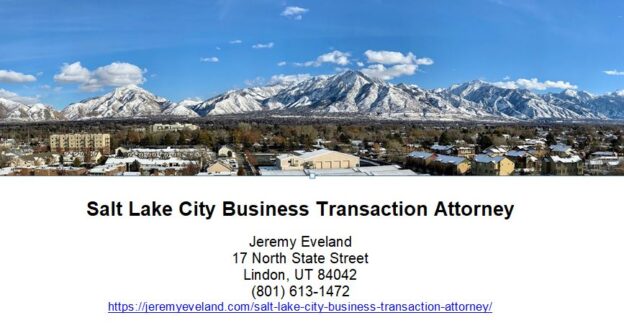
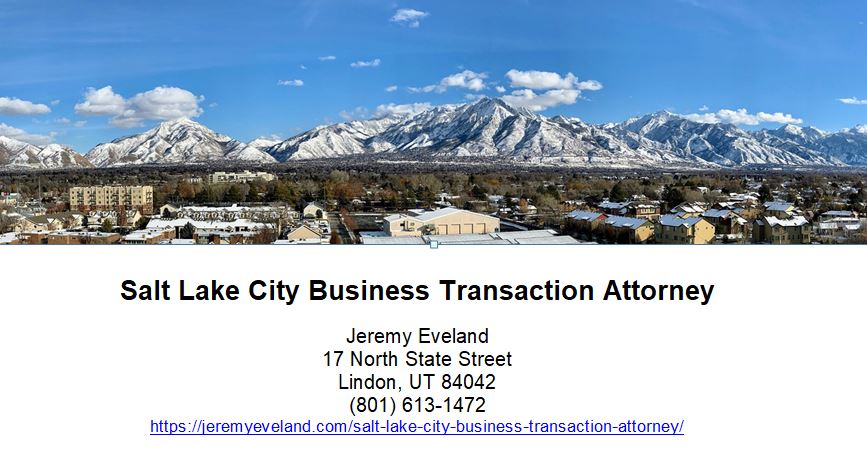
Salt Lake City (often shortened to Salt Lake and abbreviated as SLC) is the capital and most populous city of Utah, United States. It is the seat of Salt Lake County, the most populous county in Utah. With a population of 200,133 in 2020,[10] the city is the core of the Salt Lake City metropolitan area, which had a population of 1,257,936 at the 2020 census. Salt Lake City is further situated within a larger metropolis known as the Salt Lake City–Ogden–Provo Combined Statistical Area, a corridor of contiguous urban and suburban development stretched along a 120-mile (190 km) segment of the Wasatch Front, comprising a population of 2,746,164 (as of 2021 estimates),[11] making it the 22nd largest in the nation. It is also the central core of the larger of only two major urban areas located within the Great Basin (the other being Reno, Nevada).
Salt Lake City was founded July 24, 1847, by early pioneer settlers led by Brigham Young, who were seeking to escape persecution they had experienced while living farther east. The Mormon pioneers, as they would come to be known, entered a semi-arid valley and immediately began planning and building an extensive irrigation network which could feed the population and foster future growth. Salt Lake City’s street grid system is based on a standard compass grid plan, with the southeast corner of Temple Square (the area containing the Salt Lake Temple in downtown Salt Lake City) serving as the origin of the Salt Lake meridian. Owing to its proximity to the Great Salt Lake, the city was originally named Great Salt Lake City. In 1868, the word “Great” was dropped from the city’s name.[12]
Salt Lake City has developed a strong tourist industry based primarily on skiing, outdoor recreation, and religious tourism. It hosted the 2002 Winter Olympics and is a candidate city for the 2030 Winter Olympics. It is known for its politically liberal culture, which stands in contrast with the rest of the state’s highly conservative leanings.[13] It is home to a significant LGBT community and hosts the annual Utah Pride Festival.[14] It is the industrial banking center of the United States.[15] Salt Lake City and the surrounding area are also the location of several institutions of higher education including the state’s flagship research school, the University of Utah. Sustained drought in Utah has more recently strained Salt Lake City’s water security and caused the Great Salt Lake level drop to record low levels,[16][17] and has impacted the local and state economy.[18]
“Startup Attorney: Your Legal Partner for Business Success”
The Benefits of Working with a Startup Attorney
Working with a startup attorney can be a great way to ensure that your business is legally compliant and protected from potential legal issues. A startup attorney can provide invaluable advice and guidance on a variety of legal matters, from forming a business entity to protecting intellectual property. Here are some of the key benefits of working with a startup attorney.
1. Expertise: A startup attorney has the expertise and experience to provide sound legal advice and guidance on a variety of legal matters. They can help you understand the legal implications of your business decisions and ensure that you are in compliance with all applicable laws and regulations.
2. Cost Savings: Working with a startup attorney can save you money in the long run. By having an experienced attorney on your side, you can avoid costly legal mistakes and disputes that can arise from not having the proper legal advice.
3. Time Savings: Working with a startup attorney can save you time. An experienced attorney can help you navigate the legal process quickly and efficiently, allowing you to focus on running your business.
4. Peace of Mind: Working with a startup attorney can provide peace of mind. Knowing that you have an experienced attorney on your side can help you feel more confident in your business decisions and help you avoid potential legal issues.
Overall, working with a startup attorney can be a great way to ensure that your business is legally compliant and protected from potential legal issues. An experienced attorney can provide invaluable advice and guidance on a variety of legal matters, from forming a business entity to protecting intellectual property. By having an experienced attorney on your side, you can save time, money, and have peace of mind knowing that your business is legally compliant.
Understanding the Legal Implications of Starting a Business
Starting a business can be an exciting and rewarding endeavor, but it is important to understand the legal implications of doing so. Depending on the type of business, there are a variety of legal considerations that must be taken into account.
First, it is important to determine the type of business entity that best suits the needs of the business. Common business entities include sole proprietorships, partnerships, limited liability companies (LLCs), and corporations. Each type of entity has different legal implications, such as the amount of personal liability the owners have, the amount of paperwork required, and the tax implications.
Third, it is important to understand the various contracts and agreements that may be necessary for the business. These may include contracts with suppliers, customers, and employees, as well as leases for office or retail space. It is important to ensure that these contracts are legally binding and protect the interests of the business.
Finally, it is important to understand the various taxes that may be applicable to the business. Depending on the type of business, there may be taxes on income, sales, and payroll. It is important to understand the various tax laws and ensure that the business is in compliance.
Starting a business can be a rewarding experience, but it is important to understand the legal implications of doing so. By understanding the various types of business entities, laws and regulations, contracts and agreements, and taxes that may be applicable, entrepreneurs can ensure that their business is legally compliant and protected.
How to Choose the Right Startup Attorney for Your Business
Starting a business is an exciting endeavor, but it can also be a daunting one. It is important to have the right legal advice and representation to ensure that your business is set up correctly and that you are protected from potential legal issues. Choosing the right startup attorney for your business is essential to the success of your venture.
When selecting a startup attorney, it is important to consider their experience and expertise. Look for an attorney who has experience in the specific area of law that your business requires. Ask for references and check their credentials to ensure that they are qualified to handle your legal needs.
It is also important to consider the attorney’s fees. Ask for a detailed breakdown of their fees and services so that you can compare them to other attorneys. Make sure that you understand the terms of the agreement and that you are comfortable with the payment structure.
It is also important to consider the attorney’s communication style. You want to make sure that you can easily communicate with them and that they are responsive to your questions and concerns. Ask for a consultation to get a better sense of their communication style and to make sure that you are comfortable working with them.
Finally, consider the attorney’s reputation. Ask for references and read online reviews to get a better sense of their reputation. You want to make sure that you are working with an attorney who is respected in the legal community and who has a good track record of success.
Choosing the right startup attorney for your business is essential to the success of your venture. Take the time to research and compare attorneys to ensure that you are getting the best legal advice and representation for your business.
The Role of a Startup Attorney in Raising Capital
A startup attorney plays an important role in the process of raising capital for a startup. The attorney’s primary responsibility is to ensure that the startup is in compliance with all applicable laws and regulations. This includes providing advice on the formation of the company, the issuance of securities, and the negotiation of contracts.
The attorney will also help the startup navigate the complex process of raising capital. This includes helping the startup understand the different types of capital available, such as venture capital, angel investors, and crowdfunding. The attorney will also help the startup understand the legal implications of each type of capital and the associated risks.
The attorney will also help the startup draft and negotiate the terms of any investment agreements. This includes ensuring that the terms are fair and reasonable for both the investor and the startup. The attorney will also help the startup understand the tax implications of any investments and advise on the best way to structure the investment.
Finally, the attorney will help the startup protect its intellectual property. This includes helping the startup register any trademarks or copyrights, and drafting any necessary non-disclosure agreements.
In summary, a startup attorney plays an important role in the process of raising capital for a startup. The attorney’s primary responsibility is to ensure that the startup is in compliance with all applicable laws and regulations. The attorney will also help the startup navigate the complex process of raising capital, draft and negotiate the terms of any investment agreements, and protect the startup’s intellectual property.
Navigating Intellectual Property Law as a Startup
As a startup, navigating intellectual property law can be a daunting task. It is important to understand the various types of intellectual property and the laws that protect them. This article will provide an overview of the different types of intellectual property and the laws that protect them.
The first type of intellectual property is copyright. Copyright law protects original works of authorship, such as books, music, and artwork. Copyright law grants the author exclusive rights to reproduce, distribute, and publicly perform or display the work. Copyright protection lasts for the life of the author plus 70 years.
The second type of intellectual property is trademark. Trademark law protects words, symbols, and designs that identify a product or service. Trademark law grants the owner exclusive rights to use the mark in commerce. Trademark protection lasts as long as the mark is used in commerce.
The third type of intellectual property is patent. Patent law protects inventions and processes. Patent law grants the inventor exclusive rights to make, use, and sell the invention. Patent protection lasts for 20 years from the date of filing.
The fourth type of intellectual property is trade secret. Trade secret law protects confidential information, such as formulas, recipes, and customer lists. Trade secret law grants the owner exclusive rights to keep the information secret. Trade secret protection lasts as long as the information remains secret.
It is important for startups to understand the various types of intellectual property and the laws that protect them. By understanding these laws, startups can protect their intellectual property and ensure that their ideas are not stolen or misused.
Q&A
1. What is a startup attorney?
A startup attorney is a lawyer who specializes in providing legal advice and services to startup companies. They are knowledgeable in areas such as corporate law, intellectual property law, venture capital, and other areas related to the formation and operation of a startup.
2. What services does a startup attorney provide?
A startup attorney can provide a variety of services, including helping to form a business entity, drafting contracts, providing advice on intellectual property protection, negotiating venture capital investments, and providing guidance on regulatory compliance.
3. What qualifications should I look for in a startup attorney?
When looking for a startup attorney, it is important to find someone who is knowledgeable in the areas of law that are relevant to your business. Additionally, you should look for an attorney who has experience working with startups and understands the unique challenges that they face.
4. How much does it cost to hire a startup attorney?
The cost of hiring a startup attorney will vary depending on the complexity of the legal services needed and the attorney’s experience. Generally, startup attorneys charge an hourly rate or a flat fee for their services.
5. What are the benefits of hiring a startup attorney?
Hiring a startup attorney can provide a number of benefits, including providing legal advice and guidance, helping to protect your intellectual property, negotiating venture capital investments, and providing guidance on regulatory compliance. Additionally, having an experienced attorney on your side can help to ensure that your business is properly structured and that all legal requirements are met.
Startup Attorney Consultation
When you need legal help with a startup, call Jeremy D. Eveland, MBA, JD (801) 613-1472 for a consultation.
Jeremy Eveland
17 North State Street
Lindon UT 84042
(801) 613-1472
A business transaction lawyer in West Valley City is an invaluable asset for any business. These lawyers specialize in the legal aspects of business transactions, such as contracts, mergers, acquisitions, and other business deals. They provide legal advice and guidance to ensure that all parties involved in a business transaction are protected and that the transaction is conducted in accordance with the law.
Business transaction lawyers in West Valley City are knowledgeable in a variety of areas, including corporate law, contract law, and securities law. They are experienced in negotiating and drafting contracts, as well as in providing legal advice on the various aspects of a business transaction. They can also provide guidance on the tax implications of a business transaction, as well as on the legal requirements for the formation of a business entity.
Business transaction lawyers in West Valley City are also experienced in dispute resolution. They can help resolve disputes between parties involved in a business transaction, such as disputes over the terms of a contract or the ownership of a business. They can also provide advice on how to protect the interests of all parties involved in a business transaction.
Business transaction lawyers in West Valley City are also experienced in providing legal advice on the formation of a business entity. They can help business owners understand the legal requirements for forming a business entity, such as the formation of a corporation, limited liability company, or partnership. They can also provide advice on the various tax implications of forming a business entity.
Business transaction lawyers in West Valley City are also experienced in providing legal advice on the sale or purchase of a business. They can provide advice on the various legal requirements for the sale or purchase of a business, such as the transfer of ownership, the transfer of assets, and the transfer of liabilities. They can also provide advice on the various tax implications of the sale or purchase of a business.
Business transaction lawyers in West Valley City are also experienced in providing legal advice on the dissolution of a business. They can provide advice on the various legal requirements for the dissolution of a business, such as the transfer of assets, the transfer of liabilities, and the transfer of ownership. They can also provide advice on the various tax implications of the dissolution of a business.
Business transaction lawyers in West Valley City are also experienced in providing legal advice on the formation of a business entity. They can provide advice on the various legal requirements for the formation of a business entity, such as the formation of a corporation, limited liability company, or partnership. They can also provide advice on the various tax implications of forming a business entity.
Business transaction lawyers in West Valley City are also experienced in providing legal advice on the sale or purchase of a business. They can provide advice on the various legal requirements for the sale or purchase of a business, such as the transfer of ownership, the transfer of assets, and the transfer of liabilities. They can also provide advice on the various tax implications of the sale or purchase of a business.
Business transaction lawyers in West Valley City are an invaluable asset for any business. They provide legal advice and guidance to ensure that all parties involved in a business transaction are protected and that the transaction is conducted in accordance with the law. They can also provide advice on the formation of a business entity, the sale or purchase of a business, and the dissolution of a business.Utah is a great place to do business. With its low taxes, business-friendly regulations, and highly educated workforce, Utah is an ideal location for businesses of all sizes.
Utah has one of the lowest corporate income tax rates in the nation, at 4.95%. This rate is significantly lower than the national average of 21%. Additionally, Utah has no personal income tax, which can help businesses save money on payroll taxes.
Utah also has a number of business-friendly regulations that make it easier to start and operate a business. The state has streamlined the process for registering a business, and it offers a variety of incentives for businesses that create jobs or invest in the local economy.
Finally, Utah has a highly educated workforce. The state has one of the highest percentages of college graduates in the nation, and its universities produce a steady stream of highly qualified graduates. This makes it easier for businesses to find the talent they need to succeed.
In short, Utah is an ideal location for businesses of all sizes. With its low taxes, business-friendly regulations, and highly educated workforce, Utah can help businesses save money and find the talent they need to succeed.When it comes to business transactions, it is important to ensure that all parties involved are protected and that the transaction is conducted in a legal and ethical manner. Working with a business transaction lawyer in West Valley City can help to ensure that all parties involved in a business transaction are protected and that the transaction is conducted in a legal and ethical manner.
A business transaction lawyer in West Valley City can also provide assistance in resolving disputes that may arise during the course of a business transaction. This includes providing advice on how to resolve disputes, negotiating settlements, and representing clients in court if necessary.
In addition to providing legal advice and assistance, a business transaction lawyer in West Valley City can also provide guidance on how to structure a business transaction in order to maximize the benefits for all parties involved. This includes providing advice on how to structure the transaction in order to minimize taxes, maximize profits, and ensure that all parties involved are protected.
Working with a business transaction lawyer in West Valley City can help to ensure that all parties involved in a business transaction are protected and that the transaction is conducted in a legal and ethical manner. A business transaction lawyer can provide a variety of services to help protect the interests of all parties involved in a business transaction and can provide guidance on how to structure a business transaction in order to maximize the benefits for all parties involved.Utah is a state located in the western United States. It is bordered by Idaho to the north, Wyoming to the northeast, Colorado to the east, Arizona to the south, and Nevada to the west. Utah is known for its diverse landscape, which includes mountains, deserts, and forests. It is also home to some of the most spectacular national parks in the United States, including Zion National Park, Bryce Canyon National Park, and Arches National Park.
Utah is the 13th largest state in the United States, with an area of 84,899 square miles. It is the 33rd most populous state, with a population of 3,205,958 as of 2019. The capital of Utah is Salt Lake City, which is also the most populous city in the state.
Utah is known for its strong economy, which is largely based on the mining and manufacturing industries. The state is also home to a number of technology companies, including Adobe, eBay, and Oracle. Additionally, Utah is home to several universities, including the University of Utah, Brigham Young University, and Utah State University.
Utah is a great place to live and work. It has a low cost of living, a strong economy, and a variety of outdoor activities. Additionally, Utah is home to some of the most beautiful national parks in the United States. Whether you are looking for a place to live, work, or just visit, Utah is an excellent choice.When choosing a business transaction lawyer in West Valley City, it is important to consider a few key factors. First, it is important to ensure that the lawyer has experience in the specific area of business transaction law that you need. Ask for references and check the lawyer’s track record to ensure that they have a successful history of representing clients in similar cases.
Second, it is important to consider the lawyer’s fees and payment structure. Ask for a detailed breakdown of the fees and make sure that you understand the payment terms before signing any contracts.
Third, it is important to consider the lawyer’s communication style. Make sure that the lawyer is willing to answer your questions and provide clear explanations of the legal process. It is also important to ensure that the lawyer is available to meet with you in person or by phone when needed.
Finally, it is important to consider the lawyer’s reputation. Ask for references and read online reviews to get an idea of the lawyer’s past performance. It is also important to ensure that the lawyer is licensed and in good standing with the local bar association.
By considering these factors, you can ensure that you choose a business transaction lawyer in West Valley City who is experienced, reliable, and trustworthy.Utah is a state located in the western United States. It is bordered by Idaho to the north, Wyoming to the northeast, Colorado to the east, Arizona to the south, and Nevada to the west. Utah is known for its diverse landscape, which includes mountains, deserts, and forests. It is also home to some of the most spectacular national parks in the United States, including Zion National Park, Bryce Canyon National Park, and Arches National Park.
Utah is the 13th largest state in the United States, with an area of 84,899 square miles. It is the 33rd most populous state, with a population of 3,205,958 as of 2020. The capital of Utah is Salt Lake City, which is also the most populous city in the state.
Utah is known for its strong economy, which is largely based on the mining and energy industries. It is also home to a number of technology companies, including Adobe, eBay, and Oracle. The state is also home to a number of universities, including the University of Utah, Brigham Young University, and Utah State University.
Utah is known for its unique culture, which is heavily influenced by its Mormon heritage. The state is home to a number of popular tourist attractions, including Temple Square in Salt Lake City, the Great Salt Lake, and the Bonneville Salt Flats. Utah is also home to a number of outdoor activities, including skiing, snowboarding, hiking, and camping.
Utah is a beautiful and diverse state with a lot to offer. From its stunning national parks to its vibrant cities, Utah is a great place to visit and explore.1. Not Being Prepared: Before meeting with a business transaction lawyer, it is important to be prepared. Gather all relevant documents, such as contracts, financial statements, and other legal documents, and have them ready to discuss. Additionally, it is important to have a clear understanding of the goals and objectives of the transaction.
2. Not Understanding the Process: It is important to understand the process of a business transaction. This includes understanding the legal requirements, the timeline, and the potential risks and rewards. A business transaction lawyer can help explain the process and provide guidance.
3. Not Being Clear About Expectations: It is important to be clear about expectations when working with a business transaction lawyer. This includes expectations about the timeline, the cost, and the outcome. It is important to be realistic and honest about expectations to ensure the best outcome.
4. Not Communicating: Communication is key when working with a business transaction lawyer. It is important to keep the lawyer informed of any changes or developments in the transaction. Additionally, it is important to ask questions and seek clarification when needed.
5. Not Following Advice: It is important to follow the advice of a business transaction lawyer. This includes following the legal requirements and timelines. Ignoring advice can lead to costly mistakes and delays.Utah is a state located in the western United States. It is bordered by Idaho to the north, Wyoming to the northeast, Colorado to the east, Arizona to the south, and Nevada to the west. Utah is known for its diverse landscape, which includes mountains, deserts, and forests. It is also home to some of the most spectacular national parks in the United States, including Zion National Park, Bryce Canyon National Park, and Arches National Park.
Utah is the 13th largest state in the United States, with an area of 84,899 square miles. It is the 33rd most populous state, with a population of 3,205,958 as of 2020. The capital of Utah is Salt Lake City, which is also the most populous city in the state.
Utah is known for its strong economy, which is largely based on the mining and energy industries. It is also home to a number of technology companies, including Adobe, eBay, and Oracle. The state is also home to a number of universities, including the University of Utah, Brigham Young University, and Utah State University.
Utah is known for its unique culture, which is heavily influenced by its Mormon heritage. The state is home to a number of popular tourist attractions, including Temple Square in Salt Lake City, the Great Salt Lake, and the Bonneville Salt Flats. Utah is also home to a number of outdoor activities, including skiing, snowboarding, hiking, and camping.
Utah is a beautiful and diverse state with a lot to offer. From its stunning national parks to its vibrant cities, Utah is a great place to visit and explore.Hiring a business transaction lawyer in West Valley City can be a great asset to any business. A business transaction lawyer can provide invaluable legal advice and guidance to help ensure that all business transactions are conducted in a legally sound manner. Here are some of the advantages of hiring a business transaction lawyer in West Valley City:
1. Expertise: A business transaction lawyer in West Valley City has the expertise and experience to provide sound legal advice and guidance on all aspects of business transactions. They can help to ensure that all transactions are conducted in accordance with applicable laws and regulations, and that all parties involved are fully aware of their rights and obligations.
2. Negotiation: A business transaction lawyer in West Valley City can provide invaluable assistance in negotiating the terms of a business transaction. They can help to ensure that all parties involved are satisfied with the outcome of the transaction and that all parties are protected from potential legal risks.
3. Documentation: A business transaction lawyer in West Valley City can provide assistance in preparing and reviewing all necessary documents related to a business transaction. This includes contracts, leases, and other legal documents. They can also help to ensure that all documents are properly executed and that all parties involved are aware of their rights and obligations.
4. Dispute Resolution: A business transaction lawyer in West Valley City can provide assistance in resolving any disputes that may arise during the course of a business transaction. They can help to ensure that all parties involved are treated fairly and that any disputes are resolved in a timely and cost-effective manner.
Hiring a business transaction lawyer in West Valley City can be a great asset to any business. They can provide invaluable legal advice and guidance to help ensure that all business transactions are conducted in a legally sound manner. They can also provide assistance in negotiating the terms of a business transaction, preparing and reviewing all necessary documents, and resolving any disputes that may arise during the course of a business transaction.Utah is an ideal location for businesses looking to expand or relocate. With its diverse economy, low taxes, and business-friendly environment, Utah offers a variety of advantages for businesses of all sizes.
Utah’s economy is diverse and growing. The state is home to a variety of industries, including technology, manufacturing, finance, and tourism. Utah is also home to a number of Fortune 500 companies, including Adobe, eBay, and Goldman Sachs. This diversity of industries provides businesses with a wide range of opportunities for growth and expansion.
Utah’s taxes are among the lowest in the nation. The state has no corporate income tax, and its sales tax rate is among the lowest in the country. This makes it an attractive option for businesses looking to reduce their tax burden.
Utah also offers a business-friendly environment. The state has a number of incentives and programs designed to help businesses succeed. These include tax credits, grants, and loan programs. The state also offers a variety of resources to help businesses get started, such as business incubators and mentorship programs.
Finally, Utah is home to a highly educated and skilled workforce. The state has a number of universities and colleges, as well as a number of technical and vocational schools. This provides businesses with access to a talented and experienced workforce.
For businesses looking to expand or relocate, Utah is an ideal location. With its diverse economy, low taxes, and business-friendly environment, Utah offers a variety of advantages for businesses of all sizes.
Business Transaction Lawyer West Valley City Utah Consultation
When you need legal help from a Business Transaction Lawyer in West Valley City Utah, call Jeremy D. Eveland, MBA, JD (801) 613-1472 for a consultation.
Jeremy Eveland
17 North State Street
Lindon UT 84042
(801) 613-1472
When selecting a business transaction lawyer in Salt Lake City, it is important to consider a few key factors. First, it is important to ensure that the lawyer has experience in the specific area of business transaction law that is relevant to your needs. It is also important to consider the lawyer’s reputation and track record of success. Additionally, it is important to ensure that the lawyer is familiar with the local laws and regulations that may affect your business transaction.
When researching potential business transaction lawyers in Salt Lake City, it is important to read reviews and ask for references. This will help you to get a better understanding of the lawyer’s experience and reputation. Additionally, it is important to ask questions about the lawyer’s fees and payment structure. It is also important to ensure that the lawyer is willing to provide a written agreement outlining the terms of the representation.
When interviewing potential business transaction lawyers in Salt Lake City, it is important to ask questions about their experience and qualifications. Additionally, it is important to ask questions about the lawyer’s approach to business transactions and their understanding of the relevant laws and regulations. It is also important to ask questions about the lawyer’s communication style and availability.
Utah is a state located in the western United States. It is bordered by Idahonortheast, Colorado to the east, Arizona to the south, and Nevada to the west. Utah is known for its diverse landscape, which includes mountains, deserts, and forests. The state is home to five national parks, seven national monuments, and numerous state parks and recreation areas.
Utah is the 13th largest state in the United States, with an area of 84,899 square miles. It is the 11th most populous state, with a population of 3,205,958 as of 2019. The capital of Utah is Salt Lake City, which is also the most populous city in the state. Other major cities include West Valley City, Provo, West Jordan, and Ogden.
Utah is known for its natural beauty and outdoor recreation opportunities. The state is home to five national parks, including Arches National Park, Bryce Canyon National Park, Canyonlands National Park, Capitol Reef National Park, and Zion National Park. These parks offer visitors a variety of activities, such as hiking, camping, and sightseeing.
Utah is also home to seven national monuments, including Cedar Breaks National Monument, Dinosaur National Monument, Hovenweep National Monument, Natural Bridges National Monument, Rainbow Bridge National Monument, Timpanogos Cave National Monument, and Zion National Park. These monuments offer visitors a variety of activities, such as hiking, camping, and sightseeing.
Utah is also home to numerous state parks and recreation areas. These parks offer visitors a variety of activities, such as hiking, camping, fishing, boating, and more. Some of the most popular state parks in Utah include Antelope Island State Park, Bear Lake State Park, Goblin Valley State Park, and Wasatch Mountain State Park.
Additional Articles on Business Law
We have also posted the following articles regarding the topic of business law:
Utah is a great place to visit for outdoor recreation and sightseeing. With its diverse landscape and numerous parks and monuments, Utah offers something for everyone. Whether you’re looking for a relaxing getaway or an adventure-filled vacation, Utah has something for you.
our side. A business transaction lawyer in Salt Lake City can provide invaluable assistance in a variety of areas, from contract negotiation to dispute resolution. Working with a business transaction lawyer can help ensure that your business transactions are conducted in a legally sound manner and that your interests are protected.
One of the primary benefits of working with a business transaction lawyer is that they can provide guidance and advice on the legal aspects of a transaction. A business transaction lawyer can help you understand the legal implications of a contract or agreement, as well as the potential risks and rewards associated with it. They can also provide advice on how to structure a transaction to maximize the benefits for all parties involved.
A business transaction lawyer can also help you negotiate the terms of a contract or agreement. They can help you identify potential areas of dispute and provide advice on how to resolve them. They can also help you draft contracts and agreements that are legally sound and protect your interests.
In addition, a business transaction lawyer can provide assistance in dispute resolution. If a dispute arises between parties involved in a transaction, a business transaction lawyer can help you navigate the legal process and ensure that your interests are protected. They can also provide advice on how to resolve the dispute in a timely and cost-effective manner.
Finally, a business transaction lawyer can provide assistance in the enforcement of contracts and agreements. They can help you ensure that the terms of a contract or agreement are followed and that any disputes are resolved in a timely and cost-effective manner.
By working with a business transaction lawyer in Salt Lake City, you can ensure that your business transactions are conducted in a legally sound manner and that your interests are protected. A business transaction lawyer can provide invaluable assistance in a variety of areas, from contract negotiation to dispute resolution. With their help, you can ensure that your business transactions are conducted in a legally sound manner and that your interests are protected.
Utah
Utah is a state located in the western United States. It is bordered by Idahonortheast, Colorado to the east, Arizona to the south, and Nevada to the west. Utah is known for its diverse landscape, which includes mountains, deserts, and forests. The state is home to five national parks, seven national monuments, and numerous state parks and recreation areas.
Utah is the 13th largest state in the United States, with an area of 84,899 square miles. It is the 11th most populous state, with a population of 3,205,958 as of 2019. The capital of Utah is Salt Lake City, which is also the most populous city in the state. Other major cities include West Valley City, Provo, West Jordan, and Ogden.
Utah is known for its natural beauty and outdoor recreation opportunities. The state is home to five national parks, including Arches National Park, Bryce Canyon National Park, Canyonlands National Park, Capitol Reef National Park, and Zion National Park. These parks offer visitors a variety of activities, such as hiking, camping, and sightseeing.
Utah is also home to seven national monuments, including Cedar Breaks National Monument, Dinosaur National Monument, Hovenweep National Monument, Natural Bridges National Monument, Rainbow Bridge National Monument, Timpanogos Cave National Monument, and Zion National Park. These monuments offer visitors a variety of activities, such as hiking, camping, and sightseeing.
Utah is also home to numerous state parks and recreation areas. These parks offer visitors a variety of activities, such as hiking, camping, fishing, boating, and more. Some of the most popular state parks in Utah include Antelope Island State Park, Bear Lake State Park, Goblin Valley State Park, and Wasatch Mountain State Park.
Utah is a great place to visit for outdoor recreation and sightseeing. With its diverse landscape and numerous parks and monuments, Utah offers something for everyone. Whether you’re looking for a relaxing getaway or an adventure-filled vacation, Utah has something for you.
The Role of a Business Transactcomplexities of the legal system. Business transaction lawyers provide legal advice and representation to businesses in a variety of areas, including contract negotiation, corporate formation, mergers and acquisitions, and intellectual property protection.
Business transaction lawyers in Salt Lake City are responsible for helping businesses understand the legal implications of their decisions and actions. They provide advice on the best course of action to take in order to protect the interests of the business. They also help businesses draft and review contracts, ensuring that all parties involved are aware of their rights and obligations.
Business transaction lawyers in Salt Lake City also help businesses with the formation of corporations and other business entities. They can provide advice on the best type of entity to form, as well as the necessary paperwork and filings required to establish the entity. They can also help businesses with the dissolution of entities, as well as the transfer of ownership.
Business transaction lawyers in Salt Lake City also provide advice and representation to businesses involved in mergers and acquisitions. They can help businesses understand the legal implications of the transaction, as well as the potential risks and rewards. They can also help businesses negotiate the terms of the transaction and draft the necessary documents.
Finally, business transaction lawyers in Salt Lake City can help businesses protect their intellectual property. They can provide advice on the best way to protect a business’s intellectual property, as well as the necessary paperwork and filings required to do so. They can also help businesses with the enforcement of their intellectual property rights.
Business transaction lawyers in Salt Lake City play an important role in helping businesses navigate the complexities of the legal system. They provide advice and representation to businesses in a variety of areas, helping them make informed decisions and protect their interests.
Utah in Mergers and Acquisitions
Mergers and acquisitions, increase their market share, and gain access to new technologies. In Utah, M&A activity has been on the rise in recent years, with a number of high-profile deals taking place.
The most notable M&A deal in Utah in recent years was the acquisition of Vivint Smart Home by Blackstone in 2020. The deal, valued at $3 billion, saw Blackstone acquire Vivint, a leading provider of home security and automation services. The acquisition was seen as a major win for Blackstone, as it gave the company access to Vivint’s technology and customer base.
Another major M&A deal in Utah was the acquisition of Zions Bancorporation by Goldman Sachs in 2019. The deal, valued at $1.8 billion, saw Goldman Sachs acquire Zions, a leading regional bank in the western United States. The acquisition was seen as a strategic move by Goldman Sachs, as it gave the company access to Zions’ customer base and banking operations.
In addition to these two major deals, there have been a number of smaller M&A deals in Utah in recent years. These deals have included the acquisition of Vivint Solar by Sunrun in 2018, the acquisition of Instructure by Pluralsight in 2017, and the acquisition of Ancestry.com by Permira in 2016.
Overall, M&A activity in Utah has been on the rise in recent years, with a number of high-profile deals taking place. These deals have been beneficial for both the companies involved and the state of Utah, as they have provided access to new technologies and markets, as well as increased employment opportunities. As such, M&A activity is likely to remain strong in Utah in the years to come.
business transaction lawyer in Salt Lake City can provide a variety of services to help facilitate a successful transaction. They can review and draft contracts, negotiate terms, and provide advice on the best course of action. They can also help to ensure that all parties involved in the transaction are aware of their rights and obligations. Additionally, they can provide guidance on the tax implications of the transaction and help to ensure that all applicable laws and regulations are followed.
When selecting a business transaction lawyer in Salt Lake City, it is important to choose one who is experienced and knowledgeable in the area of business transactions. They should have a thorough understanding of the applicable laws and regulations and be able to provide sound legal advice. Additionally, they should be able to provide clear and concise communication to ensure that all parties involved in the transaction are on the same page.
By working with a business transaction lawyer in Salt Lake City, you can rest assured that your transaction will be conducted in a legally sound manner. They can provide invaluable assistance in navigating the complexities of the transaction and ensure that all parties involved are protected. With their expertise and experience, they can help to ensure that the transaction is conducted in a manner that is beneficial to all parties involved.
Utah
Utah is a state located in the western United States. It is bordered by Idahonortheast, Colorado to the east, Arizona to the south, and Nevada to the west. Utah is known for its diverse landscape, which includes mountains, deserts, and forests. The state is home to five national parks, seven national monuments, and numerous state parks and recreation areas.
Utah is the 13th largest state in the United States, with an area of 84,899 square miles. It is the 11th most populous state, with a population of 3,205,958 as of 2019. The capital of Utah is Salt Lake City, which is also the most populous city in the state. Other major cities include West Valley City, Provo, West Jordan, and Ogden.
Utah is known for its natural beauty and outdoor recreation opportunities. The state is home to five national parks, including Arches National Park, Bryce Canyon National Park, Canyonlands National Park, Capitol Reef National Park, and Zion National Park. These parks offer visitors a variety of activities, such as hiking, camping, and sightseeing.
Utah is also home to seven national monuments, including Cedar Breaks National Monument, Dinosaur National Monument, Hovenweep National Monument, Natural Bridges National Monument, Rainbow Bridge National Monument, Timpanogos Cave National Monument, and Zion National Park. These monuments offer visitors a variety of activities, such as hiking, camping, and sightseeing.
Utah is also home to numerous state parks and recreation areas. These parks offer visitors a variety of activities, such as hiking, camping, fishing, boating, and more. Some of the most popular state parks in Utah include Antelope Island State Park, Bear Lake State Park, Goblin Valley State Park, and Wasatch Mountain State Park.
Utah is a great place to visit for outdoor recreation and sightseeing. With its diverse landscape and numerous parks and monuments, Utah offers something for everyone. Whether you’re looking for a relaxing getaway or an adventure-filled vacation, Utah has something for you.
to be prepared. Gather all relevant documents, such as contracts, financial statements, and other legal documents, and have them ready to discuss.
2. Not Understanding the Process: It is important to understand the process of working with a business transaction lawyer. Ask questions and make sure you understand the process before signing any documents.
3. Not Being Clear About Your Goals: Before meeting with a business transaction lawyer, it is important to be clear about your goals. Make sure you understand what you want to accomplish and communicate this to the lawyer.
4. Not Being Open to Advice: A business transaction lawyer can provide valuable advice and guidance. Be open to their advice and consider their suggestions before making any decisions.
5. Not Following Through: Once you have agreed to a plan of action, it is important to follow through. Make sure you are taking the necessary steps to ensure the success of the transaction.
6. Not Keeping Records: It is important to keep records of all communication and documents related to the transaction. This will help ensure that everything is handled properly and that all parties are held accountable.
Utah
Utah is a state located in the western United States. It is bordered by Idahonortheast, Colorado to the east, Arizona to the south, and Nevada to the west. Utah is known for its diverse landscape, which includes mountains, deserts, and forests. It is also home to some of the most spectacular national parks in the United States, including Zion National Park, Bryce Canyon National Park, and Arches National Park.
Utah is the 13th largest state in the United States, with an area of 84,899 square miles. It is the 33rd most populous state, with a population of 3,205,958 as of 2020. The capital of Utah is Salt Lake City, which is also the most populous city in the state.
Utah is known for its strong economy, which is largely based on the mining and energy industries. It is also home to a number of technology companies, including Adobe, eBay, and Oracle. The state is also home to a number of universities, including the University of Utah, Brigham Young University, and Utah State University.
Utah is known for its unique culture, which is heavily influenced by its Mormon heritage. The state is home to a number of popular tourist attractions, including Temple Square in Salt Lake City, the Great Salt Lake, and the Bonneville Salt Flats. Utah is also home to a number of outdoor activities, including skiing, snowboarding, hiking, and camping.
Utah is a beautiful and diverse state with a lot to offer. From its stunning national parks to its vibrant cities, Utah is a great place to visit and explore.
Salt Lake City Business Transaction Attorney Consultation
When you need legal help with a Salt Lake City business transaction, call Jeremy D. Eveland, MBA, JD (801) 613-1472 for a consultation.
Jeremy Eveland
17 North State Street
Lindon UT 84042
(801) 613-1472
Salt Lake City (often shortened to Salt Lake and abbreviated as SLC) is the capital and most populous city of Utah, United States. It is the seat of Salt Lake County, the most populous county in Utah. With a population of 200,133 in 2020,[10] the city is the core of the Salt Lake City metropolitan area, which had a population of 1,257,936 at the 2020 census. Salt Lake City is further situated within a larger metropolis known as the Salt Lake City–Ogden–Provo Combined Statistical Area, a corridor of contiguous urban and suburban development stretched along a 120-mile (190 km) segment of the Wasatch Front, comprising a population of 2,746,164 (as of 2021 estimates),[11] making it the 22nd largest in the nation. It is also the central core of the larger of only two major urban areas located within the Great Basin (the other being Reno, Nevada).
Salt Lake City was founded July 24, 1847, by early pioneer settlers led by Brigham Young, who were seeking to escape persecution they had experienced while living farther east. The Mormon pioneers, as they would come to be known, entered a semi-arid valley and immediately began planning and building an extensive irrigation network which could feed the population and foster future growth. Salt Lake City’s street grid system is based on a standard compass grid plan, with the southeast corner of Temple Square (the area containing the Salt Lake Temple in downtown Salt Lake City) serving as the origin of the Salt Lake meridian. Owing to its proximity to the Great Salt Lake, the city was originally named Great Salt Lake City. In 1868, the word “Great” was dropped from the city’s name.[12]
Salt Lake City has developed a strong tourist industry based primarily on skiing, outdoor recreation, and religious tourism. It hosted the 2002 Winter Olympics and is a candidate city for the 2030 Winter Olympics. It is known for its politically liberal culture, which stands in contrast with the rest of the state’s highly conservative leanings.[13] It is home to a significant LGBT community and hosts the annual Utah Pride Festival.[14] It is the industrial banking center of the United States.[15] Salt Lake City and the surrounding area are also the location of several institutions of higher education including the state’s flagship research school, the University of Utah. Sustained drought in Utah has more recently strained Salt Lake City’s water security and caused the Great Salt Lake level drop to record low levels,[16][17] and has impacted the local and state economy.[18]
















.svg)