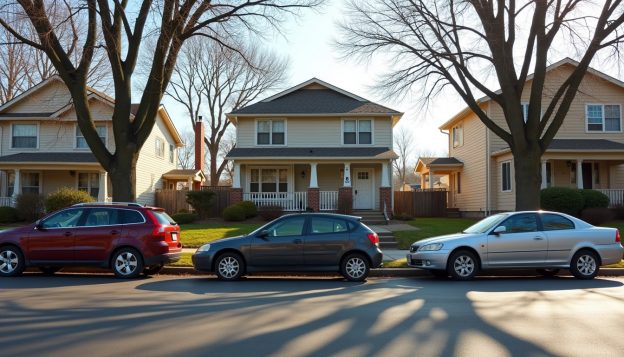
In Utah you can sell up to two vehicles in a 12-month period without a dealer license. At three or more sold, displayed for sale, or offered for sale or exchange, you meet the statutory definition of a dealer under Utah Code Section 41-3-102 and must be licensed. Selling only vehicles you have personally owned for more than 12 months does not count against you.
Last updated: October 2026
Key Takeaways
- The Utah dealer test has two parts. Your business must in whole or in part involve selling vehicles, and you must sell, display for sale, or offer for sale or exchange three or more vehicles in any 12-month period.
- Displaying or offering counts. You do not have to complete three sales to cross the line.
- Section 41-3-103 exempts a person who sells or exchanges only vehicles the person has owned for over 12 months, which is the real safe harbor rather than a raw vehicle count.
- Acting as a dealer without a license is a class A misdemeanor, and once you meet the elements, each additional vehicle is treated as a separate offense.
- Pawnbrokers who sell, exchange, or pawn vehicles must be licensed as used motor vehicle dealers. Leasing companies are not exempt as coming into possession incident to their business.
- A dealer licensed in another state may sell in Utah only to licensed dealers, dismantlers, or manufacturers, and only at their places of business.
The Statutory Test, Word for Word
Utah Code Section 41-3-102 defines a dealer as a person for which the business in whole or in part involves selling new, used, or new and used motor vehicles or off-highway vehicles, and that sells, displays for sale, or offers for sale or exchange three or more new or used motor vehicles or off-highway vehicles in any 12-month period. The definition also includes a representative or consignee of any dealer.
Read that carefully, because the popular shorthand of “you can sell three cars a year” gets two things wrong.
It is a two-part test, not a counter. Both elements have to be satisfied. The business-purpose element and the three-vehicle element work together, which is why an estate liquidating a decedent’s vehicles and a weekend flipper are treated differently even at the same vehicle count.
The count is not limited to completed sales. The statute reaches vehicles you sell, display for sale, or offer for sale or exchange. Three listings that never sold can satisfy the element as readily as three closings. Screenshots of online marketplace posts are ordinary evidence in these matters for exactly that reason.
The Twelve-Month Ownership Exception
The provision that actually protects private sellers is not in the definition. It is in Section 41-3-103, which says that a person who sells or exchanges only those motor vehicles that the person has owned for over 12 months is not considered a dealer.
A person who sells or exchanges only those motor vehicles that the person has owned for over 12 months is not considered a dealer.
The word doing the work is “only.” The exception describes a pattern of conduct, not a per-vehicle allowance. A person who sells four vehicles they each owned for two years is outside the definition. A person who sells three long-held vehicles and one they bought last month no longer sells only vehicles owned for over 12 months, and the exception stops applying to them.
This is why holding a title in your name for a few weeks before flipping does nothing. The exception measures ownership duration, and short-term ownership is the pattern it is designed to exclude.
Who Else Is Not a Dealer
Section 41-3-103 also lists entities that come into possession of a vehicle incident to their regular business and sell it under contractual rights they hold. Those are not dealers: insurance companies, banks, finance companies, companies registered as title lenders under Title 7, Chapter 24, companies registered as check cashers or deferred deposit lenders under Title 7, Chapter 23, public utility companies, commission impound yards, federal or state government agencies, and their political subdivisions.
Two clarifications in the same section cut the other way:
- Leasing companies are expressly not treated as coming into possession of vehicles incident to their regular business.
- Pawnbrokers engaged in selling, exchanging, or pawning motor vehicles are treated as coming into possession incident to their business, and the statute states they must be licensed as used motor vehicle dealers.
What Unlicensed Dealing Actually Costs
Section 41-3-701 sets the penalties. A general violation of the chapter is a class B misdemeanor. Violating Section 41-3-201, which is the provision requiring a license, is a class A misdemeanor. There is a narrow exception: failing to title a vehicle carrying a salvage certificate within seven days of buying it at a motor vehicle auction is a class C misdemeanor.
The provision that changes the arithmetic comes next. Once a person has met the criteria for the offense of acting as a dealer without a license, each additional motor vehicle the person sells, displays for sale, or offers for sale is treated as an additional offense. Unlicensed dealing is therefore not one charge that scales with volume. It is a count per vehicle.
| Conduct | Classification | Statute |
|---|---|---|
| Acting as a dealer without a license | Class A misdemeanor, and each additional vehicle is a separate offense | 41-3-701(2) |
| General violation of Title 41, Chapter 3 | Class B misdemeanor | 41-3-701(1) |
| Failing to title an auction-purchased salvage vehicle within seven days | Class C misdemeanor | 41-3-701(2)(a)(ii) |
| Civil violations under the level schedule | $25 to $5,000 depending on level and prior offenses in the last 12 months | 41-3-702 |
Why Licensed Dealers Care About This
Curbstoning is the term for unlicensed dealing dressed up as private sale, and licensed dealers carry the cost of it in three ways.
Price competition without the overhead. A curbstoner has no principal place of business to lease, no $75,000 bond premium, no annual license fee, no three-hour renewal class, and no records obligations. Every one of those is a cost you carry and they do not.
Consumer harm attributed to the trade. Buyers who are sold undisclosed branded or flood vehicles by an unlicensed seller often arrive at a licensed store afterward, and complaint volume against the trade generally shapes enforcement priorities that land on licensed businesses.
Title problems entering your inventory. Vehicles that pass through unlicensed hands frequently arrive with open titles, gaps in the chain, or undisclosed brands. Your acquisition diligence is the only thing standing between that and a claim on your bond.
Reporting suspected unlicensed activity goes to the Motor Vehicle Enforcement Division, which is the agency with authority over the chapter. Its contact information and complaint process are published at dmv.utah.gov/mved. If the division opens a file, the process it follows is described in our guide to an MVED investigation of your dealership.
If You Have Crossed the Line Without Meaning To
People reach the threshold accidentally more often than deliberately. A car enthusiast who buys and sells project vehicles, a landscaper replacing trucks, someone helping family members sell vehicles, or an online seller who lists more than they close can all satisfy a definition they have never read.
Three practical points if that describes you:
- Count offers, not just sales. Your exposure is measured by what you sold, displayed, or offered, so the honest count is usually higher than the one you have in mind.
- Check ownership duration on every unit. If every vehicle was owned more than 12 months, the Section 41-3-103 exception applies and the count does not matter. If even one was not, it does.
- Getting licensed is the cheaper path if the activity continues. The requirements are demanding but knowable, and they are covered in our guide to Utah dealer license requirements. The alternative is a per-vehicle count of class A misdemeanors.
For the broader regulatory picture that applies once you are licensed, see our resources for an attorney for car dealerships in Utah.
Frequently Asked Questions
How many cars can you sell in Utah without a dealer license?
Two. At three or more vehicles sold, displayed for sale, or offered for sale or exchange in any 12-month period, combined with a business that in whole or in part involves selling vehicles, you meet the dealer definition in Section 41-3-102 and need a license.
Does listing a car that never sells count toward the three?
Yes. The statute counts vehicles you sell, display for sale, or offer for sale or exchange. Listings that did not result in a sale can satisfy the element, which is why online marketplace postings are common evidence in these matters.
Can I sell my own cars in Utah without a license?
Yes, if you sell or exchange only vehicles you have owned for more than 12 months. That exception in Section 41-3-103 turns on ownership duration rather than a vehicle count, and the word “only” means a single short-held vehicle in the group defeats it.
What is the penalty for curbstoning in Utah?
Acting as a dealer without a license violates Section 41-3-201 and is a class A misdemeanor. Once the elements are met, each additional vehicle sold, displayed, or offered is treated as an additional offense, so exposure scales with volume.
Do I need a license to sell off-highway vehicles?
The definition covers off-highway vehicles alongside motor vehicles, so the same three-vehicle threshold applies. Bond amounts differ by class, with $10,000 required for a motorcycle, off-highway vehicle, or small trailer dealer license.
I have a dealer license in another state. Can I sell in Utah?
Only in a limited way. Under Section 41-3-103, a person licensed as a dealer or salesperson by another state or country, and not under suspension or revocation here, may sell vehicles in Utah only to licensed dealers, dismantlers, or manufacturers, and only at their places of business.
Does a pawnbroker need a Utah dealer license to sell vehicles?
Yes. Section 41-3-103 treats a pawnbroker engaged in selling, exchanging, or pawning motor vehicles as coming into possession incident to that business, and states the pawnbroker must be licensed as a used motor vehicle dealer.
Whether you are near the licensing threshold or dealing with unlicensed competition in your market, a short conversation clarifies where you stand.
Schedule a consultation or call (801) 613-1472.
This article is general information, not legal advice. Reading it does not create an attorney-client relationship. Citations are to Utah Code Title 41, Chapter 3 as published by the Utah Legislature and current as of October 2026. Confirm the current text before relying on any provision.