Tag Archives: rights

Nursing Home Law

Nursing Home Law

“Protecting Your Loved Ones with Nursing Home Law: Compassionate Advocacy for Quality Care.”

Introduction

Nursing home law is a complex and ever-evolving area of law that governs the rights and responsibilities of nursing home residents, their families, and the nursing home facility. It is important for those involved in the nursing home industry to understand the legal requirements and regulations that govern the industry. Nursing home law covers a wide range of topics, including resident rights, facility licensing, and staff qualifications. It also covers issues such as abuse and neglect, medical malpractice, and wrongful death. This introduction will provide an overview of nursing home law and its implications for those involved in the industry.

Nursing home residents have certain legal rights that are protected by federal and state laws. It is important for nursing home residents and their families to understand these rights in order to ensure that they are being treated fairly and with respect.

This is a part of the topic of Estate Planning.

Residents of nursing homes have the right to be treated with dignity and respect. This includes the right to privacy, freedom from abuse and neglect, and the right to make decisions about their own care. Nursing home staff must respect the resident’s right to privacy and must not disclose any information about the resident without their consent.

Residents also have the right to participate in their own care. This includes the right to be involved in decisions about their medical care, activities, and other aspects of their daily life. Nursing home staff must provide residents with information about their care and must respect their decisions.

Residents have the right to be free from abuse and neglect. Nursing home staff must provide a safe and secure environment for residents and must not use physical or verbal abuse. Residents also have the right to be free from any form of discrimination based on race, religion, gender, or sexual orientation.

Residents have the right to access their medical records and to be informed of any changes in their care. Nursing home staff must provide residents with information about their medical condition and any changes in their care.

Residents also have the right to voice their concerns and complaints. Nursing home staff must provide a safe and secure environment for residents to express their concerns and must take appropriate action to address any issues.

Finally, residents have the right to access their financial records and to be informed of any changes in their financial situation. Nursing home staff must provide residents with information about their financial situation and must respect their decisions regarding their finances.

It is important for nursing home residents and their families to understand their legal rights in order to ensure that they are being treated fairly and with respect. If you have any questions or concerns about your rights as a nursing home resident, it is important to speak to a qualified attorney who can provide you with legal advice.

Exploring the Different Types of Nursing Home Abuse and Neglect

Nursing home abuse and neglect is a serious issue that affects thousands of elderly individuals each year. It is important to understand the different types of abuse and neglect that can occur in nursing homes in order to protect vulnerable seniors from harm.

Nursing Home Law, Jeremy Eveland, Lawyer Jeremy Eveland, Jeremy Eveland Business Consultant, resident, care, facility, home, nursing, residents, abuse, health, department, homes, state, section, services, rights, act, treatment, facilities, neglect, law, person, consent, staff, source, medication, sec, p.a, al., physician, percent, requirements, research, board, right, states, form, restraint, par, program, decision, attorney, nursing homes, nursing home, care home, informed consent, nursing home residents, psychotropic medication, human services, surrogate decision maker, ombudsman program, institutional review board, long term care, clinical record, nursing home abuse, nursing home reform, long-term care, long-term care facilities, residential care facilities, care plan, experimental research, care homes, nursing home care, medical treatment, sweeney law firm, potential health care, identification wristlet, federal law, state laws, elder abuse, resident rights, medical care, care home, nursing home, regulations, insurance, medicaid, nhs, medical negligence, patient, negligence, power of attorney, maternity, cqc, law, rights, dignity, attorney, safety, medicare, nursing, cqc, dbs, disclosure and barring service, long-term care, care facilities, medicare, lasting power of attorney, nursing home residents' rights, medical insurance, long-term care insurance, skilled nursing, lpn, long-term care facilities, care inspectorate, nursing, nurse, ppl, cqc inspection, medication errors, patient safety, tv licensing, powers of attorney, nursing home care,

Physical Abuse

Physical abuse is the intentional use of physical force that results in bodily injury, pain, or impairment. Examples of physical abuse in nursing homes include hitting, slapping, pushing, kicking, and restraining. Physical abuse can also include the inappropriate use of physical restraints, such as tying a resident to a bed or chair.

Emotional Abuse

Emotional abuse is any behavior that causes emotional distress or trauma. Examples of emotional abuse in nursing homes include verbal abuse, humiliation, intimidation, and isolation. Emotional abuse can also include the withholding of necessary care or services.

Sexual Abuse

Sexual abuse is any form of non-consensual sexual contact. Examples of sexual abuse in nursing homes include unwanted touching, sexual assault, and rape.

Financial Abuse

Financial abuse is the illegal or improper use of a person’s funds or property. Examples of financial abuse in nursing homes include stealing money or possessions, forging signatures, and misusing power of attorney.

Neglect

Neglect is the failure to provide necessary care or services. Examples of neglect in nursing homes include failing to provide adequate nutrition, failing to provide necessary medical care, and failing to provide a safe and clean living environment.

It is important to be aware of the different types of abuse and neglect that can occur in nursing homes in order to protect vulnerable seniors from harm. If you suspect that a loved one is being abused or neglected in a nursing home, it is important to report it to the proper authorities.

The Impact of Nursing Home Regulations on Quality of Care

Nursing home regulations are an important factor in ensuring quality of care for residents. The regulations are designed to protect the rights of residents and ensure that they receive the highest quality of care. This article will discuss the impact of nursing home regulations on quality of care and how they can be used to improve the quality of care in nursing homes.

Nursing home regulations are designed to ensure that residents receive the highest quality of care. These regulations are set by the federal government and are enforced by state and local governments. The regulations cover a wide range of topics, including staffing levels, quality of care, and safety standards. The regulations also require nursing homes to provide residents with access to medical care, social services, and other services that are necessary for their health and well-being.

The impact of nursing home regulations on quality of care is significant. The regulations ensure that nursing homes are providing the highest quality of care to their residents. They also ensure that residents are receiving the necessary services and support that they need. The regulations also help to ensure that nursing homes are providing a safe and secure environment for their residents.

Nursing home regulations can also be used to improve the quality of care in nursing homes. For example, the regulations can be used to ensure that nursing homes are providing adequate staffing levels and that staff members are properly trained and qualified to provide the highest quality of care. The regulations can also be used to ensure that nursing homes are providing the necessary services and support that residents need.

In conclusion, nursing home regulations are an important factor in ensuring quality of care for residents. The regulations are designed to protect the rights of residents and ensure that they receive the highest quality of care. The regulations also help to ensure that nursing homes are providing a safe and secure environment for their residents. Finally, the regulations can be used to improve the quality of care in nursing homes by ensuring that nursing homes are providing adequate staffing levels and that staff members are properly trained and qualified to provide the highest quality of care.

The Role of Nursing Home Attorneys in Protecting Residents’ Rights

Nursing home attorneys play an important role in protecting the rights of nursing home residents. Nursing home attorneys are responsible for ensuring that nursing home residents receive the care and services they are entitled to under the law. They also work to ensure that nursing home residents are treated with respect and dignity.

Nursing home attorneys are knowledgeable about the laws and regulations that govern nursing homes. They are familiar with the rights of nursing home residents and the responsibilities of nursing home staff. They are also knowledgeable about the various types of abuse and neglect that can occur in nursing homes.

Nursing home attorneys can help nursing home residents and their families understand their rights and the laws that protect them. They can provide advice on how to file a complaint or take legal action if a nursing home is not providing the care and services that are required by law. They can also provide assistance in filing a lawsuit against a nursing home if necessary.

Nursing home attorneys can also help nursing home residents and their families understand the various types of abuse and neglect that can occur in nursing homes. They can provide advice on how to recognize and report abuse and neglect. They can also provide assistance in filing a lawsuit against a nursing home if necessary.

Nursing home attorneys can also provide assistance in negotiating with nursing homes to ensure that the rights of nursing home residents are respected. They can help to ensure that nursing home residents receive the care and services they are entitled to under the law. They can also help to ensure that nursing home residents are treated with respect and dignity.

Nursing home attorneys are an important part of the nursing home system. They are responsible for ensuring that nursing home residents receive the care and services they are entitled to under the law. They also work to ensure that nursing home residents are treated with respect and dignity. Nursing home attorneys play an important role in protecting the rights of nursing home residents.

The Benefits of Nursing Home Litigation for Residents and Families

Nursing home litigation is a legal process that can be used to protect the rights of nursing home residents and their families. It is a powerful tool that can be used to hold nursing homes accountable for providing inadequate care and for failing to meet the standards of care that are required by law.

Nursing home litigation can provide a number of benefits for residents and their families. First, it can help to ensure that residents receive the care and services that they need and deserve. Nursing home litigation can be used to hold nursing homes accountable for providing inadequate care, such as failing to provide adequate nutrition, failing to provide adequate medical care, or failing to provide a safe and secure environment.

Second, nursing home litigation can help to ensure that residents are treated with respect and dignity. Nursing home litigation can be used to hold nursing homes accountable for failing to provide a safe and secure environment, failing to provide adequate staffing, or failing to provide adequate supervision.

Third, nursing home litigation can help to ensure that residents are not subjected to abuse or neglect. Nursing home litigation can be used to hold nursing homes accountable for failing to provide adequate supervision, failing to investigate allegations of abuse or neglect, or failing to take appropriate action when abuse or neglect is reported.

Finally, nursing home litigation can help to ensure that residents and their families receive the compensation they deserve for any harm that has been caused by the nursing home. Nursing home litigation can be used to seek damages for medical expenses, pain and suffering, and other losses that have been suffered as a result of the nursing home’s negligence.

Nursing home litigation is an important tool that can be used to protect the rights of nursing home residents and their families. It can help to ensure that residents receive the care and services that they need and deserve, that they are treated with respect and dignity, and that they are not subjected to abuse or neglect. It can also help to ensure that residents and their families receive the compensation they deserve for any harm that has been caused by the nursing home.

Q&A

1. What is the purpose of Nursing Home Law?

The purpose of Nursing Home Law is to protect the rights of nursing home residents and ensure that they receive the highest quality of care. It also sets standards for nursing home operations and establishes regulations for the care of residents.

2. What rights do nursing home residents have?

Nursing home residents have the right to be treated with respect and dignity, to receive quality care, to be free from abuse and neglect, to participate in their own care, to have access to their medical records, and to have their complaints addressed.

3. What is the role of the state in regulating nursing homes?

The state is responsible for setting and enforcing standards for nursing home operations. The state also inspects nursing homes to ensure that they are meeting the standards and provides oversight of nursing home operations.

4. What is the role of the federal government in regulating nursing homes?

The federal government sets minimum standards for nursing home operations and provides funding for nursing home inspections and enforcement. The federal government also provides oversight of nursing home operations.

5. What is the role of the nursing home staff in providing quality care?

The nursing home staff is responsible for providing quality care to residents. This includes providing medical care, assisting with activities of daily living, and providing emotional support. The staff must also ensure that the nursing home is meeting the standards set by the state and federal government.

Nursing Home Law Consultation

When you need help with Nursing Home Law call Jeremy D. Eveland, MBA, JD (801) 613-1472 for a consultation.

Jeremy Eveland
17 North State Street
Lindon UT 84042
(801) 613-1472

Home

Related Posts

Estate Planning Lawyer Salt Lake City Utah

Durable Power of Attorney

Health Care Directive

Employment Contracts

Promissory Estoppel

Medical Device Company Lawyer

Corporate Restructuring

Franchise Law

Laws and Regulations

How to Purchase a Business

Venture Capital

Breach of Contract

Business Legal Structure

Business Workplace Safety

Non-Profit Foundation Law

Corporate and Business Law

Management Consultant

Business Succession Lawyer Bountiful Utah

Incorporting

Hospital Law

Contractor Lawyer

Estate Administration

Non-Disclosure Agreement

Concrete Pumping Business Lawyer

Utah Administrative Code

Business Consultant

Franchise Association Law

Utah Department of Health

Nursing Home Law

Franchise Association Law

Franchise Association Law

Franchise Association Law

“Protecting Your Franchise Investment with Expert Franchise Association Law Advice”

Introduction

Franchise Association Law is a complex and ever-evolving area of law that governs the relationship between franchisors and franchisees. It is designed to protect the interests of both parties and ensure that the franchise relationship is fair and equitable. Franchise Association Law covers a wide range of topics, including franchise agreements, franchise disclosure documents, franchise fees, franchise renewals, and franchise termination. It also covers the rights and responsibilities of both franchisors and franchisees, as well as the legal remedies available to them in the event of a dispute. This introduction provides an overview of Franchise Association Law and its importance in the franchise industry.

Understanding the Benefits of Joining a Franchise Association

Joining a franchise association can be a great way to gain access to resources, support, and networking opportunities that can help you succeed in the franchise industry. Franchise associations provide a variety of benefits to their members, including access to industry-specific information, educational resources, and networking opportunities.

One of the primary benefits of joining a franchise association is access to industry-specific information. Franchise associations provide members with access to industry news, research, and other resources that can help them stay informed about the latest trends and developments in the franchise industry. This information can be invaluable for franchisees who are looking to stay ahead of the competition and make informed decisions about their business.

Franchise associations also provide members with access to educational resources. Many associations offer seminars, webinars, and other educational opportunities that can help franchisees stay up-to-date on the latest industry trends and best practices. These educational resources can be invaluable for franchisees who are looking to stay ahead of the competition and make informed decisions about their business.

Finally, franchise associations provide members with access to networking opportunities. Many associations host events and conferences that allow franchisees to meet and network with other franchisees and industry professionals. These networking opportunities can be invaluable for franchisees who are looking to build relationships and gain insights from experienced professionals.

In short, joining a franchise association can be a great way to gain access to resources, support, and networking opportunities that can help you succeed in the franchise industry. By taking advantage of the resources and networking opportunities provided by franchise associations, franchisees can stay informed about the latest industry trends and best practices, and build relationships with other franchisees and industry professionals.

Exploring the Different Types of Franchise Association Laws

Franchise associations are organizations that represent the interests of franchisors and franchisees. These associations are responsible for setting standards and regulations for the franchise industry, as well as providing resources and support to franchisees. As such, they play an important role in the success of the franchise industry.

There are several different types of franchise association laws that govern the franchise industry. These laws are designed to protect the interests of both franchisors and franchisees, and to ensure that the franchise industry operates in a fair and equitable manner.

The first type of franchise association law is the Franchise Disclosure Document (FDD). This document is required by the Federal Trade Commission (FTC) and must be provided to prospective franchisees prior to signing a franchise agreement. The FDD contains important information about the franchise, including the franchisor’s business history, financial performance, and the terms and conditions of the franchise agreement.
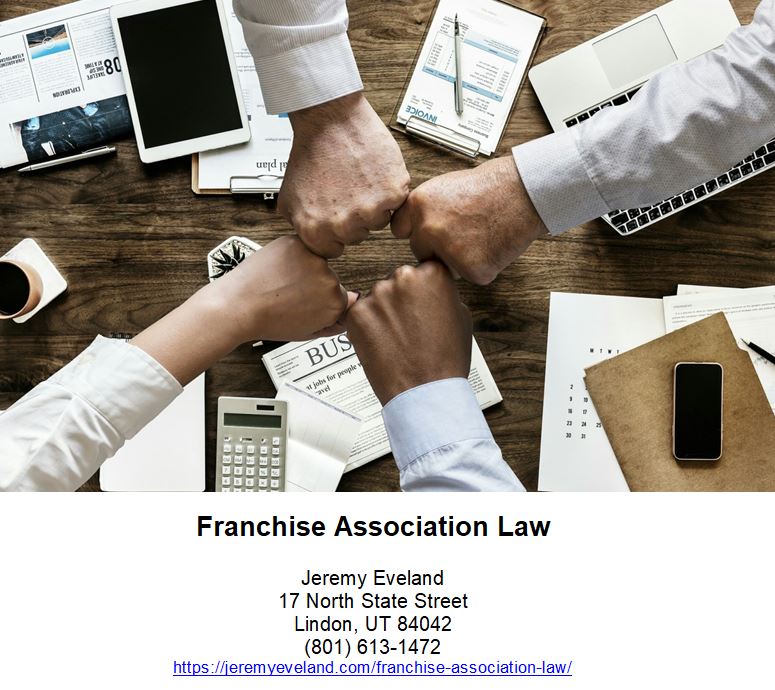
Franchise Association Law, Jeremy Eveland, Lawyer Jeremy Eveland, Jeremy Eveland Utah Attorney, franchise, franchisee, franchisor, law, agreement, business, franchisees, franchisors, agreements, contract, bfa, association, protection, services, franchising, act, data, code, parties, bird, laws, competition, rights, property, trade, obligations, requirements, case, relationship, provisions, disclosure, tax, kingdom, businesses, court, party, regulations, members, faith, system, franchise agreement, united kingdom, franchise agreements, good faith, british franchise association, franchise business, intellectual property, english law, personal data, bfa code, franchise law review, competition law, franchise system, third party, restrictive covenants, franchise network, franchise disputes, swiss law, franchise relationship, master franchisee, franchise systems, quality franchise association, prospective franchisees, common law, trade mark, franchise industry, law firm, bird llp, case law, english courts, franchise, franchising, franchisors, franchise agreement, the united kingdom, bird & bird, tax, bird, good faith, trademarks, law review, law, intellectual property, contractual, per cent, regulations, breach, agreement, utah, united states, money-laundering, remedies, contracts, negligent misrepresentation, recast brussels regulation, udrp, contractual obligation, mediation, misrepresentations, jurisdiction clauses, lugano convention, franchise disclosure document, corporation tax, franchises, partner, uniform domain name dispute resolution policy, agreement, guarantees, costs, bribery act 2010, dispute resolution clause,

The second type of franchise association law is the Franchise Rule. This rule is designed to protect franchisees from unfair or deceptive practices by franchisors. It requires franchisors to provide prospective franchisees with certain information, such as the franchisor’s financial performance, the terms and conditions of the franchise agreement, and the franchisor’s dispute resolution process.

The third type of franchise association law is the Franchise Relationship Law. This law is designed to ensure that franchisors and franchisees have a fair and equitable relationship. It requires franchisors to provide franchisees with certain rights, such as the right to terminate the franchise agreement without cause, the right to receive financial information from the franchisor, and the right to receive fair compensation for services rendered.

Finally, the fourth type of franchise association law is the Franchisee Bill of Rights. This law is designed to protect franchisees from unfair or deceptive practices by franchisors. It requires franchisors to provide franchisees with certain rights, such as the right to receive financial information from the franchisor, the right to terminate the franchise agreement without cause, and the right to receive fair compensation for services rendered.

These are just a few of the different types of franchise association laws that govern the franchise industry. It is important for both franchisors and franchisees to understand these laws in order to ensure that their franchise relationship is fair and equitable.

How to Choose the Right Franchise Association for Your Business

Choosing the right franchise association for your business is an important decision that can have a significant impact on the success of your venture. A franchise association is a professional organization that provides support and resources to franchisors and franchisees. It can help you stay informed about industry trends, connect with other franchisees, and access valuable resources.

When selecting a franchise association, it is important to consider the organization’s size, scope, and services. A larger association may offer more resources and support, but may also be more expensive. A smaller association may be more affordable, but may not have the same level of resources and support. It is also important to consider the association’s reputation and track record. Look for an organization that has a good reputation in the industry and has a history of helping its members succeed.

It is also important to consider the association’s membership requirements. Some associations may require a certain level of experience or financial commitment. Others may require a certain amount of training or certification. Make sure you understand the requirements before joining an association.

Finally, consider the association’s fees and services. Some associations may charge an annual fee, while others may offer discounts or other incentives. Make sure you understand the fees and services offered before joining an association.

By taking the time to research and compare different franchise associations, you can ensure that you select the right one for your business. Doing so will help you access the resources and support you need to succeed.

The Pros and Cons of Franchise Association Membership

Franchise association membership can be a great way for franchisees to stay informed and connected to the industry. However, it is important to weigh the pros and cons of joining a franchise association before making a decision.

Pros

1. Access to Resources: Franchise associations provide members with access to a wealth of resources, including industry news, legal advice, and educational materials. This can be invaluable for franchisees who are looking to stay up-to-date on the latest developments in the industry.

2. Networking Opportunities: Franchise associations offer members the chance to network with other franchisees and industry professionals. This can be a great way to make connections and learn from the experiences of others.

3. Advocacy: Franchise associations are often involved in advocating for the rights of franchisees. This can include lobbying for legislation that is beneficial to franchisees, as well as providing support in disputes with franchisors.

Cons

1. Cost: Joining a franchise association can be expensive, as there are often membership fees and other costs associated with membership.

2. Time Commitment: Franchise associations often require members to attend meetings and participate in activities. This can be time-consuming and may not be feasible for franchisees with busy schedules.

3. Limited Representation: Franchise associations may not represent the interests of all franchisees, as they may focus on certain types of franchises or geographic areas.

In conclusion, franchise association membership can be a great way for franchisees to stay informed and connected to the industry. However, it is important to consider the pros and cons before making a decision.

Franchise associations are organizations that provide support and resources to franchisors and franchisees. Membership in a franchise association can provide a number of benefits, including access to industry-specific information, networking opportunities, and legal advice. However, there are a number of legal requirements that must be met in order to become a member of a franchise association.

The first step in joining a franchise association is to determine which association is the best fit for your business. Different associations have different requirements for membership, so it is important to research the various associations and determine which one is the best fit for your business.

Once you have chosen an association, you will need to complete the application process. This process typically includes providing information about your business, such as the type of franchise you operate, the number of locations, and the number of employees. You may also be required to provide financial information, such as your annual revenue and profit margins.

Once your application is approved, you will need to pay the membership fee. This fee is typically based on the size of your business and the type of services you are requesting.

Once you have become a member of a franchise association, you will need to comply with the association’s rules and regulations. These rules and regulations may include requirements for reporting financial information, maintaining certain standards of conduct, and participating in certain activities.

Finally, you will need to stay up to date on any changes to the association’s rules and regulations. It is important to review the association’s website regularly to ensure that you are aware of any changes that may affect your business.

Navigating the legal requirements of franchise association membership can be a complex process. However, by researching the various associations and understanding the requirements for membership, you can ensure that your business is in compliance with the association’s rules and regulations. This will help you take advantage of the many benefits that membership in a franchise association can provide.

Q&A

1. What is a Franchise Association?
A Franchise Association is an organization that provides support and resources to franchisors and franchisees. It is a non-profit organization that works to protect the interests of both parties in the franchise relationship.

2. What are the benefits of joining a Franchise Association?
The benefits of joining a Franchise Association include access to resources, networking opportunities, and legal advice. It also provides a platform for franchisors and franchisees to share best practices and discuss industry trends.

3. What are the responsibilities of a Franchise Association?
The responsibilities of a Franchise Association include advocating for the interests of franchisors and franchisees, providing educational resources, and promoting ethical business practices. It also works to ensure that franchise agreements are fair and equitable.

4. What is the role of the government in Franchise Association Law?
The government plays an important role in Franchise Association Law by setting standards and regulations that must be followed by franchisors and franchisees. It also provides oversight to ensure that the rights of both parties are protected.

5. What are some common issues addressed by Franchise Association Law?
Common issues addressed by Franchise Association Law include franchise fees, royalty payments, disclosure requirements, and termination rights. It also covers topics such as trademark protection, advertising, and dispute resolution.

Franchise Association Law Consultation

When you need legal help with Franchise Association Law call Jeremy D. Eveland, MBA, JD (801) 613-1472 for a consultation.

Jeremy Eveland
17 North State Street
Lindon UT 84042
(801) 613-1472

Home

Related Posts

Revocable Living Trust

Estate Planning Lawyer Salt Lake City Utah

Durable Power of Attorney

Health Care Directive

Employment Contracts

Promissory Estoppel

Medical Device Company Lawyer

Corporate Restructuring

Franchise Law

Laws and Regulations

How to Purchase a Business

Venture Capital

Breach of Contract

Business Legal Structure

Business Workplace Safety

Non-Profit Foundation Law

Corporate and Business Law

Management Consultant

Business Succession Lawyer Bountiful Utah

Incorporting

Hospital Law

Contractor Lawyer

Estate Administration

Non-Disclosure Agreement

Concrete Pumping Business Lawyer

Utah Administrative Code

Business Consultant

Franchise Association Law

Non-Disclosure Agreement

Non-Disclosure Agreement

Non-Disclosure Agreement

“Protecting Your Confidentiality – A Non-Disclosure Agreement is Your Best Defense.”

Introduction

A Non-Disclosure Agreement (NDA) is a legally binding contract between two or more parties that outlines confidential material, knowledge, or information that the parties wish to share with one another for certain purposes, but wish to restrict access to or by third parties. It is a contract through which the parties agree not to disclose information covered by the agreement. NDAs are commonly used when two companies, individuals, or other entities are considering doing business and need to understand the processes used in each other’s business for the purpose of evaluating the potential business relationship. NDAs can also be used to protect any type of confidential information, such as trade secrets, proprietary information, or any other confidential information that may be disclosed during the course of a business relationship.

How to Draft a Non-Disclosure Agreement for Your Business

A non-disclosure agreement (NDA) is a legally binding contract between two or more parties that outlines confidential material, knowledge, or information that the parties wish to share with one another for certain purposes, but wish to restrict access to or by third parties. An NDA is an important tool for businesses to protect their confidential information and trade secrets.

Non-Disclosure Agreements are a part of Contract Law.

When drafting an NDA for your business, there are several key elements to consider.

1. Parties: The NDA should clearly identify the parties involved in the agreement. This includes the names of the parties, their addresses, and contact information.

2. Purpose: The NDA should clearly state the purpose of the agreement and the confidential information that is being shared.

3. Obligations: The NDA should outline the obligations of each party, including the obligation to keep the confidential information confidential and the obligation to not use the confidential information for any purpose other than the purpose stated in the agreement.

4. Duration: The NDA should specify the duration of the agreement and the circumstances under which the agreement may be terminated.

5. Remedies: The NDA should outline the remedies available to the parties in the event of a breach of the agreement.

6. Miscellaneous: The NDA should include any other provisions that are necessary to protect the interests of the parties.

By including these key elements in your NDA, you can ensure that your confidential information is protected and that your business is safeguarded from potential legal issues.

Breaking a non-disclosure agreement (NDA) can have serious legal implications. Depending on the terms of the agreement, a breach of an NDA can result in civil and/or criminal penalties.

In a civil case, the aggrieved party may seek monetary damages for any losses suffered as a result of the breach. This could include lost profits, reputational damage, or other economic losses. The court may also order the breaching party to pay the aggrieved party’s legal fees.

In some cases, a breach of an NDA may also be considered a criminal offense. Depending on the jurisdiction, a breach of an NDA may be considered a misdemeanor or a felony. If convicted, the breaching party may face fines, jail time, or both.

In addition to the legal consequences, a breach of an NDA can also have serious professional and personal repercussions. A breach of an NDA can damage a person’s reputation and credibility, making it difficult to find future employment or business opportunities.

It is important to remember that NDAs are legally binding contracts. Before signing an NDA, it is important to understand the terms and conditions of the agreement and to ensure that you are able to comply with them. If you have any questions or concerns, it is best to consult with an attorney before signing.

What Are the Different Types of Non-Disclosure Agreements?

Non-disclosure agreements (NDAs) are legally binding contracts that protect confidential information from being shared with third parties. They are commonly used in business transactions, such as when two companies are considering a merger or when a company is hiring a consultant. There are several different types of NDAs, each with its own purpose and set of rules.

1. Unilateral NDA: A unilateral NDA is a one-way agreement in which one party agrees to keep the other party’s information confidential. This type of NDA is often used when a company is hiring a consultant or contractor to work on a project.

2. Mutual NDA: A mutual NDA is a two-way agreement in which both parties agree to keep each other’s information confidential. This type of NDA is often used when two companies are considering a merger or when two companies are entering into a joint venture.

3. Employee NDA: An employee NDA is an agreement between an employer and an employee that outlines the confidential information the employee is not allowed to share. This type of NDA is often used to protect trade secrets and other proprietary information.

4. Non-Compete NDA: A non-compete NDA is an agreement between an employer and an employee that prohibits the employee from working for a competitor or starting a competing business. This type of NDA is often used to protect a company’s competitive advantage.

Non-Disclosure Agreement, Jeremy Eveland, Lawyer Jeremy Eveland, Jeremy Eveland Utah Attorney, agreement, nda, party, parties, agreements, confidentiality, business, university, ndas, recipient, employee, contract, disclosure, employees, document, relationship, example, services, research, owner, time, trade, law, amazon, secrets, share, employer, contracts, supplier, site, clause, rights, term, property, student, advice, work, form, state, employment, non-disclosure agreement, non-disclosure agreements, confidentiality agreement, trade secrets, third parties, confidentiality agreements, legal advice, legal services, third party, intellectual property, law firm, intellectual property rights, ris contracts team, legal contract, public domain, sequiter inc., service apply, good idea, legal action, court order, business relationship, new students, northumbria university, mutual nda, joint venture, confidential relationship, business plans, public knowledge, nda template, nda, non-disclosure agreement, confidential information, confidential, employee, trade secrets, disclosure, sensitive information, confidentiality agreement, document, company, injunction, apple, intellectual property, confidential disclosure agreement, agree not to disclose, agency, non-disparagement agreement, agents, non disclosure agreements, proprietary information agreements, hold harmless, indemnify, indemnity clause, non-disclosure, secrecy agreement, confidentiality clause, confidentiality agreements, contracts, legally binding

5. Non-Solicitation NDA: A non-solicitation NDA is an agreement between an employer and an employee that prohibits the employee from soliciting the employer’s customers or employees. This type of NDA is often used to protect a company’s customer base and employee talent.

No matter what type of NDA is used, it is important to ensure that the agreement is clear and comprehensive. It should include a detailed description of the confidential information that is being protected, the duration of the agreement, and the consequences for violating the agreement.

What Are the Benefits of Having a Non-Disclosure Agreement?

A Non-Disclosure Agreement (NDA) is a legally binding contract between two or more parties that outlines confidential material, knowledge, or information that the parties wish to share with one another for certain purposes, but wish to restrict access to or by third parties. NDAs are commonly used in business transactions, such as when a company is considering a merger or acquisition, or when a company is looking to hire a consultant or contractor.

The primary benefit of having an NDA in place is that it helps protect confidential information from being disclosed to third parties. This is especially important when dealing with sensitive information, such as trade secrets, customer lists, or financial data. An NDA can also help protect the parties involved from potential legal action if confidential information is shared without permission.

In addition to protecting confidential information, an NDA can also help to ensure that the parties involved in the agreement are clear on their respective rights and obligations. This can help to avoid misunderstandings and disputes down the line.

Finally, an NDA can help to create a sense of trust between the parties involved. By signing an NDA, the parties are demonstrating that they are willing to work together in a professional and respectful manner. This can help to foster a productive working relationship.

What is a Non-Disclosure Agreement (NDA) and How Does it Work?

A Non-Disclosure Agreement (NDA) is a legally binding contract between two or more parties that outlines confidential material, knowledge, or information that the parties wish to share with one another for certain purposes, but wish to restrict access to or by third parties. The agreement is designed to protect any type of confidential and proprietary information or trade secrets.

The NDA outlines the confidential information that is being shared, the purpose of the disclosure, and the obligations of the parties involved. It also outlines the duration of the agreement, the restrictions on the use of the confidential information, and the consequences of a breach of the agreement.

The parties involved in the NDA must agree to keep the confidential information confidential and not to disclose it to any third parties. The agreement also outlines the remedies available to the parties in the event of a breach of the agreement.

The NDA is an important tool for businesses to protect their confidential information and trade secrets. It is important to ensure that the agreement is properly drafted and that all parties understand their obligations under the agreement.

Why You Need A Lawyer to Assist You With a Non-Disclosure Agreement

A non-disclosure agreement (NDA) is a legally binding contract between two or more parties that outlines confidential material, knowledge, or information that the parties wish to share with one another for certain purposes, but wish to restrict access to or by third parties. NDAs are commonly used in business transactions, such as mergers and acquisitions, joint ventures, and other collaborations.

Having a lawyer to assist you with a non-disclosure agreement is essential to ensure that the agreement is legally binding and enforceable. A lawyer can help you draft an agreement that is tailored to your specific needs and that meets all legal requirements. A lawyer can also help you understand the implications of the agreement and advise you on any potential risks or liabilities.

A lawyer can also help you negotiate the terms of the agreement and ensure that all parties are in agreement. This is especially important if the agreement involves multiple parties, as each party may have different interests and needs. A lawyer can also help you resolve any disputes that may arise during the course of the agreement.

Finally, a lawyer can help you ensure that the agreement is properly executed and that all parties are in compliance with the terms of the agreement. This is important to ensure that the agreement is legally binding and enforceable.

Having a lawyer to assist you with a non-disclosure agreement is essential to ensure that the agreement is legally binding and enforceable. A lawyer can help you draft an agreement that is tailored to your specific needs and that meets all legal requirements. A lawyer can also help you understand the implications of the agreement and advise you on any potential risks or liabilities. A lawyer can also help you negotiate the terms of the agreement and ensure that all parties are in agreement. Finally, a lawyer can help you ensure that the agreement is properly executed and that all parties are in compliance with the terms of the agreement.

Q&A

Q: What is a Non-Disclosure Agreement (NDA)?
A: A Non-Disclosure Agreement (NDA) is a legally binding contract between two or more parties that outlines confidential material, knowledge, or information that the parties wish to share with one another for certain purposes, but wish to restrict access to or by third parties.

Q: What is the purpose of an NDA?
A: The purpose of an NDA is to protect confidential information from being disclosed to third parties without the consent of the parties involved. It also helps to ensure that the parties involved in the agreement are aware of their obligations and responsibilities regarding the confidential information.

Q: What types of information are typically covered by an NDA?
A: An NDA typically covers confidential information such as trade secrets, proprietary information, business plans, customer lists, financial information, and other sensitive information.

Q: What are the consequences of violating an NDA?
A: Violating an NDA can have serious legal consequences, including fines, damages, and even an injunction (depending on how it is written and what jurisdiction you are in).

Q: How long does an NDA last?
A: The duration of an NDA depends on the specific terms of the agreement. Generally, NDAs last for a set period of time, such as one year, or until the confidential information is no longer confidential.

Q: What should I do if I have questions about an NDA?
A: If you have questions about an NDA, it is best to consult with an experienced attorney who can provide you with legal advice and guidance.

Non-Disclosure Agreement Consultation

When you need legal help with a Non-Disclosure Agreement call Jeremy D. Eveland, MBA, JD (801) 613-1472 for a consultation.

Jeremy Eveland
17 North State Street
Lindon UT 84042
(801) 613-1472

Home

Related Posts

Utah Estate Planning

Business Law and Intellectual Property

Commercial Litigation Strategies

Estate Planning Lawyer

Revocable Living Trust

Estate Planning Lawyer Salt Lake City Utah

Durable Power of Attorney

Health Care Directive

Employment Contracts

Promissory Estoppel

Medical Device Company Lawyer

Corporate Restructuring

Franchise Law

Laws and Regulations

How to Purchase a Business

Venture Capital

Breach of Contract

Business Legal Structure

Business Workplace Safety

Non-Profit Foundation Law

Corporate and Business Law

Management Consultant

Business Succession Lawyer Bountiful Utah

Incorporting

Hospital Law

Contractor Lawyer

Estate Administration

Non-Disclosure Agreement

Contractor Lawyer

Contractor Lawyer

Contractor Lawyer

“Protecting Contractors’ Rights – Get the Legal Representation You Deserve!”

Introduction

Contractor Lawyer is a specialized area of law that deals with the legal issues that arise in the context of contracting. Contractor lawyers provide legal advice and representation to contractors, subcontractors, and other parties involved in the contracting process. They are knowledgeable in the laws and regulations that govern the contracting process, and they can help ensure that contracts are properly drafted and executed. Contractor lawyers can also help resolve disputes that arise during the contracting process, and they can provide guidance on how to protect your rights and interests when entering into a contract.

Understanding the Different Types of Contractor Lawyer Services

Contractors are an integral part of the construction industry, and they need to be aware of the legal implications of their work. Contractor lawyers provide legal services to contractors to ensure that they are in compliance with the law and that their rights are protected. There are several types of contractor lawyer services available, and it is important to understand the differences between them.

The first type of contractor lawyer services is transactional services. This type of service involves drafting and negotiating contracts, reviewing contracts, and providing advice on contract law. Transactional services are typically used when a contractor is entering into a contract with a client or another contractor.

The second type of contractor lawyer services is litigation services. This type of service involves representing a contractor in court if they are involved in a dispute or lawsuit. Litigation services can also involve filing and defending lawsuits, negotiating settlements, and representing a contractor in arbitration or mediation.

The third type of contractor lawyer services is regulatory services. This type of service involves providing advice on regulatory matters, such as licensing requirements, zoning laws, and environmental regulations. Regulatory services are typically used when a contractor is trying to obtain a permit or license or when they are dealing with a regulatory agency.

The fourth type of contractor lawyer services is transactional and litigation services. This type of service combines both transactional and litigation services. This type of service is typically used when a contractor is involved in a dispute or lawsuit and needs to negotiate a settlement or represent themselves in court.

Finally, the fifth type of contractor lawyer services is consulting services. This type of service involves providing advice on legal matters, such as contract law, business law, and labor law. Consulting services are typically used when a contractor is trying to understand the legal implications of their work or when they need advice on how to handle a particular situation.

It is important for contractors to understand the different types of contractor lawyer services available to them. Knowing the differences between the various types of services can help contractors make informed decisions about their legal needs.

How to Choose the Right Contractor Lawyer for Your Business

Choosing the right contractor lawyer for your business is an important decision. A good lawyer can help you navigate the complexities of the legal system and protect your interests. Here are some tips to help you find the right contractor lawyer for your business:

1. Research: Start by researching the lawyers in your area who specialize in contract law. Look for lawyers who have experience in the specific type of contract law that applies to your business. Check their credentials and read reviews from past clients.

2. Interview: Once you have narrowed down your list of potential lawyers, schedule an initial consultation. Ask questions about their experience, fees, and approach to contract law. Make sure you feel comfortable with the lawyer and that they understand your business and its needs.

3. References: Ask the lawyer for references from past clients. Contact the references and ask about their experience with the lawyer. This will give you an idea of how the lawyer works and how satisfied their clients are.

4. Fees: Discuss the lawyer’s fees and payment terms. Make sure you understand what services are included in the fee and what additional services may be charged.

5. Communication: Make sure the lawyer is available to answer your questions and provide timely updates on your case. Good communication is essential for a successful lawyer-client relationship.

Contractor Lawyer, Jeremy Eveland, Lawyer Jeremy Eveland, Jeremy Eveland Utah Attorney, construction, contractor, contract, contractors, dispute, law, work, project, claim, lawyer, time, disputes, agreement, business, services, lawyers, claims, court, parties, case, litigation, advice, contracts, process, negligence, experience, employment, issues, client, recipient, team, defects, payment, resolution, party, loss, adjudication, rights, bristow, collyer, independent contractor agreement, collyer bristow, construction project, alternative dispute resolution, legal aid, independent contractors, construction lawyer, legal advice, professional negligence claim, independent contractor, construction industry, construction disputes, construction contracts, professional negligence, construction dispute, construction contract, quantity surveyor, construction law, construction lawyers, main contractor, main contractors, dispute resolution, real estate, expense claims, construction adjudication, contractor lawyers, construction solicitors, legal action, legal work, free classes, contractor, lawyer, ir35, attorney, legal aid, clients, solicitors, payment, expert, tax, breach of contract, knowledge, consent, litigation, self-employed, contractual, risk, legal advice, real estate, employment, construction, mechanics lien, construction contract, unfair dismissal, sue, liability, breach of contract, cost estimate, self employment, employee, employment, lawsuits, breaching, mediation, indemnify, nec3, damages, contracts, specifications, liable, adjudication

By following these tips, you can find the right contractor lawyer for your business. With the right lawyer, you can ensure that your contracts are legally sound and protect your interests.

The Benefits of Working with a Contractor Lawyer

When it comes to navigating the complexities of the legal system, it is important to have an experienced and knowledgeable contractor lawyer on your side. A contractor lawyer can provide invaluable assistance in a variety of areas, from contract negotiation and dispute resolution to protecting your rights and interests in the event of a lawsuit. Here are some of the key benefits of working with a contractor lawyer.

1. Expertise: Contractor lawyers have a deep understanding of the laws and regulations that govern the construction industry. They can provide advice on the best course of action to take in any given situation, as well as help you understand the implications of any contracts or agreements you enter into.

2. Negotiation: Contractor lawyers are experienced negotiators who can help you get the best possible deal in any contract or agreement. They can also help you resolve disputes quickly and efficiently, saving you time and money.

3. Protection: Contractor lawyers can help protect your rights and interests in the event of a lawsuit. They can provide advice on how to respond to legal claims, as well as represent you in court if necessary.

4. Efficiency: Working with a contractor lawyer can help you save time and money. They can help you avoid costly mistakes and ensure that all legal documents are properly drafted and executed.

5. Peace of Mind: Knowing that you have an experienced and knowledgeable contractor lawyer on your side can provide peace of mind. They can help you navigate the complexities of the legal system and ensure that your rights and interests are protected.

Overall, working with a contractor lawyer can provide a number of benefits. From expert advice and negotiation to protection and efficiency, a contractor lawyer can help you get the best possible outcome in any legal situation.

Common Mistakes to Avoid When Working with a Contractor Lawyer

1. Not Doing Your Research: Before hiring a contractor lawyer, it is important to do your research. Make sure to read reviews, ask for references, and check the lawyer’s credentials.

2. Not Having a Written Contract: A written contract is essential when working with a contractor lawyer. It should include the scope of the project, payment terms, and any other relevant details.

3. Not Understanding the Law: It is important to understand the laws and regulations that apply to your project. Make sure to ask your lawyer questions and get clarification on any legal issues.

4. Not Communicating Clearly: Communication is key when working with a contractor lawyer. Make sure to provide clear instructions and expectations, and be sure to ask questions if you don’t understand something.

5. Not Being Prepared: Before meeting with your lawyer, make sure to have all the necessary documents and information ready. This will help the lawyer understand your project and provide the best advice.

6. Not Following the Lawyer’s Advice: It is important to follow the advice of your lawyer. If you don’t agree with something, make sure to discuss it with the lawyer and come to an agreement.

7. Not Keeping Records: Make sure to keep records of all communication with your lawyer. This will help you keep track of the progress of your project and ensure that everything is done correctly.

The Role of a Contractor Lawyer in Negotiating Contracts

A contractor lawyer plays an important role in negotiating contracts. Contractor lawyers are responsible for ensuring that the terms of a contract are fair and legally binding. They are also responsible for ensuring that the contract is in compliance with applicable laws and regulations.

Contractors often need to negotiate contracts with clients, suppliers, and other parties. Contractor lawyers are experienced in contract law and can provide advice on the best way to negotiate a contract. They can help to ensure that the contract is fair and legally binding, and that it meets the needs of all parties involved.

Contractors may need to negotiate contracts for a variety of reasons. For example, they may need to negotiate a contract for a new project, or they may need to renegotiate an existing contract. Contractor lawyers can help to ensure that the terms of the contract are fair and legally binding. They can also help to ensure that the contract meets the needs of all parties involved.

Contractors may also need to negotiate contracts for the purchase or sale of goods or services. Contractor lawyers can help to ensure that the terms of the contract are fair and legally binding. They can also help to ensure that the contract meets the needs of all parties involved.

Contractors may also need to negotiate contracts for the use of intellectual property. Contractor lawyers can help to ensure that the terms of the contract are fair and legally binding. They can also help to ensure that the contract meets the needs of all parties involved.

Contractors may also need to negotiate contracts for the use of real estate. Contractor lawyers can help to ensure that the terms of the contract are fair and legally binding. They can also help to ensure that the contract meets the needs of all parties involved.

In summary, contractor lawyers play an important role in negotiating contracts. They are experienced in contract law and can provide advice on the best way to negotiate a contract. They can help to ensure that the terms of the contract are fair and legally binding, and that it meets the needs of all parties involved.

Q&A

1. What is a contractor lawyer?
A contractor lawyer is a lawyer who specializes in the legal aspects of contracting, such as contract drafting, negotiation, and dispute resolution.

2. What types of contracts do contractor lawyers handle?
Contractor lawyers handle a wide variety of contracts, including construction contracts, employment contracts, purchase and sale agreements, and leases.

3. What are the benefits of hiring a contractor lawyer?
Hiring a contractor lawyer can help ensure that your contracts are legally sound and protect your interests. A contractor lawyer can also provide advice on how to negotiate the best terms for your contracts and help resolve any disputes that may arise.

4. What should I look for when hiring a contractor lawyer?
When hiring a contractor lawyer, it is important to make sure that they have experience in the type of contract you are dealing with and that they are familiar with the applicable laws and regulations. It is also important to make sure that the lawyer is knowledgeable and experienced in dispute resolution.

5. How much does it cost to hire a contractor lawyer?
The cost of hiring a contractor lawyer will vary depending on the complexity of the contract and the lawyer’s experience. Generally, the cost of hiring a contractor lawyer will range from a few hundred dollars to several thousand dollars.

Contractor Lawyer Consultation

When you need legal help from a Contractor Lawyer call Jeremy D. Eveland, MBA, JD (801) 613-1472 for a consultation.

Jeremy Eveland
17 North State Street
Lindon UT 84042
(801) 613-1472

Home

Related Posts

Probate Law

Business Contract Lawyer Riverton UT

Utah Estate Planning

Business Law and Intellectual Property

Commercial Litigation Strategies

Estate Planning Lawyer

Revocable Living Trust

Estate Planning Lawyer Salt Lake City Utah

Durable Power of Attorney

Health Care Directive

Employment Contracts

Promissory Estoppel

Medical Device Company Lawyer

Corporate Restructuring

Franchise Law

Laws and Regulations

How to Purchase a Business

Venture Capital

Breach of Contract

Business Legal Structure

Business Workplace Safety

Non-Profit Foundation Law

Corporate and Business Law

Management Consultant

Business Succession Lawyer Bountiful Utah

Incorporting

Hospital Law

Contractor Lawyer

Hospital Law

Hospital Law

Hospital Law

“Navigating the Complexities of Hospital Law – We Make It Easier.”

Introduction

Hospital law is a complex and ever-evolving field of law that governs the operations of hospitals and other healthcare facilities. It covers a wide range of topics, from patient rights and privacy to medical malpractice and healthcare fraud. Hospital law is an important area of law that helps ensure that patients receive the best possible care and that healthcare providers are held accountable for their actions. This introduction will provide an overview of the key aspects of hospital law and how it affects healthcare providers and patients.

Patients in NHS hospitals have a number of legal access rights that are designed to ensure they receive the best possible care. These rights are outlined in the NHS Constitution, which sets out the principles and values of the NHS in England.

The NHS Constitution states that all patients have the right to be treated with respect and dignity, and to be given the information they need to make informed decisions about their care. Patients also have the right to access their medical records, and to be involved in decisions about their care.

Patients also have the right to complain if they feel their care has not been of a satisfactory standard. The NHS Constitution states that all complaints should be dealt with promptly and fairly, and that patients should be kept informed of the progress of their complaint.

Patients also have the right to access NHS services free of charge, and to be given the same level of care regardless of their age, gender, race, religion, or sexual orientation.

In addition, patients have the right to access NHS services in a language they understand, and to be given the support they need to access services if they have a disability.

Finally, patients have the right to be given information about their care in a format that is easy to understand. This includes information about their diagnosis, treatment options, and any risks associated with their care.

These legal access rights are designed to ensure that all patients receive the best possible care from the NHS. It is important that patients are aware of their rights, and that they are able to exercise them if necessary.

Exploring the Social Care Act and Its Impact on Social Care

The Social Care Act of 2012 is a piece of legislation that has had a significant impact on the social care sector in the United Kingdom. The Act was introduced to ensure that social care services are provided in a way that is safe, effective, and of a high quality. It also seeks to ensure that people who use social care services are treated with dignity and respect.

The Social Care Act sets out a number of key principles that must be followed by social care providers. These include the need to promote people’s independence, well-being, and choice; to ensure that people are treated with dignity and respect; and to ensure that services are provided in a safe and effective manner. The Act also sets out the duties of social care providers, including the need to ensure that services are provided in a way that meets the needs of the people who use them.

The Social Care Act has had a number of impacts on the social care sector. Firstly, it has led to an increased focus on the quality of care provided. Social care providers must now ensure that they are providing services that meet the needs of the people who use them, and that they are doing so in a safe and effective manner. This has led to an increased emphasis on training and development for social care staff, as well as an increased focus on monitoring and evaluation of services.

The Social Care Act has also led to an increased focus on the rights of people who use social care services. The Act sets out a number of rights that people who use social care services have, including the right to be treated with dignity and respect, the right to be involved in decisions about their care, and the right to access information about their care. This has led to an increased emphasis on ensuring that people who use social care services are aware of their rights and are able to exercise them.

Finally, the Social Care Act has led to an increased focus on the regulation of social care services. The Act sets out a number of requirements that social care providers must meet in order to be registered and to provide services. This has led to an increased emphasis on ensuring that social care providers are meeting these requirements, and that they are providing services in a safe and effective manner.

In summary, the Social Care Act of 2012 has had a significant impact on the social care sector in the United Kingdom. It has led to an increased focus on the quality of care provided, the rights of people who use social care services, and the regulation of social care services. This has had a positive impact on the sector, and has helped to ensure that people who use social care services are receiving the care they need in a safe and effective manner.

Doctors and hospitals in Utah are subject to a variety of legal responsibilities. These responsibilities are based on both state and federal laws, and they are designed to protect the health and safety of patients.

Hospital Law, Lawyer Jeremy Eveland, Jeremy Eveland Utah Attorney, section, health, act, care, hospital, services, law, subsection, patients, treatment, rights, nhs, staff, service, right, functions, england, emergency, people, time, schedule, trusts, part, patient, advice, doctor, procedures, support, policies, provision, government, decisions, bodies, state, constitution, legislation, hospitals, providers, access, regulations, mental health act, such policies, nhs england, nhs trusts, mental health, health care, nhs services, social care, health service, consequential amendments, social care act, nhs constitution, nhs bodies, nhs foundation trusts, local authorities, legal access rights, hospital staff, virginity testing, english language text, health services, whole act, medical ethics, mental health professional, country profile, mental capacity, legal rights, health law, public health law, mental health advocate, legal advice, nhs, mental health, patients, treatment, nhs england, paragraph, offences, regulations, health service, social care, nhs foundation trusts, trusts, secretary of state, gp, integrated care, health, exercise, community treatment order, mental health act., amhp, nearest relative, carer, human fertilisation and embryology act 1990, consent, approved mental health professional, patient safety, sectioned, section 106, unfair dismissal, power of attorney, ward, mental health tribunal, outpatient, health, mental health services, nurses, healthcare, health and social care act

First, doctors and hospitals in Utah must comply with the state’s medical malpractice laws. These laws require that medical professionals provide a certain standard of care to their patients. If a doctor or hospital fails to meet this standard, they may be held liable for any resulting injuries or illnesses.

Second, doctors and hospitals in Utah must comply with the state’s privacy laws. These laws protect the privacy of patients’ medical information. Doctors and hospitals must keep patient information confidential and secure, and they must only use it for legitimate medical purposes.

Third, doctors and hospitals in Utah must comply with the state’s licensing laws. These laws require that medical professionals maintain a valid license to practice medicine in the state. Doctors and hospitals must also comply with any other applicable regulations, such as those related to the use of drugs and medical devices.

Finally, doctors and hospitals in Utah must comply with the state’s anti-discrimination laws. These laws prohibit discrimination based on race, gender, religion, and other protected characteristics. Doctors and hospitals must treat all patients equally and provide them with the same level of care.

By following these legal responsibilities, doctors and hospitals in Utah can ensure that they are providing the highest quality of care to their patients.

Exploring the Mental Health Act and Its Consequential Amendments

The Mental Health Act is a piece of legislation that governs the assessment, treatment, and rights of individuals with mental health issues in the United Kingdom. It was first introduced in 1983 and has since been amended several times in order to ensure that individuals with mental health issues are treated fairly and with respect.

The Mental Health Act 1983 was the first piece of legislation to provide a legal framework for the assessment, treatment, and rights of individuals with mental health issues. It established the legal framework for the assessment and treatment of individuals with mental health issues, as well as the rights of those individuals. The Act also established the Mental Health Review Tribunal, which is responsible for reviewing the detention of individuals with mental health issues and ensuring that their rights are respected.

Since its introduction, the Mental Health Act has been amended several times in order to ensure that individuals with mental health issues are treated fairly and with respect. The most significant amendment was the Mental Health Act 2007, which introduced a number of changes to the Act. These changes included the introduction of the Mental Health Capacity Act, which established the right of individuals to make decisions about their own treatment, as well as the introduction of the Mental Health Tribunal, which is responsible for reviewing the detention of individuals with mental health issues.

The Mental Health Act 2007 also introduced a number of other changes, such as the introduction of the Mental Health Care and Treatment Plan, which is designed to ensure that individuals with mental health issues receive the best possible care and treatment. Additionally, the Act introduced the Mental Health Crisis Care Concordat, which is designed to ensure that individuals in crisis receive the best possible care and support.

The Mental Health Act 2007 also introduced a number of other changes, such as the introduction of the Mental Health (Discrimination) Act, which prohibits discrimination against individuals with mental health issues. Additionally, the Act introduced the Mental Health (Approved Mental Health Professionals) Regulations, which established the qualifications and training requirements for approved mental health professionals.

The Mental Health Act 2007 has been amended several times since its introduction in order to ensure that individuals with mental health issues are treated fairly and with respect. The most recent amendment was the Mental Health Act 2017, which introduced a number of changes to the Act, including the introduction of the Mental Health (Approved Mental Health Professionals) Regulations, which established the qualifications and training requirements for approved mental health professionals. Additionally, the Act introduced the Mental Health (Discrimination) Act, which prohibits discrimination against individuals with mental health issues.

The Mental Health Act and its consequential amendments have been instrumental in ensuring that individuals with mental health issues are treated fairly and with respect. The Act has established a legal framework for the assessment and treatment of individuals with mental health issues, as well as the rights of those individuals. Additionally, the Act has introduced a number of changes to ensure that individuals in crisis receive the best possible care and support.

Patients have certain legal rights that must be respected by healthcare providers. It is important for patients to understand these rights so that they can make informed decisions about their care.

Patients have the right to be informed about their diagnosis, treatment options, and prognosis. Healthcare providers must provide patients with accurate and up-to-date information about their condition and the available treatments. Patients should also be informed of any risks associated with the proposed treatment.

Patients have the right to make decisions about their care. Healthcare providers must respect the patient’s right to make decisions about their care, including the right to refuse treatment. Patients should be informed of the consequences of refusing treatment and should be given the opportunity to make an informed decision.

Patients have the right to privacy and confidentiality. Healthcare providers must protect the patient’s privacy and keep their medical information confidential. This includes not disclosing the patient’s medical information to anyone without the patient’s consent.

Patients have the right to access their medical records. Healthcare providers must provide patients with access to their medical records upon request. Patients should also be informed of any changes made to their medical records.

Patients have the right to be treated with respect and dignity. Healthcare providers must treat patients with respect and dignity, regardless of their race, gender, religion, or sexual orientation.

Patients have the right to file a complaint if they feel their rights have been violated. Healthcare providers must provide patients with information about how to file a complaint if they feel their rights have been violated.

It is important for patients to understand their legal rights so that they can make informed decisions about their care. Healthcare providers must respect the patient’s rights and ensure that they are treated with respect and dignity.

Lawyer Representing Hospitals in Utah

Utah hospitals are dedicated to providing quality care to their patients. As such, they require the assistance of experienced legal counsel to ensure that their operations are compliant with all applicable laws and regulations.

At the Law Offices of Smith & Associates, we are proud to represent hospitals in Utah. Our attorneys have extensive experience in the healthcare industry, and we understand the unique challenges that hospitals face. We provide comprehensive legal services to hospitals, including advice on regulatory compliance, contract negotiation, and dispute resolution.

We understand the importance of providing quality care to patients, and we strive to ensure that our clients are able to do so in a manner that is compliant with all applicable laws and regulations. Our attorneys are knowledgeable in the areas of healthcare law, including HIPAA, Medicare, Medicaid, and other relevant regulations. We are also experienced in the areas of medical malpractice, employment law, and insurance coverage.

At the Law Offices of Smith & Associates, we are committed to providing our clients with the highest quality legal services. We are dedicated to helping our clients navigate the complexities of the healthcare industry and ensure that their operations are compliant with all applicable laws and regulations. If you are a hospital in Utah and are in need of legal counsel, please contact us today to discuss your legal needs.

Q&A

1. What is hospital law?

Hospital law is a branch of law that deals with the legal issues that arise in the context of hospitals and other healthcare facilities. It covers a wide range of topics, including patient rights, medical malpractice, privacy, and the regulation of healthcare providers.

2. What are the legal rights of patients in a hospital?

Patients in a hospital have the right to receive appropriate medical care, to be informed of their diagnosis and treatment options, to be treated with respect and dignity, to have their privacy respected, and to be free from discrimination.

3. What is medical malpractice?

Medical malpractice is a form of negligence that occurs when a healthcare provider fails to provide a patient with the standard of care that is expected in the medical profession. This can include errors in diagnosis, treatment, or aftercare.

4. What is the difference between a hospital and a healthcare facility?

A hospital is a facility that provides inpatient care, while a healthcare facility is a facility that provides outpatient care. Hospitals typically provide more comprehensive care than healthcare facilities, but both are subject to the same legal regulations.

5. What is the role of the government in regulating hospitals?

The government plays an important role in regulating hospitals and other healthcare facilities. It sets standards for the quality of care that must be provided, and it enforces those standards through inspections and other means.

6. What is the role of the courts in hospital law?

The courts play an important role in hospital law by adjudicating disputes between patients and healthcare providers. They also interpret laws and regulations related to hospitals and healthcare facilities, and they can issue orders to ensure that hospitals comply with the law.

Hospital Law Consultation

When you need legal help with Hospital Law call Jeremy D. Eveland, MBA, JD (801) 613-1472 for a consultation.

Jeremy Eveland
17 North State Street
Lindon UT 84042
(801) 613-1472

Home

Related Posts

Real Estate Attorneys in Salt Lake City Utah

Probate Law

Business Contract Lawyer Riverton UT

Utah Estate Planning

Business Law and Intellectual Property

Commercial Litigation Strategies

Estate Planning Lawyer

Revocable Living Trust

Estate Planning Lawyer Salt Lake City Utah

Durable Power of Attorney

Health Care Directive

Employment Contracts

Promissory Estoppel

Medical Device Company Lawyer

Corporate Restructuring

Franchise Law

Laws and Regulations

How to Purchase a Business

Venture Capital

Breach of Contract

Business Legal Structure

Business Workplace Safety

Non-Profit Foundation Law

Corporate and Business Law

Management Consultant

Business Succession Lawyer Bountiful Utah

Incorporting

Hospital Law

Corporate and Business Law

Corporate and Business Law

Corporate and Business Law

“Navigating the Complexities of Corporate and Business Law – Your Path to Success”

Introduction

Corporate and Business Law is a complex and ever-evolving field of law that governs the formation, operation, and dissolution of businesses. It is a broad area of law that covers a wide range of topics, including corporate governance, contracts, mergers and acquisitions, securities, and intellectual property. Corporate and Business Law is an important part of the legal system, as it helps to ensure that businesses are operating in a fair and legal manner. It also helps to protect the rights of shareholders, creditors, and other stakeholders. Understanding the basics of Corporate and Business Law is essential for anyone involved in the formation, operation, or dissolution of a business.

Analyzing the Pros and Cons of Outsourcing Legal Services

Outsourcing legal services is becoming increasingly popular among businesses of all sizes. It can provide a cost-effective way to access legal expertise without the need to hire a full-time in-house lawyer. However, there are both advantages and disadvantages to outsourcing legal services that should be considered before making a decision.

Pros

One of the main advantages of outsourcing legal services is cost savings. By outsourcing legal services, businesses can access the expertise of a lawyer without the need to pay a full-time salary. This can be especially beneficial for small businesses that may not have the budget to hire a full-time lawyer. Additionally, outsourcing legal services can provide access to a wider range of expertise than an in-house lawyer may have. This can be especially beneficial for businesses that require specialized legal advice.

Another advantage of outsourcing legal services is that it can help businesses stay up to date with the latest legal developments. By outsourcing legal services, businesses can access the latest legal information and advice without having to invest in costly research. This can help businesses stay compliant with the latest laws and regulations.

Cons

One of the main disadvantages of outsourcing legal services is that it can be difficult to establish trust with an outside lawyer. When outsourcing legal services, businesses must ensure that the lawyer they are working with is reliable and trustworthy. Additionally, businesses must ensure that the lawyer they are working with is knowledgeable and experienced in the relevant area of law.

Another disadvantage of outsourcing legal services is that it can be difficult to maintain control over the legal process. When outsourcing legal services, businesses must ensure that the lawyer they are working with is following their instructions and providing the necessary advice. Additionally, businesses must ensure that the lawyer they are working with is providing timely updates on the progress of the legal process.

Corporate and Business Law, Jeremy Eveland, Lawyer Jeremy Eveland, Jeremy Eveland Utah Attorney, degree, law, postgraduate, entry, qualifications, programmes, taught, business, module, institution.uk, bachelor, gpa, students, study, research, governance, course, modules, years, university, exam, companies, school, issues, areas, practice, shareholders, skills, directors, trade, rights, knowledge, acca, questions, area, credits, honours, courses, requirements, world, following qualifications, postgraduate taught programmes, bachelor degree, corporate law, corporate governance, commercial law, business law, international law, ects credits, bachelor honours, united states, legal advice, legal framework, specialist diploma, legal profession, commercial arbitration, environmental law, corporate responsibility, international trade law, legal areas, intellectual property, legal personality, human rights, additional item, contract law, entry requirements, recognised institution, english language requirements, optional modules, social responsibility, gpa, postgraduate, 2:2, 2:1 degree, bachelor degree, acca, exam, shareholders, corporate law, degree, preferred stock, capital structure, 2:1, corporations, creditors' voluntary liquidation, compulsory liquidation, second class, graduates, corporate finance, degree, liquidation, majister, wound up, first class honours, piercing the corporate veil, equity, non-public information, wind up, bankruptcy, company law, securities, just and equitable winding up, honours, masters degree, insider dealing, corporate law, upper second class honours

Corporate and Business Law

In conclusion, outsourcing legal services can provide businesses with cost savings and access to specialized legal expertise. However, businesses must ensure that they are working with a reliable and trustworthy lawyer and that they are able to maintain control over the legal process. By carefully considering the pros and cons of outsourcing legal services, businesses can make an informed decision about whether it is the right choice for them.

Exploring the Benefits of Corporate GovernanceCorporate and Business Law

Good corporate governance is essential for the success of any business. It is the set of rules, processes, and practices that ensure a company is managed in an ethical and responsible manner. Corporate governance helps to ensure that the interests of all stakeholders, including shareholders, employees, customers, and the community, are taken into account.

The benefits of corporate governance are numerous. It helps to ensure that a company is run in a transparent and accountable manner. This helps to build trust between the company and its stakeholders, which can lead to increased investment and improved customer loyalty. Corporate governance also helps to ensure that the company is managed in a way that is in line with its mission and values. This can help to create a positive corporate culture and foster a sense of purpose and commitment among employees.

Good corporate governance also helps to protect the interests of shareholders. It helps to ensure that the company is managed in a way that maximizes shareholder value. This can include ensuring that the company is run in a way that is compliant with applicable laws and regulations, as well as ensuring that the company’s financial statements are accurate and up to date.

Finally, corporate governance can help to ensure that the company is managed in a way that is in the best interests of all stakeholders. This can include ensuring that the company is run in a way that is socially responsible and that takes into account the needs of the community.

In summary, corporate governance is essential for the success of any business. It helps to ensure that the company is managed in an ethical and responsible manner, which can lead to increased trust and investment, improved customer loyalty, and a positive corporate culture. It also helps to protect the interests of shareholders and ensure that the company is managed in a way that is in the best interests of all stakeholders.

Navigating the Complexities of Mergers and Acquisitions

Mergers and acquisitions (M&A) are complex transactions that involve the combination of two or more companies. The process of M&A can be lengthy and complex, and requires careful consideration of the legal, financial, and operational implications of the transaction.

When considering an M&A transaction, it is important to understand the different types of transactions that can occur. Mergers involve the combination of two companies into one, while acquisitions involve one company purchasing another. In both cases, the target company is absorbed into the acquiring company.

The legal aspects of M&A transactions are complex and require the expertise of experienced legal counsel. The legal team will need to review the terms of the transaction, including the purchase price, the structure of the transaction, and any potential liabilities. Additionally, the legal team will need to review any existing contracts and agreements between the two companies, as well as any applicable laws and regulations.

The financial aspects of M&A transactions are also complex and require the expertise of experienced financial advisors. The financial team will need to review the financial statements of both companies, analyze the potential impact of the transaction on the financial performance of the combined entity, and assess the potential risks and rewards of the transaction.

The operational aspects of M&A transactions are also complex and require the expertise of experienced operational advisors. The operational team will need to review the operations of both companies, analyze the potential impact of the transaction on the operations of the combined entity, and assess the potential risks and rewards of the transaction.

Navigating the complexities of M&A transactions requires a team of experienced professionals who understand the legal, financial, and operational implications of the transaction. It is important to ensure that all parties involved in the transaction are aware of the potential risks and rewards, and that the transaction is structured in a way that is beneficial to all parties involved.

Understanding the Basics of Business Formation

Business formation is an important step for any entrepreneur looking to start a business. It is the process of creating a legal entity for a business, such as a corporation, limited liability company (LLC), or partnership. The process of business formation involves a number of steps, including selecting a business structure, filing the necessary paperwork with the state, and obtaining the necessary licenses and permits.

When selecting a business structure, it is important to consider the advantages and disadvantages of each option. The most common business structures are sole proprietorships, partnerships, corporations, and LLCs. Each structure has its own set of advantages and disadvantages, such as liability protection, tax implications, and ease of formation.

Once the business structure has been selected, the next step is to file the necessary paperwork with the state. This typically includes filing articles of incorporation or organization, as well as other documents such as operating agreements and bylaws. Depending on the state, there may also be additional paperwork that needs to be filed.

In addition to filing the necessary paperwork, businesses must also obtain the necessary licenses and permits. This includes obtaining a business license, as well as any other licenses or permits that may be required for the specific type of business.

Business formation is an important step for any entrepreneur looking to start a business. It is important to understand the advantages and disadvantages of each business structure, as well as the necessary paperwork and licenses that must be obtained. By taking the time to understand the basics of business formation, entrepreneurs can ensure that their business is properly formed and compliant with all applicable laws.

The Impact of Recent Changes to Corporate Tax Laws

The recent changes to corporate tax laws have had a significant impact on businesses across the United States. These changes have been implemented in order to simplify the tax code and reduce the overall burden on businesses.

The most significant change is the reduction of the corporate tax rate from 35% to 21%. This reduction has resulted in a significant decrease in the amount of taxes that businesses must pay. This has allowed businesses to keep more of their profits and reinvest them into their operations. Additionally, the new tax law has eliminated the corporate alternative minimum tax, which had been a significant burden for many businesses.

The new tax law has also made it easier for businesses to deduct certain expenses. For example, businesses can now deduct up to 100% of the cost of certain investments in the year they are made. This has allowed businesses to invest more in their operations and take advantage of tax savings.

Finally, the new tax law has made it easier for businesses to take advantage of certain tax credits. For example, businesses can now take advantage of the research and development tax credit, which allows them to deduct a portion of their research and development costs. This has allowed businesses to invest more in research and development, which can lead to increased innovation and productivity.

Overall, the recent changes to corporate tax laws have had a positive impact on businesses across the United States. These changes have allowed businesses to keep more of their profits and invest in their operations. Additionally, businesses can now take advantage of certain tax credits and deductions, which can help them save money and increase their profitability.

Q&A

Q1: What is corporate law?
A1: Corporate law is a body of law that governs the formation, operation, and dissolution of corporations. It also covers the legal relationships between shareholders, directors, and officers of the corporation.

Q2: What is the purpose of business law?
A2: The purpose of business law is to provide a legal framework for businesses to operate within. It sets out the rules and regulations that businesses must follow, and provides remedies for when those rules are broken.

Q3: What are the different types of corporate entities?
A3: The different types of corporate entities include corporations, limited liability companies, partnerships, and sole proprietorships.

Q4: What are the advantages of forming a corporation?
A4: The advantages of forming a corporation include limited liability for shareholders, perpetual existence, and the ability to raise capital through the sale of stock.

Q5: What are the responsibilities of a corporate officer?
A5: The responsibilities of a corporate officer include managing the day-to-day operations of the corporation, ensuring compliance with applicable laws and regulations, and representing the corporation in legal matters.

Corporate and Business Law Consultation

When you need help with Corporate and Business Law call Jeremy D. Eveland, MBA, JD (801) 613-1472 for a consultation.

Jeremy Eveland
17 North State Street
Lindon UT 84042
(801) 613-1472

Home

Related Posts

Legal Requirements to Start a Business

Contract Law for Businesses

Business Law and Taxes

Contract Lawyer

Real Estate Attorneys in Salt Lake City Utah

Probate Law

Business Contract Lawyer Riverton UT

Utah Estate Planning

Business Law and Intellectual Property

Commercial Litigation Strategies

Estate Planning Lawyer

Revocable Living Trust

Estate Planning Lawyer Salt Lake City Utah

Durable Power of Attorney

Health Care Directive

Employment Contracts

Promissory Estoppel

Medical Device Company Lawyer

Corporate Restructuring

Franchise Law

Laws and Regulations

How to Purchase a Business

Venture Capital

Breach of Contract

Business Legal Structure

Business Workplace Safety

Non-Profit Foundation Law

Corporate and Business Law

Breach of Contract

Breach of Contract

Breach of Contract

“Don’t break the contract – or else!”

Introduction

A breach of contract is a legal term used to describe a situation in which one or more parties to a contract fail to fulfill their obligations under the contract. When a breach of contract occurs, the non-breaching party may be entitled to certain remedies, such as damages or specific performance. In some cases, a breach of contract may even result in criminal penalties. It is important to understand the legal implications of a breach of contract, as well as the remedies available to the non-breaching party. This article will provide an overview of breach of contract law and the remedies available to the non-breaching party.

What is a Material Breach of Contract?

A material breach of contract is a violation of a contract that is so significant that it defeats the purpose of the contract and renders it unenforceable. It is a breach of contract that is so substantial that it goes to the heart of the agreement and renders it impossible for either party to fulfill their obligations. A material breach of contract can occur when one party fails to perform their obligations as outlined in the contract, fails to perform them in a timely manner, or fails to perform them in accordance with the terms of the contract. In some cases, a material breach of contract may also occur when one party fails to provide the goods or services as outlined in the contract.

What is a Repudiatory Breach of Contract and How Can it be Avoided?

A repudiatory breach of contract is a breach of contract that is so serious that it goes to the root of the contract and renders it impossible for one of the parties to fulfill their obligations. This type of breach is considered to be a fundamental breach of contract and can be used as a basis for the innocent party to terminate the contract.

In order to avoid a repudiatory breach of contract, it is important for both parties to ensure that they are aware of their obligations under the contract and that they are fulfilling them. It is also important to ensure that any changes to the contract are agreed upon by both parties and that any disputes are resolved quickly and amicably. Additionally, it is important to ensure that the contract is clear and unambiguous and that both parties understand their rights and obligations under the contract. Finally, it is important to ensure that both parties are aware of any applicable laws and regulations that may affect the contract.

When a contract is breached, the non-breaching party may seek legal remedies to compensate for the damages caused by the breach. Legal remedies for breach of contract include:

1. Monetary Damages: The non-breaching party may be entitled to monetary damages to compensate for any losses suffered as a result of the breach. These damages may include direct losses, such as the cost of replacing goods or services, or indirect losses, such as lost profits or lost business opportunities.

2. Specific Performance: The non-breaching party may be entitled to specific performance, which is an order from the court requiring the breaching party to fulfill their obligations under the contract.

3. Rescission: The non-breaching party may be entitled to rescission, which is the cancellation of the contract and the return of any payments made under the contract.

4. Restitution: The non-breaching party may be entitled to restitution, which is the return of any benefits received by the breaching party under the contract.

5. Injunctive Relief: The non-breaching party may be entitled to injunctive relief, which is an order from the court prohibiting the breaching party from engaging in certain activities or requiring the breaching party to take certain actions.

These legal remedies are available to the non-breaching party to compensate for the damages caused by the breach of contract. It is important to note that the availability of these remedies may vary depending on the specific facts and circumstances of the breach.

What are the Different Types of Breach of Contract?

A breach of contract is a violation of any of the terms or conditions of a contract. When one party fails to fulfill their obligations under the contract, it is considered a breach. There are several different types of breach of contract, including:

1. Minor Breach: A minor breach is a violation of a minor term or condition of the contract. This type of breach does not usually result in any significant damages to the non-breaching party.

2. Material Breach: A material breach is a violation of a major term or condition of the contract. This type of breach can result in significant damages to the non-breaching party.

Breach of Contract, Jeremy Eveland, Lawyer Jeremy Eveland, Jeremy Eveland Utah Attorney, Breach of Contract, contract, breach, party, contracts, damages, business, parties, employment, employee, employer, obligations, breaches, law, example, agreement, court, time, term, claim, advice, way, performance, action, case, types, services, consequences, loss, rights, remedy, cases, warranty, part, management, remedies, condition, courts, payment, losses, teams, repudiatory breach, innocent party, anticipatory breach, material breach, employment contract, minor breach, fundamental breach, contract breach, actual breach, contractual obligations, specific performance, legal action, innominate term, contract law, legal teams, employee breach, full list, financial loss, contract claim, legal advice, binding agreement, employment contracts, contract obligations, certain goods, employment tribunal, gross misconduct, punitive damages, serious breach, financial losses, business contracts, breach of contract, employee, obligations, breaching, repudiatory breach, breach, remedy, failure, terms and conditions, contract, material breaches, contractual obligations, constrictive dismissal, breaches of a contract, agreement, implied term, repudiatory breach of contract, repudiatory breaches, breach, industrial tribunal, misrepresentation, contract breach, duty of confidentiality, legally binding, contracts, lawsuits, damages

3. Anticipatory Breach: An anticipatory breach is when one party indicates that they will not fulfill their obligations under the contract. This type of breach can result in damages to the non-breaching party.

4. Fundamental Breach: A fundamental breach is a violation of a fundamental term or condition of the contract. This type of breach can result in significant damages to the non-breaching party.

5. Actual Breach: An actual breach is when one party fails to fulfill their obligations under the contract. This type of breach can result in damages to the non-breaching party.

6. Constructive Breach: A constructive breach is when one party fails to fulfill their obligations under the contract, but does not actually breach the contract. This type of breach can result in damages to the non-breaching party.

7. Implied Breach: An implied breach is when one party fails to fulfill their obligations under the contract, but does not actually breach the contract. This type of breach can result in damages to the non-breaching party.

What is a Breach of Contract and What are the Consequences?

A breach of contract is a violation of any of the terms or conditions of a contract by one or more of the parties involved. This can include failure to perform a contractual obligation, such as delivering goods or services, or failing to pay money owed. The consequences of a breach of contract depend on the type of breach and the terms of the contract.

In some cases, the breach may be considered minor and the parties may be able to resolve the issue without legal action. However, if the breach is more serious, the non-breaching party may be able to seek legal remedies, such as monetary damages or specific performance.

Monetary damages are a form of compensation for the non-breaching party. This can include reimbursement for any losses suffered as a result of the breach, such as lost profits or additional expenses incurred. The court may also award punitive damages, which are intended to punish the breaching party for their actions.

Specific performance is a court order requiring the breaching party to fulfill their obligations under the contract. This is typically used when monetary damages are not sufficient to compensate the non-breaching party.

In some cases, the court may also issue an injunction, which is an order prohibiting the breaching party from taking certain actions. This can be used to prevent further breaches of the contract or to protect the non-breaching party from harm.

In addition to legal remedies, the parties may also be able to resolve the breach through negotiation or mediation. This can be a less costly and time-consuming option than going to court.

No matter the type of breach or the terms of the contract, it is important to seek legal advice if you believe you have been the victim of a breach of contract. An experienced attorney can help you understand your rights and determine the best course of action.

How a Business Contract Lawyer Helps you with Contract Breaches

A business contract lawyer is an invaluable asset when it comes to contract breaches. A contract breach occurs when one or more parties fail to fulfill their obligations as outlined in the contract. This can be a serious issue, as it can lead to costly litigation and other legal issues.

A business contract lawyer can help you in a variety of ways when it comes to contract breaches. First, they can help you identify the breach and determine the best course of action. They can review the contract and advise you on the best way to proceed. They can also help you negotiate a resolution with the other party, if necessary.

In addition, a business contract lawyer can help you understand the legal implications of a breach. They can explain the potential consequences of a breach, such as damages, penalties, and other remedies. They can also help you determine the best way to protect your interests in the event of a breach.

Finally, a business contract lawyer can help you draft a new contract that is more likely to be upheld in the event of a breach. They can help you create a contract that is clear and concise, and that outlines the rights and obligations of each party. This can help to ensure that the contract is enforceable and that any breach is addressed quickly and effectively.

In short, a business contract lawyer can be a valuable asset when it comes to contract breaches. They can help you identify the breach, understand the legal implications, and negotiate a resolution. They can also help you draft a new contract that is more likely to be upheld in the event of a breach. With their help, you can protect your interests and ensure that any breach is addressed quickly and effectively.

Q&A

Q: What is a breach of contract?
A: A breach of contract is a violation of any of the terms or conditions of a contract by one or more of the parties to the contract. It can occur when one party fails to fulfill their obligations under the contract, or when one party does something that goes against the terms of the contract.

Q: What are the consequences of a breach of contract?
A: The consequences of a breach of contract depend on the type of breach and the terms of the contract. Generally, the non-breaching party may be entitled to damages, specific performance, or cancellation of the contract.

Q: What are some common examples of a breach of contract?
A: Common examples of a breach of contract include failure to deliver goods or services, failure to pay for goods or services, failure to meet deadlines, and failure to perform according to the terms of the contract.

Q: What are the remedies for a breach of contract?
A: The remedies for a breach of contract depend on the type of breach and the terms of the contract. Generally, the non-breaching party may be entitled to damages, specific performance, or cancellation of the contract.

Q: What is the difference between a material breach and a non-material breach?
A: A material breach is a breach of a major term or condition of the contract, while a non-material breach is a breach of a minor term or condition of the contract. The consequences of a material breach are typically more severe than those of a non-material breach.

Q: What is the statute of limitations for a breach of contract?
A: The statute of limitations for a breach of contract varies by state. Generally, the statute of limitations is between two and six years, depending on the state. It is important to consult an attorney to determine the applicable statute of limitations in your state.

Breach of Contract Consultation

When you need legal help with Breach of Contract call Jeremy D. Eveland, MBA, JD (801) 613-1472 for a consultation.

Jeremy Eveland
17 North State Street
Lindon UT 84042
(801) 613-1472

Home

Related Posts

Contract Negotiation

Employment Law

Trusted Personal Injury Attorneys in Utah

Tort Law

Legal Requirements to Start a Business

Contract Law for Businesses

Business Law and Taxes

Contract Lawyer

Real Estate Attorneys in Salt Lake City Utah

Probate Law

Business Contract Lawyer Riverton UT

Utah Estate Planning

Business Law and Intellectual Property

Commercial Litigation Strategies

Estate Planning Lawyer

Revocable Living Trust

Estate Planning Lawyer Salt Lake City Utah

Durable Power of Attorney

Health Care Directive

Employment Contracts

Promissory Estoppel

Medical Device Company Lawyer

Corporate Restructuring

Franchise Law

Laws and Regulations

How to Purchase a Business

Venture Capital

Breach of Contract

Laws and Regulations

Laws and Regulations

Laws and Regulations

“Laws and Regulations: Keeping Us Safe and Secure”

Introduction

Laws and regulations are the rules and standards that govern the conduct of individuals and organizations in a society. They are designed to protect the rights of citizens, promote public safety, and ensure the orderly functioning of society. Laws and regulations are created by governments, and enforced by the courts and other government agencies. They can be found in the form of statutes, regulations, and common law. They are essential for maintaining order and stability in a society, and for ensuring that everyone is treated fairly and equally.

The Impact of Executive Orders on U.S. Laws and Regulations

Executive orders are a powerful tool used by the President of the United States to direct the executive branch of the federal government. Executive orders are legally binding directives issued by the President that have the force of law. They are used to direct the executive branch to take certain actions, such as implementing new regulations or policies, or to modify existing laws and regulations.

Executive orders are a powerful tool for the President to shape the law and regulations of the United States. Executive orders can be used to create new regulations, modify existing regulations, or even repeal existing regulations. Executive orders can also be used to direct the executive branch to take certain actions, such as implementing new policies or programs.

Executive orders can have a significant impact on U.S. laws and regulations. Executive orders can be used to create new regulations or modify existing regulations. For example, President Obama used executive orders to create the Deferred Action for Childhood Arrivals (DACA) program, which allowed certain undocumented immigrants to remain in the United States. Executive orders can also be used to repeal existing regulations, such as President Trump’s executive order to repeal the Clean Power Plan, which was designed to reduce carbon emissions from power plants.

Executive orders can also be used to direct the executive branch to take certain actions, such as implementing new policies or programs. For example, President Obama used executive orders to create the Affordable Care Act, which provided health insurance to millions of Americans. Executive orders can also be used to modify existing laws and regulations, such as President Trump’s executive order to modify the Endangered Species Act, which was designed to protect endangered species.

In short, executive orders are a powerful tool for the President to shape the law and regulations of the United States. Executive orders can be used to create new regulations, modify existing regulations, or even repeal existing regulations. Executive orders can also be used to direct the executive branch to take certain actions, such as implementing new policies or programs. As such, executive orders can have a significant impact on U.S. laws and regulations.

How to Navigate the U.S. Code and Federal Regulations

Navigating the U.S. Code and Federal Regulations can be a daunting task. However, with the right tools and resources, it can be a straightforward process.

The U.S. Code is the official compilation of all federal laws. It is organized by subject matter and is divided into 50 titles. Each title is further divided into chapters, and each chapter is divided into sections. The Code is updated annually and is available online through the Government Printing Office website.

The Federal Register is the official daily publication for rules, proposed rules, and notices of federal agencies and organizations. It is published by the Office of the Federal Register and is available online. The Federal Register is organized by agency and includes a table of contents, a list of subjects, and a list of agencies.

Laws and Regulations, Jeremy Eveland, Lawyer Jeremy Eveland, Jeremy Eveland Utah Attorney, Utah Law, Utah Business Regulations, Utah Business Law, United States Laws, Federal Law, State Law, regulations, laws, law, legislation, government, regulation, safety, agencies, act, health, rules, guidance, congress, state, register, states, agency, code, protection, services, bodies, service, president, types, branch, requirements, standards, department, search, documents, rights, executive, regulators, care, number, statutes, site, section, commission, example, federal register, united states, federal agencies, safety legislation, safety regulations, federal regulations, u.s. code, federal government, united states code, executive orders, social care act, u.s. laws, public laws, economic regulators, legislative branch, u.s. department, executive branch, regulations regulations, public sector, united states government, australian government, wildlife service, legal instruments, common types, executive branch agencies, public health security, bioterrorism preparedness, response act, new legislation, detailed guidance, regulations, regulatory, eu, hhs, safety regulations, federal register, securities, public sector, tax, law, safety, health and safety, legislation, signature, health, insider trading, federal securities laws, securities laws, nonpublic information, sec, united states code, u.s. code, federal regulations, mot tests, hitech act, safety regulations, nara, national insurance, regulatory flexibility act, securities and exchange commission, securities fraud, workplace safety, occupational safety, employee, hipaa, paye, interest, hipaa privacy rule, federal register, national insurance contributions, utilities

The Code of Federal Regulations (CFR) is the official compilation of all regulations issued by federal agencies. It is organized by subject matter and is divided into 50 titles. Each title is further divided into chapters, and each chapter is divided into parts. The CFR is updated annually and is available online through the Government Printing Office website.

The Federal Register and the CFR can be searched by keyword, title, or agency. Additionally, the Government Printing Office website provides a searchable index of the U.S. Code, the Federal Register, and the CFR.

By using the resources available online, it is possible to quickly and easily navigate the U.S. Code and Federal Regulations. With the right tools and resources, it can be a straightforward process.

An Overview of the Legislative Branch and Its Role in Government

The Legislative Branch of the United States government is one of the three branches of government established by the Constitution. It is responsible for making laws, approving the budget, and overseeing the executive branch. The Legislative Branch is composed of the Senate and the House of Representatives, which together make up the United States Congress.

The primary role of the Legislative Branch is to make laws. Congress is responsible for introducing and passing legislation, which is then sent to the President for approval. If the President vetoes the legislation, Congress can override the veto with a two-thirds majority vote in both the Senate and the House of Representatives. Once a bill is passed, it becomes a law.

The Legislative Branch is also responsible for approving the budget. Congress must pass a budget each year that allocates funds for the various government programs and agencies. The budget must be approved by both the Senate and the House of Representatives before it can be sent to the President for approval.

Finally, the Legislative Branch is responsible for overseeing the executive branch. Congress has the power to investigate the executive branch and its agencies, and can issue subpoenas to compel testimony or documents. Congress can also impeach the President or other executive branch officials for “high crimes and misdemeanors.”

In summary, the Legislative Branch is responsible for making laws, approving the budget, and overseeing the executive branch. It is an essential part of the United States government and plays a vital role in ensuring that the government functions properly.

Exploring the Different Types of Federal Laws

Federal laws are laws that are enacted by the United States Congress and signed into law by the President. These laws are the foundation of the legal system in the United States and are binding on all citizens. Federal laws are divided into several categories, each with its own purpose and scope.

The first type of federal law is criminal law. This type of law is designed to protect the public from harm and to punish those who commit crimes. Criminal laws are enforced by federal, state, and local law enforcement agencies. These laws cover a wide range of offenses, from murder and theft to drug possession and fraud.

The second type of federal law is civil law. This type of law is designed to resolve disputes between individuals or organizations. Civil laws are enforced by the courts and can involve a wide range of issues, such as contracts, property rights, and family law.

The third type of federal law is administrative law. This type of law is designed to regulate the activities of government agencies. Administrative laws are enforced by the executive branch of the government and can involve a wide range of issues, such as environmental protection, labor laws, and immigration.

The fourth type of federal law is constitutional law. This type of law is designed to protect the rights of citizens and to ensure that the government operates within the bounds of the Constitution. Constitutional laws are enforced by the Supreme Court and can involve a wide range of issues, such as freedom of speech, the right to bear arms, and the right to privacy.

Finally, the fifth type of federal law is international law. This type of law is designed to regulate the activities of nations and to ensure that they comply with international treaties and agreements. International laws are enforced by the United Nations and can involve a wide range of issues, such as trade, human rights, and the environment.

These five types of federal laws are the foundation of the legal system in the United States. They are designed to protect the rights of citizens and to ensure that the government operates within the bounds of the Constitution. Understanding these different types of federal laws is essential for anyone who wants to understand the legal system in the United States.

Understanding the Basics of Utah Business Law

Understanding the basics of Utah business law is essential for any business owner or entrepreneur operating in the state. Utah business law is a complex and ever-evolving area of law, and it is important to stay up to date on the latest developments. This article will provide an overview of the key aspects of Utah business law and the resources available to help business owners understand and comply with the law.

The first step in understanding Utah business law is to become familiar with the state’s business statutes. These statutes are the primary source of law governing business operations in the state. They cover topics such as formation of business entities, taxation, contracts, employment, and more. It is important to understand the statutes and regulations that apply to your business in order to ensure compliance.

In addition to the statutes, Utah business law also includes common law, which is the body of law developed by courts over time. Common law is often used to interpret and supplement the statutes. It is important to understand the common law principles that apply to your business in order to ensure compliance.

Another important aspect of Utah business law is the Utah Administrative Code. This code contains the rules and regulations that govern the operations of state agencies. It is important to understand the rules and regulations that apply to your business in order to ensure compliance.

It is important to understand the resources available to help business owners understand and comply with Utah business law. The Utah State Bar Association provides a variety of resources, including legal advice, publications, and seminars. Additionally, the Utah Department of Commerce provides information and resources related to business law.

Understanding the basics of Utah business law is essential for any business owner or entrepreneur operating in the state. It is important to become familiar with the statutes, common law, and administrative code that apply to your business in order to ensure compliance. Additionally, it is important to understand the resources available to help business owners understand and comply with the law.

Regulations of Utah State Departments and Divisions

The Utah State Department and Divisions are responsible for the regulation of various activities and services within the state. These regulations are designed to ensure the safety and well-being of the citizens of Utah.

The Utah Department of Health is responsible for the regulation of health care services, including hospitals, nursing homes, and other health care facilities. The Department of Health also regulates the practice of medicine, nursing, and other health care professions.

The Utah Department of Transportation is responsible for the regulation of motor vehicle safety, including the licensing of drivers, the registration of vehicles, and the enforcement of traffic laws. The Department of Transportation also regulates the construction and maintenance of roads and highways.

The Utah Department of Environmental Quality is responsible for the regulation of air and water quality, hazardous waste management, and the protection of natural resources. The Department of Environmental Quality also regulates the disposal of solid and hazardous waste.

The Utah Department of Public Safety is responsible for the regulation of public safety, including the enforcement of criminal laws, the protection of citizens from crime, and the regulation of firearms. The Department of Public Safety also regulates the operation of motor vehicles and the licensing of drivers.

The Utah Department of Workforce Services is responsible for the regulation of labor and employment, including the enforcement of labor laws, the protection of workers’ rights, and the regulation of wages and hours. The Department of Workforce Services also regulates the operation of businesses and the licensing of employers.

The Utah Department of Agriculture and Food is responsible for the regulation of agricultural activities, including the inspection of food products, the regulation of pesticides, and the protection of agricultural resources. The Department of Agriculture and Food also regulates the sale of agricultural products.

The Utah Department of Natural Resources is responsible for the regulation of natural resources, including the protection of wildlife, the management of public lands, and the regulation of water resources. The Department of Natural Resources also regulates the use of public lands for recreational activities.

The Utah Department of Commerce is responsible for the regulation of business activities, including the licensing of businesses, the enforcement of consumer protection laws, and the regulation of financial institutions. The Department of Commerce also regulates the sale of securities and the operation of insurance companies.

Q&A

Q: What is the purpose of laws and regulations?

A: The purpose of laws and regulations is to protect citizens and ensure that everyone is treated fairly and equally under the law. Laws and regulations also help to maintain order and stability in society by providing a framework for how people should behave and interact with each other.

Laws and Regulations Consultation

When you need legal help with Laws and Regulations call Jeremy D. Eveland, MBA, JD (801) 613-1472 for a consultation.

Jeremy Eveland
17 North State Street
Lindon UT 84042
(801) 613-1472

Home

Related Posts

Business Transaction Lawyer Provo Utah

What Is An LLC?

Boutique Law Firm

Contract Negotiation

Employment Law

Trusted Personal Injury Attorneys in Utah

Tort Law

Legal Requirements to Start a Business

Contract Law for Businesses

Business Law and Taxes

Contract Lawyer

Real Estate Attorneys in Salt Lake City Utah

Probate Law

Business Contract Lawyer Riverton UT

Utah Estate Planning

Business Law and Intellectual Property

Commercial Litigation Strategies

Estate Planning Lawyer

Revocable Living Trust

Estate Planning Lawyer Salt Lake City Utah

Durable Power of Attorney

Health Care Directive

Employment Contracts

Promissory Estoppel

Medical Device Company Lawyer

Corporate Restructuring

Franchise Law

Laws and Regulations

Franchise Law

Franchise Law

Franchise Law

“Protecting Your Franchise Investment with Experience in Franchise Law”

Introduction

Franchise law is a complex and ever-evolving area of law that governs the relationship between franchisors and franchisees. It is important for both parties to understand the legal implications of entering into a franchise agreement. Franchise law covers a wide range of topics, including the rights and obligations of both parties, the disclosure of information, the transfer of ownership, and the termination of the agreement. This introduction will provide an overview of the basics of franchise law and the legal considerations that should be taken into account when entering into a franchise agreement.

The Relationship Between Franchisor and Franchisee: Rights and Obligations Under English Law

The relationship between a franchisor and a franchisee is a contractual one, governed by English law. This relationship is based on a franchise agreement, which sets out the rights and obligations of both parties.

The franchisor has the right to control the franchisee’s business operations, including the use of the franchisor’s trademarks, logos, and other intellectual property. The franchisor also has the right to set standards for the franchisee’s operations, such as the quality of products and services, and the manner in which they are provided.

The franchisee has the right to use the franchisor’s trademarks, logos, and other intellectual property, as well as to benefit from the franchisor’s business system and expertise. The franchisee also has the right to receive training and support from the franchisor.

The franchisor has the obligation to provide the franchisee with the necessary training and support to ensure the success of the franchise. The franchisor must also ensure that the franchisee is provided with the necessary materials and equipment to operate the franchise.

The franchisee has the obligation to operate the franchise in accordance with the franchisor’s standards and to pay the franchisor the agreed-upon fees and royalties. The franchisee must also comply with all applicable laws and regulations.

In addition, both parties have the obligation to act in good faith and to act in the best interests of the franchise. This includes the obligation to keep confidential any information related to the franchise.

The franchise agreement should clearly set out the rights and obligations of both parties. It should also include provisions for dispute resolution, such as arbitration or mediation. This will help to ensure that any disputes between the franchisor and franchisee are resolved in a timely and cost-effective manner.

What Is a Master Franchise Agreement?

A master franchise agreement is a contract between a franchisor and a master franchisee. The master franchisee is granted the right to sub-franchise the franchisor’s business in a designated territory. The master franchisee is responsible for recruiting and training sub-franchisees, providing ongoing support, and ensuring that the franchisor’s standards are met.

The master franchise agreement outlines the rights and responsibilities of both parties. It typically includes provisions regarding the franchisor’s trademarks, the master franchisee’s territory, the fees and royalties to be paid, the duration of the agreement, and the termination and renewal provisions. The agreement also outlines the obligations of the master franchisee, such as recruiting and training sub-franchisees, providing ongoing support, and ensuring that the franchisor’s standards are met.

The master franchise agreement is an important document that should be carefully reviewed by both parties before signing. It is important to ensure that the agreement is fair and equitable for both parties and that all of the terms and conditions are clearly understood.

Franchises in the United States are legal business models that allow a business owner to use the established brand name, trademarks, and business processes of an existing business. This type of business model is regulated by the Federal Trade Commission (FTC) and is subject to certain rules and regulations.

The FTC requires that a franchisee must receive a disclosure document that outlines the terms of the franchise agreement. This document must include information about the franchisor, the franchisee’s obligations, the fees and costs associated with the franchise, and the franchisor’s rights and responsibilities. The FTC also requires that the franchisor provide a franchisee with a copy of the franchise agreement before the franchisee signs it.

In addition to the FTC regulations, each state has its own laws governing franchises. These laws may include requirements for registration, disclosure of information, and restrictions on the transfer of ownership.

Franchise Law, Jeremy Eveland, Lawyer Jeremy Eveland, Jeremy Eveland Utah Attorney, Franchise Lawyer Jeremy Eveland, franchise, franchisor, franchisee, business, law, agreement, franchisees, franchisors, laws, agreements, registration, services, franchising, act, contract, code, bfa, data, protection, property, relationship, disclosure, state, rights, franchises, competition, bird, trade, states, case, obligations, businesses, regulations, market, court, requirements, kingdom, right, parties, provisions, franchise agreement, united kingdom, franchise agreements, good faith, franchise law, intellectual property, franchise business, bfa code, english law, franchise law review, franchise system, united states, personal data, franchise laws, competition law, land registration act, british franchise association, franchise network, franchise systems, prospective franchisees, restrictive covenants, federal franchise rule, common law, franchise relationship, master franchisee, commercial agency, franchise lawyers, prospective franchisee, third party, bird llp, franchisor, franchise agreement, franchising, eu, regulations, risk, lease, attorney, misrepresentation, lawyer, good faith, competition law, liability, land registration act 2002, trade, intellectual property, non-compete, law, trade mark, employees, breach, indemnity, franchise system, article 101 of the treaty on the functioning of the european union, franchised, agreement, non-compete, eu competition law, federal trade commission, contract, negligent misrepresentation, sub-lease, franchise disclosure document, joint venture, franchise rule, franchise model, liable, misrepresentation, leases, negligent misstatement, ucta, land registration act 2002

While franchises are legal business models in the United States, some business models are not. For example, pyramid schemes, multi-level marketing, and certain types of investment opportunities are illegal in the United States. These types of business models are considered to be fraudulent and are not allowed under the law.

In conclusion, franchises are legal business models in the United States and are subject to certain rules and regulations. However, some business models are not allowed and are considered to be fraudulent. It is important to understand the laws and regulations governing franchises before entering into a franchise agreement.

Exploring the Different Types of Franchise Agreements

Franchise agreements are a key component of the franchising process, as they outline the rights and responsibilities of both the franchisor and the franchisee. There are several different types of franchise agreements, each of which has its own unique features and benefits. Understanding the different types of franchise agreements can help both franchisors and franchisees make informed decisions about their business relationships.

The most common type of franchise agreement is the single-unit franchise agreement. This type of agreement is used when a franchisor grants a single franchisee the right to operate a single franchise location. The agreement outlines the terms of the franchise relationship, including the franchisor’s obligations to the franchisee, the franchisee’s obligations to the franchisor, and the fees and royalties that must be paid.

Multi-unit franchise agreements are similar to single-unit agreements, but they grant a franchisee the right to operate multiple franchise locations. This type of agreement is often used when a franchisee is looking to expand their business and open multiple locations. The agreement outlines the same terms as a single-unit agreement, but it also includes provisions for the expansion of the franchise.

Area development agreements are used when a franchisee is looking to open multiple locations in a specific geographic area. This type of agreement grants the franchisee the exclusive right to open and operate franchises in a designated area. The agreement outlines the terms of the franchise relationship, as well as the franchisor’s obligations to the franchisee and the fees and royalties that must be paid.

Master franchise agreements are used when a franchisee is looking to open multiple locations in multiple geographic areas. This type of agreement grants the franchisee the exclusive right to open and operate franchises in multiple areas. The agreement outlines the terms of the franchise relationship, as well as the franchisor’s obligations to the franchisee and the fees and royalties that must be paid.

Finally, international franchise agreements are used when a franchisee is looking to open franchises in multiple countries. This type of agreement grants the franchisee the exclusive right to open and operate franchises in multiple countries. The agreement outlines the terms of the franchise relationship, as well as the franchisor’s obligations to the franchisee and the fees and royalties that must be paid.

Franchise agreements are an important part of the franchising process, and understanding the different types of agreements can help both franchisors and franchisees make informed decisions about their business relationships. By understanding the different types of franchise agreements, franchisors and franchisees can ensure that their business relationships are mutually beneficial.

Understanding the Basics of Franchise Law

Franchise law is a complex and ever-evolving area of legal practice. It is important for business owners to understand the basics of franchise law in order to protect their interests and ensure compliance with applicable laws.

At its core, franchise law is the legal framework that governs the relationship between a franchisor and a franchisee. A franchisor is the company that owns the rights to a particular brand or product and grants a franchisee the right to use the brand or product in exchange for a fee. A franchisee is the individual or business that purchases the franchise and operates the business under the franchisor’s guidelines.

The franchise agreement is the legal document that outlines the terms and conditions of the franchise relationship. It typically includes provisions regarding the franchisor’s obligations to the franchisee, the franchisee’s obligations to the franchisor, and the rights and responsibilities of both parties. The agreement also typically includes provisions regarding the franchise fee, royalties, and other fees associated with the franchise.

Franchise law also covers the disclosure of information to prospective franchisees. Franchisors are required to provide prospective franchisees with a disclosure document that outlines the terms and conditions of the franchise agreement, as well as any other relevant information about the franchise. This document must be provided to the prospective franchisee at least 14 days prior to signing the franchise agreement.

Franchise law also covers the termination of a franchise agreement. A franchisor may terminate a franchise agreement for a variety of reasons, including failure to comply with the terms of the agreement or failure to pay fees. The franchisor must provide the franchisee with written notice of the termination and an opportunity to cure any breach of the agreement.

Finally, franchise law also covers the transfer of a franchise. A franchisee may transfer the franchise to another individual or business, provided that the franchisor approves the transfer. The franchisor must provide written notice of the transfer and may impose certain conditions on the transfer.

Understanding the basics of franchise law is essential for any business owner considering entering into a franchise agreement. It is important to consult with an experienced franchise attorney to ensure that all legal requirements are met and that the franchise agreement is properly drafted and executed.

Direct Sales Businesses and Business Law

Direct sales businesses are a popular way for entrepreneurs to start their own business. These businesses involve selling products directly to customers, either in person or online. While direct sales businesses can be a great way to make money, it is important to understand the legal requirements associated with them.

The first step in setting up a direct sales business is to register the business with the appropriate state and local authorities. Depending on the type of business, this may include registering with the Secretary of State, obtaining a business license, and registering with the local tax authority. It is also important to understand the laws governing sales tax, as well as any other applicable laws.

Once the business is registered, it is important to understand the laws governing the sale of products. This includes understanding the rules and regulations governing product labeling, advertising, and pricing. It is also important to understand the laws governing the sale of products to minors, as well as any other applicable laws.

In addition to understanding the laws governing the sale of products, it is important to understand the laws governing the protection of customers. This includes understanding the laws governing customer privacy, as well as any other applicable laws. It is also important to understand the laws governing the use of customer data, such as credit card information.

Finally, it is important to understand the laws governing the protection of intellectual property. This includes understanding the laws governing trademarks, copyrights, and patents. It is also important to understand the laws governing the use of trade secrets, as well as any other applicable laws.

By understanding the legal requirements associated with direct sales businesses, entrepreneurs can ensure that their business is compliant with the law. This will help to protect the business from potential legal issues, as well as ensure that customers are protected.

Q&A

Q: What is franchise law?
A: Franchise law is a body of law that governs the relationship between a franchisor and a franchisee. It covers the rights and obligations of both parties, as well as the legal requirements for setting up and operating a franchise business.

Q: What are the main components of franchise law?
A: The main components of franchise law include the franchise agreement, disclosure documents, trademark protection, and state registration requirements.

Q: What is a franchise agreement?
A: A franchise agreement is a contract between a franchisor and a franchisee that outlines the terms and conditions of the franchise relationship. It typically includes details such as the franchisor’s rights and obligations, the franchisee’s rights and obligations, and the fees and royalties associated with the franchise.

Q: What are disclosure documents?
A: Disclosure documents are documents that must be provided to a prospective franchisee prior to signing a franchise agreement. These documents provide information about the franchisor, the franchise system, and the franchise opportunity.

Q: What is trademark protection?
A: Trademark protection is a form of intellectual property protection that prevents others from using a trademarked name or logo without permission. It is important for franchisors to protect their trademarks in order to maintain the integrity of their brand.

Q: What are state registration requirements?
A: State registration requirements vary from state to state, but generally require franchisors to register their franchise with the state in order to legally operate within that state. This registration process typically involves filing certain documents and paying a fee.

Franchise Law Consultation

When you need legal help with Franchise Law call Jeremy D. Eveland, MBA, JD (801) 613-1472 for a consultation.

Jeremy Eveland
17 North State Street
Lindon UT 84042
(801) 613-1472

Home

Related Posts

Commercial Lease Lawyer

Business Transaction Lawyer Provo Utah

What Is An LLC?

Boutique Law Firm

Contract Negotiation

Employment Law

Trusted Personal Injury Attorneys in Utah

Tort Law

Legal Requirements to Start a Business

Contract Law for Businesses

Business Law and Taxes

Contract Lawyer

Real Estate Attorneys in Salt Lake City Utah

Probate Law

Business Contract Lawyer Riverton UT

Utah Estate Planning

Business Law and Intellectual Property

Commercial Litigation Strategies

Estate Planning Lawyer

Revocable Living Trust

Estate Planning Lawyer Salt Lake City Utah

Durable Power of Attorney

Health Care Directive

Employment Contracts

Promissory Estoppel

Medical Device Company Lawyer

Corporate Restructuring

Franchise Law