Tag Archives: care

Estate Planning Lawyer Salt Lake City Utah

Estate Planning Lawyer Salt Lake City Utah

An estate planning lawyer in Salt Lake City drafts the will or living trust, financial power of attorney, and advance health care directive that decide who inherits your property and who acts for you if you cannot. Flat fees here are $1,500 for a will-based plan and $3,500 for a trust-based plan.

Last updated: September 2026

Key Takeaways

  • Flat pricing: $1,500 for a will-based plan, $3,500 for a trust-based plan. Every plan is custom built, so your figure can land above or below depending on your circumstances.
  • Salt Lake County home values are what push most local families toward a trust. Real property is the asset that drags an estate into probate.
  • Probate venue follows domicile. Under Utah Code 75-3-201, the first proceeding is filed in the county where the person lived at death, so a Salt Lake City resident’s estate is administered in Salt Lake County.
  • Funding a trust with a Salt Lake City home means recording a deed with the Salt Lake County Recorder at 2001 South State Street. A trust nobody funded does nothing.
  • Utah has no state estate tax and no inheritance tax. The Inheritance Tax Act was formally repealed on 5 May 2026.

Why Salt Lake City Families End Up in Probate

The pattern is consistent. A couple buys a house in Sugar House or the Avenues or Rose Park in the 1990s, holds it for thirty years, and never revisits how it is titled. There is a will in a drawer somewhere. When the second spouse dies, the house is the estate, and the house has to go through the district court in Salt Lake County before anyone can sell it.

That is the case an estate planning lawyer in Salt Lake City sees most often, and it is entirely preventable. The will did its job. A will is a set of instructions to a probate court, so having one guarantees probate rather than avoiding it. The document that would have kept the house out of court is a funded revocable living trust.

Utah’s venue rule makes this concrete.

Venue for the first informal or formal testacy or appointment proceedings after a decedent’s death is in the county where the decedent had his domicile at the time of his death.

Utah Code 75-3-201

If you live in Salt Lake City, your estate is administered in Salt Lake County. Property you own elsewhere can pull a second proceeding into another county or another state entirely, which is one of the strongest arguments for a trust when a family owns a cabin in Wasatch County or a rental in another state.

What an Estate Planning Lawyer in Salt Lake City Charges

Most local firms will not publish a number. Here are the actual fees.

Plan Flat fee What it includes Best for
Will-based plan $1,500 Last will and testament, financial power of attorney, advance health care directive, guardian nominations for minor children Renters and condo owners with modest equity, no out-of-state property
Trust-based plan $3,500 Revocable living trust, pour-over will, financial power of attorney, advance health care directive, deed preparation to move your Salt Lake County property into the trust Homeowners with real equity, blended families, minor children, property in more than one county or state

Both are quoted before drafting begins, so there is no hourly meter running during phone calls. The figures can move in either direction, because every plan here is custom built for the person in front of me. A single owner with one Salt Lake City home and two adult children is straightforward. A blended family with a business interest, a cabin held with siblings, and a beneficiary receiving needs-based benefits is not. You get your real number at the first meeting rather than after the work.

Recording fees paid to the Salt Lake County Recorder sit outside the flat fee, because they go to the county rather than to the firm.

Will or Trust for a Salt Lake City Household

The deciding factor is almost always real property. An estate planning lawyer in Salt Lake City is really asking one question: is there a house, and how much equity is in it?

Question Will-based plan Trust-based plan
Keeps the house out of probate? No Yes, once the deed is recorded
Stays private? No. A will filed with the court is public. Yes. Administered privately.
Covers incapacity? No. Operates only at death. Yes. A successor trustee can act.
Cabin in Wasatch or Summit County? Can trigger a second proceeding Handled in one trust
Cost today $1,500 $3,500
Cost to the family later Higher. Probate has its own filing fee and attorney fees. Lower. Trust administration is usually faster and cheaper.

The trust costs more now and usually costs the family less later. The will costs less now and moves the expense to your beneficiaries at the worst possible moment. Neither choice is wrong. They are different places to put the same money, and for a Salt Lake City homeowner the trust usually wins on arithmetic.

Funding a Trust in Salt Lake County

If you ask an estate planning lawyer in Salt Lake City only one question, make it this one. Funding is the step that separates a plan from a binder, and it is the one most often skipped.

A revocable living trust only controls what has been transferred into it. For your Salt Lake City home, that means a new deed conveying the property from you as an individual to you as trustee, recorded with the Salt Lake County Recorder. The Recorder’s office is at 2001 South State Street, Suite N1-600, Salt Lake City, and is open Monday through Friday.

Until that deed is recorded, the house is still titled in your name. Your trust exists, your family paid for it, and the house goes through probate anyway. When you compare quotes from any estate planning lawyer in Salt Lake City, the question that matters is whether deed preparation and recording are included in the fee or left to you.

Financial accounts, retirement plans, and life insurance are funded differently, through beneficiary designations and account retitling rather than deeds. Our step-by-step guide to funding a trust in Utah walks through each asset type.

The Documents a Complete Plan Includes

Whichever structure you choose, the headline document is only part of it. An estate planning lawyer in Salt Lake City should deliver all of the following, because a gap in any one of them is where a family gets stuck.

Document What it does When it operates
Last will and testament Names who receives probate property, nominates a personal representative and a guardian for minor children At death, through the court
Revocable living trust Holds title and passes assets to beneficiaries without probate Immediately, and through incapacity and death
Pour-over will Catches anything never retitled into the trust and directs it there At death, as a backstop
Financial power of attorney Lets an agent handle money, property, and accounts if you cannot During incapacity, ends at death
Advance health care directive Names a health care agent and records treatment wishes When you cannot speak for yourself
Guardian nomination Tells the court who should raise your minor children At death or incapacity of both parents

Two of those six operate while you are alive. That surprises people. Estate planning is only half about death, and the financial power of attorney and the health care directive are the documents a family reaches for first, usually during a hospital stay rather than after a funeral. They are also the two most often missing when someone arrives with a will they bought online.

Who in Salt Lake City Needs Which Plan

Rather than a general recommendation, here is how an estate planning lawyer in Salt Lake City would usually call it for common local situations.

Young family renting in Sugar House or downtown. A will-based plan at $1,500 is normally right. The critical piece is not the will, it is the guardian nomination for the children and the two incapacity documents. There is no house to keep out of probate yet, so the trust would be solving a problem you do not have.

Long-time homeowner in the Avenues, Rose Park, or Millcreek. A trust-based plan almost always earns its cost. Thirty years of Salt Lake County appreciation means the house is the estate, and the house is exactly what a funded trust keeps out of court.

Blended family. A trust, and careful drafting inside it. Utah’s elective share means a surviving spouse cannot simply be written out, so a plan that leaves everything to children from a first marriage does not quietly succeed. It produces litigation over what the augmented estate is worth.

Family with a cabin. A trust. A cabin in Wasatch, Summit, or Duchesne County held outside a trust can trigger a second proceeding in that county, and one held with siblings brings co-ownership questions that should be settled while everyone is alive.

Business owner. A trust, coordinated with the operating agreement. A buy-sell provision that contradicts the estate plan is a common and expensive discovery, because the two documents are usually drafted years apart by different people.

Someone with a beneficiary who receives needs-based benefits. A trust with the share structured so it does not disqualify that person from benefits. An outright gift, however well meant, can do real harm here.

What Utah Law Requires

Three provisions decide whether the documents an estate planning lawyer in Salt Lake City drafts will actually work.

Wills. Under Utah Code 75-2-502, a will must be in writing, signed by you, and signed by at least two witnesses. Utah also recognizes an unwitnessed holographic will if the signature and material portions are in your own handwriting, which is a safety net rather than a plan.

Self-proving. Adding sworn affidavits under Utah Code 75-2-504 means the court does not have to locate your witnesses years later. It costs one extra signature page and saves real trouble.

Spousal rights. Under Utah Code 75-2-202, a surviving spouse can elect one third of the augmented estate, with a supplemental floor of $75,000. A surviving spouse is also entitled to a $22,500 homestead allowance and up to $15,000 of exempt property. You cannot quietly write a spouse out of a Utah estate plan.

If Someone Has Already Died

Planning and probate are different matters, though the same estate planning lawyer in Salt Lake City should be able to handle both. If you are here because a Salt Lake City parent or spouse has died, the path depends on the size and composition of the estate.

Utah offers a small estate affidavit under Utah Code 75-3-1201 for collecting personal property thirty days after death when the entire estate subject to administration, less liens and encumbrances, does not exceed $100,000. It does not transfer real property, and a Salt Lake City house normally takes an estate past the threshold. See our guides to the Utah small estate affidavit and to working with a probate attorney in Salt Lake City.

What Happens Without a Plan

Dying without a will in Utah does not send your property to the state. It means Utah Code 75-2-102 writes the plan for you, and the default catches many Salt Lake City families off guard.

A surviving spouse takes the entire intestate estate if you leave no descendants, or if every surviving descendant is also that spouse’s descendant. But if even one descendant is not your spouse’s, the spouse takes the first $75,000 plus half the balance, and the remainder passes to your descendants.

In practice that means a long second marriage plus one child from a prior relationship produces a split estate by operation of law. A surviving spouse can end up co-owning the family home with a stepchild. It is one of the most common outcomes an estate planning lawyer in Salt Lake City has to explain after the fact, and almost nobody intends it.

Incapacity is the other half. Without a financial power of attorney and an advance health care directive, a family facing a stroke or a dementia diagnosis has to petition the court for guardianship or conservatorship. That is slower, public, and considerably more expensive than the documents would have been.

Mistakes That Cost Salt Lake City Families the Most

  1. The unfunded trust. Signed, never deeded. The house goes through probate and the trust sat in a drawer.
  2. Beneficiary designations nobody updated. Retirement accounts and life insurance pass by designation, not by will. A former spouse named in 2009 collects in 2026.
  3. Adding a child to the deed. It is a present gift, exposes the home to that child’s creditors and divorce, and gives up the basis step-up the family would otherwise get.
  4. Ignoring the cabin. Property in another county or state frequently triggers a second proceeding that a trust would have avoided.
  5. Never revisiting the plan. A plan written before a divorce, a remarriage, or a business sale describes a life you no longer live.

Four of those five are funding and maintenance failures rather than drafting failures. That is the pattern an estate planning lawyer in Salt Lake City sees again and again, and it is why the follow-through matters more than the paragraph choices.

Working With an Estate Planning Lawyer in Salt Lake City

The process runs three meetings and about three to four weeks. The first is a design meeting covering what you own, how each asset is titled, and who depends on you, and you leave it knowing which plan you need and what it costs. Documents are then drafted and sent for you to read before any signing. The signing meeting handles Utah’s witness and notary requirements, and for trust plans the deed is prepared and recorded afterward.

Offices are in Lindon and West Jordan, both a short drive from Salt Lake City, and the practice covers business law, real estate law, estate planning, and probate. Handling probate is what informs the planning side, because it shows which provisions actually break. If you want the statewide picture first, start with the overview of estate planning in Utah, or read how a Utah living trust works.

Frequently Asked Questions

How much does an estate planning lawyer in Salt Lake City cost?

At this office, a flat $1,500 for a will-based plan and a flat $3,500 for a trust-based plan, quoted before drafting begins. Because plans are custom built, your figure may be higher or lower depending on complexity. Salt Lake County recording fees are separate and are paid to the county.

Do I need a trust if I own a home in Salt Lake City?

Usually yes, and it is the first thing an estate planning lawyer in Salt Lake City will ask about. Real property is the asset that forces an estate into probate, and Salt Lake County home equity is normally the largest thing a family owns. A funded trust keeps the house out of court, stays private, and covers incapacity as well as death.

Where would my estate be probated if I live in Salt Lake City?

In Salt Lake County. Utah Code 75-3-201 places venue for the first proceeding in the county where the person was domiciled at death. Property owned in another county or state can pull in an additional proceeding, which a trust generally prevents.

What does funding a trust involve for a Salt Lake City house?

A new deed conveying the property from you individually to you as trustee, recorded with the Salt Lake County Recorder at 2001 South State Street. Until that deed is recorded, the home is not in the trust and will be probated regardless of what the trust says.

Does Utah charge an estate tax or inheritance tax?

No. Utah imposes no state estate tax, and its Inheritance Tax Act at Title 59, Chapter 11 was formally repealed effective 5 May 2026. Only the federal estate tax remains, and it reaches a small minority of estates.

Can I disinherit my spouse in a Utah will?

Not completely. Utah Code 75-2-202 lets a surviving spouse elect one third of the augmented estate with a $75,000 supplemental floor, plus a $22,500 homestead allowance and up to $15,000 of exempt property. A plan that ignores this invites litigation rather than avoiding the claim.

Is a handwritten will valid in Utah?

Yes, within limits. Utah Code 75-2-502 recognizes a holographic will, valid whether or not witnessed, if the signature and material portions are in the testator’s own handwriting. It rescues some homemade documents but invites handwriting and intent disputes that a properly executed will avoids.

Should I use an estate planning lawyer in Salt Lake City or can I do this online?

An online form can produce a will that satisfies Utah Code 75-2-502. What it cannot do is review how your Salt Lake County property is titled, catch a retirement account still naming a former spouse, or record the deed that keeps your house out of probate. For a renter with modest assets an online will is defensible. For a homeowner it is usually the most expensive document in the house.

Do you meet clients in Salt Lake City?

Offices are in Lindon and West Jordan, both a short drive from Salt Lake City, and much of the design and review work can be handled by phone or video. The signing meeting is in person because Utah’s witness and notary requirements call for it.

Ready to get your plan in place? A will-based plan is $1,500 and a trust-based plan is $3,500, quoted flat before any drafting and adjusted only for genuine complexity.

Call or text (801) 613-1472, or reach out through the contact page. Offices in Lindon and West Jordan, serving Salt Lake City and the surrounding area.

Written by Jeremy Eveland, a Utah attorney practicing business law, real estate law, estate planning, and probate, with offices in Lindon and West Jordan.

This article is general information about Utah law and is not legal advice. Reading it does not create an attorney-client relationship. Fees quoted describe this office only. Statutes, dollar thresholds, and county office details change, so confirm anything you intend to rely on. Consult a licensed attorney about your situation.
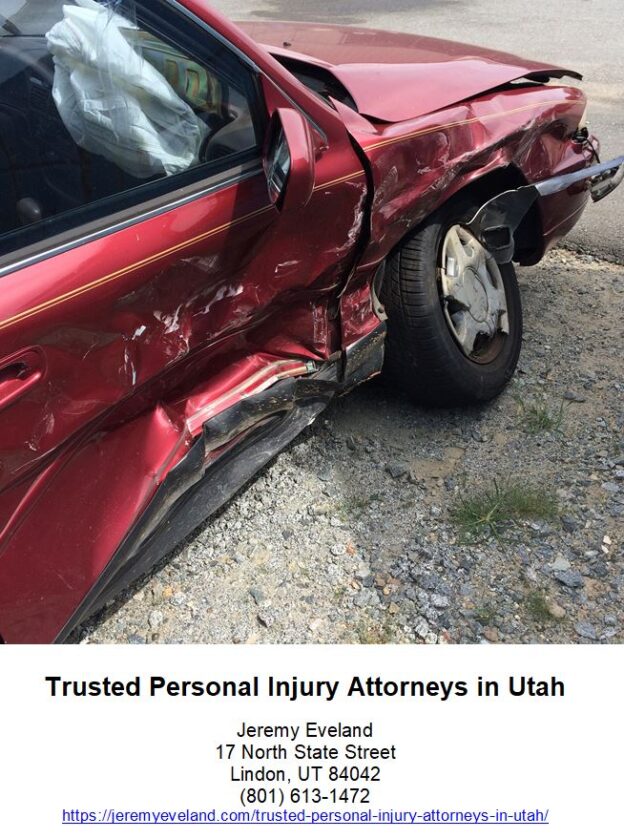
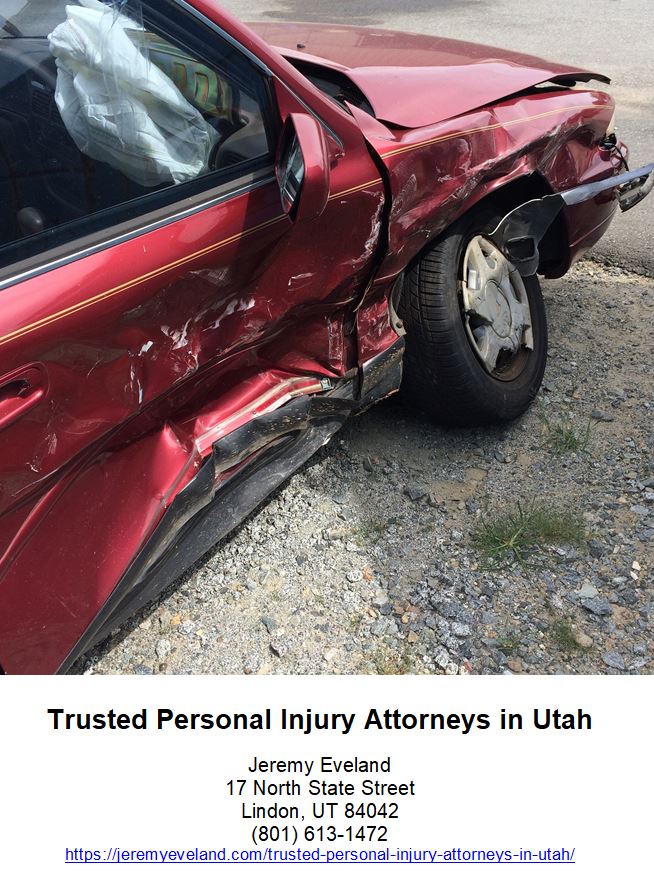
Trusted Personal Injury Attorneys in Utah

Trusted Personal Injury Attorneys in Utah

Trusted Personal Injury Attorneys in Utah

Last Updated: June 11, 2026

Understanding Trusted Personal Injury Attorneys

This guide covers Trusted Personal Injury Attorneys and what you need to know. “Utah’s Trusted Choice for Personal Injury Representation”

Introduction

If you need to find a trusted personal injury attorney to help you get the compensation you deserve. Personal injury attorneys in Utah are experienced in handling a variety of cases, from car accidents to medical malpractice. They understand the laws and regulations in the state and can help you navigate the legal process. With the right attorney, you can get the justice you deserve and the compensation you need to cover medical bills, lost wages, and other damages. This guide will provide an overview of the best personal injury attorneys in Utah and what to look for when selecting one.

The Benefits of Hiring a Reputable Personal Injury Attorney in Utah

When you have been injured due to the negligence of another person, it is important to seek legal representation from a reputable personal injury attorney in Utah. A personal injury attorney can help you to receive the compensation you deserve for your injuries and losses. Here are some of the benefits of hiring a reputable personal injury attorney in Utah.

First, a personal injury attorney in Utah will have the knowledge and experience to handle your case. They will be familiar with the laws and regulations in the state and will be able to provide you with the best legal advice. They will also be able to negotiate with the insurance companies on your behalf to ensure that you receive the maximum amount of compensation for your injuries.

Second, a personal injury attorney in Utah will be able to provide you with the necessary resources to help you through the legal process. They will be able to provide you with the necessary paperwork and documents to file a claim, as well as provide you with the necessary legal representation. This will ensure that your case is handled properly and that you receive the compensation you deserve.

Third, a personal injury attorney in Utah will be able to provide you with the necessary support and guidance throughout the entire process. They will be able to answer any questions you may have and provide you with the necessary advice to ensure that your case is handled properly. They will also be able to provide you with the necessary resources to help you through the legal process.

Trusted Personal Injury Attorneys in Utah, Lawyer Jeremy Eveland, Jeremy Eveland, Jeremy Eveland Utah Attorney, injury, law, attorney, attorneys, accidents, accident, firm, lawyers, lawyer, clients, city, injuries, case, cases, compensation, death, business, insurance, car, years, associates, claims, consultation, utah, experience, victims, advocates, family, county, malpractice, areas, practice, care, motorcycle, state, professionalism, claim, christensen, help, reputation, lake city, personal injury, law firm, personal injury law, personal injury lawyers, personal injury attorney, free consultation, personal injury lawyer, personal injury cases, insurance companies, utah county, personal injury attorneys, medical malpractice, utah attorneys, legal services, medical bills, car accident, wrongful death, st. george, legal representation, death claims, law office, craig swapp, dog bites, family law, symco injury law, west jordan, financial compensation, personal injury claims, car accidents, personal injury, utah, attorney, clients, salt lake city, lawyers, compensation, reputation, law firm, accidents, insurance companies, wrongful death, car accident, law, medical malpractice, abuse, injury, negligence, personal injuries, contingency, suit, tort law, personal injury lawyers, lawsuit, negligence, damages, self-representation, settlement, personal injury attorney, compensatory damages

Finally, a personal injury attorney in Utah will be able to provide you with the necessary resources to help you through the legal process. They will be able to provide you with the necessary paperwork and documents to file a claim, as well as provide you with the necessary legal representation. This will ensure that your case is handled properly and that you receive the compensation you deserve.

Hiring a reputable personal injury attorney in Utah can be beneficial for those who have been injured due to the negligence of another person. They will be able to provide you with the necessary resources to help you through the legal process, as well as provide you with the necessary legal representation. This will ensure that your case is handled properly and that you receive the compensation you deserve.

What to Expect When Working with a Personal Injury Law Firm in Utah

When working with a personal injury law firm in Utah, you can expect a team of experienced professionals who are dedicated to helping you get the compensation you deserve. The attorneys at the firm will work with you to understand the details of your case and develop a strategy to maximize your recovery.

The attorneys at the firm will review the facts of your case and advise you on the best course of action. They will also help you understand the legal process and the potential outcomes of your case. The attorneys will also provide you with guidance on how to best present your case to the court.

The attorneys at the firm will also work with you to negotiate a settlement with the other party or their insurance company. They will also represent you in court if necessary.

The attorneys at the firm will also provide you with emotional support throughout the process. They understand that this is a difficult time for you and will do their best to make sure you are comfortable and informed throughout the process.

Finally, the attorneys at the firm will ensure that you receive the compensation you deserve. They will work hard to make sure that you are fairly compensated for your injuries and losses.

When working with a personal injury law firm in Utah, you can expect a team of experienced professionals who are dedicated to helping you get the compensation you deserve. The attorneys at the firm will work with you to understand the details of your case and develop a strategy to maximize your recovery. They will also provide you with emotional support throughout the process and ensure that you receive the compensation you deserve.

Understanding the Different Types of Personal Injury Cases in Utah

Personal injury cases in Utah can be divided into three main categories: negligence, intentional torts, and strict liability. Each type of case has its own set of rules and procedures that must be followed in order to successfully pursue a claim.

Negligence

Negligence is the most common type of personal injury case in Utah. In order to prove negligence, the plaintiff must show that the defendant had a duty to act with reasonable care, that the defendant breached that duty, and that the breach caused the plaintiff’s injury. The plaintiff must also show that the injury resulted in damages, such as medical bills, lost wages, or pain and suffering.

Intentional Torts

Intentional torts are intentional acts that cause harm to another person. Examples of intentional torts include assault, battery, false imprisonment, and intentional infliction of emotional distress. In order to prove an intentional tort, the plaintiff must show that the defendant intended to cause harm and that the harm was the direct result of the defendant’s actions.

Strict Liability

Strict liability is a type of personal injury case in which the defendant is held liable for damages regardless of fault. This type of case is typically used in cases involving defective products or dangerous activities. In order to prove strict liability, the plaintiff must show that the defendant was engaged in an activity that was inherently dangerous and that the defendant failed to take reasonable precautions to prevent harm.

No matter what type of personal injury case you are pursuing, it is important to consult with an experienced personal injury attorney who can help you understand your rights and the legal process. An attorney can help you determine the best course of action and ensure that you receive the compensation you deserve.

The Benefits of Working with Experienced Personal Injury Attorneys in Utah

When you have been injured due to the negligence of another, it is important to seek the help of experienced personal injury attorneys in Utah. Personal injury attorneys are knowledgeable in the laws and regulations that govern personal injury cases and can provide you with the best possible outcome for your case.

The first benefit of working with experienced personal injury attorneys in Utah is that they are familiar with the laws and regulations that govern personal injury cases. They understand the nuances of the law and can provide you with the best possible outcome for your case. They can also provide you with advice on how to proceed with your case and can help you navigate the legal system.

Another benefit of working with experienced personal injury attorneys in Utah is that they are experienced in negotiating settlements. They understand the value of your case and can help you get the most out of it. They can also help you understand the legal process and can provide you with the best possible outcome for your case.

Finally, experienced personal injury attorneys in Utah can provide you with the best possible representation. They understand the complexities of personal injury cases and can provide you with the best possible outcome for your case. They can also provide you with advice on how to proceed with your case and can help you navigate the legal system.

When you have been injured due to the negligence of another, it is important to seek the help of experienced personal injury attorneys in Utah. They can provide you with the best possible outcome for your case and can help you navigate the legal system. They can also provide you with advice on how to proceed with your case and can help you understand the legal process. With their knowledge and experience, they can provide you with the best possible outcome for your case.

How to Find the Best Personal Injury Attorneys in Utah

Finding the best personal injury attorneys in Utah can be a daunting task. With so many attorneys to choose from, it can be difficult to know which one is the best fit for your case. To help you make the right decision, here are some tips for finding the best personal injury attorneys in Utah.

1. Research: Before you start your search, it’s important to do some research. Look into the attorneys’ backgrounds and experience. Read reviews and testimonials from past clients. This will give you a better understanding of the attorney’s qualifications and how they handle cases.

2. Ask for Referrals: Ask friends, family, and colleagues for referrals. They may be able to provide you with the names of attorneys they have worked with in the past. This can be a great way to find an attorney who is experienced and knowledgeable in personal injury law.

3. Schedule a Consultation: Once you have narrowed down your list of potential attorneys, it’s important to schedule a consultation. This will give you the opportunity to meet with the attorney and discuss your case in detail. During the consultation, ask questions about their experience, fees, and any other information you need to make an informed decision.

4. Check Credentials: Make sure the attorney you choose is licensed to practice law in Utah. You can check the Utah State Bar Association website for a list of licensed attorneys. Additionally, you should also check to see if the attorney has any disciplinary actions or complaints against them.

By following these tips, you can find the best personal injury attorneys in Utah. With the right attorney on your side, you can be sure that your case will be handled with the utmost care and attention.

Q&A

1. What qualifications should I look for in a trusted personal injury attorney in Utah?

When looking for a trusted personal injury attorney in Utah, you should look for an attorney who is licensed to practice law in the state of Utah, has experience handling personal injury cases, and is knowledgeable about the laws and regulations that apply to personal injury cases in Utah. Additionally, you should look for an attorney who is willing to take the time to listen to your story and provide you with personalized advice and guidance.

2. How much does it cost to hire a trusted personal injury attorney in Utah?

The cost of hiring a trusted personal injury attorney in Utah will vary depending on the complexity of your case and the attorney’s experience. Generally, attorneys charge an hourly rate or a flat fee for their services. It is important to discuss the cost of representation with your attorney before signing any agreements.

3. What types of cases do trusted personal injury attorneys in Utah handle?

Trusted personal injury attorneys in Utah handle a variety of cases, including car accidents, slip and fall accidents, medical malpractice, product liability, and wrongful death.

4. What should I expect during my consultation with a trusted personal injury attorney in Utah?

During your consultation with a trusted personal injury attorney in Utah, you should expect to discuss the details of your case, including the facts of the accident, the injuries you sustained, and any other relevant information. Your attorney will also explain the legal process and answer any questions you may have.

5. How long does it take to resolve a personal injury case in Utah?

The length of time it takes to resolve a personal injury case in Utah will depend on the complexity of the case and the amount of evidence available. Generally, it can take anywhere from a few months to several years to resolve a personal injury case.

Personal Injury Consultation

When you need legal help with a personal injury matter, call Jeremy D. Eveland, MBA, JD (801) 613-1472 for a consultation.

Jeremy Eveland
17 North State Street
Lindon UT 84042
(801) 613-1472

Home

Related Posts

Registered Trade Marks

Due Diligence

Do I Need A Permit To Start A Business In Utah?

Business Succession Lawyer Draper Utah

Tax Law

Startup Attorney

Business Contract Lawyer Salt Lake City

Goals of Estate Planning

What Is The Difference Between Corporate And Commercial Law?

Business Credit

Business Contract Lawyer West Valley City

Commercial Real Estate Law

AI Business Consultant

Estate Planning Documents

Mechanic’s Lien in Utah

Business Lawyer West Jordan Utah

Artificial Intelligence

Irrevocable Life Insurance Trusts

What Is The Purpose Of A Business Attorney?

Commercial Lease Lawyer

Business Transaction Lawyer Provo Utah

What Is An LLC?

Boutique Law Firm

Contract Negotiation

Employment Law

Trusted Personal Injury Attorneys in Utah

Introduction

Visit USA.gov for official resources.

For legal assistance, contact Jeremy Eveland, Attorney at Law — 8833 S Redwood Rd #A, West Jordan, UT 84088 · (801) 613-1472.

Goals of Estate Planning

Goals of Estate Planning

Goals of Estate Planning

Last Updated: June 11, 2026

Estate planning is an important process for people in Utah to consider. It is a way for individuals to take control of their assets and make sure that their wishes are carried out after they are gone. Estate planning can help ensure that the individual’s assets are distributed according to their wishes and that their family is taken care of. In Utah, there are specific goals that individuals should keep in mind when they are creating their estate plans.

The first goal of estate planning in Utah is to ensure the financial security of the individual’s family. This includes making sure that their spouse and children are provided for financially after the individual’s death. Estate planning can provide for the individual’s spouse and children by designating a beneficiary on life insurance policies, setting up trusts, or creating wills. It is important to have a plan in place to ensure that the individual’s family is taken care of financially after they are gone.

The second goal of estate planning in Utah is to minimize the tax burden on the individual’s family. Estate planning can help to reduce the taxes that the individual’s family will have to pay on their inheritance. This can be accomplished by taking advantage of certain tax benefits, such as using a trust or other estate-planning strategies. It is important to understand the tax implications of each estate-planning strategy so that the individual can make an informed decision about which one is best for their situation.

The third goal of estate planning in Utah is to ensure that the individual’s wishes are carried out after they are gone. Estate planning allows individuals to create documents that outline their wishes for the distribution of their assets after they are gone. This includes setting up trusts, creating wills, and making sure that their wishes are respected by the courts. By creating these documents, individuals can ensure that their wishes are followed after they are gone.

Goals of Estate Planning, Jeremy Eveland, Jeremy, Eveland, Lawyer Jeremy Eveland, Attorney Jeremy Eveland, Utah Attorney Jeremy Eveland, estate planning, assets, trust, probate, taxes, beneficiaries, executor, tax, estate taxes, utah, lehi, utah, power of attorney, lehi, park, law, attorney, probate court, spouse, massachusetts, bus, usa, heirs, estate, step up in basis, probate administration, estate planner, liquid assets, 401(k), cost-basis, living wills, advance directives, estate-planning, generation skipping, last testament, illiquid, trusted, will, living trust, probated, 529 plan, liquidity, additional medicare tax, powers of attorneys, revocable trust, estate, planning, assets, plan, tax, trust, taxes, goals, children, death, property, attorney, family, life, beneficiaries, state, person, time, care, power, income, probate, documents, process, court, law, home, asset, executor, business, decisions, wishes, people, gift, ones, trusts, amount, basis, objectives, spouse, estate planning, estate plan, estate taxes, loved ones, probate court, ascent law llc, minor children, estate plans, real estate, bus stop, estate planning goals, irrevocable trust, healthcare proxy, life estate deed, common estate planning, married couples, health care, durable power, legal documents, income taxes, nursing home, helpful guides, estate planner, proper estate planning, financial advisor, federal estate tax, internal revenue service, family members, united states, capital gains tax

The fourth goal of estate planning in Utah is to protect the individual’s assets from creditors. Estate planning can help individuals protect their assets from creditors by setting up trusts and other strategies. This can help ensure that the individual’s assets are not taken by creditors and that their family is taken care of financially.

The fifth goal of estate planning in Utah is to provide for the individual’s long-term care. Estate planning can help individuals plan for their long-term care needs by setting up trusts, creating wills, and taking advantage of other strategies. This can help ensure that the individual’s care needs are taken care of and that their wishes are respected by the courts.

The goals of estate planning in Utah are varied and can be tailored to the individual’s specific needs and circumstances. It is important to understand the different goals of estate planning and to create a plan that takes into account the individual’s wishes and desires. By understanding the goals of estate planning in Utah, individuals can create a plan that will ensure that their wishes are carried out after they are gone and that their family is taken care of financially.

Estate Planning Consultation

When you need help with estate planning, call Jeremy D. Eveland, MBA, JD (801) 613-1472 for a consultation.

Jeremy Eveland
17 North State Street
Lindon UT 84042
(801) 613-1472

Home

Related Posts

Business Succession Lawyer Lehi Utah

Business Succession Lawyer Millcreek Utah

Business Succession Lawyer Murray Utah

Business Transaction Lawyer

Construction Law

Business Lawyer Salt Lake City Utah

What Is An Express Contract?

Antitrust Law

Salt Lake City Business Transaction Attorney

Business Succession Lawyer Herriman Utah

What Are The Advantages Of Hiring A Business Lawyer?

Business Succession Lawyer Logan Utah

Buy Sell Agreement

What Is The Relationship Between Business Law And Economies?

Litigation

Commercial Law

Business Transaction Lawyer West Valley City Utah

Registered Trade Marks

Due Diligence

Do I Need A Permit To Start A Business In Utah?

Business Succession Lawyer Draper Utah

Tax Law

Startup Attorney

Business Contract Lawyer Salt Lake City

Goals of Estate Planning

Visit USA.gov for official resources.

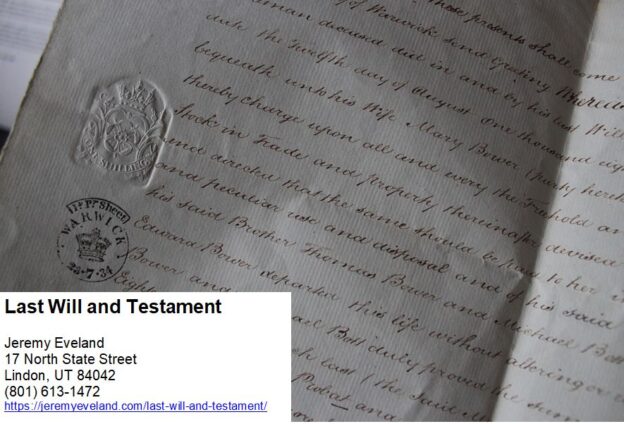
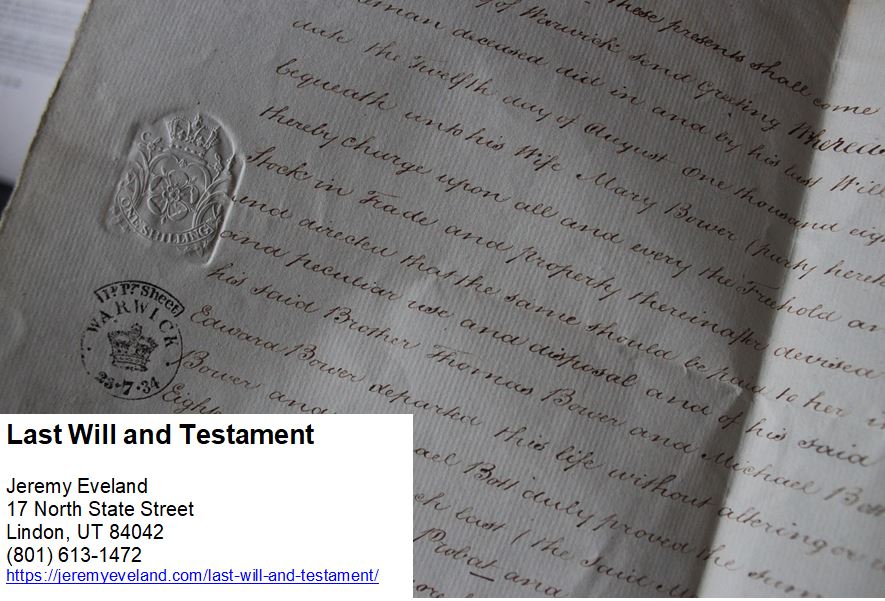
Last Will and Testament

Last Will And Testament

Last Will And Testament

Last Updated: June 11, 2026

A last will and testament is a legal document that allows someone to dictate how their property, assets, and other possessions should be distributed upon their death. It also names a person to serve as the executor of the estate and specifies who will receive which assets. The will should be drafted and signed by the testator, the person making the will, in the presence of two witnesses and a notary public.

The purpose of a last will and testament is to ensure that the testator’s wishes are carried out after death. It can prevent disputes between family members and ensure that the testator’s assets are distributed in a way that reflects their wishes and intentions. After you create a will, you can always revoke it while you are alive. Revocation can be done in different ways depending on where you are domiciled at the time you intend to revoke your will. Best to talk to an estate planning attorney to make sure your revocation is valid.

What Is A Last Will And Testament?

Dictionary Definition: Last Will and Testament: A written document in which a person (testator) sets forth instructions for the disposition of his or her property after death. The will typically names an executor, who is responsible for carrying out the instructions of the will, and may also name guardians for minor children of the testator. Last Wills and Testaments usually must be signed by the testator and witnessed by two or more individuals.

Last Will and Testament, estate, property, assets, state, testator, person, executor, wills, document, court, trust, children, witnesses, lawyer, attorney, death, people, documents, beneficiaries, probate, states, wishes, life, living, process, individual, name, time, planning, spouse, family, law, someone, laws, testament, money, requirements, example, insurance, care, legal document, personal property, probate process, personal representative, probate court, many people, legal guardian, sound mind, legal documents, total estate, estate planning, rocket lawyer, last wills, many jurisdictions, living trust, life insurance, loved ones, testament form, minor children, notary public, estate plan, state law, self-proving affidavit, final wishes, law firm, legal advice, legal professionals, helpful guides, funeral arrangements, real estate, last will and testament, will, testator, assets, executor, lawyer, beneficiary, probate, trust, witnesses, attorney, bond, spouse, rocket lawyer, jurisdictions, estate planning, gift, revocation, debts, personal property, affidavit, property, testament, living will, expenses, mind, peace of mind, dependent relative revocation, trusts, schuyler, probate laws, will or testament, st. lawrence, devises, without a valid will, madison, last will, holographic will, testament, freedom of disposition, olographic testament, living will, estate-planning, testamentary trusts, revocable living trust, intestate, wills,

What Does A Last Will And Testament Include?

A last will and testament should include the testator’s name, address, and the names of the beneficiaries, which are the people who will receive the testator’s assets. It should also include the testator’s wishes regarding the distribution of their assets, who will serve as the executor of their estate, and any other instructions the testator wishes to include.

The will should also include the names of two witnesses who can attest to the fact that the testator signed the document of their own free will and in sound mind. The witnesses should also be present when the testator signs the document and must be at least 18 years old.

The testator should also name a person to serve as their personal representative, which is the person who will be responsible for carrying out the testator’s wishes. This person should be someone the testator trusts to handle their estate upon their death.

What Are The Requirements For A Last Will And Testament?

The requirements for a last will and testament vary from state to state, but generally the testator must be at least 18 years old and of sound mind. The document must also be signed in the presence of at least two witnesses who are at least 18 years old.

The document should also be notarized, which means that a notary public will witness the signing of the document and will typically ask the testator a few questions to ensure that they understand what they are signing.

In addition, the testator should list all of their assets and specify who will receive each asset in the document. It is also important to name an executor, who will be responsible for carrying out the testator’s wishes, as well as a personal representative who will handle any debts or taxes that may be owed upon the testator’s death.

What is Dependent Relative Revocation?

The term dependent relative revocation refers to the procedure by which an entity revokes a certificate that is dependent on another certificate that has already been revoked. The entity can revoke the certificate they hold even if they do not hold the other certificate, because the certification authority (CA) who issued the dependent certificate has already handled all the necessary steps to revoke that certificate. Dependent relative revocation is a defense against a revoked certificate in which, when the original certificate is revoked, dependent certificates are also revoked.

What Are The Benefits Of Having A Last Will And Testament?

Having a last will and testament is an important part of estate planning and can provide peace of mind to the testator and their loved ones. A will can ensure that the testator’s wishes are followed after their death and that their assets are distributed in a way that reflects their wishes and intentions.

A will can also be beneficial in preventing disputes between family members or other beneficiaries. It can also take the burden off of the testator’s family members or other loved ones by making the process of settling the estate much easier.

In addition, a will can also help to ensure that any special instructions the testator may have are followed, such as funeral arrangements or the care of a dependent relative.

Where Can I Get Help With A Last Will And Testament?

If you are interested in creating a last will and testament, it is important to seek legal advice from a qualified attorney or other legal professionals. Many states also have helpful guides available online that can help you create a valid will.

There are also several companies, such as Rocket Lawyer, that provide helpful resources for drafting a last will and testament. These companies can provide you with the necessary forms and can also help you to understand your state’s laws and requirements for a valid will.

It is also important to note that the laws and requirements for a last will and testament vary from state to state, so it is important to research your state’s laws before drafting a will.

Control Who Gets your Property, Assets, Etc.

A last will and testament is a legal document that allows someone to dictate how their property, assets, and other possessions should be distributed upon their death. It also names a person to serve as the executor of the estate and specifies who will receive which assets. The requirements for a valid will vary from state to state, so it is important to research your state’s laws before drafting a will.

If you are interested in drafting a last will and testament, it is important to seek legal advice from a qualified attorney or other legal professionals. Many states also have helpful guides available online that can help you create a valid will. There are also several companies, such as Rocket Lawyer, that provide helpful resources for drafting a last will and testament.

Having a lawyer write your Last Will and Testament is highly recommended. It is important to make sure that your wishes are followed and that the document is legally binding. A lawyer can help ensure that your wishes are carried out properly and that your assets are distributed according to your wishes.

A Last Will and Testament is a legal document that outlines your wishes for the distribution of your assets upon your death. It also allows you to appoint an executor, who will be responsible for carrying out your wishes. Without a properly drafted Last Will and Testament, your assets could be distributed according to the laws of your state, which may not be in line with your wishes.

A Will Lawyer Can Help You

A lawyer can help you draft a Last Will and Testament that meets all of the legal requirements of your state. They can also advise you on any potential tax implications of your estate plan. This can help ensure that your assets are distributed in a way that is beneficial to your beneficiaries.

Having a lawyer write your Last Will and Testament can also provide peace of mind. Your lawyer will be able to ensure that your wishes are legally binding and that your assets are distributed according to your wishes. This can help remove the potential for disputes between family members or beneficiaries.

Having a lawyer write your Last Will and Testament can also help to protect your assets. They can advise you on ways to protect your assets from creditors or lawsuits. They can also advise you on ways to limit or avoid estate taxes.

Finally, having a lawyer write your Last Will and Testament can provide you with the assurance that your wishes will be carried out after your death. Your lawyer can make sure that your document is properly drafted and that all of the legal requirements are met. This can help to ensure that your wishes are followed and that your assets are distributed according to your wishes.

Having a lawyer write your Last Will and Testament is an important step for anyone planning for their future. It can provide you with peace of mind and can help ensure that your wishes are followed. A lawyer can help you draft a document that meets all of the legal requirements and can advise you on ways to protect your assets.

A Will As Part Of Your Estate Plan

A Last Will and Testament is an essential part of any good estate plan. This document allows you to designate who your assets and possessions will be passed on to when you pass away. It also allows you to name an executor who is responsible for carrying out the terms of your will. Additionally, having a Last Will and Testament can help to avoid family disputes over your estate by making your wishes known. It also allows you to name guardians for any minor children you may have. When creating a Last Will and Testament it is important to make sure it is in compliance with your state’s laws and is properly witnessed and notarized.

Last Will and Testament Lawyer Consultation

When you need legal help with a Last Will and Testament, call Jeremy D. Eveland, MBA, JD (801) 613-1472.

Jeremy Eveland
17 North State Street
Lindon UT 84042
(801) 613-1472

Home

Recent Posts

Business Law

Business Lawyer

Contract Law

Offer and Acceptance

The Utah Uniform Partnership Act

The 10 Essential Elements of Business Succession Planning

Business Succession Law

Estate Planning

Utah Business Law

Advertising Law

Real Estate Law

Law Firm

Legal Contract

Intellectual Property

Visit USA.gov for official resources.