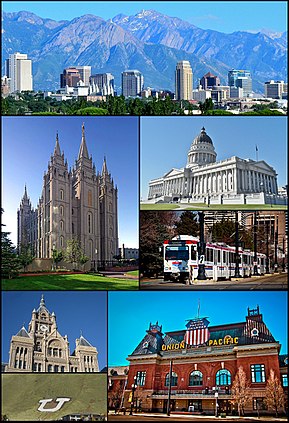
If you have arrived on this page you probably need to hire a business lawyer near Salt Lake City Utah. Whether you need help with litigation, contracts, or general counsel, consider contacting attorney Jeremy Eveland to assist you as your lawyer.
Salt Lake City, Utah is home to many successful business lawyers. With the city’s booming economy, there is an increasing need for attorneys who specialize in business law. Business attorneys are responsible for helping businesses and corporations with the legal aspects of operating in the state. They provide legal advice, research, and other services related to business transactions and disputes. Jeremy Eveland regularly helps businesses as a consultant, lawyer, and a trusted advisor regarding business succession.
Business is defined by Black’s Legal Dictionary as “A commercial enterprises carried on for profit; a particular occupation or employment habitually engaged in for livelihood or gain.” page 157.
Lawyer is defined by Black’s Legal Dictionary as both a verb and a noun. When a noun it is “one who is licensed to practice law.” When a verb, it is “1. to practice as a lawyer or 2. To supply with lawyers .” page 717-718.
Business lawyers in Salt Lake City, Utah are highly educated professionals who have completed a rigorous path of study and training. Most business lawyers in the area have a degree from a law school, and many have attended a school accredited by the American Bar Association. In addition to their formal education, many business attorneys in the city have also completed additional courses in specialized areas such as tax law or corporate law.
The job of a business lawyer in Salt Lake City, Utah involves providing legal advice to clients on a variety of matters related to business and the law. This includes helping businesses with the formation of corporations and limited liability companies, contract negotiation and drafting, and disputes between business owners, clients, and other entities. Business lawyers also provide strategic advice to clients on a variety of legal issues and help them navigate the complex world of corporate law. We can usually help corporations and LLCs with the follow:
In addition to providing legal advice, business lawyers in Salt Lake City are also responsible for researching and analyzing legal documents, conducting legal research, and preparing documents and pleadings for court proceedings. They may also represent clients in court and work with other attorneys to prepare for litigation and trial. Many business lawyers also have their own blog sites where they post updates and advice on legal topics and current issues.
Business lawyers in Salt Lake City are also highly sought after for their expertise in commercial and insurance law. Many business owners turn to business lawyers for advice on how to protect their business from potential legal issues, as well as for help with insurance coverage cases. Business lawyers are also experienced in dealing with litigation, including representing clients in federal court and before the state’s bar association. In addition to providing legal advice, business lawyers in Salt Lake City also provide strategic advice to clients on a variety of legal issues, helping them make informed decisions about their businesses.
Jeremy Eveland is considered by some to be among the leading law firms in Salt Lake City, Utah that focuses in on business law. Jeremy Eveland is an experienced attorney who has many years of experience in the field. Mr. Eveland has obtained verdicts in insurance cases and has been involved in several cases over the years. The firm also represents a wide range of personal clients and businesses, handling a variety of legal issues, from global risks working with the director of global assets to the COO, CFO, and CEO of different companies and their subsidiaries. Some areas of business law include representation of:
Construction Companies
Landscape Companies
General Contractors
Subcontractors
Manufacturing Companies
Concrete Businesses
Direct to Consumer Businesses
Business to Business Sales Companies
Medical Devices Companies
and many more.
At the law firm, the attorney strives to provide the highest quality legal representation to all clients. The firm’s attorneys are dedicated to providing clients with the best legal advice, as well as strategic advice on how to handle their legal issues based on their specific circumstances. There simply are no cookie cutter answers in business law. They are also committed to providing their clients with a comprehensive understanding of business law, as well as their rights and responsibilities as business owners, including intellectual property rights, contract rights, HR and OSHA matters.
If you are in need of legal advice, the Jeremy Eveland may be able help. The firm offers a range of services, including helping clients with the formation of business entities and partnerships, contract negotiations and drafting, and disputes between business owners and other entities. Depending on the case, the firm may provide legal representation in court and provides strategic advice on a variety of legal issues, including corporate law, intellectual property law, employment and labor law, and franchisees. Mr. Eveland primarily acts as general counsel for his business clients in Salt Lake City.
If you are a business owner in Salt Lake City, Utah Mr. Eveland may be the right attorney for you. The firm’s attorneys are committed to providing the highest quality of legal services to their clients, from providing advice to researching and analyzing legal documents. The firm is also involved in a variety of continuing legal education courses to keep all attorneys up to date on the latest developments in the field.
Business Lawyer Salt Lake City Utah Consultation
When you need legal help with transactional law in Utah, call Jeremy D. Eveland, MBA, JD (801) 613-1472.
Jeremy Eveland
17 North State Street
Lindon UT 84042
(801) 613-1472
Salt Lake City (often shortened to Salt Lake and abbreviated as SLC) is the capital and most populous city of Utah, as well as the seat of Salt Lake County, the most populous county in Utah. With a population of 200,133 in 2020,[10] the city is the core of the Salt Lake City metropolitan area, which had a population of 1,257,936 at the 2020 census. Salt Lake City is further situated within a larger metropolis known as the Salt Lake City–Ogden–Provo Combined Statistical Area, a corridor of contiguous urban and suburban development stretched along a 120-mile (190 km) segment of the Wasatch Front, comprising a population of 2,606,548 (as of 2018 estimates),[11] making it the 22nd largest in the nation. It is also the central core of the larger of only two major urban areas located within the Great Basin (the other being Reno, Nevada).
Salt Lake City was founded July 24, 1847, by early pioneer settlers, led by Brigham Young, who were seeking to escape persecution they had experienced while living farther east. The Mormon pioneers, as they would come to be known, entered a semi-arid valley and immediately began planning and building an extensive irrigation network which could feed the population and foster future growth. Salt Lake City’s street grid system is based on a standard compass grid plan, with the southeast corner of Temple Square (the area containing the Salt Lake Temple in downtown Salt Lake City) serving as the origin of the Salt Lake meridian. Owing to its proximity to the Great Salt Lake, the city was originally named Great Salt Lake City. In 1868, the word “Great” was dropped from the city’s name.[12]
Salt Lake City has developed a strong tourist industry based primarily on skiing and outdoor recreation. It hosted the 2002 Winter Olympics. It is known for its politically progressive and diverse culture, which stands at contrast with the rest of the state’s conservative leanings.[13] It is home to a significant LGBT community and hosts the annual Utah Pride Festival.[14] It is the industrial banking center of the United States.[15] Salt Lake City and the surrounding area are also the location of several institutions of higher education including the state’s flagship research school, the University of Utah. Sustained drought in Utah has more recently strained Salt Lake City’s water security and caused the Great Salt Lake level drop to record low levels,[16][17] and impacting the state’s economy, of which the Wasatch Front area anchored by Salt Lake City constitutes 80%.[18]
Construction law is a subcategory of Business Law. Utah construction law is a complex area of legal practice that encompasses a wide range of issues, from contracts and bidding to dispute resolution and litigation. We will provide an overview of the legal framework of construction law in Utah and discuss the roles of lawyers, contractors, and other stakeholders in the construction industry. We will also discuss some of the legal issues that arise in construction projects, with a particular focus on bid protests, dispute resolution, and construction defects. Finally, we will consider the resources available to construction lawyers, such as the American Bar Association’s Forum on Construction Law, free classes, and how-to guides.
Legislative Framework
The laws governing construction in Utah are relatively complex and are largely based on state statutes, court decisions, and administrative regulations. Utah’s Construction Law Statutes (UTC) generally provide the framework for the construction industry, while the Utah Courts have issued decisions that have further clarified the legal landscape. The state has also adopted a number of administrative rules related to construction projects, such as those governing contracts, bidding, and dispute resolution.
In addition to the state laws, the American Bar Association (ABA) has established a Forum on Construction Law, which provides additional guidance to construction lawyers and other stakeholders in the construction industry. The Forum publishes a variety of resources, including a second edition of the ABA’s Construction Law Statutes and Regulations, as well as a series of free classes and how-to guides.
Roles of Lawyers, Contractors, and Other Stakeholders
Construction law is a highly specialized field of legal practice that requires knowledge of both the legal framework and the practical aspects of the construction industry. Construction lawyers typically provide legal advice and representation to clients, such as contractors, architects, developers, and other stakeholders in the construction industry. They may also represent clients in court proceedings, such as bid protests and other disputes.
Contractors and other stakeholders in the construction industry have an important role to play in the legal process. They are responsible for understanding the legal requirements of their projects, such as bidding and contracting, and for complying with applicable laws and regulations. They must also be aware of their rights and obligations under contracts and other legal documents.
Lawyers who specialize in construction law can help contractors and clients in a variety of ways. Lawyers can draft and review contracts, advise clients on legal issues related to construction projects, help clients with bid protests, and represent clients in court or arbitration proceedings. Additionally, lawyers can help contractors and clients with dispute resolution, including mediation and arbitration. They can also provide assistance with construction defects, liquidated damages, and claims of negligence.
The American Bar Association (ABA) offers a wide range of resources to attorneys specializing in construction law. The ABA offers free classes, how-to guides, and other resources to help lawyers better understand the legal issues involved in construction projects. Lawyers may also take advantage of the ABA’s Construction Lawyer Certification Program, which provides certification to lawyers who have demonstrated a high level of knowledge in construction law.
In addition to the resources provided by the ABA, lawyers may also pursue a construction law degree or an LL.M in construction law if the law school offers the program. Some lawyers will take continuing education classes (or CLE) to learn construction law as well as take cases with co-counsel to learn those areas. A law degree where the student studies construction law specifically (or draft a law journal article about it) can provide an in-depth understanding of the legal issues related to construction projects. Lawyers may also pursue a Legal Studies Certificate or something similar to further their legal education.
Lawyers may also take advantage of alternative dispute resolution (ADR) programs offered by the state. These programs provide a cost-effective and quick way to resolve disputes without having to go to court. Mediation and arbitration are two of the most common forms of ADR used in construction law. Mediators are typically lawyers who are knowledgeable about construction law and can help both sides in a dispute reach an agreement.
Finally, lawyers may also join the ABA’s Forum on the Construction Industry, a group of lawyers dedicated to providing resources and support to members of the construction industry. The Forum provides members with access to free classes and how-to guides, as well as a network of lawyers who specialize in construction law. The Forum also provides members with access to a variety of legal resources, such as Construction Law Second Edition, a comprehensive guide to construction law and related topics.
Legal Issues in Construction Projects
Construction projects often involve a variety of legal issues, such as bid protests, dispute resolution, and construction defects. Bid protests are a common issue in the construction industry, as contractors may challenge a bid award if they believe that the process was not conducted fairly or that the successful bidder did not comply with applicable laws and regulations. In such cases, the contractor may file a complaint with the appropriate state agency or court.
Dispute resolution is also a common issue in the construction industry. Disputes may arise over contractual issues, such as payment, performance, or materials, and may require the use of alternative dispute resolution (ADR) methods, such as mediation and arbitration. If the parties cannot resolve the dispute through ADR, they may need to pursue litigation.
Construction defects are a common issue in the construction industry. When a contractor is found to have breached their contract, they may be liable for damages, such as repair costs or lost profits. In some cases, contractors may also be liable for liquidated damages.
Utah Construction Lien Law
Construction lien law in Utah is complicated and requires careful attention to detail. Any contractor or subcontractor who wishes to exercise their right to file a lien on a project must adhere to certain procedures and must make sure they are familiar with the rules. It is highly recommended to consult with a lawyer experienced in Utah construction lien law before getting involved in a project.
The first step in protecting your rights is to file a pre-lien notice in the county recorder’s office. This pre-lien notice serves as a warning to the property owner that you have lien rights on the project and is an important step to protect your rights. The pre-lien must contain the name of the lien claimant, the name of the owner, the legal description of the property, and the estimated amount of the claim.
Once the pre-lien is filed, the next step is to register with the Utah Construction Registry. This registry is a statewide database that tracks all construction projects in Utah. Registration with the registry is free and provides contractors with important information regarding the project, including the name of the owner, the property address, and the estimated cost of the project.
After registering with the registry, the next step is to file a Notice of Commencement with the county recorder’s office. This notice must contain the name of the owner, the legal description of the property, the estimated cost of the project, and the name of the contractor. In addition, the Notice of Commencement must be published in the newspaper for at least five consecutive days. This Notice of Commencement serves to inform the public of the construction project and to provide notice to potential lien claimants that they have a right to file a lien on the property.
In order to file a lien in Utah, the lien claimant must wait 30 days after the Notice of Commencement has been published in the newspaper. After the 30-day waiting period, the lien claimant can file a lien with the county recorder’s office. The lien must contain the name of the lien claimant, the legal description of the property, the name of the owner, the estimated cost of the project, and the amount of the lien. The lien must also be published in the newspaper for at least five consecutive days before it can be enforced.
Construction lien law in Utah is complex and requires careful attention to detail. Contractors and subcontractors must make sure they are familiar with the procedures and must take the necessary steps to protect their rights. This includes filing a pre-lien notice in the county recorder’s office, registering with the Utah Construction Registry, and filing a Notice of Commencement in the newspaper. After the 30-day waiting period, the lien claimant may file a lien with the county recorder’s office. It is highly recommended to consult with a lawyer experienced in Utah construction lien law before getting involved in a project.
Resources for Construction Lawyers
Construction lawyers have access to a variety of resources to help them understand and navigate the complexities of construction law. The American Bar Association’s Forum on Construction Law provides a wealth of information and resources, including a second edition of the ABA’s Construction Law Statutes and Regulations and a series of free classes and how-to guides. Additionally, construction lawyers may consider pursuing a Master of Laws (LL.M.) in Legal Studies or a Construction Law Degree to further their knowledge and expertise.
Before you hire a construction law attorney, be sure that attorney has knowledge of both the legal framework and the practical aspects of the construction industry. Construction lawyers, contractors, and other stakeholders in the construction industry must be aware of the legal issues that may arise in construction projects, such as bid protests, dispute resolution, and construction defects. Additionally, there are a variety of resources available to construction lawyers, such as the American Bar Association’s Forum on Construction Law, free classes, and how-to guides. By understanding the legal framework and the resources available, construction lawyers can provide the best possible advice and representation to their clients.
Construction Law Attorney Consultation
When you need legal help with construction law in Utah, call Jeremy D. Eveland, MBA, JD (801) 613-1472.
Jeremy Eveland
17 North State Street
Lindon UT 84042
(801) 613-1472
If you are on this webpage you probably understand that proper Business Succession Planning is essential and that you need to have a Lehi Utah Lawyer help you to Secure Your Business’s Future. This is part of Business Succession Law and under the main category of Business Law.
Business succession planning is an important factor for any business owner to consider, as it can help to ensure the business’s longevity and success into the future. Succession planning is the process of planning for the transfer of ownership and management of a business from one generation to the next. It is a critical process that should be undertaken to ensure the future of the business and its owners.
Business succession planning involves more than just the transfer of ownership. It also involves the transfer of management, the development of a succession plan, and the implementation of strategies to ensure a successful transition. Proper planning can help to ensure that the business’s future is secure and that it will continue to be successful for years to come.
One of the key elements of business succession planning is the development of a succession plan. A succession plan is a document that outlines the ownership and management of the business and the steps that will be taken to ensure a smooth transition from one generation to the next. The plan should include the names of the designated successors, the timeline for the transition, and the strategies that will be used to ensure a successful transition.
The development of a succession plan should be undertaken with the help of an experienced business succession planning consultant. These consultants have the expertise and knowledge necessary to help business owners develop a plan that is tailored to the needs of their business. Consultants may also be able to provide advice on how to best manage the transition process, as well as provide advice on how to prepare for the future of the business.
In addition to developing a succession plan, business owners should also consider the financial aspects of the transition. This includes making sure that the business is properly insured and that the necessary taxes and fees are paid. It is also important to consider the estate taxes that may be applicable in the event of a business sale or transfer.
The transition process should also be carefully considered. It is important to ensure that the transition is smooth and that the business is not disrupted. The transition process should also involve the transfer of ownership and management of the business, as well as the development of any necessary agreements.
The transition process should also include the development of a buy-sell agreement. This agreement is a legally binding document that outlines the terms and conditions of the sale or transfer of the business. It should include the names of the buyers and sellers, the purchase price, the payment terms, and any other relevant information.
The transition process should also include the consideration of any outside parties that may be involved in the transaction. This may include family members, creditors, or other investors. It is important to ensure that all parties involved in the transaction are aware of the terms and conditions of the buy-sell agreement and that they agree to the terms.
The transition process should also include the consideration of any other related entities. This may include trustees, executors, or other entities. It is important to ensure that all of the relevant entities are aware of the terms and conditions of the buy-sell agreement and that they agree to the terms.
The transition process should also include the consideration of any key employees. These employees may be key to the success of the business and should be taken into account when planning for the transition. It is important to ensure that these employees are aware of the terms of the buy-sell agreement and that they agree to the terms.
The transition process should also include the consideration of any financial life insurance policies that may be necessary. These policies can help to protect the business and its owners in the event of the death of a key employee or family member. It is important to ensure that these policies are in place before the transition takes place.
The transition process should also include the consideration of any taxes and fees that may be applicable. This may include estate taxes, capital gains taxes, and other taxes that may be applicable. It is important to ensure that all of the relevant taxes and fees are paid before the transition takes place.
Finally, the transition process should include the consideration of any other related entities. This may include trustees, executors, or other entities. It is important to ensure that all of the relevant entities are aware of the terms and conditions of the buy-sell agreement and that they agree to the terms.
With proper planning and the help of a business succession planning consultant, business owners can ensure the future of their business and its owners. The transition process should be undertaken with the utmost care and consideration to ensure the business’s future success. With a well-developed succession plan, business owners can ensure the security of their business and its owners for many years to come.
Business Succession Law
Business succession planning is the process in which long-term needs are identified and addressed. The main concern in succession planning is in providing for the continuation of business operations in the event that the owner or manager retires or suddenly becomes incapacitated or deceased. This can occur by several means, such as transferring leadership to the following generation of family members or by naming a specific person to become the next owner. It is highly advantageous to have a business succession plan. Such a plan can create several benefits for the business, including tax breaks and no gaps in business operations. The plan will be formally recorded in a document, which is usually drafted by an attorney. A business succession plan is similar to a contract in that it has binding effect on the parties who sign the document and consent to the plan. Therefore, the main advantage of having a succession plan is that the organization will be much better prepared to handle any unforeseen circumstances in the future.
A well thought out succession plan will be both very broad in scope and specific in detailed instruction. It should include many provisions to address other concerns besides the issue of who will take over ownership.
A business succession plan should include:
• Approximate dates or time frames when succession will begin. For example, the projected date of the owner’s retirement. Instructions should also be composed for steps to take as the date approaches.
• Provisions for what should occur in case of the owner’s unexpected incapacitation, such as in the event of severe illness or death. A replacement should be named in these provisions, and you should state how long their responsibilities will last (i.e., permanent or temporary).
• Identification of who will be the next successor or a guideline for how election should occur, and instructions to ensure a smooth transition.
• A strategic plan for the business after the succession has taken place. This should include any new revisions to current policies and management structures.
As you might expect, there are many legal matters to be addressed when creating a succession plan. Some common issues that arise in connection with business succession include:
• Choice of successor: If the succession plan does not clearly name a successor, it can lead to disputes, especially amongst family members who may be inheriting the business. Be sure to state exactly who will take charge.
• Property distribution: If there is any property in the previous owner’s name, this will need to be addressed so that the property can be distributed upon or during transition.
• Type of business form: Every type of business has different requirements regarding succession. For example, if the business is a corporation, the previous owner’s name must be removed from the articles of incorporation and replaced with that of the successor’s name. On the other hand, partnerships will usually dissolve upon the death of a partner, and it must be re-formed unless specific provisions are made in a contract.
• Tax issues: Any outstanding taxes, debts, or unfinished business must be resolved. Also, if the owner has died, there may be issues with death taxes.
• Benefits: You should ask whether the business will continue to provide benefits even after the owner has retired. For example, health care, life insurance, and retirement pay must be addressed.
• Employment contracts: If there are any ongoing employment contracts, these must be honored so as to avoid an employment law disputes. For example, if there is going to be a change in management structure, it must take into account any provisions contained in the employees’ contracts.
Picking the Successor
When creating the business succession plan, it is crucial that the person that succeeds the current owner is able to continue the company successfully. Without this ability, many individuals may be crossed off the list. Otherwise, it is just easier to sell the organization to someone that the owner has not invested interest in, and the continued transactions and revenue mean nothing personal. One of the primary reasons to have a business succession plan is to ensure the company continues functioning after the owner either enters retirement or dies. For the successor to be a family member, he or she must be fully prepared to work hard and invest time and energy into the business. Many owners of a business have multiple family members or assistants that could take his or her place. It is important to assess both the strengths and weaknesses of each individual so he or she is able to choose the person best suited for the position. There could be resentment and negative emotions that affect the arrangement with other members of the family, and this must be taken into account along with keeping other relationships from becoming complicated such as a spouse or the manager of the business who may have assumed he or she would take on the ownership or full run of the company.
Finalizing the Process
While some may sell the company before retiring or death, it is still important to determine the value of the business before the plan is finalized. This means an appraisal and documentation with the successor’s name and information. Additional items may need to be purchased such as life insurance, liability coverage and various files with the transfer of ownership if the owner is ready to conclude the proceedings. The current owner may also be provided monetary compensation for his or her interest or a monthly stipend based on the profits of the company. These matters are determined by the paperwork and possession of the business. The transfer may be possible through a cross-purchase agreement where each party has a policy on the partners in the business. Each person is both owner and beneficiary simultaneously. This permits a buyout of shares or interest when one partner dies if necessary. An entity purchase occurs with the policy being both beneficiary and owner. Then the shares are transferred to the company upon the death of one person. Succession plans are commonly associated with retirement; however, they serve an important function earlier in the business lifespan: If anything unexpected happens to you or a co-owner, a succession plan can help reduce headaches, drama, and monetary loss. As the complexity of the business and the number of people impacted by the exit grows, so does the need for a well-written succession plan.
You should consider creating successions plan if you:
• Have complex processes: How will your employees and successor know how to operate the business once you exit? How will you duplicate your subject matter expertise?
• Employ more than just yourself: Who will step in to lead employees, administer human resources (HR) and payroll, and choose a successor and leadership structure?
• Have repeat clients and ongoing contracts: Where will clients go after your exit, and who will maintain relationships and deliver on long-term contracts?
• Have a successor in mind: How did you arrive at this decision, and are they aware and willing to take ownership?
When to Create a Small Business Succession Plan
Every business needs a succession plan to ensure that operations continue, and clients don’t experience a disruption in service. If you don’t already have a succession plan in place for your small business, this is something you should put together as soon as possible. While you may not plan to leave your business, unplanned exits do happen. In general, the closer a business owner gets to retirement age, the more urgent the need for a plan. Business owners should write a succession plan when a transfer of ownership is in sight, including when they intend to list their business for sale, retire, or transfer ownership of the business. This will ensure the business operates smoothly throughout the transition. There are several scenarios in which a business can change ownership. The type of succession plan you create may depend on a specific scenario. You may also wish to create a succession plan that addresses the unexpected, such as illness, accident, or death, in which case you should consider whether to include more than one potential successor.
Selling Your Business to a Co-owner
If you founded your business with a partner or partners, you may be considering your co-owners as potential successors. Many partnerships draft a mutual agreement that, in the event of one owner’s untimely death or disability, the remaining owners will agree to purchase their business interests from their next of kin. This type of agreement can help ease the burden of an unexpected transition—for the business and family members alike. A spouse might be interested in keeping their shares but may not have the time investment or experience to help it blossom. A buy-sell agreement ensures they’re given fair compensation, and allows the remaining co-owners to maintain control of the business.
Passing Your Business Onto an Heir
Choosing an heir as your successor is a popular option for business owners, especially those with children or family members working in their organization. It is regarded as an attractive option for providing for your family by handing them the reins to a successful, fully operational enterprise. Passing your business on to an heir is not without its complications. Some steps you can take to pass your business onto an heir smoothly are:
• Determine who will take over: This is an easy decision if you already have a single-family member involved in the business but gets more complicated when multiple family members are interested in taking over.
• Provide clear instructions: Include instructions on who will take over and how other heirs will be compensated.
• Consider a buy-sell agreement: Many succession plans include a buy-sell agreement that allows heirs that are not active in the business to sell their shares to those who are.
• Determine future leadership structure: In businesses where many heirs are involved, and only one will take over, you can simplify future discussions by providing clear instructions on how the structure should look moving forward.
Selling Your Business to a Key Employee
When you don’t have a co-owner or family member to entrust with your business, a key employee might be the right successor. Consider employees who are experienced, business-savvy, and respected by your staff, which can ease the transition. Your org chart can help with this. If you’re concerned about maintaining quality after your departure, a key employee is generally more reliable than an outside buyer. Just like selling to a co-owner, a key employee succession plan requires a buy-sell agreement. Your employee will agree to purchase your business at a predetermined retirement date, or in the event of death, disability, or other circumstance that renders you unable to manage the business.
Selling Your Business to an Outside Party
When there isn’t an obvious successor to take over, business owners may look to the community: Is there another entrepreneur, or even a competitor, that would purchase your business? To ensure that the business is sold for the proper amount, you will want to calculate the business value properly, and that the valuation is updated frequently. This is easier for some types of businesses than others. If you own a more turnkey operation, like a restaurant with a good general manager, your task is simply to demonstrate that it’s a good investment. They won’t have to get their hands dirty unless they want to and will ideally still have time to focus on their other business interests. Meanwhile, if you own a real estate company that’s branded under your own name, selling could potentially be more challenging. Buyers will recognize the need to rebrand and remarket and, as a result, may not be willing to pay full price. Instead, you should prepare your business for sale well in advance; hire and train a great general manager, formalize your operating procedures, and get all your finances in check. Make your business as stable and turnkey as possible, so it’s more attractive and valuable to outside buyers.
Selling Your Shares Back to the Company
The fifth option is available to businesses with multiple owners. An “entity purchase plan” or a “stock redemption plan” is an arrangement where the business purchases life insurance on each of the co-owners. When one owner dies, the business uses the life insurance proceeds to purchase the business interest from the deceased owner’s estate, thus giving each surviving owners a larger share of the business.
Reasons to Hire a Business Succession Attorney
• Decisions during the Idea Stage: Even before you officially open your doors for business, you have several decisions to make that will affect your daily operations going forward. What will you call your company? Is the name you have in mind available? What is your marketing tag line? Can you use that without encountering any problems? Where will your business be located? Are there any zoning issues of which you need to be aware? These are just a few examples of decisions that need to be made before you even start doing what it is you want to do. These decisions will be a lot easier to make with the help of a business attorney.
• Startup Protocols and Legal Requirements: Another early decision you’re going to have to make involves the specific type of business entity you want to initiate. You need to do so for several reasons, not the least of which is that most types of business entities require some sort of registration and all businesses will need to register and obtain a business license from the local municipalities in which they operate. In addition, you may need to provide public notice of the intention of starting a business entity, which could involve publishing that notice in a newspaper for four weeks. You need to do this right or you could face other problems, which is another reason why hiring a lawyer for your business startup is a wise decision.
• Banking Questions: If you’re going to start a business, you’re also going to need to open a bank account or perhaps multiple bank accounts. You may also need to apply for credit in the forms of credit cards and/or lines of credit if attainable. It’s highly advisable for a plethora of reasons to keep all of your business finances completely separate from your personal situation, as it’ll be much easier to organize those separate forms of finances come tax time or should any other questions arise. A small business attorney can help you choose the proper bank and the type of account or accounts you should look to open so you don’t wind up scrambling after you begin your core mission.
• Tax Questions: Since the founding of our country, a common quote that people tend to repeat in several contexts is, “Nothing is certain except for death and taxes.” What is not debatable is that your business will be taxed in one way or another, and you need a lawyer for your business startup to make sure that you’re both in compliance with local, state and federal tax codes and so that you’re not unnecessarily facing double taxes. Tax questions should be answered before you get started so you know what to generally expect in this regard, and from there you should work with a tax accountant for your specific tax questions.
• Insurance Questions: One of the issues that you’ll begin to hear and think more about as you get ready to start your business involves liability. You are responsible for the product or service you provide to your clients or customers, and you want to make sure that you’re protected from personal liability should something go wrong. You may also need to comply with regulations that require some sort of liability insurance coverage, but choosing the proper coverage and understanding the nature of that coverage are involved tasks that need to be done right. A small business attorney can help guide your business towards the coverage you need while simultaneously helping you minimize the chance for unexpected and unpleasant surprises down the road.
• Debt Management: For most Americans, debt is simply a part of life. For the majority of small business owners, debt is something that exists even before they open their doors. Debt is real and it doesn’t go away easily, and like anything else, questions, confusion and problems relating to debt can arise that can harm your ability to push your organization forward. The best way to manage debt issues is by way of advice from a business attorney who can explain the legalities involved with it and fight for you if there is a problem.
• Dispute Advocacy: It’s common for any business to encounter disputes of one type or another. It’s also unfortunately common for a startup business to wind up dealing with a problem with a vendor or some larger, more established entity. Regardless, owners need a small business attorney at the ready to fight for their company when such situations arise. An attorney who isn’t going to hesitate to advocate zealously for clients can level the playing field and even help resolve issues before they become much larger problems. In some cases, even mentioning that you have an attorney representing you could help avoid those problems altogether.
Business Succession Lawyer Lehi Utah Consultation
When you need legal help with a business succession in Lehi Utah, call Jeremy D. Eveland, MBA, JD (801) 613-1472.
Jeremy Eveland
17 North State Street
Lindon UT 84042
(801) 613-1472
A last will and testament is a legal document that allows someone to dictate how their property, assets, and other possessions should be distributed upon their death. It also names a person to serve as the executor of the estate and specifies who will receive which assets. The will should be drafted and signed by the testator, the person making the will, in the presence of two witnesses and a notary public.
The purpose of a last will and testament is to ensure that the testator’s wishes are carried out after death. It can prevent disputes between family members and ensure that the testator’s assets are distributed in a way that reflects their wishes and intentions. After you create a will, you can always revoke it while you are alive. Revocation can be done in different ways depending on where you are domiciled at the time you intend to revoke your will. Best to talk to an estate planning attorney to make sure your revocation is valid.
What Is A Last Will And Testament?
Dictionary Definition: Last Will and Testament: A written document in which a person (testator) sets forth instructions for the disposition of his or her property after death. The will typically names an executor, who is responsible for carrying out the instructions of the will, and may also name guardians for minor children of the testator. Last Wills and Testaments usually must be signed by the testator and witnessed by two or more individuals.
What Does A Last Will And Testament Include?
A last will and testament should include the testator’s name, address, and the names of the beneficiaries, which are the people who will receive the testator’s assets. It should also include the testator’s wishes regarding the distribution of their assets, who will serve as the executor of their estate, and any other instructions the testator wishes to include.
The will should also include the names of two witnesses who can attest to the fact that the testator signed the document of their own free will and in sound mind. The witnesses should also be present when the testator signs the document and must be at least 18 years old.
The testator should also name a person to serve as their personal representative, which is the person who will be responsible for carrying out the testator’s wishes. This person should be someone the testator trusts to handle their estate upon their death.
What Are The Requirements For A Last Will And Testament?
The requirements for a last will and testament vary from state to state, but generally the testator must be at least 18 years old and of sound mind. The document must also be signed in the presence of at least two witnesses who are at least 18 years old.
The document should also be notarized, which means that a notary public will witness the signing of the document and will typically ask the testator a few questions to ensure that they understand what they are signing.
In addition, the testator should list all of their assets and specify who will receive each asset in the document. It is also important to name an executor, who will be responsible for carrying out the testator’s wishes, as well as a personal representative who will handle any debts or taxes that may be owed upon the testator’s death.
What is Dependent Relative Revocation?
The term dependent relative revocation refers to the procedure by which an entity revokes a certificate that is dependent on another certificate that has already been revoked. The entity can revoke the certificate they hold even if they do not hold the other certificate, because the certification authority (CA) who issued the dependent certificate has already handled all the necessary steps to revoke that certificate. Dependent relative revocation is a defense against a revoked certificate in which, when the original certificate is revoked, dependent certificates are also revoked.
What Are The Benefits Of Having A Last Will And Testament?
Having a last will and testament is an important part of estate planning and can provide peace of mind to the testator and their loved ones. A will can ensure that the testator’s wishes are followed after their death and that their assets are distributed in a way that reflects their wishes and intentions.
A will can also be beneficial in preventing disputes between family members or other beneficiaries. It can also take the burden off of the testator’s family members or other loved ones by making the process of settling the estate much easier.
In addition, a will can also help to ensure that any special instructions the testator may have are followed, such as funeral arrangements or the care of a dependent relative.
Where Can I Get Help With A Last Will And Testament?
If you are interested in creating a last will and testament, it is important to seek legal advice from a qualified attorney or other legal professionals. Many states also have helpful guides available online that can help you create a valid will.
There are also several companies, such as Rocket Lawyer, that provide helpful resources for drafting a last will and testament. These companies can provide you with the necessary forms and can also help you to understand your state’s laws and requirements for a valid will.
It is also important to note that the laws and requirements for a last will and testament vary from state to state, so it is important to research your state’s laws before drafting a will.
Control Who Gets your Property, Assets, Etc.
A last will and testament is a legal document that allows someone to dictate how their property, assets, and other possessions should be distributed upon their death. It also names a person to serve as the executor of the estate and specifies who will receive which assets. The requirements for a valid will vary from state to state, so it is important to research your state’s laws before drafting a will.
If you are interested in drafting a last will and testament, it is important to seek legal advice from a qualified attorney or other legal professionals. Many states also have helpful guides available online that can help you create a valid will. There are also several companies, such as Rocket Lawyer, that provide helpful resources for drafting a last will and testament.
Having a lawyer write your Last Will and Testament is highly recommended. It is important to make sure that your wishes are followed and that the document is legally binding. A lawyer can help ensure that your wishes are carried out properly and that your assets are distributed according to your wishes.
A Last Will and Testament is a legal document that outlines your wishes for the distribution of your assets upon your death. It also allows you to appoint an executor, who will be responsible for carrying out your wishes. Without a properly drafted Last Will and Testament, your assets could be distributed according to the laws of your state, which may not be in line with your wishes.
A Will Lawyer Can Help You
A lawyer can help you draft a Last Will and Testament that meets all of the legal requirements of your state. They can also advise you on any potential tax implications of your estate plan. This can help ensure that your assets are distributed in a way that is beneficial to your beneficiaries.
Having a lawyer write your Last Will and Testament can also provide peace of mind. Your lawyer will be able to ensure that your wishes are legally binding and that your assets are distributed according to your wishes. This can help remove the potential for disputes between family members or beneficiaries.
Having a lawyer write your Last Will and Testament can also help to protect your assets. They can advise you on ways to protect your assets from creditors or lawsuits. They can also advise you on ways to limit or avoid estate taxes.
Finally, having a lawyer write your Last Will and Testament can provide you with the assurance that your wishes will be carried out after your death. Your lawyer can make sure that your document is properly drafted and that all of the legal requirements are met. This can help to ensure that your wishes are followed and that your assets are distributed according to your wishes.
Having a lawyer write your Last Will and Testament is an important step for anyone planning for their future. It can provide you with peace of mind and can help ensure that your wishes are followed. A lawyer can help you draft a document that meets all of the legal requirements and can advise you on ways to protect your assets.
A Will As Part Of Your Estate Plan
A Last Will and Testament is an essential part of any good estate plan. This document allows you to designate who your assets and possessions will be passed on to when you pass away. It also allows you to name an executor who is responsible for carrying out the terms of your will. Additionally, having a Last Will and Testament can help to avoid family disputes over your estate by making your wishes known. It also allows you to name guardians for any minor children you may have. When creating a Last Will and Testament it is important to make sure it is in compliance with your state’s laws and is properly witnessed and notarized.
Last Will and Testament Lawyer Consultation
When you need legal help with a Last Will and Testament, call Jeremy D. Eveland, MBA, JD (801) 613-1472.
Jeremy Eveland
17 North State Street
Lindon UT 84042
(801) 613-1472
{
"@context":"https://schema.org",
"@type":"WebPage",
"headline":"Last Will and Testament",
"url":" https://jeremyeveland.com/last-will-and-testament/",
"about":
Business succession planning is an important part of any business’s long-term success. It is a way to ensure that a business will continue to operate, even after the owner retires, or in the event of death or disability. The process of planning involves a number of steps, including the selection of a successor, the transfer of ownership, and the establishment of a legal framework for the continued operation of the business. An experienced business succession lawyer in Ogden, Utah can help business owners through the process and ensure that their business is protected and able to continue to thrive.
Business succession planning involves a number of legal considerations, including the selection of a successor, the transfer of ownership, and the establishment of a legal framework for the continued operation of the business. The process typically begins with the selection of a successor. This can be a family member, a partner, or a key employee. The succession plan must be documented and signed by all parties and must be approved by the state of Utah. Once the successor is chosen, the transfer of ownership must be completed and the legal framework established.
Once the succession plan is in place, the business succession lawyer in Ogden, Utah will help the business owner to create a plan for the ongoing operation of the business. This will include the creation of a partnership agreement, the establishment of a buy-sell agreement, and the implementation of a key employee retention plan. The lawyer will also help the business owner to review the estate planning documents, such as wills, trusts, and other legal documents, to ensure that the business assets will be managed according to the wishes of the business owner.
The business succession lawyer in Ogden, Utah will also provide legal services for the business in the event of death or disability of the business owner. This includes preparing the necessary paperwork for the transfer of ownership and ensuring that the estate is properly distributed to the heirs or beneficiaries. The lawyer will also handle the filing of probate documents, the payment of estate taxes, and the distribution of assets.
Finally, the business succession lawyer in Ogden, Utah will provide legal advice to the business owner on other matters related to the business. This includes providing advice on the formation of a partnership agreement, the negotiation of a buy-sell agreement, and other legal matters. The lawyer will also act as a resource to the business owner in case of any disputes or legal issues that may arise.
Business succession planning is a complex process, and it is important that business owners work with an experienced business succession lawyer in Ogden, Utah. An experienced lawyer can provide the necessary legal advice and expertise to ensure that the business is protected and will continue to thrive for years to come.
Business Advice
The reason you should care about the business advice other successful entrepreneurs have to share with you… is that their experiences and words of wisdom may just come in handy one day. They have created products and services we’ve all heard of, turned entire industries upside down, redefined what it means to be successful when you start a business and many have also written business books or taught online business courses about it. Suffice it to say, their business advice is worth its weight in gold.
Not surprisingly, many of these entrepreneurs had very similar pieces of business advice to share, based on what has worked for them when it comes to learning how to grow a business.
Here are some actual advices:
Never forget that your business needs to take in more money than it spends. I know that sounds too simple, but so many people lose sight of that. That’s also why so many first-time entrepreneurs over-invest (or spend so much of their time looking for investors) early on. “Create solutions that cost little to no money & always spend less than you make.” Instead, work to come up with a creative solution that costs little to no money. That forced discipline will help you spend less than you make, even when you’re not making a lot. Sometimes capital is necessary, but at some point there must be return on that capital. There’s nothing wrong with taking equity investment, investing for the future, even losing money for a few years. But your plan has to get you back to that simple equation of making more than you spend.
Entrepreneurs make over-estimating the novelty of their big idea. “Don’t over-estimate the novelty of your big idea. Wait for a truly great one.” It takes so much time and effort to go all-in on a business idea, you might as well wait for a truly great one.
Probably another costly mistake many entrepreneurs make is in choosing the people that they work with or hire, it’s a mistake that has been seen over and over again. “Work with people on projects before handing over equity or large sums of money.” The way we have gotten around that is to always work with somebody on a project before we start handing over significant equity stakes or large sums of money. If the trial project goes well, then talk about expanding the scope of the relationship ‘a bad hire in the first few employees can be detrimental to a startup.’
Another mistake first-time (or inexperienced) entrepreneurs make is that they see others in their industry or blog niche as competition. This can significantly hold you back, as you may never learn industry secrets and tips, make genuine friends, and more. “Don’t view others in your niche as competition. Network and build relationships.” See others in your industry or niche as colleagues and friends. You should network with others, attend conferences, reach out to people, and more.
Across the board, another mistake first-time entrepreneurs make is placing too much focus on building product versus learning from users. There usually isn’t much risk in building software, but there’s a lot of risk in bringing a new product to market. “Take time to learn how your users actually behave with your product.” A few ways to solve this include: constantly talking to users, building an audience while or before you build and taking time to learn how users actually behave with your product. Not easy, but if you can really understand which type of user you want to optimize toward, you will increase your odds of finding an initial wedge in the market.
Most people, particularly those with their first project is striving for perfection over getting it done. Weeks turn into months, months into years. As a result, whatever they are trying to launch isn’t out there gaining traction in the marketplace because of the fear of being perfect. “Go out and break shit, it’s better to ask for forgiveness than permission when you start a business.” The only way your project, your business idea or whatever is in your mind is going to become better, is by having people use it in the real-world.
New entrepreneurs make the mistake of not putting themselves out there. If you want to succeed as an entrepreneur, you need to show others what you are doing. “Put yourself out there and show others what you’re working on.” Instead of praying an audience (or customers) will find you, get in front of people in your space. Start a blog, podcast or create video content. Take advantage of social media. Attend in-person events. One way to make “putting yourself out there” easier is by making an effort to help others. (Sounds counterintuitive, right!) On the individual level, maybe it’s by making an introduction. For a larger audience, perhaps it’s by pursuing and executing on actionable blog post ideas. However, by being helpful you will make a lasting impression.
First-time entrepreneurs mostly try to invent something totally new because their ego tells them they have to. “Don’t invent something new. Copy what works and make tweaks to push over the top.” It is much smarter to copy a competitor you like, then tweak one or two things that you think will put you over the top.
Trying to start a company for years and still making the mistake planning too far ahead. Many new entrepreneurs are stuck on this idea of what the company could be five years from now. They are trying to make the five year version of the company happen tomorrow. “Focus on the next step and don’t try to make your 5yr vision happen tomorrow.” What they need to realize is that if you have no customers, the next milestone is one customer. A very powerful tactic to overcome this is to help young entrepreneurs focus on building on momentum. That means focusing on the next step and trusting that those first few steps will build to the speed and impact you want.
Avoid being a single founder. Creating a company is hard work, most startups fail. The one characteristic you need above all others is resilience. You need to be relentless and work harder than the competition, and even then you will have tough times. It is for this reason that it is advisable to start companies with more than one founder. It means there is someone to share the load, to reflect and to support each other. “Want to be successful in business? Avoid being a single founder.” It is not impossible to be a single founder but it is easier to be resilient and successful as a team.”
First-time entrepreneurs almost always focus too much on non-differentiating work. Work that doesn’t make a difference in their business. Work that definitely doesn’t increase revenue. “Without a focus on doing work that makes a difference, your business is just a hobby.” A few simple examples: Redesigning your logo or website a dozen times in hopes of finding that perfect blog layout, setting up every social media account possible, trying to stay on top of said social media. And the list goes on. Instead, focus on revenue. Do the tasks that will increase revenue and reduce costs. Without a focus on that, your business is just a hobby. In order to even consider doing work that makes a difference, you need to build and leverage your entrepreneurial strength every day.
If your freelance client won’t agree to a 50% deposit, they’re not worth working with. To prevent disasters like this, take a 50% upfront payment before you even start, then taking the final 50% before any final files are provided. Any client not willing to work this way is unlikely to ever pay and should be avoided. I also strongly advise freelancers to have a written freelance contract, signed by the client, detailing what’s been agreed upon and what will happen in various different circumstances. This will give you ammo should your client be unreasonable, and will also add a level of professionalism and credibility to your service.
There’s one incredibly painful mistake that new entrepreneurs make. It’s painful because it keeps them from success. They feel like they’re working hard, but not making any progress. The mistake? Trying to do too many things at once. “Focus on just one project & strategy at a time, you’re more likely to succeed.” Focus, by definition, means narrowing your field of vision and attention. It means choosing which opportunities, projects, and even customers you are NOT going to pursue. And it is really, really hard. Focus in on just ONE strategy, create an incredibly high-value virtual summit, and you would start to make serious progress in your business. “Choose the one thing that will move the needle for you and your business. When you try to be the best podcaster, blogger, author, business coach and event producer all at the same time, you end up being mediocre at all of them. Pick one (like learning how to master the art and science of cold emailing). Focus. And work it, hard.
One piece of bonus advice: As a newer business owner, one of the biggest ROI’s you will get is from investing in growing your email list. Whether you plan on offering a mastermind, writing books or producing online summits, you’ll need a powerful, engaged email list. Make that a focus from day one.
The most painful mistake that first-time entrepreneurs make is they rely on their business idea too much. They are convinced that success in business is pre-determined by the awesomeness of their business idea alone. And they could not be more wrong. Execution is equally (if not more) important than the actual idea. Ideation is the easy and fun part and execution is the hard and tedious one. “Success in business is NOT pre-determined by the awesomeness of your idea.” That is why people would rather put faith in their ideas than invest countless hours of work towards making it happen.
Most entrepreneurs launch before they learn. For example, you may decide you want to launch a marketing consulting company, so you hastily make a website, content and reach out to people, but you have not yet figured out who your target clientele is. What people actually need help with or what you are specifically good at. So no one bites. Or you could launch a new app, but you don’t know what sells well in the app store or how to promote it. So even though you have a great product, no one sees it. Or you decide to write a book but haven’t really spent time with the key concept (researching), talking to people—so your book proposal falls flat and feels generic. Publishers ignore it. “Learn before you launch. Take time to build your plan and be patient.” This common mistake could also be framed as an inspiration/perspiration problem. We’re so inspired by the end result that we forego the process — a lot of which is hard, un-fun work. In turn, we sacrifice the best possible outcome. And this is painful because the solution is retrospectively so obvious: patience. Take time with each new idea; flesh it out; design it fully; have a plan and not just hope.”
First-time entrepreneurs are being deathly afraid that someone will steal their secret idea. “Spoiler alert for first-time entrepreneurs: Ideas are worthless.” It is the execution beyond the idea that really brings home the gold. So focus on getting out there and meeting as many folks as possible to join your team, give you feedback and point you in the right direction. Any successful entrepreneurial journey is the sum total of a rather large (and under-appreciated) team that came together in a magical way. Get cracking on building yours.
First-time entrepreneurs don’t count the cost or figure out how they will actually make money ahead of time. Since entrepreneurs don’t create a business as a ‘charitable deed to mankind,’ they need to think about where their revenue and profit will be once the business scales. “If you want to succeed in business, count your costs and project revenue ahead of time.”
New entrepreneurs bank on an idea that is not valuable to anyone with actual, real-world problems. “Spend time with people who are different than you, it will open your mind to different people and different problems, allowing you to connect the dots faster and make a real contribution to the world.
Many first-time entrepreneurs do not follow the Customer Development Model (the Steve Blank school of thought). They won’t presell their product. They avoid surveying their market, meeting or calling people from their target audience before they pony up substantial money and time building a product. In other words, too often first-timers build a product behind closed doors and don’t get the feedback necessary to ensure they get buy in for their idea. As a result, they don’t reach product-market fit and end up building a product that fails or succeeds by mere chance, not by calculated steps. “Don’t build your product behind closed doors. Get feedback and validate your idea.” Avoid the common mistake of aiming to be the next Facebook. Achieve product-market fit by focusing on building one core feature better than the competition and make sure that feature solves a big pain point for your audience. Don’t get lost in creating a bunch of features off-the-bat.
Keep your first product extremely barebones. Get clear product validation from your target customer before you spend any time or money building a Minimum Viable Product (MVP). Start small. Invest more resources in product development as you generate enough operating income to cover your ongoing research and development expenses. Hold off on executing your product roadmap before you have enough consistent sales revenue to support that vision.
Become your company’s best salesperson and marketer before hiring. One costly and painful mistake is hiring in marketing and sales too early. Things tend to go VERY wrong when a founder brings on board a senior sales or marketing person who is lacking entrepreneurial spirit and/or experience working in startups. Instead of hiring full-time, founders should seek out and consult with experienced marketers and sales veterans who work with startups on a daily basis for a fixed fee or company stock based on specific goals.” And remember, the fact that you can recite all the business slang, blogging terms or industry jargon that’s pervasive within your niche, does not automatically make you a good salesperson. Connect with your target customers and learn how to truly help them.
Business Succession Lawyer Ogden Utah Consultation
When you need an Ogden Utah business succession attorney, call Jeremy D. Eveland, MBA, JD (801) 613-1472.
Jeremy Eveland
17 North State Street
Lindon UT 84042
(801) 613-1472
Ogden/ˈɒɡdən/ is a city in and the county seat of Weber County,[6]Utah, United States, approximately 10 miles (16 km) east of the Great Salt Lake and 40 miles (64 km) north of Salt Lake City. The population was 87,321 in 2020, according to the US Census Bureau, making it Utah’s eighth largest city.[7] The city served as a major railway hub through much of its history,[8] and still handles a great deal of freight rail traffic which makes it a convenient location for manufacturing and commerce. Ogden is also known for its many historic buildings, proximity to the Wasatch Mountains, and as the location of Weber State University.
Ogden is a principal city of the Ogden–Clearfield, Utah Metropolitan Statistical Area (MSA), which includes all of Weber, Morgan, Davis, and Box Elder counties. The 2010 Census placed the Metro population at 597,159.[9] In 2010, Forbes rated the Ogden-Clearfield MSA as the 6th best place to raise a family.[10] Ogden has had a sister city relationship to Hof in Germany since 1954. The current mayor is Mike Caldwell.
A tender is a formal offer made by one party to another party, usually in a business setting, to purchase goods or services, or to enter into an agreement. It is usually expressed in writing, and may include an offer to purchase a certain number of goods or services at a specified price, or at a rate of exchange determined by the tenderer. The party making the offer is referred to as the tenderer, while the party receiving the offer is known as the offeree.
Black’s Legal Dictionary, 7th Edition, Abridged (2000), page 1193 states that tender is “an unconditional offer of money or performance to satisfy a debt or obligation ,a tender of delivery.. The tender may save the tendering party from a penalty for nonpayment or nonperformance of may, if the other party unjustifiably refuses the tender, place the other party in default.”
Tender is also defined as “a formal word for make or give.” according to Garner’s Dictionary of Legal Usage, Oxford University Press, Third Edition, (2011) page 881.
Tender has also been defined as “an offer to deliver something, made in pursuance of some contract or obligation, under such circumstances as to require no further act from the party making it to complete the transfer.” Bouvier’s Law Dictionary, Volume 2, Third Revision, West Publishing (1914) page 3255. In Pennsylvania, by statue of 1705, in case of tender made before suit, the amount tendered must in the event of a suit be paid into court; Cornell v. Green, 10 S. & R. (Pa.) 14.
Tender in Business and Contract law
In business and contract law, “tender” is a term used to describe the process of offering goods, services, money, or other items of value in exchange for consideration. Tender is also used to refer to the act of submitting a formal offer to purchase an item or to accept an offer. In Utah, the tender process is governed by a combination of state and federal laws.
Tender is used in a variety of contexts, including when an individual or business offers goods or services for sale, when a purchaser submits a bid, and when a government solicits bids for a project or other services. The tender process is often used to select a contractor for large projects, such as construction of a government building, or to select a supplier for goods or services.
The tender process typically involves the submission of a tender, which is a formal offer to purchase an item or to accept an offer. The tender is typically made in the form of a bid, which is a response to a call for tenders from a buyer. The call for tenders is typically issued by the buyer, such as a government agency or business. The call for tenders typically outlines the terms of the tender, such as the price, terms of payment, and other conditions.
Tender in the US
In the United States, tender law is primarily governed by federal law. The Federal Reserve Notes, which are the legal tender of the United States, are issued by the Federal Reserve Bank in accordance with the Coinage Act of 1965. The Coinage Act of 1965 also outlines the legal tender laws of the United States, which govern the issuance of coins and notes. The Coinage Act of 1965 also outlines the legal tender laws of the United States, which govern the issuance of coins and notes.
The legal tender laws of the United States also apply to the tender process. The legal tender of the United States is defined as any notes issued by the Federal Reserve Bank, coins issued by the United States Mint, and certain other obligations issued by the United States government. The tender process generally involves the exchange of US currency for goods or services.
In Utah, tender law is also governed by state laws. For example, the Utah Business Code outlines the bidding process for government contracts, which includes the submission of a tender for the project. The Utah Business Code also outlines the requirements for submitting a formal offer to purchase goods or services, which includes the submission of a tender. The Utah Business Code also outlines the requirements for submitting a tender for a government contract, which includes the submission of a tender, a bid bond, and a performance bond.
In addition to the laws that govern the tender process, there are other considerations that must be taken into account. For example, when a business or individual submits a tender, they must provide all of the information required by the buyer in order to properly evaluate the tender. The buyer may also require the tender to be submitted in a certain form, such as a written or electronic format.
When submitting a tender, it is important to consider the legal tender of the United States and the legal tender laws of the state in which the tender is being submitted. When submitting a tender for a government contract, it is important to make sure that all of the required documents are included in the tender, such as the bid bond and performance bond. Additionally, when submitting a tender, it is important to make sure that all of the information provided is accurate and complete.
In conclusion, tender is an important process in business and contract law. Tender is used to offer goods or services in exchange for consideration. The tender process is governed by a combination of federal and state laws. When submitting a tender, it is important to consider the legal tender of the United States, the legal tender laws of the state in which the tender is being submitted, and the requirements of the buyer.
In business law, a tender is a legal instrument used to facilitate the transfer of goods and services from one party to another. It is an offer made by a party to purchase goods or services or to enter into an agreement for the sale or exchange of goods or services. The tender is generally expressed in writing and may include an offer to purchase a certain number of goods or services at a specified price or a rate of exchange. The party making the offer is referred to as the tenderer, while the party receiving the offer is known as the offeree.
Tenders are commonly used in the context of public procurement, where they are used to invite bids from potential suppliers. The tender process involves the submission of tenders by suppliers, the evaluation of those tenders by the buyer, and the award of the contract to the successful bidder.
In some cases, a tender may be used to settle a dispute between two parties. For example, if two parties are in dispute over the terms of a contract, they may enter into a “tender of performance” in which they agree to abide by the terms of the tender. In this case, the tender is used to determine the outcome of the dispute.
Buy, Sell, or Exchange
Under Utah Code § 25-1-1, a tender is defined as “a written offer, in a specified form, to buy, sell, exchange, or otherwise dispose of or receive property, or to perform a specified service, for a stated price or rate of exchange.” Additionally, Utah Code § 25-1-2 states that a tender is a “formal offer to buy, sell, exchange, or otherwise dispose of or receive property, or to perform a specified service, for a stated price or rate of exchange.”
The Utah Supreme Court has held that a tender is an offer to buy, sell, exchange, or otherwise dispose of or receive property, or to perform a specified service, for a stated price or rate of exchange. In the case of Rumbaugh v. Board of County Commissioners of Weber County, 659 P.2d 565 (Utah 1983), the court held that a tender is an offer “to purchase a defined quantity of goods, services, or property at a fixed price.” The court further held that a tender can be accepted or rejected, and that it must be made in writing.
Formal Offer
Essentially, a tender is a formal offer made by one party to another party, usually in a business setting, to purchase goods or services, or to enter into an agreement. It is usually expressed in writing, and may include an offer to purchase a certain number of goods or services at a specified price, or at a rate of exchange determined by the tenderer. Under Utah law, a tender is defined as an offer to buy, sell, exchange, or otherwise dispose of or receive property, or to perform a specified service, for a stated price or rate of exchange. The Utah Supreme Court has held that a tender is an offer to buy, sell, exchange, or otherwise dispose of or receive property, or to perform a specified service, for a stated price or rate of exchange. A tender can be accepted or rejected, and it must be made in writing.
Utah Business Lawyer Free Consultation
When you need a Utah business attorney, call Jeremy D. Eveland, MBA, JD (801) 613-1472.
Jeremy Eveland
17 North State Street
Lindon UT 84042
(801) 613-1472
{
"@context":"https://schema.org",
"@type":"WebPage",
"headline":"What Is A Tender In Business Law?",
"url":"https://jeremyeveland.com/what-is-a-tender-in-business-law/",
"about":
In corporate finance, a tender offer is a type of public takeover bid. The tender offer is a public, open offer or invitation (usually announced in a newspaper advertisement) by a prospective acquirer to all stockholders of a publicly tradedcorporation (the target corporation) to tender their stock for sale at a specified price during a specified time, subject to the tendering of a minimum and maximum number of shares. In a tender offer, the bidder contacts shareholders directly; the directors of the company may or may not have endorsed the tender offer proposal.
To induce the shareholders of the target company to sell, the acquirer’s offer price is usually at a premium over the current market price of the target company’s shares. For example, if a target corporation’s stock were trading at $10 per share, an acquirer might offer $11.50 per share to shareholders on the condition that 51% of shareholders agree. Cash or securities may be offered to the target company’s shareholders, although a tender offer in which securities are offered as consideration is generally referred to as an “exchange offer“.
In the United States, under the Williams Act, codified in Section 13(d) and Section 14(d)(1) of the Securities Exchange Act of 1934, a bidder must file Schedule TO with the SEC upon commencement of the tender offer. Among the matters required to be disclosed in schedule TO are: (i) a term sheet which summarizes the material terms of the tender offer in plain English; (ii) the bidder’s identity and background; and (iii) the bidder’s history with the target company. In addition, a potential acquirer must file Schedule 13D within 10 days of acquiring more than 5% of the shares of another company.
The consummation of a tender offer resulting in payment to the shareholder is a taxable event triggering capital gains or losses, which may be long-term or short-term depending on the shareholder’s holding period.
This Estate Planning post will attempt to tell you what you need to know about estate planning. Obviously it is hard to provide all information about every aspect of estate planning in one post, but we will touch upon each of the essential elements. Also, if you have questions about estate planning in Utah, call Jeremy Eveland for a free consultation (801) 613-1472.
Estate planning is an important part of life, no matter which state you live in. In Utah, estate planning is the process of planning for the management of someone’s assets, property, and other possessions after their death. It is important to understand the basics of estate planning so that you can make the best decisions for yourself and your family.
What is Estate Planning in Utah?
Estate planning in Utah is the process of creating documents and other measures to ensure that your wishes are carried out after your death. This includes creating a will, trust, power of attorney, and health care directive to ensure that your assets, property, and other possessions are passed on according to your wishes. Estate planning also involves making decisions about taxes on your estate, who will be the executor of your estate, and who will make medical decisions for you if you are unable to do so yourself.
Why Get a Complete Estate Plan Done?
Creating a comprehensive estate plan is important because it will provide your loved ones with the peace of mind that your wishes will be carried out after you pass away. It will also protect your assets and property, allowing them to be passed on to your beneficiaries with minimal tax or other costs. Additionally, it will provide your family with the guidance they need to make decisions about how to handle your estate in the event of your death.
Why Does an Estate Plan Use a Will, Trust, Power of Attorney and Health Care Directive?
A will is a legal document that outlines how you want your assets and property to be distributed after you pass away. It can also appoint an executor to carry out your wishes and make sure that your legacy is carried out according to your wishes. A trust is a legal document that allows you to transfer your assets and property to a third party, such as a family member or a charity, while you are still alive. This can help reduce estate taxes, and can also help you protect your assets and property.
A power of attorney is a document that allows you to appoint someone to make financial and legal decisions on your behalf if you are unable to do so yourself. A health care directive is a document that outlines your wishes regarding medical care should you become incapacitated and unable to make decisions for yourself.
Durable Power of Attorney
Durable Power of Attorney in Utah is an important document when it comes to estate planning. It is a legal document that allows someone to act on behalf of the principal when it comes to managing their financial and medical decisions. This document is especially important for those who are unable to make decisions for themselves due to age, disability, or illness.
When it comes to estate planning in Utah, there are several important tasks that need to be completed. These include creating a trust, setting up beneficiary designations for accounts, and determining who will be the executor of the estate. In addition, there are also important tax considerations that must be taken into account. A CFP® professional can help individuals understand the tax implications of their estate plan.
When it comes to the durable power of attorney, it is important to understand the different types that exist. These include financial power of attorney, health care power of attorney, and guardianship. The American Bar Association recommends that individuals create a durable power of attorney as part of their estate plan. This document will allow someone to make decisions on behalf of the principal in the event that they are unable to do so.
Creating a durable power of attorney in Utah can be a complicated process. It is important to consult with an estate planning attorney to ensure that the document is properly drafted and all of the necessary tasks are completed. There are also helpful guides and estate planning checklists that can be used to ensure that everything is taken care of properly.
In addition to creating a durable power of attorney in Utah, it is also important to create other documents such as a living trust, last testament, and life insurance policy. These documents can help ensure that assets are managed according to the wishes of the principal, and that the heirs and beneficiaries of the estate are taken care of.
Estate planning in Utah is an important process, and one that should not be taken lightly. It is important to consult with a trusted financial advisor, estate planning attorney, or estate planner to ensure that the estate plan is created properly and that all of the necessary documents are drafted. With the help of these professionals, individuals can create a plan that is tailored to their needs and that will provide peace of mind to their loved ones.
Health Care Directive
Making a health care directive in Utah can be a complex process, and it’s important to have all the necessary documents in place to ensure your wishes will be honored in the event of your incapacity. Estate planning involves a variety of documents, including wills, trusts, power of attorneys, and life insurance policies, all of which can be used to protect your assets, care for your family, and make sure your beneficiaries are taken care of when you’re gone.
Estate planning begins with a thorough review of your assets and liabilities. An estate-planning attorney can help you determine the best way to organize your assets and minimize the impact of federal and state taxes. You will also need to decide how to distribute your property and assets among your beneficiaries, and how to allocate your estate taxes.
Once you have a plan in place, you will need to create the legal documents that will ensure your wishes are carried out. Your estate plan should include a will, a trust, and a durable power of attorney. A will is used to specify who will receive your property and assets when you pass away, and a trust can be used to manage and protect your assets during your lifetime. A durable power of attorney will give someone else the power to make decisions on your behalf if you become incapacitated.
In addition to these documents, you may need to create other documents to protect your loved ones. Beneficiary designations, for example, can be used to ensure that your life insurance benefits are paid to the people you choose. It’s also important to review your financial accounts and beneficiary designations on a regular basis to make sure they are up-to-date.
Finally, you may want to create a living will to make sure your wishes are respected in the event of your death. This document can be used to specify your wishes regarding medical care and end-of-life decisions. You may also want to consider creating a guardianship for any minor children you have, or a power of attorney for someone you trust to manage your finances if you become incapacitated.
A health care directive in Utah can help protect your family, your estate, and your assets. Working with a CFP® professional or an estate planner can help ensure your plan is tailored to your specific needs and goals. Estate planning is an important part of taking care of yourself and your loved ones, so it’s a good idea to take the time to create a plan that meets your needs.
Why Does a Business Owner Need Estate Planning?
Estate planning is important for business owners, as it allows them to ensure that their business will continue to be successful after their death. Estate planning for a business involves setting up a trust or other legal structure to ensure that the business is passed on according to your wishes. It also involves making decisions about taxes, beneficiaries, and accounts. Additionally, it involves making sure that the business is structured in a way that will minimize tax costs and maximize the value of the business for future generations.
Estate planning in Utah is an important process that should not be taken lightly. It is essential to understand the basics of estate planning, including the use of a will, trust, power of attorney, and health care directive. It is also important to understand why a business owner needs estate planning, and to make sure that the business is structured in a way that will maximize its value and minimize tax costs. By understanding the basics of estate planning and taking the time to create a comprehensive plan, you can ensure that your wishes will be carried out after your death.
Estate Planning and the Family Business Succession Plan
Many think “Estate Planning” is about planning for property after death, or about avoiding estate or death taxes – but it is much more than that. It is about people: spouses, children, favorite family members, and close friends; their security and prosperity without you. It is about your values.
You are unique and therefore your estate plan should be unique. A skilled advisor can assist you to accomplish things that most people have never thought about and don’t understand, since estate planning is complex, and changes occur in legislation and circumstances. It is living planning as well as planning after death. It is about the time necessary to identify and accomplish goals and about the money and property necessary to create and maintain a lifestyle for your loved ones after death. It is also about state and federal taxes: income, gift, estate and generation skipping taxes. But there are many issues in estate planning more important to most people than taxes.
Estate planning is also a process that if not carried out privately by you, will be completed publicly and very expensively by the government.
Estate Planning Goals (Questions you should consider before planning succession)
Who will be the guardian of your minor children (Someone you chose or someone the government chooses)?
Will you plan to privately administer your estate or will you allow the government to plan for you (In other words, will you be a voluntary or an involuntary
philanthropist)?
Who will take care of you and how will you be taken care of if you become disabled?
Who will make medical decisions for you, including life support, and how will they be made if you are disabled?
How can you assure that your entire family is not burdened by taking care of you if you become disabled?
How can you protect yourself from creditors?
How can you pass your family values with your property to your children?
How can you assure that your children’s character will not be spoiled by their inheritance from you?
How can you leave your assets fairly, if not equally, to the children of a blended family?
How can you assure that your surviving spouse will not worry about the management of your estate if you pass away?
How can you protect your surviving spouse from a new spouse who becomes a financial predator upon his/her remarriage after your demise?
How can you develop a family business succession plan during life or after death?
How can you avoid disputes among your family members after your demise?
Some Estate Planning Mistakes and Misconceptions
There are many misunderstandings about estate planning. One of the most common misunderstandings is the thinking that “I only need a trust to avoid probate and accomplish my objectives and any trust will do…” Like many misunderstandings, this one is based upon a twisted version of the truth.
The truth is that a trust is a contract and courts honor the intentions of the parties to a trust which provides for the private administration of their estate at disability or death so that, theoretically, they do not then need to go through the administrative nightmare of probate court. However, that is like saying that the only thing you need to be successful in business is a business plan and any business plan will do. No one would believe that. Over the years, it has been proven that only around 50% actually achieve the client’s objectives.
There are many reasons for this and some are:
• The primary reason trusts fail is that the assets have not been transferred to the control of the trust.
• The second major reason trusts fail is that they do not have the correct trustees.
• Another important reason is that no one ever explained the multitude of alternative benefits in estate planning to the client, so that they could make intelligent decisions about what they wanted to accomplish.
• The client had perhaps consulted one of the many attorneys simply providing a “trust book salesman” service. They purchased a boilerplate trust, never updated it, and died without knowledge of the benefits that might have been available if they had been correctly advised. The boilerplate trust failed because it didn’t accomplish the client’s true needs.
• Other reasons trusts fail are because changes in the law have not been implemented into the trust, or that the trust has not been updated to reflect the client’s current wishes.
Your Estate Plan
A good definition of fundamental private estate planning is a plan to control your property while you are alive, take care of you and your loved ones if you become disabled and give what you have to whom you want, the way you want and when you want and to save every last tax dollar, professional fee and court cost possible. Many large business houses have been facing the problems of succession issues. At the same time smaller enterprises are not immune from the syndrome either. Effective business succession plan is one of the most important aspects of estate planning at its best.
While chalking out their estate planning many estate owners forget taking care of one of the major aspects of it, the family business succession plan. Large commercial enterprises faced such problems and there are numerous others who have already been in the frying pan or in line for it. Addressing the problem requires effective planning and foresight and it is better to have such plan in place in the lifetime if someone owns a family business.
Not having such plan in place could create real problems. Yet having one could really help even after the death of the original owner preventing the family going apart due to property conflicts. Since careful planning and strategy building are both involved in such planning, services of some reputed and reliable probate attorney could be real help. Problems like these are common to all irrespective of the geographical locations, social formation, custom, usages, and even the specific law of the land.
Developing a family business succession plan may be an integral part of the overall estate planning but it is no mean task. Psychological barriers apart from other considerations, the state of mind of some of the inheritors and their current status could all substantially influence the formation of such plans. Of course the problem has been minimized to a great extent with the advent of Internet and World Wide Web. For instance it is now possible getting all the information about best attorneys dealing with real estate management in Utah just sitting at home and surfing the websites.
Interesting aspect of such planning process is the probabilities of disputes arising among the family members on succession after the demise of the real owner. Unless effectively addressed before it starts, it could well go out of hand and could become one of the greatest challenges even for the avid Estate Planning Attorney.
The basic requirements for a plan are that it be accessible, clear, specific, precise, and accurate.
Is it Accessible?
To be accessible, a plan must provide the needed information so that you can find it. It must be in the proper format, and it must not be cluttered with extraneous material. Although having complete plans is important, voluminous plans are unwieldy. You need to know what is in the plan and where it is. You should be able to quickly find the original schedule and all subsequent revisions. Data should be clear and, to be most convenient, should be in a prescribed order and in a known, consistent, and no redundant format.
Is It Clear?
If data are not complete and unmistakably clear, they cannot be used with confidence. If they cannot be used with confidence, there is no point in gathering them at all.
Is It Specific?
A specific plan identifies what will be done, when, by whom, and at what costs. If these items are not clear, the plan is not specific.
Is It Precise?
Precision is a matter of relating the unit of measure to the total magnitude of the measurement. If, for example, you analyzed a project that took 14 programmer years, management would not be interested in units of minutes, hours, or probably even days. In fact, programmer weeks would probably be the finest level of detail they could usefully consider.
Is It Accurate?
Although the other four points are all important, accuracy is crucial. A principal concern of the planning process is producing plans with predictable accuracy. Do not be too concerned about the errors in each small task plan as long as they appear to be random. That is, you want to have about as many overestimates as underestimates. As you work on larger projects or participate on development teams, the small-scale errors will balance each other out and the combined total will be more accurate.
Estate Protection Plan
Includes All Legal Services in “Minimum Required Plan” Plus:
Communication with Attorney
a. Meeting with clients/family includes review of advanced planning needs.
Transfer of Assets
a. Drafting the four essential items of an estate plan, including a will, trust, power of attorney and health care directive.
Trustee Training
a. Letters to all of your trustees, executors, agents and guardians, explaining the honor and definition of their role and where to find documents in case of need.
Estate Planning Free Consultation
When you need an estate planning attorney, call Jeremy D. Eveland, MBA, JD (801) 613-1472.
Recent Posts
We serve businesses and business owners for succession planning in the following locations:
Utah has been inhabited for thousands of years by various indigenous groups such as the ancient Puebloans, Navajo and Ute. The Spanish were the first Europeans to arrive in the mid-16th century, though the region’s difficult geography and harsh climate made it a peripheral part of New Spain and later Mexico. Even while it was Mexican territory, many of Utah’s earliest settlers were American, particularly Mormons fleeing marginalization and persecution from the United States. Following the Mexican–American War in 1848, the region was annexed by the U.S., becoming part of the Utah Territory, which included what is now Colorado and Nevada. Disputes between the dominant Mormon community and the federal government delayed Utah’s admission as a state; only after the outlawing of polygamy was it admitted in 1896 as the 45th.
People from Utah are known as Utahns.[9] Slightly over half of all Utahns are Mormons, the vast majority of whom are members of the Church of Jesus Christ of Latter-day Saints (LDS Church), which has its world headquarters in Salt Lake City;[10] Utah is the only state where a majority of the population belongs to a single church.[11] The LDS Church greatly influences Utahn culture, politics, and daily life,[12] though since the 1990s the state has become more religiously diverse as well as secular.
Utah has a highly diversified economy, with major sectors including transportation, education, information technology and research, government services, mining, and tourism. Utah has been one of the fastest growing states since 2000,[13] with the 2020 U.S. census confirming the fastest population growth in the nation since 2010. St. George was the fastest-growing metropolitan area in the United States from 2000 to 2005.[14] Utah ranks among the overall best states in metrics such as healthcare, governance, education, and infrastructure.[15] It has the 14th-highest median average income and the least income inequality of any U.S. state. Over time and influenced by climate change, droughts in Utah have been increasing in frequency and severity,[16] putting a further strain on Utah’s water security and impacting the state’s economy.[17]
Hiring Attorney Jeremy Eveland to draft a business succession plan in Orem, Utah is a wise decision for anyone looking for experienced legal counsel. With many years of experience in business law, Jeremy is well-versed in the nuances of business succession planning and has a deep understanding of the legal process. He works diligently with clients to ensure they understand their options and can make informed decisions. Jeremy has extensive experience in the Orem area and is a member of the Utah State Bar.
When business disputes happen, he is an effective working with the mediator, and assisting parties to come to an agreement that meets their mutual needs. He is also a skilled litigator, having handled a variety of business cases in his career. He is committed to providing ethical and legal advice to the clients he serves.
Orem Utah Business Lawyer
For those looking for probate, estate planning, or estate administration lawyers, Jeremy is a solid choice. He is knowledgeable in the areas of estate planning, probate, and liability, and is experienced in creating partnership agreements, buy-sell agreements, and other documents related to business succession planning. He is well-versed in the tax implications of estate planning and can provide advice on how to minimize taxes and maximize estate value.
Business Formation Attorney Orem UT
Jeremy is also well-versed in the process of creating LLCs and other business entities. He can help clients draft the necessary paperwork, such as partnership agreements and operating agreements, to ensure the business is properly formed and all parties involved are properly protected. He can also provide legal advice on the ownership stakes of each business partner and the ownership interests of each party.
Jeremy is committed to providing the best legal services and solutions to his clients. He offers free consultations and is available to answer any questions clients might have. He is also available to discuss mediation, if necessary, to reach a settlement agreement between parties.
Utah Business Entity
When we talk about business entities, we are referring to the type or structure of a business as opposed to what the business does. How a business is structured affects how taxes are paid, liabilities are determined, and of course, paperwork. Business entities—organizations created by one or more people to carry on a trade—are usually created at the state level, often by filing documents with a state agency such as the Secretary of State.
Business entities are subject to taxation and must file a tax return.
For federal income tax purposes, some business entities are, by default, considered not to be separate from their owner. Such is the case with sole proprietors and single-member limited liability companies. The income and deductions related to these entities are normally reported on the same tax return as the owner of the business. The IRS calls these disregarded entities because it “disregards” the separate name and structure of the business. However, a disregarded entity can choose to be treated as if it were a separate entity. This is done by making an Entity Classification Election using Form 8832 and filing this form with the IRS. The purpose of this form is to choose a classification other than the default classification provided by federal tax laws.
Confusion Over Business and tax Terms
Distinguishing between the actual organizational structure created under state law and the tax classification can cause confusion, especially if the same words are used for both concepts. Colloquially, when accountants talk about “entities” or “entity returns,” they are referring to tax returns other than for individual people.
In simplest terms, a business entity is an organization created by an individual or individuals to conduct business, engage in a trade, or partake in similar activities. There are various types of business entities—sole proprietorship, partnership, LLC, corporation, etc.—and a business’s entity type dictates both the structure of that organization and how that company is taxed.
When starting a business, one of the first things you want to do is choose the structure of your company—in other words, choose a business entity type. This decision will have important legal and financial implications for your business. The amount of taxes you have to pay depends on your business entity choice, as does the ease with which you can get a small business loan or raise money from investors. Plus, if someone sues your business, your business entity structure determines your risk exposure. State governments in the U.S. recognize more than a dozen different types of business entities, but the average small business owner chooses between these six: sole proprietorship, general partnership, limited partnership (LP), limited liability company (LLC), C-corporation, and S-corporation.
Business Succession Lawyer Free Consultation
When you need a business succession attorney, call Jeremy D. Eveland, MBA, JD (801) 613-1472.
Areas We Serve
We serve businesses and business owners for succession planning in the following locations:
As we mentioned above, at a very basic level, a business entity simply means an organization that has been formed to conduct business. However, the type of entity you choose for your business determines how your company is structured and taxed. For example, by definition, a sole proprietorship must be owned and operated by a single owner. If your business entity type is a partnership, on the other hand, this means there are two or more owners. Similarly, if you establish a business as a sole proprietorship, this means for tax purposes, you’re a pass-through entity (the taxes are passed onto the business owner). Conversely, if you establish your business as a corporation, this means the business exists separately from its owners, and therefore, pays separate taxes. Generally, to actually establish your business’s entity structure, you’ll register in the state where your business is located. With all of this in mind, the chart below summarizes the various entity types business owners can choose from:
Business Entity Type
• Sole proprietorship: Unincorporated business with one owner or jointly owned by a married couple
• General partnership: Unincorporated business with two or more owners
• Limited partnership: Registered business composed of active, general partners and passive, limited partners
• Limited liability partnership: Partnership structure that shields all partners from personal liability
• Limited liability limited partnership: Type of limited partnership with some liability protection for general partners
• Limited liability company (LLC): Registered business with limited liability for all members
• Professional limited liability company: LLC structure for professionals, such as doctors and accountants
• C-corporation: Incorporated business composed of shareholders, directors, and officers
• S-corporation: Incorporated business that is taxed as a pass-through entity
• Professional corporation: Corporate structure for professionals, such as doctors and accountants
• B-corporation: For-profit corporation that is certified for meeting social and environmental standards
• Nonprofit: Corporation formed primarily to benefit the public interest rather than earn a profit
• Estate: Separate legal entity created to distribute an individual’s property after death
• Municipality: Corporate status given to a city or town
• Cooperative: Private organization owned and controlled by a group of individuals for their own benefit
As you can see, there are numerous types of business entities; however, most business owners will choose from the six most common options: sole proprietorship, general partnership, limited partnership, LLC, C-corporation, or S-corporation. Below, we’ve explained each of these popular business entity types, as well as the pros and cons of choosing each particular structure for your company.
Sole Proprietorship
A sole proprietorship is the simplest business entity, with one person (or a married couple) as the sole owner and operator of the business. If you launch a new business and are the only owner, you are automatically a sole proprietorship under the law. There’s no need to register a sole proprietorship with the state, though you might need local business licenses or permits depending on your industry. Freelancers, consultants, and other service professionals commonly work as sole proprietors, but it’s also a viable option for more established businesses, such as retail stores, with one person at the helm.
Pros of Sole Proprietorship
• Easy to start (no need to register your business with the state).
• No corporate formalities or paperwork requirements, such as meeting minutes, bylaws, etc.
• You can deduct most business losses on your personal tax return.
• Tax filings is easy—simply fill out and attach Schedule C-Profit or Loss From Business to your personal income tax return.
Cons of Sole Proprietorship
• As the only owner, you’re personally responsible for all of the business’s debts and liabilities—someone who wins a lawsuit against your business can take your personal assets (your car, personal bank accounts, even your home in some situations).
• There’s no real separation between you and the business, so it’s more difficult to get a business loan and raise money (lenders and investors prefer LLCs or corporations).
• It’s harder to build business credit without a registered business entity.
Sole proprietorships are by far the most popular type of business structure in the U.S. because of how easy they are to set up. There’s a lot of overlap between your personal and business finances, which makes it easy to launch and file taxes. The problem is that this same lack of separation can also land you in legal trouble. If a customer, employee, or another third party successfully sues your business, they can take your personal assets. Due to this risk, most sole proprietors eventually convert their business to an LLC or corporation.
General Partnership (GP)
Partnerships share many similarities with sole proprietorships—the key difference is that the business has two or more owners. There are two kinds of partnerships: general partnerships (GPs) and limited partnerships (LPs). In a general partnership, all partners actively manage the business and share in the profits and losses. Like a sole proprietorship, a general partnership is the default mode of ownership for multiple-owner businesses—there’s no need to register a general partnership with the state. I’ve written about the Utah Uniform Partnership Act previously.
Pros of General Partnership
• Easy to start (no need to register your business with the state).
• No corporate formalities or paperwork requirements, such as meeting minutes, bylaws, etc.
• You don’t need to absorb all the business losses on your own because the partners divide the profits and losses.
• Owners can deduct most business losses on their personal tax returns.
Cons of General Partnership
• Each owner is personally liable for the business’s debts and other liabilities.
• In some states, each partner may be personally liable for another partner’s negligent actions or behavior (this is called joint and several liability).
• Disputes among partners can unravel the business (though drafting a solid partnership agreement can help you avoid this).
• It’s more difficult to get a business loan, land a big client, and build business credit without a registered business entity.
Most people form partnerships to lower the risk of starting a business. Instead of going all-in on your own, having multiple people sharing the struggles and successes can be very helpful, especially in the early years. This being said, if you do go this route, it’s very important to choose the right partner or partners. Disputes can seriously limit a business’s growth, and many state laws hold each partner fully responsible for the actions of the others. For example, if one partner enters into a contract and then violates one of the terms, the third party can personally sue any or all of the partners.
Limited Partnership (LP)
Unlike a general partnership, a limited partnership is a registered business entity. To form an LP, therefore, you must file paperwork with the state. In an LP, there are two kinds of partners: those who own, operate, and assume liability for the business (general partners), and those who act only as investors (limited partners, sometimes called “silent partners”). Limited partners don’t have control over business operations and have fewer liabilities. They typically act as investors in the business and also pay fewer taxes because they have a more tangential role in the company.
Pros of Limited Partnership
• An LP is a good option for raising money because investors can serve as limited partners without personal liability.
• General partners get the money they need to operate but maintain authority over business operations.
• Limited partners can leave anytime without dissolving the business partnership.
Cons of Limited Partnership
• General partners are personally responsible for the business’s debts and liabilities.
• More expensive to create than a general partnership and requires a state filing.
• A limited partner may also face personal liability if they inadvertently take too active a role in the business.
Multi-owner businesses that want to raise money from investors often do well as LPs because investors can avoid liability. You might come across yet another business entity structure called a limited liability partnership (LLP). In an LLP, none of the partners have personal liability for the business, but most states only allow law firms, accounting firms, doctor’s offices, and other professional service firms to organize as LLPs. These types of businesses can organize as an LLP to avoid each partner being liable for the other’s actions. For example, if one doctor in a medical practice commits malpractice, having an LLP lets the other doctors avoid liability.
C-Corporation
A C-corporation is an independent legal entity that exists separately from the company’s owners. Shareholders (the owners), a board of directors, and officers have control over the corporation, although one person in a C-corp can fulfill all of these roles, so it is possible to create a corporation where you’re in charge of everything. This being said, with this type of business entity, there are many more regulations and tax laws that the company must comply with. Methods for incorporating, fees, and required forms vary by state.
Pros of C-corporation
• Owners (shareholders) don’t have personal liability for the business’s debts and liabilities.
• C-corporations are eligible for more tax deductions than any other type of business.
• C-corporation owners pay lower self-employment taxes.
• You have the ability to offer stock options, which can help you raise money in the future.
Cons of C-corporation
• More expensive to create than sole proprietorships and partnerships (the filing fees required to incorporate a business range from $100 to $500 based on which state you’re in).
• C-corporations face double taxation: The company pays taxes on the corporate tax return, and then shareholders pay taxes on dividends on their personal tax returns.
• Owners cannot deduct business losses on their personal tax returns.
• There are a lot of formalities that corporations have to meet, such as holding board and shareholder meetings, keeping meeting minutes, and creating bylaws.
Most small businesses pass over C-corps when deciding how to structure their business, but they can be a good choice as your business grows and you find yourself needing more legal protections. The biggest benefit of a C-corp is limited liability. If someone sues the business, they are limited to taking business assets to cover the judgment—they can’t come after your home, car, or other personal assets. This being said, corporations are a mixed bag from a tax perspective—there are more tax deductions and fewer self-employment taxes, but there’s the possibility of double taxation if you plan to offer dividends. Owners who invest profits back into the business as opposed to taking dividends are more likely to benefit under a corporate structure.
S-Corporation
An S-corporation preserves the limited liability that comes with a C-corporation but is a pass-through entity for tax purposes. This means that, similar to a sole prop or partnership, an S-corp’s profits and losses pass through to the owners’ personal tax returns. There’s no corporate-level taxation for an S-corp.
Pros of S-corporation
• Owners (shareholders) don’t have personal liability for the business’s debts and liabilities.
• No corporate taxation and no double taxation: An S-corp is a pass-through entity, so the government taxes it much like a sole proprietorship or partnership.
Cons of S-corporation
• Like C-corporations, S-corporations are more expensive to create than both sole proprietorships and partnerships (requires registration with the state).
• There are more limits on issuing stock with S-corps vs. C-corps.
• You still need to comply with corporate formalities, like creating bylaws and holding board and shareholder meetings.
In order to organize as an S-corporation or convert your business to an S-corporation, you have to file IRS form 2553. S-corporations can be a good choice for businesses that want a corporate structure but like the tax flexibility of a sole proprietorship or partnership.
Limited Liability Company (LLC)
A limited liability company takes positive features from each of the other business entity types. Like corporations, LLCs offer limited liability protections. But, LLCs also have less paperwork and ongoing requirements, and in that sense, they are more like sole proprietorships and partnerships. Another big benefit is that you can choose how you want the IRS to tax your LLC. You can elect to have the IRS treat it as a corporation or as a pass-through entity on your taxes.
Pros of LLC
• Owners don’t have personal liability for the business’s debts or liabilities.
• You can choose whether you want your LLC to be taxed as a partnership or as a corporation.
• Not as many corporate formalities compared to an S-corp or C-corp.
Cons of LLC
• It’s more expensive to create an LLC than a sole proprietorship or partnership (requires registration with the state).
LLCs are popular among small business owners, including freelancers, because they combine the best of many worlds: the ease of a sole proprietorship or partnership with the legal protections of a corporation.
At the end of the day, hiring Attorney Jeremy Eveland to draft a business succession plan in Orem, Utah is a wise decision. With his extensive experience, knowledge, and commitment to providing the best legal solutions, clients can be assured that their business succession plan will be drafted with the utmost care and consideration. Jeremy is committed to providing the best legal advice and is available to answer any questions or concerns clients may have. With Jeremy’s help, clients can feel confident in their business succession plan and the future of their business.
Orem is a city in Utah County, Utah, United States, in the northern part of the state. It is adjacent to Provo, Lindon, and Vineyard and is approximately 45 miles (72 km) south of Salt Lake City.
Business Succession Law is a complex and important area in the legal landscape. It involves planning for the future of a business, from the transfer of ownership and control to the division of assets and liabilities. It is essential for business owners, family members, and other stakeholders to understand the legal rules, regulations, and issues associated with business succession in order to ensure the continuity of the business and the protection of the owners’ interests. Business Succession Law is a subset of Business Law.
Black’s Law Dictionary, Seventh Edition, Page 1162, defines succession as: “The act or right of legally or officially taking over a predecessor’s office, rank, or duties. 2. The acquisition of rights or property by inheritance under the laws of descent and distribution.” (Abridged Edition, West Group, 2000). Succession is also defined in law as “(1) the act or right of legally or officially coming into a predecessor’s office, rank, or functions: (2) the acquiring of an intestate share of an estate; or (3) loosely, the acquiring of property by will.” from Garner’s Dictionary of Legal Usage, Third Edition, p. 859, Oxford University Press (2011). In the common law, Succession is the mode by which one set of persons, members of a corporation agregate, acquire the rights of another set which preceded them. This term in strictness is to be applied only to such corporations. 2 Bla. Com. 430. From page 3176 of Bouvier’s Law Dictionary, Volume 2, L-Z (1914).
So, business succession law is an important area of law that governs the transfer of ownership of businesses from one owner to another. It is important for businesses that are owned by multiple individuals, as it helps to ensure that the business is transferred in accordance with the wishes of the owners. It is also important for businesses that are owned by a single individual, as it helps to ensure that the business is transferred in accordance with the wishes of the deceased owner. Attorney Jeremy Eveland helps business owners in Utah with succession or transfer of ownership of a business either by estate planning, succession planning, or mergers, acquisitions, or direct sales.
Business Succession Planning
The process of business succession planning involves numerous legal issues, such as the transfer of ownership, division of assets and liabilities, and the protection of the business’s interests. Ownership of a business can be transferred to a family member, outside party, or other entity in the form of a buy-sell agreement, estate plan, or other legal arrangement. A buy-sell agreement is a document that outlines the terms and conditions for the purchase and sale of a business, and can be used to transfer ownership of a business to a family member, outside party, or other entity.
Transferring a Business to a Family Member
Transferring a business to a family member is an exit strategy that legally requires a great deal of planning, paperwork, and patience. Before beginning the process, it is important to understand the tax implications, as well as any legal or other considerations that may need to be addressed. For example, if the business is a corporation, it is important to ensure that all shareholders are in agreement with the transfer.
The next step is to draft a legally binding agreement that outlines the terms of the transfer. This should include the value of the business, the method of payment, the responsibilities of the recipient, and any contingencies that may be necessary. It is also important to consider the tax consequences of the transfer, as this may have a significant impact on the financial future of the business and its owners.
Once the agreement is finalized and signed, the transfer can begin. This may involve transferring ownership of the business, transferring assets, and transferring any necessary licenses or permits. It is also important to consider the transition of employees and customers to the new owner.
Finally, it is important to ensure that all of the necessary paperwork is filed with the relevant governing bodies. This may include filing for a new business license or registration, or notifying the IRS of the transfer.
Transferring a business to a family member legally can quickly become a complicated and time consuming process, but it is a viable business exit strategy. It is important to understand the legal and financial considerations involved, as well as to ensure that all paperwork is completed correctly and filed with the relevant governing bodies. With the right preparation and planning, however, the transfer can be completed with minimal disruption to the business and its owners.
Business Succession Lawyer Free Consultation
When you need a business succession attorney, call Jeremy D. Eveland, MBA, JD (801) 613-1472.
Areas We Serve
We serve businesses and business owners for succession planning in the following locations:
Estate planning is also an important part of business succession planning. Estate planning involves the preparation of a will, trust, or other document that outlines the transfer of ownership and control of a business upon its owner’s death. It can also encompass the division of assets, liabilities, and taxes associated with the business. Estate planning can be especially important for family businesses, as it can help ensure that the business will be passed on to the next generation in the manner intended by the senior-generation owners.
The legal needs of business succession planning can be complex, and it is important to consult an experienced attorney to ensure that the process is handled correctly. Attorney Jeremy D. Eveland, MBA, JD, a lawyer based in Utah, focuses his practice in business succession planning and estate planning. We provide legal services to many business owners and families, from estate planning to buy/sell agreements. We use our knowledge and experience to help families and businesses navigate the complexities of business succession law and ensure that their goals for the future of their business are achieved.
Business succession planning involves more than just legal services. It requires careful consideration of many different issues, from the transfer of ownership and control to the division of assets and liabilities. It is important to consider the needs of the business, its employees, and its owners, as well as the future of the business. Attorney Jeremy Eveland understands the nuances of business succession planning, and our attorneys provide comprehensive legal services to ensure that the needs of the business and its owners are met.
What Is Business Law?
Business succession law is a set of laws that govern the transfer of ownership of a business from one owner to another. This type of law is important for businesses that are owned by multiple individuals, as it helps to ensure that the business is transferred in accordance with the wishes of the owners. It is also important for businesses that are owned by a single individual, as it helps to ensure that the business is transferred in accordance with the wishes of the deceased owner.
Business succession law is primarily concerned with wills, intestacy, and the granting of probate. A will is a legal document that sets out the wishes of the deceased owner in regards to the transfer of ownership of the business. If the owner has not left a will, then the laws of intestate succession will apply. Intestate succession is a set of laws that govern the transfer of ownership of a business when the deceased owner did not leave a will. In either case, the court will grant a probate, which is a document that confirms the transfer of ownership of the business.
Alternative dispute resolution (ADR) is another important aspect of business succession law. ADR is a process in which parties attempt to resolve a dispute without going to court. This can include mediation, arbitration, or other forms of negotiation. ADR can be used to resolve disputes over the ownership of a business, as well as disputes over the distribution of assets or the payment of debts.
Business succession law also involves the transfer of ownership of stocks and other publicly traded securities. This includes the transfer of ownership of stock in a publicly traded company, as well as the transfer of ownership of other securities such as bonds and mutual funds. The transfer of ownership of stocks and other securities must be done in accordance with the laws of the jurisdiction in which the securities are traded.
Business succession law also involves the transfer of ownership of life insurance policies. This includes the transfer of ownership of life insurance policies from the deceased owner to the beneficiaries of the policy. The transfer of ownership must be done in accordance with the laws of the jurisdiction in which the policy is issued.
Sometimes, business succession law is concerned with wills, intestacy, the granting of probate, alternative dispute resolution, lawsuits and the transfer of ownership of stocks and other publicly traded securities. This is why your business succession lawyer needs to know about estate planning, estate administration and probate.
In addition to legal services, lawyer Eveland also offers specialized services related to business succession planning, such as: powers of attorney, last wills and testaments, advanced health care directives, revocable living trusts, irrevocable trusts, and more. Our team of experienced attorneys and advisors can help business owners and families evaluate their options and develop a comprehensive succession plan that meets their needs. Our attorneys provide advice on the various options available and help owners and families identify key employees and successors. We also provide guidance on issues such as estate planning, stock ownership, tax planning, and insurance.
We understand the complexities of business succession planning and provide comprehensive legal services to help business owners and families achieve their goals for the future of their business. Our attorneys and advisors are experienced in handling a variety of business succession issues, from the transfer of ownership and control to the division of assets and liabilities, and can provide the advice and guidance needed to ensure the continuity of the business and the protection of the owners’ interests. With our comprehensive services, we can help business owners and families develop a comprehensive business succession plan that meets their needs and ensures a successful transition for the business.
When you need legal help with business succession law in Utah, call attorney Jeremy Eveland for a business succession consultation (801) 613-1472 today.
Utah
From Wikipedia, the free encyclopedia
Jump to navigationJump to search
This article is about the U.S. state. For other uses, see Utah (disambiguation).
Coordinates: 39°N 111°W
Utah
State
State of Utah
Flag of Utah
Flag
Official seal of Utah
Seal
Nickname(s): “Beehive State” (official), “The Mormon State”, “Deseret”
Motto: Industry
Anthem: “Utah…This Is the Place”
Map of the United States with Utah highlighted
Country United States
Before statehood Utah Territory
Admitted to the Union January 4, 1896 (45th)
Capital
(and largest city) Salt Lake City
Largest metro and urban areas Salt Lake City
Government
• Governor Spencer Cox (R)
• Lieutenant Governor Deidre Henderson (R)
Legislature State Legislature
• Upper house State Senate
• Lower house House of Representatives
Judiciary Utah Supreme Court
U.S. senators Mike Lee (R)
Mitt Romney (R)
U.S. House delegation 1: Blake Moore (R)
2: Chris Stewart (R)
3: John Curtis (R)
4: Burgess Owens (R) (list)
Area
• Total 84,899 sq mi (219,887 km2)
• Land 82,144 sq mi (212,761 km2)
• Water 2,755 sq mi (7,136 km2) 3.25%
• Rank 13th
Dimensions
• Length 350 mi (560 km)
• Width 270 mi (435 km)
Elevation 6,100 ft (1,860 m)
Highest elevation (Kings Peak[1][2][a]) 13,534 ft (4,120.3 m)
Lowest elevation (Beaver Dam Wash at Arizona border[2][a][3]) 2,180 ft (664.4 m)
Population (2020)
• Total 3,271,616[4]
• Rank 30th
• Density 36.53/sq mi (14.12/km2)
• Rank 41st
• Median household income $60,365[5]
• Income rank 11th
Demonym Utahn or Utahan[6]
Language
• Official language English
Time zone UTC−07:00 (Mountain)
• Summer (DST) UTC−06:00 (MDT)
USPS abbreviation
UT
ISO 3166 code US-UT
Traditional abbreviation Ut.
Latitude 37° N to 42° N
Longitude 109°3′ W to 114°3′ W
Website utah.gov
Utah state symbols
Flag of Utah.svg
Flag of Utah
Seal of Utah.svg
Living insignia
Bird California gull
Fish Bonneville cutthroat trout[7]
Flower Sego lily
Grass Indian ricegrass
Mammal Rocky Mountain Elk
Reptile Gila monster
Tree Quaking aspen
Inanimate insignia
Dance Square dance
Dinosaur Utahraptor
Firearm Browning M1911
Fossil Allosaurus
Gemstone Topaz
Mineral Copper[7]
Rock Coal[7]
Tartan Utah State Centennial Tartan
State route marker
Utah state route marker
State quarter
Utah quarter dollar coin
Released in 2007
Lists of United States state symbols
Utah (/ˈjuːtɑː/ YOO-tah, /ˈjuːtɔː/ (listen) YOO-taw) is a state in the Mountain West subregion of the Western United States. Utah is a landlocked U.S. state bordered to its east by Colorado, to its northeast by Wyoming, to its north by Idaho, to its south by Arizona, and to its west by Nevada. Utah also touches a corner of New Mexico in the southeast. Of the fifty U.S. states, Utah is the 13th-largest by area; with a population over three million, it is the 30th-most-populous and 11th-least-densely populated. Urban development is mostly concentrated in two areas: the Wasatch Front in the north-central part of the state, which is home to roughly two-thirds of the population and includes the capital city, Salt Lake City; and Washington County in the southwest, with more than 180,000 residents.[8] Most of the western half of Utah lies in the Great Basin.
Utah has been inhabited for thousands of years by various indigenous groups such as the ancient Puebloans, Navajo and Ute. The Spanish were the first Europeans to arrive in the mid-16th century, though the region’s difficult geography and harsh climate made it a peripheral part of New Spain and later Mexico. Even while it was Mexican territory, many of Utah’s earliest settlers were American, particularly Mormons fleeing marginalization and persecution from the United States. Following the Mexican–American War in 1848, the region was annexed by the U.S., becoming part of the Utah Territory, which included what is now Colorado and Nevada. Disputes between the dominant Mormon community and the federal government delayed Utah’s admission as a state; only after the outlawing of polygamy was it admitted in 1896 as the 45th.
People from Utah are known as Utahns.[9] Slightly over half of all Utahns are Mormons, the vast majority of whom are members of the Church of Jesus Christ of Latter-day Saints (LDS Church), which has its world headquarters in Salt Lake City;[10] Utah is the only state where a majority of the population belongs to a single church.[11] The LDS Church greatly influences Utahn culture, politics, and daily life,[12] though since the 1990s the state has become more religiously diverse as well as secular.
Utah has a highly diversified economy, with major sectors including transportation, education, information technology and research, government services, mining, and tourism. Utah has been one of the fastest growing states since 2000,[13] with the 2020 U.S. census confirming the fastest population growth in the nation since 2010. St. George was the fastest-growing metropolitan area in the United States from 2000 to 2005.[14] Utah ranks among the overall best states in metrics such as healthcare, governance, education, and infrastructure.[15] It has the 14th-highest median average income and the least income inequality of any U.S. state. Over time and influenced by climate change, droughts in Utah have been increasing in frequency and severity,[16] putting a further strain on Utah’s water security and impacting the state’s economy.[17]
St. George, Utah is home to a thriving business community and its residents rely heavily on the services of experienced attorneys to help them manage their business affairs. Business succession law is an essential part of any business plan, and a qualified attorney can provide legal counsel and advice on how to best protect a business and its owners from potential legal issues. As a St. George Law Firm, we provide top-tier legal services for businesses of all sizes and our team of business succession lawyers are committed to helping business owners in the St. George area plan for the future.
With decades of legal experience and a deep knowledge of business law, our team of lawyers can provide the legal counsel and advice that business owners need to ensure their businesses are protected. Our team of estate planning lawyers have a thorough understanding of the laws surrounding business succession and can advise clients on the best strategies for protecting their businesses and their families. Whether you’re looking to create a succession plan to pass your business onto a family member or simply want to ensure that your business is protected in the event of your death, our lawyers can provide the legal guidance and assistance you need.
At St. George Law Firm, we understand the importance of providing our clients with legal services that are tailored to meet their needs. We have local roots in Washington County and our attorneys are committed to serving the people of St. George and the surrounding areas. Our lawyers have experience in a variety of legal areas, including business law, estate planning, personal injury, and insurance defense. Our attorneys can provide legal advice on any type of business issue, from setting up a business to buying and selling a business to litigation.
Our attorneys also offer free consultation services in order to help our clients understand the legal process and make sure they are making informed decisions. We are committed to providing our clients with the highest ethical standards and legal solutions that meet their needs. Our attorneys are dedicated to helping business owners in the St. George area protect their businesses and their families.
Whether you need assistance creating a business succession plan or are looking for legal advice on any other type of business issue, our team of business succession lawyers are here to help. We can provide advice on estate planning law, intestate succession, buy-sell agreements, and more. We also offer a wide range of practice areas, including business litigation, real estate, and family business law. Our attorneys are committed to providing the legal representation that our clients need and will take the time to answer all of their questions and concerns.
At St. George Law Firm, our team of business succession lawyers can help you protect your business and plan for the future. With decades of legal experience and a deep knowledge of business law, our team of attorneys can provide the legal counsel and advice that business owners need to ensure their businesses are protected. Whether you need help creating a succession plan or are looking for legal representation on any other type of business issue, our attorneys can provide the legal solutions you need. Contact our team of business succession lawyers today to schedule a free consultation and get the legal advice you need.
Business Agreements
A business partnership agreement is a legally binding document that outlines details about business operations, ownership stake, financials and decision-making. Business partnership agreements, when coupled with other legal entity documents, could limit liability for each partner. Business partnership agreements should always be written and/or reviewed by legal counsel prior to any signatures. A business partnership agreement establishes clear rules for the operation of a business and the roles of each partner. Business partnership agreements are put in place to resolve any disputes that arise, as well as to delineate responsibilities and how profits or losses are allocated. Any business partnership in which two or more people own a stake of the company should create a business partnership agreement, as these legal documents could provide key guidance in more difficult times. A business partnership agreement is a legal document between two or more business partners that spells out the business structure, responsibilities of each partner, capital contribution, partnership property, ownership interest, decision-making conventions, the process for one business partner to sell or leave the company, and how the remaining partner or partners split profits and losses. While business partnerships seldom begin with concerns about a future partnership dispute or how to dissolve the business, these agreements can guide the process in the future, when emotions might otherwise take over. A written, legally binding agreement serves as an enforceable document, rather than just an oral agreement between partners.
Partnership Agreements
A business partnership agreement is a necessity because it establishes a set of agreed-upon rules and processes that the owners sign and acknowledge before problems arise. If any challenges or controversies do arise, the business partnership agreement spells out how to address those issues. A business partnership is just like a marriage: No one goes into it thinking that it’s going to fail. But if it does fail, it can be nasty. With the right agreements in place, which I’d always recommend be written by a qualified attorney, it makes any potential problems of the business partnership much more easily solved and/or legally enforceable.” In other words, a business partnership agreement protects all partners in the event things go sour. By agreeing to a clear set of rules and principles at the outset of a partnership, the partners are on a level playing field developed by consensus and backed by law.
Business partnership agreements are necessarily broad, touching virtually every aspect of a business partnership from start to finish. It is important to include all foreseeable issues that could arise regarding the co-management of the business. These are some of those issues:
Ownership Stake
A business partnership agreement clearly spells out who owns what percentage of the business, making each partner’s stake in the company clear.
Business Operations
Business partnership agreements should explain which activities the business will engage in, as well as which activities it will not.
Decision Making
A business partnership agreement should outline how decisions are made and the responsibility of each partner in the decision-making process. This includes who has financial control of the company and who must approve the addition of new partners. It should also include information on how profits and losses are distributed amongst the partners.
Liability
If the business partnership is set up as an LLC, the agreement should limit the liability each partner faces. To do so effectively, a partnership agreement should be paired with other documents, such as articles of incorporation. A business partnership agreement alone is likely not enough to fully protect the partners from liability.
Dispute Resolution
Any business partnership agreement should include a dispute resolution process. Even if partners are best friends, siblings or spouses, disagreements are a natural part of doing business together.
Business Dissolution
In the event the partners choose to dissolve the business, a business partnership agreement should outline how that dissolution should occur, as well as continuity or succession planning should any of the partners divest from the business.
Steps To Implement A Business Partnership Agreement
A business partnership agreement does not have to be set in stone, especially as a business grows and develops over time. There will come opportunities to implement new elements of a partnership agreement, especially if unforeseen circumstances occur.
Initial Partnership
This is when two or more partners first enter into business together. It involves drafting an agreement that governs general operation of the business, the decision-making process, ownership stakes and management responsibilities.
Addition of Limited Partners
As a business grows, it might have the opportunity to add new partners. The original partners might agree to a small carve-out of minor equity ownership for the new partner, as well as limited voting rights that give the new partner partial influence over business decisions.
Addition of Full Partners
Of course, sometimes the addition of a limited partner will lead to their inclusion as a full partner in the business. A business partnership agreement should include the requirements and process of elevating a limited partner to the status of full partner, complete with full voting rights and influence equal to that of the original partners.
Continuity and Succession
Finally, a business partnership agreement should take into account what happens when the founders retire or leave the company without initiating dissolution. It should be clear how ownership stake and responsibilities will be distributed among the remaining partners after the departing partners take their leave.
Partnership agreements need to be well crafted for a myriad of reasons. One main driver is that the desires and expectations of partners change and vary over time. A well-written partnership agreement can manage these expectations and give each partner a clear map or blueprint of what the future holds. Your partnership agreement should speak to your unique business relationship and business operation. Again, no two businesses are alike. However, there are key provisions that every partnership agreement should include:
Your Partnership’s Name
One of the first tasks you and your partners will check off your to-do list is making a decision on your business’ name. The business name may reflect the names of the partners or it may have a fictitious name. In either case, the name of your business should be registered with your state. Assuming you’ve conducted a comprehensive search of the name you’ve decided on, registration will confirm that no other business exist with the same name and will prevent others from using your name. The name of your business partnership is a key provision because it explicitly identifies the partnership and the business name for which the agreement exists. This eliminates confusion, especially when there are multiple partnerships and/or businesses that may be involved.
Partnership Contributions
In most cases, partners’ contributions (time, resources, and capital) to the business vary from partnership to partnership. While some partners provide start-up capital, others may provide operational or managerial expertise. In either case, the specific contributions should be stated in the written agreement. It’s also a good idea to include terms that address anticipated contributions that may be required before the business actually becomes profitable. For example, if the start-up investments are not sufficient to carry the business into a profitable state, the partnership agreement should state any expectations for additional financial contributions from each partner. This avoids any surprises down the road for a key contributor.
Allocations of Profits and Losses
Partnerships are formed with the expectation of making a profit. The partnership agreement should speak to the when and how profits are allocated to each eligible partner. In addition, it should speak to how losses will be distributed during the business’ operation and in the event of dissolution.
Partners’ Authority and Decision Making Powers
Each partner has a vested interest in the success of the business. Because of this vested interest, it’s generally understood that each partner has the authority to make decisions and to enter into agreements on behalf of the business. If this is not the case for your business, the partnership agreement should outline the specific rules pertaining to the authority given to each partner and how business decisions will be made. To avoid confusion and to protect everyone’s interest, you need to discuss, determine and document how business decisions will be made.
Business Management
In the beginning phase, there are many tasks to accomplish and some management roles may overlap (or may only require temporary oversight). While you do not have to address each partners’ duty as it relates to every single aspect of your business operations, there are some roles and responsibilities you need to assign and outline in a formal agreement. Roles and responsibilities related to accounting, payroll, and even human resources are worthy of noting in the partnership agreement because of their critical and sometimes sensitive nature. Even if you have an existing agreement, you may want to update your agreement to address these important managerial responsibilities.
Business Departure (Withdrawal) or Death of Partner
When entering a business partnership, it’s natural to want to avoid uncomfortable discussions about a future breakup that may never happen. No one wants to think of a possible separation when a relationship is just beginning. However, business separations happen all the time and occur for many reasons. Any of these reasons can affect you personally and professionally. Therefore, no matter the reason for the separation, the process and procedures for departure should be outlined in the partnership agreement. It’s also wise to include language that addresses buyouts and shifts in responsibility should one partner become disabled or deceased.
New Partners
As the business grows and expands, the increased need for new ideas, new resources, and new strategies grows as well. At times, growth may mean adding a new partner. Plan ahead for these new opportunities in the partnership agreement by specifying how new partners will be on-boarded into the existing partnership.
Dispute Resolution
As stated before, disputes are inevitable in any relationship. In business relationships, disputes can become deadlocked and may even require mediation, arbitration, or unfortunately lawsuits. Try avoiding the time and costs associated with lawsuits by requiring mediation and arbitration as a first (and hopefully final) resolution to business disputes. There are many ways to resolve disputes, so your partnership agreement can list alternative methods for dispute resolution. The point is to formally identify these methods of resolution in advance be listed them in the partnership agreement when all heads are cool and clear.
Why Your Business Partnership Needs a Written Agreement
To set up the roles and responsibilities of each partner and to describe how decisions are made. Who is the managing partner? What are the responsibilities of individually named partners? How do roles and responsibilities change?
To avoid tax issues, by having the tax status of the partnership spelled out, and to show that the partnership is distributing profits based on acceptable tax and accounting practices.
To avoid legal and liability issues, spelling out the liability of individual partners (general partners vs. limited partners) and the liability of all partners if there is a liability issue with one partner.
To deal with changes in the partnership due to life challenges of existing partners – partners who leave, become ill or incompetent, get divorced, or die. These are usually dealt with in buy-out agreements with each partner.
To describe the circumstances under which new partners can enter the partnership.
To deal with partner issues, like a conflict of interest and non-compete agreements.
To override state laws. Some states have required language in partnership agreements. But this language may not be the best for your particular partnership. If you don’t have a formal written agreement, you may find yourself having to abide by the default state laws.
To make disputes easier. It’s a good idea to include language in your partnership agreement that describes how disputes will be handled. Will arbitration be a possibility? What will be the responsibility of parties to the dispute? Who pays for what?
Why You Need an Attorney to Help Prepare a Business Partnership Agreement
The only disadvantage to having a partnership agreement is that you might have language that is unclear or incomplete. A DIY partnership agreement risks not getting the wording right, and a poorly worded contract is worse than none at all. Getting an attorney to help you with the process of preparing your partnership agreement seems like it’s an expensive waste of time. It’s not. Remember, if it isn’t in writing, it doesn’t exist, so putting every possible situation or contingency into a partnership agreement can prevent expensive and time-wasting lawsuits and hard feelings between the partners.
• To avoid tax issues, by having the tax status of the partnership spelled out, and to show that the partnership is distributing profits based on acceptable tax and accounting practices.
• To avoid legal and liability issues, spelling out the liability of individual partners (general partners vs. limited partners) and the liability of all partners if there is a liability issue with one partner.
• To deal with changes in the partnership due to life challenges of existing partners – partners who leave, become ill or incompetent, get divorced, or die. These are usually dealt with in buy-out agreements with each partner.
• To describe the circumstances under which new partners can enter the partnership.
• To deal with partner issues, like a conflict of interest and non-compete agreements.
• To override state laws. Some states have required language in partnership agreements. But this language may not be the best for your particular partnership. If you don’t have a formal written agreement, you may find yourself having to abide by the default state laws.
• To make disputes easier. It’s a good idea to include language in your partnership agreement that describes how disputes will be handled. Will arbitration be a possibility? What will be the responsibility of parties to the dispute? Who pays for what?
The only disadvantage to having a partnership agreement is that you might have language that is unclear or incomplete. A DIY partnership agreement risks not getting the wording right, and a poorly worded contract is worse than none at all. Getting an attorney to help you with the process of preparing your partnership agreement seems like it’s an expensive waste of time. It’s not. Remember, if it isn’t in writing, it doesn’t exist, so putting every possible situation or contingency into a partnership agreement can prevent expensive and time-wasting lawsuits and hard feelings between the partners.
Business Succession Lawyer St. George Utah Free Consultation
When you need a business succession lawyer in St. George Utah, call lawyer Jeremy Eveland (801) 613-1472.
As of the 2020 U.S Census, the city had a population of 95,342, with the overall MSA having an estimated population of 180,279.[5][6] St. George is the seventh-largest city in Utah and most populous city in the state outside of the Wasatch Front.
The city was settled in 1861 as a cotton mission, earning it the nickname “Dixie“. While the crop never became a successful commodity, the area steadily grew in population. Between 2000 and 2005, St. George emerged as the fastest growing metropolitan area in the United States.[7] Today, the St. George region is well known for its year-round outdoor recreation and proximity to several state parks, Zion National Park and The Grand Canyon. Utah Tech University is located in St. George and is an NCAA Division I institution.