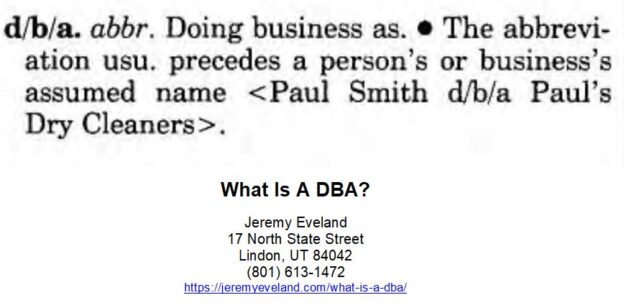
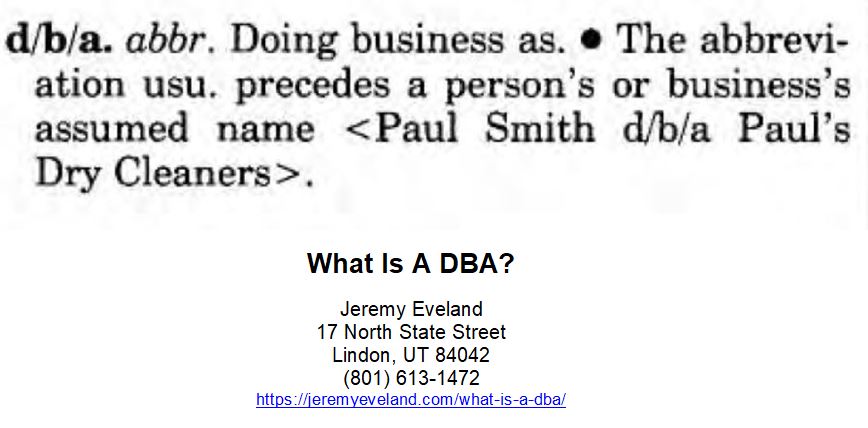
A DBA, or Doing Business As, is a type of business structure that allows an individual or company to operate under a name that is different from their legal name. A DBA is also sometimes referred to as an alias, assumed name, fictitious business name, or trade name. For example, a business owner operating under their own name might file a DBA to do business as “ABC Widgets,” rather than their own name.
When registering a DBA, the business owner is usually required to submit a form to the county or state in which they are doing business. This form typically includes the name of the business, the address of the business, and the name and address of the business owner. Depending on the state, the owner may also be required to publish a notice in a local newspaper or other periodical, alerting the public of the DBA registration.
In most cases, a DBA does not provide the same legal protections as a corporation or limited liability company (LLC). Without registering as a separate business entity, the business owner remains personally liable for any debts and obligations associated with the business. A DBA also does not offer the same tax advantages, as the business is still taxed as a sole proprietorship or partnership
Business Structures in Utah
Business structure is a vital component of any successful organization. It is the way in which the business is set up and maintained, and it can have a significant effect on the company’s ability to operate effectively. In Utah, there are a variety of different business structures available, including sole proprietorships, limited liability companies (LLCs), corporations, and partnerships. Each of these structures offer different levels of protection and exposure to the owners and their businesses.
For example, a sole proprietorship is the simplest type of business structure. This is when one individual owns the business and is solely responsible for its operations. The owner may operate the business under their own name, or they may register a “doing business as” (DBA) name with the state. This DBA name must be unique and should be registered in the state’s database of business names. This will provide a degree of protection for the owner and their business from liability and taxation.
A limited liability company (LLC) is a more complex type of business structure. LLCs are popular in Utah due to their high degree of protection and flexibility when it comes to business operations. LLCs have a number of advantages, including limited liability protection for the owners, reduced filing fees, and the ability to manage the business in a way that suits the owners’ needs. In addition, LLCs provide tax and accounting benefits, such as the ability to pass tax credits onto their owners.
Partnerships are another popular business structure in Utah. This type of business structure is similar to a sole proprietorship in that two or more individuals own the business. However, partnerships offer the advantage of having two or more owners to share the risk of running the business. Partnerships also offer tax advantages, such as the ability to pass profits and losses onto the partners.
Finally, corporations are the most complex type of business structure. Corporations are owned by shareholders and managed by a board of directors. Corporations offer a number of advantages, including limited liability protection for the owners and the ability to raise capital through the sale of stock. However, corporations are subject to a number of regulations and taxes, so it is important to consider all of the options before making a decision.
No matter which type of business structure you choose, it is important to have a clear understanding of the regulations and laws that apply to your business. In Utah, the Division of Corporations and Commercial Code Administration is responsible for registering and managing businesses. It is also important to consider the fees associated with each type of business structure, as well as the time and energy it will take to set up the business. With careful thought and planning, however, the right business structure can provide a strong foundation for success.
Business Formation
Business formation is a critical step for entrepreneurs seeking to establish a business and start generating revenue. In Utah, business formation is typically accomplished by registering a dba name, sole proprietorship, legal name, business name, legal entity, or fictitious name. A dba name is a different name used by an individual or business to identify itself to the public, while a sole proprietorship is a business structure that is owned and operated by a single business owner. For a dba registration, business owners must file an application with their county clerk. Additionally, many states require a business owner to register a fictitious business name with the state.
When forming a sole proprietorship, a business owner typically uses his or her own name as the business name. In some cases, business owners may register a “trade name” which is a name other than their own personal name. This allows them to use a different name for the business that is more descriptive or easier to remember. In addition, many states require business owners to register a dba degree, which is an additional designation that they can use to identify the business.
When forming a legal entity, such as a general partnership or limited liability company, business owners must appoint a business administration to handle business affairs. This includes opening a business bank account, obtaining necessary permits and licenses, and filing all required paperwork with the state. Depending on the business structure, the business owners may be personally liable for any debts or obligations of the business. Therefore, it is important for business owners to understand the legal protections of the particular business structure they choose.
Noise levels and personal assets are two important considerations when selecting a business structure. For example, a sole proprietorship provides the greatest amount of legal protection for the business owner’s personal assets, but there is no limit on the amount of noise associated with the business. On the other hand, a limited liability company offers more legal protections for the business owner’s personal assets, but it also limits the amount of noise generated by the business.
The cost of business formation also varies depending on the type of business structure chosen. For example, the cost of filing a fictitious business name is typically lower than the cost of registering a dba or forming a legal entity such as a general partnership or limited liability company. Additionally, the state fees associated with forming a business may vary from state to state.
In conclusion, business formation is a critical step for entrepreneurs looking to launch a business. There are a variety of factors to consider, including the type of business structure selected, the cost associated with filing a fictitious business name or dba degree, and the legal protections of the particular business structure chosen. Additionally, many states require business owners to register a fictitious business name with the state. It is important for entrepreneurs to understand all of the options available to them when forming a business in order to ensure the most successful business formation.
DBA Lawyer Consultation
When you need legal help from a Business Lawyer about a DBA, call Jeremy D. Eveland, MBA, JD (801) 613-1472 for a consultation.
Jeremy Eveland
17 North State Street
Lindon UT 84042
(801) 613-1472
What Are The Advantages Of Hiring A Business Lawyer?
Last Updated: June 11, 2026
Hiring a business lawyer can be a huge advantage, especially when it comes to making sure that all of your business dealings are legal and compliant with local, state, and federal laws. Business lawyers can provide invaluable advice when it comes to drafting contracts, forming partnerships, and negotiating deals. They can also provide guidance on issues such as intellectual property, taxation, and employee relations.
In Utah, business lawyers have the ability to provide counsel on the state’s unique laws and regulations. For example, Utah’s Anti-Discrimination and Fair Employment Act requires employers to abide by certain regulations when it comes to hiring and firing employees, and business lawyers can help ensure that employers are in compliance with the law. Business lawyers are also knowledgeable about the Utah Franchise Act, which establishes the relationship between a franchisor and its franchisees.
Business lawyers can also help business owners develop strategies for minimizing their risk and avoiding legal disputes. This can include reviewing proposed contracts, identifying potential areas of litigation, and assessing the potential risks associated with various business transactions. In the event of a dispute, business lawyers can provide legal representation, ensuring that the interests of their clients are protected.
Finally, business lawyers can provide invaluable advice when it comes to developing business plans and marketing strategies. They can help entrepreneurs identify the most effective and efficient ways to achieve their business goals. They can also provide advice on how to structure the business, including what type of entity to use and how to maintain operational efficiency.
Overall, hiring a business lawyer can be a great asset to any business, as they can provide a wealth of knowledge and experience to help business owners succeed. Not only can they help ensure that business dealings are compliant with the law, but they can also provide invaluable advice on how to develop and execute successful business strategies.
Drafting Contracts and Agreements
You want a business lawyer to draft contracts and agreements. A business attorney is essential when it comes to drafting contracts and agreements. Contracts and agreements are the foundation of any business, and having a well-drafted agreement in place can protect a company from potential legal issues. A business attorney can provide invaluable legal counsel and ensure that all of the necessary details have been adequately addressed. A business attorney can also help to ensure that the contracts and agreements are in compliance with applicable laws and regulations.
Having a business attorney draft contracts and agreements can provide peace of mind and provide a level of security for a business. A business attorney can help to ensure that all parties involved in a contract or agreement understand the terms and conditions, and can provide protection against potential conflicts. Additionally, a business attorney can provide advice on how to best structure a contract or agreement to protect the interests of the company and to ensure that the terms and conditions are reasonable and in the best interests of the company.
Furthermore, business attorneys are well-versed in the intricacies of contract law, and can help to ensure that all contracts and agreements are enforceable. This is especially important when entering into contracts with other businesses or individuals, as having a legally-binding agreement can help to protect the interests of the company.
Advising On Business Compliance and Regulations
A business owner needs a business attorney for many reasons, but one of the most important is to ensure that the business is compliant with applicable laws and regulations. Many laws and regulations are complex and can be difficult to understand without the help of a knowledgeable legal professional. A business attorney can advise the business owner on the relevant laws that apply to their business, help them understand their obligations, and ensure that the business is in compliance. This can help the business owner avoid costly fines and other penalties associated with non-compliance.
A business attorney can also help the business owner draft contracts and agreements, such as leases, employment contracts, and vendor contracts. Having a legal professional review these documents can help the business owner avoid potential disputes and ensure that the terms written are legally binding. In addition, a business attorney can provide advice on potential business opportunities, such as mergers, acquisitions, or business expansions. This can help the business owner make informed decisions and ensure that the business is properly structured and protected.
A business attorney can also provide guidance on the various tax and accounting requirements associated with running a business. This can help the business owner ensure that the business is properly registered, understands the requirements for filing taxes, and understands the various deductions and credits that may be available.
Overall, a business attorney is an invaluable resource for business owners. By having a legal professional to advise on compliance and regulations, draft contracts, and provide guidance on tax and accounting, a business owner can ensure that their business is properly structured and in compliance with all applicable laws. This can help to protect the business and its owners from potential legal issues and provide the peace of mind that comes with knowing that their business is properly structured and protected.
Representing Businesses In Court
When running a business, it is important to have a reliable business attorney to represent your business in court in Utah. Under current Utah law, an owner of a business cannot represent a business entity in court (unless the owner is a licensed attorney). A business attorney can provide valuable insights and advice to help you navigate the complexities of legal proceedings. Not only can they provide legal advice, but they can also advise you on legal strategies, help you protect your rights, and serve as your advocate in court.
Having a business attorney can help ensure that your business transactions are handled properly and legally. They can help you draft legal documents and contracts, represent you in court, and help you settle any legal disputes that could arise. A business attorney will also be able to provide guidance on matters related to taxation, insurance, licensing, and other business-related matters.
Additionally, a business attorney can help protect your business’s interests by ensuring that all contracts and agreements are properly executed and that all legal obligations are met. Furthermore, a business attorney can represent your business in court. This means that they can help you present your legal arguments and negotiate a settlement if a dispute arises.
Having a business attorney can provide peace of mind for business owners in Utah. A business attorney will be familiar with the state’s laws, which can provide you with the assurance that your business is following the proper legal procedures. They can also provide you with an extra layer of protection if a lawsuit is filed against your business.
It is essential for business owners to have a reliable business attorney to represent their business in court in Utah. Not only can they provide legal advice and representation, but they can also help protect your rights and interests when it comes to business transactions and legal disputes.
Resolving Disputes With Other Businesses Or Individuals
A business attorney is essential for any business that wishes to protect itself from disputes with other businesses or individuals. A business lawyer can provide vital legal advice and representation in order to help protect the business’s interests. A business attorney can also help a business to resolve any disputes that arise with other businesses or individuals in an effective and efficient manner.
A business attorney can assist a business in drafting contracts, including employee contracts, sales agreements, and other contractual agreements. They can also help to review and negotiate contracts on behalf of the business. A business attorney can provide the legal expertise to ensure that all parties are in agreement with the contract and that it is legally binding.
A business attorney can also provide advice and representation to a business in the event of a dispute. If a dispute arises, a business attorney can provide legal representation to the business and can help to protect the business’s interests and reduce the risk of financial loss. A business attorney can also help to negotiate a settlement between the parties or represent the business in court.
A business lawyer can provide advice and counsel on compliance with the various laws and regulations that apply to a business. A business attorney can ensure that a business is in compliance with all applicable laws and regulations, which can help to protect the business from legal action.
A good business attorney can provide invaluable assistance to a business in resolving disputes and protecting the business’s interests. A business attorney can provide legal advice, representation, and compliance with the law. A business attorney is essential for any business that wishes to protect itself from disputes with other businesses or individuals.
Business Lawyer Consultation
When you need legal help from a Business Attorney, call Jeremy D. Eveland, MBA, JD (801) 613-1472 for a consultation.
Jeremy Eveland
17 North State Street
Lindon UT 84042
(801) 613-1472
Black’s Law Dictionary defines business law as “The body of law governing the rights, relations, and conduct of persons and businesses engaged in commerce, merchandising, trade, and sales. It encompasses contracts, sales, agency, bankruptcy, and other matters related to commerce.” This would include Federal Statutes, State Statutes, Federal Case Law and State Case Law; depending on where the principal headquarters of the business is located (nerve center), and where the business conducts operations.
Depending on the type of business that you operate, you might also need to know about these areas of law:
Business law is the body of law that governs the formation, operation, and dissolution of business entities, such as partnerships, corporations, and limited liability companies. It also governs the rights and responsibilities of those who manage and own the business, as well as their interactions with customers, clients, and other business partners. Business law is composed of many statutes, regulations, and common law rules, such as contract law and tort law.
In Utah, business law is regulated by the Utah Code, which includes The Utah Uniform Partnership Act among other laws. The Utah Code is a compilation of all laws passed by the Utah State legislature, as well as statutes and regulations promulgated by state agencies. The Utah Code is divided into various titles, and within each title, various chapters, which are further divided into sections. For example, Title 70 of the Utah Code is devoted to commerce and trade, and it contains chapters that cover topics such as business organizations; business regulations; consumer protection; and securities and investments.
We’ve previously answered the following business law questions:
In addition to statutes and regulations, Utah business law is also informed by court decisions handed down by the Utah Supreme Court and the Utah Court of Appeals. These courts interpret the Utah Code, as well as statutes and regulations from other states, in order to decide disputes involving business entities and their owners, managers, and customers. For example, in State v. Brown (2007), the Utah Supreme Court held that a business had to indemnify its employees for injuries caused by their negligence, in accordance with Utah Code §34-7-1.
In addition to statutes and court decisions, Utah business law is also informed by principles of common law. Common law is a body of law that has been developed over centuries by courts, which is based on court decisions and legal principles. Common law rules, such as the doctrine of negligence, are applied in business contexts to determine liability for injuries or damage caused by a business’s activities.
Is Intellectual Property A Part Of Business Law?
Yes, intellectual property is an important part of business law. Intellectual property (IP) is any product of the creative mind that has commercial value, such as inventions, literary and artistic works, symbols, names, images, and designs. It is protected by copyright, patent, and trademark laws.
Intellectual property is a vital part of business law because it protects the work of creators and innovators. Without IP law, businesses would be able to reproduce and use the work of others without permission or compensation. This would be unfair to the creators and would lead to less innovation and creativity. IP law ensures that creators and innovators are compensated for their work, allowing them to continue creating and innovating.
IP law also ensures that businesses are able to protect their own work and ideas. Without IP law, businesses would not be able to protect their inventions or branding from competitors. This could lead to a decrease in competition and a decrease in innovation. Additionally, IP law allows businesses to license their work to others, allowing them to benefit from their work without giving away their entire product or idea.
Finally, IP law helps to protect consumers from fraud and counterfeit products. Without IP law, businesses could easily copy and sell counterfeit versions of popular products. This could lead to people being scammed or purchasing inferior products without knowing it. IP law helps to ensure that people are able to access genuine products from legitimate businesses.
Overall, intellectual property is an important part of business law. It protects the work of creators and innovators, allows businesses to protect their own work, and helps to protect consumers from fraud. Without IP law, businesses would not be able to benefit from their work, competitors could easily steal their ideas, and consumers could be exposed to counterfeit products.
In sum, business law in Utah is a complex body of law composed of statutes, regulations, court decisions, and common law rules. It governs the formation, operation, and dissolution of business entities, as well as the rights and responsibilities of those who manage and own the business. By understanding the various components of Utah business law, businesses can ensure compliance with the law and avoid costly legal disputes.
Business Law Consultation
When you need legal help from a Business Law Attorney, call Jeremy D. Eveland, MBA, JD (801) 613-1472 for a consultation.
Jeremy Eveland
17 North State Street
Lindon UT 84042
(801) 613-1472
Millcreek, Utah is home to many businesses and entrepreneurs, and they all need the expertise of a business succession lawyer. A business succession lawyer is a legal professional who specializes in the area of business succession law. This type of law covers a variety of topics, including estate planning, business succession planning, transfer of ownership, asset protection, and taxation. A business succession lawyer in Millcreek, Utah can provide legal advice and services to business owners, entrepreneurs, and families in the area.
“Good things happen to those who hustle.” – Anais Nin
Good things (usually) don’t just fall into your lap, and there’s no use waiting around and hoping they will. Want to start a side hustle? Stop thinking and talking about it. Get started today, good things will happen when you work hard for them—and position yourself to identify which opportunities you can take advantage.
“The dream is free. The hustle is sold separately.”
It doesn’t cost you anything to dream—time, money, or hard work. Hustle, on the other hand, costs all of that.
“I am deliberate and afraid of nothing.” – Audre Lorde
Adopt a deliberate mindset, and do not be afraid to take chances. This motivational quote is a reminder that if you want to be successful, you will need to work like your life (style) depends on it.
“I began to realize how important it was to be an enthusiast in life. If you are interested in something, no matter what it is, go at it full speed ahead. Embrace it with both arms, hug it, love it, and above all become passionate about it. Lukewarm is no good. Hot is no good either. White hot and passionate is the only thing to be.” – Roald Dahl
When in doubt, don’t half-ass it. You can’t afford to.
“Remembering that you are going to die is the best way I know to avoid the trap of thinking you have something to lose. You are already naked. There is no reason not to follow your heart.” – Steve Jobs
It’s a bit nihilistic, but it’s also pretty damn motivating. What do you really have to lose in this life? Failure in business won’t kill you, and you’ll be able to get back into the game if you have the drive. Pick yourself up and hustle again.
Business succession lawyers in Millcreek, Utah can provide legal services to business owners, entrepreneurs, and families in the area. They can provide advice on how to structure a business entity, such as a sole proprietorship, partnership, limited liability company (LLC), or corporation. They can also provide advice on how to draft a valid succession plan, which is the document that will outline the ownership and control of the business. They can also provide advice on how to transfer ownership and control of a business in the event of a death or disability.
“You can’t use up creativity. The more you use, the more you have.” – Maya Angelou
The best way to get your side hustle moving is to flex those creative muscles. No matter how small or seemingly insignificant. The act of exercising your creative muscle will help you perfect your craft and become even better. Create. Create. Create.
“I always did something I was a little not ready to do. I think that’s how you grow. When there’s that moment of, ‘Wow, I’m not really sure I can do this,’ and you push through those moments, that’s when you have a breakthrough.” – Marissa Mayer
Never stop challenging yourself. The day you do, you’re falling behind. Do things you’re a little not-ready-to-do yet. That’s how you grow and have breakthroughs.
“Never let go of that fiery sadness called desire.” – Patti Smith
If you lose your ambition, you’ve lost the drive to succeed. Keep that desire to be something greater burning inside of you, and bookmark this motivational quote—it’ll get you through the tough times that lie ahead.
“Challenges are gifts that force us to search for a new center of gravity. Don’t fight them. Just find a new way to stand.” – Oprah Winfrey
If you feel like your side hustle is hitting a roadblock, reframe it: It’s adjusting its center of gravity. This motivational quote is inspiration to constantly adapt in the face of challenges. Any time you feel procrastination creeping in, strive to be aware of it and treat it like a plague—stop procrastinating the moment you realize you’re doing it and find a reward for completion of the milestone.
“What would you do if you weren’t afraid?” – Sheryl Sandberg
Take a minute to think about that one. If truly nothing was stopping you, nothing in your way, nothing to be afraid of, what would you do? This is an inspiration to do exactly that. Right now. What are you waiting for? Should you quit your job to pursue your side project that’s gaining momentum? Well, maybe. You tell me. What are you afraid of?
“It is not true that people stop pursuing dreams because they grow old. They grow old because they stop pursuing dreams.” – Gabriel García Márquez
Your passion for your dream will keep you young and invigorated. This is a reminder not to fall into the trap of contentment, laziness, or stagnation. Find a business idea that helps you achieve your most meaningful goals in life—and keep pushing towards it until you’re there.
Business succession law is an important area of the law that business owners, entrepreneurs, and families should have a basic understanding of. This type of law deals with the transfer of ownership and control of a business from one generation to the next. This law is especially important for businesses that are structured as partnerships or limited liability companies (LLCs). Business succession law also covers estate planning, which is the legal process of managing and protecting the assets of an individual or family.
“I don’t count my sit-ups; I only start counting when it starts hurting because they’re the only ones that count.” – Muhammad Ali
Going through the routine isn’t good enough, and more importantly, it’s not going to keep pushing you to grow. This is a reminder that the only way to get to the zone where you’re growing, and pushing the limits, is to continue to push yourself beyond your comfort zone.
“One, remember to look up at the stars and not down at your feet. Two, never give up work. Work gives you meaning and purpose and life is empty without it. Three, if you are lucky enough to find love, remember it is there and don’t throw it away.” – Stephen Hawking
“Innovation distinguishes between a leader and a follower.” – Steve Jobs
Are you imitating or innovating? Keep asking yourself that as you pursue your work, and use this motivational quote to push yourself in the right direction and strive to be a leader.
“I have not failed. I’ve just found 10,000 ways that won’t work.” – Thomas Edison
No one has ever done anything important (perfectly) on the first try—failing once or even dozens of times—should never mean failing forever. When you fail with a big project, don’t land a new client you’ve been pitching, under-deliver on the results you were expecting, or get down about a cold email that went unanswered, always limit the amount of time you allow for being discouraged, to no more than an afternoon. After that, it’s time to dust yourself off, figure out where you went wrong, and start hustling again.
“Do not go where the path may lead, go instead where there is no path and leave a trail.” – Ralph Waldo Emerson
It’s easier to follow established career paths and societally acceptable professions, but if that’s not going to make you the happiest version of yourself—then it’s your responsibility to deviate from the path. Welcome to entrepreneurship. Leaders carve out their own path instead of following the masses and you should inspire others to follow you. You can’t expect people to flock to your cause; give them a compelling reason that they won’t be able to ignore you any longer.
“You gotta run more than your mouth to escape the treadmill of mediocrity. A true hustler jogs during the day, and sleepwalks at night.” – Jarod Kintz
Basically, put your money where your mouth is. Don’t just tell everyone about that great idea of your, those dreams of owning your own business—this is a reminder to actually make daily progress towards bringing it to life. Learn the skills you’ll need to excel, take the right online business courses to level up your game, network with the right people, find mentors. Don’t make excuses—hustle hard.
“Lift up the weak; inspire the ignorant. Rescue the failures; encourage the deprived! Live to give. Don’t only hustle for survival. Go, and settle for revival!” – Israelmore Ayivor
If you’re doing what you do for just you, you’re probably doing it wrong. Strive to do better, give back, and inspire others. This is a reminder that there’s plenty of room for generosity in the hustle. And when you do pay it forward, the benefits you will experience come back tenfold.
“Hustle until you no longer need to introduce yourself.” – Anonymous
No one asks Bill Gates who he is, use this to achieve greatness—remind yourself of that and you can’t lose in the long run.
“Things work out best for those who make the best of how things work out.” – John Wooden
Success almost never comes in a neat package. This motivational quote will remind you to make the best of what you have, and what happens even if you fail.
“If you are not willing to risk the usual, you will have to settle for the ordinary.” – Jim Rohn
Mediocre is easy. It takes work to become truly great. Learn to love the hustle. If you want mediocrity, invest in a low risk, low return lifestyle.
You want to fulfill your dreams as an entrepreneur? You’re going to have to hustle a lot.
Business Succession Lawyer Millcreek Utah Consultation
To talk through a business succession matter in Millcreek with Jeremy Eveland, get in touch through the contact page or call (801) 613-1472. Consultations are handled statewide.
When you need legal help with a business succession in Millcreek Utah, call Jeremy D. Eveland, MBA, JD (801) 613-1472.
Jeremy Eveland
17 North State Street
Lindon UT 84042
(801) 613-1472
A Cook Island trust is a popular form of asset protection trust used by people in the United States and other countries around the world. Like other trusts, the Cook Island trust is a legal entity that allows the settlor (the person creating the trust) to transfer assets to the trust and protect them from creditors, lawsuits, and other legal action. The Cook Island trust also offers additional benefits, such as tax advantages and the potential for asset growth.
The process of drafting a Cook Island trust can be complicated and requires the help of an experienced lawyer. A lawyer can guide the settlor through the process and ensure that the trust is properly drafted and set up. A lawyer can also provide advice on how best to structure the trust and any additional steps that may be needed to protect the trust assets from creditors, lawsuits, and other legal action.
When drafting a Cook Island trust, the lawyer will first need to review the settlor’s financial situation. This includes reviewing the settlor’s assets, liabilities, and other financial information. The lawyer will also need to consider the settlor’s estate planning objectives and any other relevant factors.
Once the lawyer has completed the review, they will need to review the Cook Islands Trust Deed. This document sets out the rules, regulations, and responsibilities of the trust. The lawyer will need to advise the settlor on any additional steps that may be needed to ensure the trust is set up properly.
The lawyer will then need to ensure that the trust is properly funded. This may involve transferring assets from the settlor to the trust, setting up an LLC to hold the trust assets, or making any other arrangements necessary to ensure that the trust is properly funded. The lawyer may also need to advise the settlor on any additional fees, such as transaction fees and courier fees, that may be required to transfer the assets to the trust.
Once the trust is properly funded, the lawyer will need to review and sign any additional documents that may be required to set up the trust. This includes any trust protector agreements, trust company agreements, and any other documents necessary to ensure the trust is properly set up.
The lawyer will also need to advise the settlor on any additional requirements that may be necessary to ensure the trust is in compliance with the Cook Islands Trust Law. This may include conducting due diligence on any offshore trustees, conducting an anti-money laundering (AML) review, and filing any required documents with the Cook Islands Trust Office.
Finally, the lawyer will need to advise the settlor on any legal action that may be taken against the trust. This may include filing for a court order to freeze the trust assets, suing any creditors that may be attempting to collect on the trust assets, or taking other legal action to protect the trust assets from creditors and lawsuits.
By using a lawyer to draft a Cook Island trust, the settlor can be sure that the trust is properly set up and that their assets are properly protected. The lawyer will be able to provide the settlor with valuable advice on how to structure the trust and any additional steps that may be needed to ensure the trust is in compliance with the Cook Islands Trust Law. In addition, the lawyer can provide advice on any legal action that may be taken against the trust, such as filing for a court order to freeze the trust assets or taking other legal action to protect the trust assets from creditors and lawsuits.
Asset Protection with a Cook Island TrustWhat is an Offshore Trust?
An offshore trust is a type of trust that is located outside of the settlor’s home country, typically in a jurisdiction with favorable tax and legal laws. Offshore trusts are commonly used for asset protection, estate planning, and tax planning, among other uses. An offshore trust can be created in many different countries and jurisdictions, including the Cook Islands.
Benefits of a Cook Islands Trust
A Cook Islands trust, also known as an asset protection trust, is an offshore trust that is located in the Cook Islands. The Cook Islands offers a variety of benefits that make it an attractive option for asset protection. First, the Cook Islands has a well-developed trust law that provides extensive protection to the settlor and the trust assets. The trust assets are also protected from the jurisdiction of foreign courts and creditors, and the Cook Islands also has favorable tax laws. Additionally, the Cook Islands has a robust and experienced trust industry, with a variety of trust companies and trust administrators that can assist with the creation and management of a trust.
Legal Protection of a Cook Islands Trust
The Cook Islands provides a variety of legal protections for the trust assets. First, it is important to note that the trust assets are protected from the jurisdiction of foreign courts and creditors. In addition, the Cook Islands has a number of laws that provide additional protection to the trust assets. For example, the Cook Islands Trusts Act states that the settlor is not liable for any debts or other obligations of the trust, and that the trust assets are not subject to any claims or legal actions. Additionally, the Cook Islands has a fraudulent conveyance law, which prohibits the transfer of assets in order to avoid a creditor or legal action. Lastly, the Cook Islands has a law that prohibits legal duress, which is when a person is forced to enter into a contract or agreement under threat.
Asset protection is an increasingly important aspect of financial planning, and the use of an offshore trust, such as a Cook Islands trust, is an effective way to protect a person’s assets from legal risks. The Cook Islands offers a variety of benefits that make it an attractive option for asset protection, including a well-developed trust law, protection from the jurisdiction of foreign courts and creditors, favorable tax laws, and a robust and experienced trust industry. Additionally, the Cook Islands has a number of laws that provide additional protections for the trust assets, such as a fraudulent conveyance law and a law that prohibits legal duress. For these reasons, a Cook Islands trust is an effective way to protect a person’s assets from legal risks.
Different Trust Options
A Trust, generally, is a legal entity that can hold title to property. There are three parties to a Trust agreement: the Trustmaker who creates the Trust, the Beneficiary who receives the benefit of the property held in the Trust, and the Trustee who manages the Trust. The property that is transferred to and held by the Trust becomes the Trust principal. If you create a Trust within your Will, it is called a Testamentary Trust. If you create a Trust while you are alive, it is called an inter vivos or Living Trust.
While you are alive, you usually will receive all the income of the Trust and as much of the principal as you request. Upon your death, the Trust assets are distributed to your Beneficiaries in accordance with your directions contained in the Trust agreement, or it can continue for specified purposes for a period of time.
The Advantages and Disadvantages of a Trust
The Main Advantages of a Living Trust:
• If you want or need to have someone else manage your property and pay your bills in case of illness or disability, the Living Trust is an ideal estate planning tool for you.
• Avoiding probate which can save time and money, especially if you own real estate in different states.
• Because a Living Trust is not filed in Court, its provisions are private. This differs from a Will, which must be filed with the Probate Court and becomes public.
• Reduction of delays in distribution of your property after you pass away.
• Continuity of management of your property after your death or incapacity/disability.
Disadvantages of a Living Trust
• There are usually more initial costs in setting up a Living Trust as compared to a Will because a Living Trusts generally requires more extensive, technical and complex drafting.
• “Funding”, which is the process of re-titling your assets in the name of your Living Trust, takes time.
• Administering the Trust can be expense depending on who is acting as Trustee.
Most Common Types of Trusts
Even though there are several different types of Trusts to choose from, you don’t have to be worried about picking the one that’s best for your needs and situation. Below, we’ve listed all the most common types of Trusts, explained in detail, so you know exactly what you need. First, you should understand the basic characteristics and parts of a Trust:
• Grantor – The Trust creator (also known as Settlor or Trustor)
• Trustee
• Beneficiary
Revocable Living Trusts
Revocable living trusts (inter vivos trusts) are created during the lifetime of the grantor. They can be modified or revoked entirely at the instruction of the grantor. The grantor often serves as the initial trustee. They can transfer property into the trust and remove property from the trust during their lifetime. A revocable trust becomes an irrevocable trust upon the death of the grantor.
Pros of a Revocable Living Trust
• Assets held in the trust at the time of death avoid the probate process. They can be distributed immediately. The use of a pour-over will transfers any un-transferred assets into the trust after death.
• Minimizes the value of the taxable estate because assets held in trust are not part of the deceased’s estate.
• Ensures financial privacy after death.
• Allows a trustee or successor trustee to manage assets if the grantor becomes incapacitated.
• Less costly to create than many other types of trusts.
• In community property states the inheritance provided by the trust is a separate asset of the beneficiary. It does not become part of community property unless the beneficiary makes it so.
• Allows the grantor to control how and when beneficiaries receive their inheritance.
Cons of a Living Trust
• A revocable trust does not provide asset protection. Because assets remain available to the grantor, they also remain available to the grantor’s creditors.
• A revocable trust may interfere with the grantor’s ability to access Social Security/Medicare assistance with long-term care expenses if needed later in life.
Example of a Revocable Trust: Totten Trusts
A “Totten trust” has also been called a “poor man’s trust.” This is due to a written trust document typically not being involved and it often costs the trust maker nothing to establish.
A Totten trust is created during the lifetime of the grantor by:
• Depositing money into an account
• Having the grantor named as the trustee
• Having the beneficiary be another individual or entity
A Totten trust uses financial institutions for bank accounts and certificates of deposit. A Totten trust cannot be used with real property. To create a Totten trust, the title on the account should include “In Trust For,” “Payable on Death To,” “As Trustee For,” or the identifying initials for each, “IFF,” “POD,” “ATF.” If this language is not included, the beneficiary may not be identifiable.
The gift is not completed until the grantor’s death or until the grantor passes along the account as a gift during the grantor’s lifetime. Until then, the beneficiary cannot access the money. Totten trust assets avoid probate and gift taxes.
Irrevocable Trust
An irrevocable trust can be created during the grantor’s lifetime (also called an inter vivos trust) or after death. Once assets and property are transferred into an irrevocable trust, the grantor cannot take them out of the trust. A trustee who is not the grantor manages the trust. Often the trustee is a financial professional or a business.
Pros of an Irrevocable Trust
• Assets held in the trust at the time of death avoid the probate process. A pour-over will transfer assets after death. Assets can be distributed immediately.
• Reduces and can even eliminate the cost of wealth transfer, such as probate fees, gift taxes, and estate taxes.
• Ensures financial privacy after death.
• Because assets in an irrevocable trust are unreachable to the grantor, they are also unreachable to creditors of the grantor and cannot be taken should the grantor lose a lawsuit.
• The grantor to controls how and when beneficiaries receive their inheritance.
• In community property states, the inheritance provided by the trust is a separate (not community) asset of the beneficiary and does not become part of community property unless the beneficiary makes it so.
Cons of an Irrevocable Trust
• It cannot be changed once it is implemented. Beneficiaries named in the trust will remain beneficiaries. Terms in the trust will remain the same even though the beneficiaries may have experienced changes in their lives.
• The grantor cannot access trust assets if they need them later.
• More costly to create than a living trust and requires legal help.
Example of an Irrevocable Trust: Irrevocable Life Insurance Trusts (ILET)
An irrevocable life insurance trust (also called an ILET) owns the life insurance policy of the grantor. The trust pays the life insurance premium each month, although the grantor funds the trust so that it can make the payments. The grantor’s estate is reduced in value as it transfers money to the trust to make these payments.
Usually, when a life insurance policy pays out, the named beneficiary receives a lump sum amount. That money could be seized by the beneficiary’s creditors, could get a beneficiary kicked off government assistance or Medicaid, or could be wasted if the beneficiary is not good at handling money. Depending on the terms of the trust, an ILET can distribute insurance money immediately or the ILET can hold and manage the money and distribute it over a period of time.
Trusts for Married Couples
Most people assume that when one spouse dies, the surviving spouse inherits everything. That is not always the case. Ensuring the remaining spouse is cared for is one reason why married couples choose to establish a marital trust.
When a couple chooses to set up a trust fund, they have two immediate decisions to make:
• Whether to set up a joint trust or separate trusts
• Whether the trust is just to transfer assets to the surviving spouse or whether it should also transfer assets to remaining heirs after the death of the second spouse
A joint marital trust is a single trust that covers both members of the couple. It transfers assets between the two spouses and no one else. It is less complicated to set up and maintain and less costly to create.
Separate Marital Trusts: AB Trusts and QTIP Trusts
Separate marital trusts, in particular AB trusts and QTIP trusts, offer some additional benefits:
• Both spouses can pass along assets to separate heirs (as well as the surviving spouse).
• The surviving spouse has use of marital assets and property for the remainder of their lifetime.
• The deceased spouse’s trust becomes an irrevocable trust upon death, which offers greater protection from creditors.
• While trust assets can pass to a surviving spouse tax-free, when the surviving spouse dies, remaining assets over the $11.2 million federal estate-tax exemption limit would be taxable to heirs. The second spouse can double their federal estate tax exemption through the use of a credit shelter trust (CST). (The amount of this tax exemption limit is only in effect through 2025.)
How Does an AB Trust Differ From a QTIP (Qualified Terminable Interest Property) Trust?
Upon the death of the first spouse, the marital estate is split in two. The “A part” of the trust is a survivor’s trust, which the surviving spouse can use as they see fit. The “B trust” is a bypass trust (or a credit shelter trust) that will transfer assets to heirs.
With an AB trust, the surviving spouse has some access to funds in the B portion of the trust, although they cannot change the terms of the B trust. The surviving may be able to use funds for health, education, or to keep a particular living standard. After death, funds from the B trust, and remaining funds from the A trust pass on to the couple’s heirs.
A QTIP trust is often the preferred marital trust when one or both spouses had children from a prior marriage and want to ensure their inheritance. The surviving spouse has their own trust but can only access the interest income from the B trust, none of the principal. Upon the second spouse’s death, the principal transfers to the heirs in full.
Trusts that Benefit Specific Types of People
In some situations, you may want a trust that benefits a unique circumstance. Typically this involves a minor or loved one with special needs, seeking to skip a generation, or controlling how the inherited money is used.
Special Needs Trust
Ordinarily, when a person is receiving government benefits like Medicare or Medicaid, an inheritance or financial gift could negatively impact their eligibility to receive such benefits. But Social Security rules allow a disabled beneficiary to benefit from a special needs trust, as long as they are not the trustee. They cannot control the amount or the frequency of trust distributions and cannot revoke the trust. Usually, a special needs trust has a provision that terminates the trust in the event that it could be used to make the beneficiary ineligible for government benefits.
Benefits of Special Needs Trusts
Special needs trusts can be used to provide for the comfort and happiness of a disabled person when those needs are not being provided by any public or private agency. The list is quite extensive and includes (but is not limited to) medical and dental expenses, education, transportation (including vehicle purchase), computer equipment, vacations, movies, money to purchase gifts, payments for a companion, and other items to enhance self-esteem.
Parents of a disabled child can establish a special needs trust as part of their general estate plan and not worry that their child will be prevented from receiving benefits when they are not there to care for the child. Disabled persons who expect an inheritance can establish a special needs trust themselves, provided that another person or entity is named as trustee.
Generation-Skipping Trust
A generation-skipping trust transfers assets from grandparents to grandchildren, or other persons at least 37 1/2 years younger than the grantor. It cannot be used to transfer assets to a younger spouse. It bypasses the prior generation in order to avoid estate taxes. Under the recent tax law changes, the tax exemption for this trust doubled, to $11.2 million for singles and $22.4 million for married couples. It will revert back to $5 million in 2026.
Spendthrift Trust
A spendthrift trust is an ordinary trust intended to transfer and protect assets. But it has one particular feature suited to a particular type of beneficiary. Typically, an heir can use their interest in the trust as collateral for loans. With a spendthrift trust, that is not allowed. Not everyone can manage a sudden influx of money. A grantor may choose to set up a spendthrift trust if their beneficiary has problems with drugs, alcohol, or gambling, or if they have repeatedly mismanaged their money.
Types of Charitable Trusts
Charitable trusts are established to allow a donor to leave all or a portion of their assets to a charity or nonprofit. A charitable trust can be set up during the donor’s lifetime (inter vivos) or after death (testamentary).
There are two main types of charitable trust:
• Charitable remainder trust (CRT)
• Charitable lead trust (CLT)
Depending on how the trust is structured it can reduce income tax, reduce or delay capital gains tax, reduce estate taxes or reduce gift taxes.
Charitable Remainder Trust (CRT)
A charitable remainder trust provides the donor with income from the investment of the trust assets during their lifetime. After the donor dies, the remaining assets are donated to the public charity or private foundation for which the trust was established. If the trust makes regular payments of a fixed amount, it is a charitable remainder annuity trust. If payments vary as a percentage of the trust’s principal, then it is called a “charitable remainder unitrust.”
Charitable Lead Trust (CLT)
A charitable lead trust first makes payment to the charity for a predetermined amount of time. When the term of the trust is complete, the remainder goes back to the donor or to their heirs.
Less Common Types of Trusts
Unique situations can call for specific types of trusts. Providing for a pet is a common reason to create a trust. You can also do things like protect assets from creditors and pass on family guns. In some cases, the courts can rule that a trust was implied even if it was never created.
Pet Trust
Many people consider their pets to be members of the family. A pet trust sets aside financial support for a pet and the trustee is responsible for ensuring that care is provided that meets the terms of the trust.
Asset Protection Trust
The purpose of an asset protection trust is to insulate assets from creditor attacks. Often set up in foreign countries, the assets do not always need to be transferred to the foreign jurisdiction. The trust is irrevocable for a certain number of years, then the assets are returned to the grantor, provided there is no current risk of creditor attack.
Gun Trust or NFA Trust
A gun trust is a revocable trust that holds title to a person or family’s guns. It allows the legal transfer of ownership of guns and gun accessories, like suppressors, that are restricted under the National Firearms Act. These are also called NFA trusts. A gun trust can hold title to other weapons as well and can protect a firearm collection.
Constructive Trust
Even though a formal trust was never made, a judge can find that an implied trust existed based on the intention of the property owner that certain property is used for a particular purpose or go to a particular person. A constructive trust is established by a court.
Cook Island Trust Lawyer Consultation
When you need legal help with a Cook Island Trust, call Jeremy D. Eveland, MBA, JD (801) 613-1472.
Jeremy Eveland
17 North State Street
Lindon UT 84042
(801) 613-1472
If you are looking for a lawyer to help you with your South Jordan Utah Business for Succession Planning, you’ve found the right page. A company needs a business lawyer for a variety of reasons. First and foremost, a business lawyer can provide legal advice and representation in a variety of areas. This can include contract formation, intellectual property, labor and employment laws, tax laws, and more. Having a business lawyer on hand ensures that a company is aware of all applicable laws and regulations, and can ensure that the company is in compliance.
Business succession is a critical component of business planning and can be defined as the process of transferring a business from one owner to another. It is a complex process, as it involves assessing the state of the business, understanding the legal implications of the transfer, and planning for the financial implications of the transition. In the United States, business succession law is governed by state laws and it is important for business owners to understand their state’s specific laws and regulations.
For example, in Utah, business succession is a complicated process due to the state’s unique laws and regulations. In addition, there are a variety of business entities, including sole proprietorships, partnerships, corporations, and limited liability companies, that may affect the succession process. To ensure a successful transition, business owners should consult with qualified commercial lawyers or attorneys who specialize in business succession law and estate planning.
One of the first steps in business succession planning is to create a business succession plan. This plan should include a detailed assessment of the business, the current owners and partners, the potential successors, and the type of entity the business operates under. It should also include a buy-sell agreement to ensure that ownership transfers smoothly and a partnership agreement to ensure all partners understand their role in the transition. Additionally, the plan should include a detailed estate plan to address any tax and liability issues that may arise during the transition.
Once the plan is in place, business owners should consult with their lawyers or attorneys to discuss any legal issues and to ensure that their plan is compliant with the laws and regulations of their state. In Utah, for example, business owners should seek the advice of attorneys in South Jordan, Salt Lake City, or Salt Lake County who specialize in business succession law. These attorneys will be able to provide business owners with personalized legal advice tailored to their individual circumstances.
Finally, business owners should consider conducting a free consultation with their lawyers or attorneys to discuss any additional issues or concerns they may have. During this consultation, business owners can ask questions about the succession process, the legal implications of the transition, and any other matters related to the business succession plan.
By taking the time to properly plan and prepare for business succession, business owners can ensure that their transition is smooth and successful. With the help of a qualified lawyer or attorney, business owners can rest assured that their business succession plan meets all of their state’s legal requirements and that their transition will be successful.
Business Succession Plan
A business succession is the process of planning and preparing for the eventual transfer of the ownership and control of a business from one generation to the next. It is essential for any business that wants to sustain its current level of success into the future. A comprehensive succession plan will include strategies such as determining the future ownership and leadership of the business, as well as the financial, legal, and tax implications of the transfer of control. It also involves assessing the business’s current value, considering potential buyers, and identifying strategies to maximize the value of the business. The plan should also take into account the individual goals and objectives of the owners, as well as the impact of the succession on the employees and the business’s vendors, customers, and other stakeholders. By having a well-thought-out succession plan in place, the business will be better positioned to succeed into the future, even if changes occur in the ownership or control of the business.
Another critical role of a business lawyer is to protect the company from potential legal issues. A lawyer can provide guidance on how to best operate the company in a manner that is compliant with all applicable laws. This includes helping to draft contracts, ensuring that the company maintains proper records, and providing advice on how to best handle any disputes that may arise.
A business lawyer can also provide valuable guidance on how to structure and manage the business. This includes advice on how to structure the company, what types of contracts to use, how to best manage employees, and how to protect the company’s assets. This knowledge can be invaluable in ensuring long-term success for a company.
A business lawyer can provide important assistance in resolving disputes. A lawyer can help negotiate settlements and provide guidance on how to handle a dispute in the best way possible. This can be especially helpful in avoiding costly legal battles.
It’s clear that a company needs a business lawyer for a variety of reasons. A lawyer can provide advice and guidance on a variety of legal matters, protect the company from potential legal issues, provide guidance on how to structure and manage the business, and assist in resolving disputes. Having a business lawyer on hand can help ensure the long-term success of the company.
What type of cases do business lawyers work on?
As a business lawyer, I often work on securities and litigation cases. The type of cases that business lawyers work on is determined by the practice area. A major part of legal work revolves around corporate law, which covers anything from corporate mergers and acquisitions to securities law. These types of cases often involve a large amount of paperwork and multiple parties, so it’s important that the contracts are well-written and the filings are accurate. Many legal firms have specialized in this area, so their attorneys are able to handle these cases with ease.
Other types of cases might be more straightforward, but are still very important. White-collar criminal defense focuses on representing individuals as they face charges for business-related crimes such as embezzlement or money laundering, while employment law involves everything from discrimination suits to wrongful termination suits. Even if you’re not involved in a case yourself, it’s important to remember that your company can be affected even if you’re not directly involved. It pays to have a general knowledge of what types of business issues can come up in a court of law.
The legal profession is a broad one, and there are many different types of lawyers. Some of them focus on working with other business people to establish companies, file patents, and bring products to market. These attorneys need to be familiar with the laws governing businesses, including how to handle arbitration and legal disputes.
What is Business Law All About?
Business law is a field of law that deals with a range of subjects, from establishing a business to drafting contracts and handling legal disputes. It is designed to protect your company and its assets.
There are various types of businesses, including manufacturers, retailers, and corporations. All of them have specific rules and regulations to adhere to. The basic structure of a business is different from state to state. A typical step in setting up a business is to file paperwork. This formally establishes the business in the eyes of the government.
The business world can be a confusing place to navigate. Many entrepreneurs don’t know the laws governing them. Luckily, there are a number of laws in place to protect you from committing crimes or exposing yourself to liability.
One of the most important things a business owner can do is understand the legal issues in their industry. They can also use this knowledge to reduce the risk of a lawsuit.
Although the basics of business law are common knowledge, a good understanding of the subject can help you make better decisions. For instance, you can avoid a costly dispute by knowing the right types of contracts to use. You can also keep employees happy by implementing a sound employee policies.
Another useful business law concept is the use of due diligence. A corporate attorney may create a set of guidelines to help your company find a resolution to any legal dispute.
What Is The Legal Meaning Of Due Diligence In Business?
Due diligence refers to a level of care that is expected of a reasonable person before entering into a contract or an agreement. This is the kind of care that prevents bad outcomes from occurring.
Due diligence involves investigating a firm, product, or service in order to evaluate the information presented. It can also be used to identify the risks that are associated with a specific investment. In the era of transforming technologies, due diligence is more important than ever.
Traditional due diligence practices primarily examined financial statements and inventories, and looked into employee benefits and tax conditions. However, the term has since been extended to encompass a wider array of business contexts.
When buying a company, an individual buyer or an equity research firm may undertake the investigation. These people often have significant assets.
The results of this investigation are a tool that a buyer can use in negotiating a deal. If the findings are not satisfactory, the buyer might not proceed with the purchase. Alternatively, a buyer might request an extension from the seller.
In a merger or acquisition, due diligence is usually more rigorous. The buyer’s efforts may include checking out the background of a partner and using news reports to find out more about the business.
Many M&A analyses also include test market data and supplier and customer reviews. This is done to ensure that the deal is fair, or that the re-trade will not affect the value of the purchase.
Do I Need A Business Succession Lawyer?
Business lawyers specialize in providing legal advice to businesses of all sizes, from small startups to large corporations. They work on a wide range of cases, from drafting contracts to helping with mergers and acquisitions. Business lawyers provide advice on a variety of topics, including formation of business entities, corporate governance, employment law, securities law, intellectual property law, international business law, and antitrust law. In addition to providing advice, business lawyers represent clients in court when necessary.
Business lawyers are often called upon to review business documents, such as contracts, leases, and corporate filings. They are also responsible for ensuring that the terms of agreements are legally sound and comply with state and federal laws. Business lawyers may also advise clients on tax and financial issues, such as how to structure investments or comply with tax regulations. They also assist with mergers and acquisitions, helping to ensure that the terms of the transaction are favorable to the clients.
Business lawyers may also provide advice and representation in the areas of bankruptcy, creditors’ rights, and other related matters. They work closely with clients to develop strategies to minimize losses or maximize recoveries in cases of insolvency. Business lawyers are also called upon to mediate or negotiate disputes between businesses, such as contract disputes, wrongful termination, and other related matters.
By now you know that business lawyers work on a wide range of cases and provide legal advice on a variety of topics relating to business formation, corporate governance, employment law, and more. They review business documents, advise clients on tax and financial issues, represent clients in court, mediate or negotiate disputes, and provide other legal services.
South Jordan Utah Business Succession Lawyer Consultation
To talk through a business succession matter in South Jordan with Jeremy Eveland, get in touch through the contact page or call (801) 613-1472. Consultations are handled statewide.
When you need legal help with a Business Succession Plan in South Jordan UT, call Jeremy D. Eveland, MBA, JD (801) 613-1472.
Jeremy Eveland
17 North State Street
Lindon UT 84042
(801) 613-1472
A principal in business law is a person who has the power to make decisions, take actions, and/or exercise control over the business for which they are responsible. It is important for principals to understand the laws that govern their business and the responsibilities that come with being a principal. The principal is the person who is primarily responsible for the management of the business and its operations. A principal is also responsible for the financial wellbeing of the business. A principal in business law may have the authority to hire and fire employees, make contracts and agreements, and sign documents.
A brief history lesson is always good. The concept of a principal in business law dates back to the Roman Empire, when a person was considered to be the head of a family or business. This person was known as the “paterfamilias” and was responsible for making decisions and taking actions on behalf of the entire family or business. The concept of a principal has continued to evolve over time and is now used to refer to an individual or group of individuals who are responsible for making decisions and taking actions on behalf of a business.
Law of Principal and Agent
The law of principal and agent is a fundamental principle in business law that defines the relationship between a principal and an agent or representative. The principal is the individual or entity that is empowered to act on behalf of another. The agent, meanwhile, is the individual or entity employed by the principal to perform certain actions on their behalf, including making decisions and taking actions that are binding on the principal. In Utah, the law of principal and agent is governed by a combination of common law, state statutes, and case law. In this essay, I will discuss how principals and agents work in a business law context in Utah, with special attention to relevant Utah case law and the Utah Code.
Definition of Principal and Agent
The relationship between a principal and an agent is a fiduciary one, meaning that the two parties have a special relationship of trust and confidence. The principal is the individual or entity that is empowered to act on behalf of another, while the agent is the individual or entity employed by the principal to take certain actions on their behalf. The relationship between a principal and an agent is governed by a contract, which specifies the duties and obligations of each party.
The Utah Code sets forth a number of rules and regulations for the relationship between a principal and an agent. Generally, the Utah Code provides that a principal must act in good faith and with reasonable care in dealing with an agent. Additionally, the principal must ensure that the agent is adequately informed about the matters for which the agent is to act.
The Utah Code also sets forth the duties and responsibilities of agents. Generally, an agent must act in good faith and with reasonable care in dealing with a principal. Additionally, the agent must act in a manner that is consistent with the interests of the principal and must not act in a manner that is contrary to the principal’s instructions.
Utah Case Law
In addition to the Utah Code, the courts in Utah have issued a number of decisions that provide guidance on the law of principal and agent. Generally, these decisions make clear that a principal must act in good faith and with reasonable care in dealing with an agent. For example, in the case of Johnson v. Smith, the court held that a principal must act with reasonable care in selecting an agent, and that the principal must ensure that the agent is adequately informed about the matters for which the agent is to act.
In addition, the courts in Utah have held that an agent must act in good faith and with reasonable care in dealing with a principal. In the case of Bickham v. Smith, the court held that an agent must not act in a manner that is contrary to the principal’s instructions. Additionally, the court held that an agent must act in a manner that is consistent with the interests of the principal.
The relationship between a principal and an agent is one of the most important aspects of business law. An agent is someone who is appointed by the principal to act on their behalf, either on a voluntary or paid basis. The agent is responsible for carrying out the instructions of the principal and is accountable to the principal for their actions. The principal is ultimately responsible for the actions of the agent and can be held liable for any losses or damages caused by the agent. In Utah, the law of principal and agent is governed by a combination of common law, state statutes, and case law. The Utah Code sets forth a number of rules and regulations for the relationship between a principal and an agent, while the courts in Utah have issued a number of decisions that provide guidance on the law of principal and agent. Generally, these decisions make clear that both the principal and the agent must act in good faith and with reasonable care in dealing with one another.
The relationship between a principal and an agent is governed by agency law, which sets out the rights and obligations of both the principal and the agent. Agency law also sets out the duties and responsibilities of both parties, as well as the legal consequences of a breach of the agreement between them.
Agency law also sets out the rules and regulations that must be followed when a principal is appointing an agent. For example, agency law requires that the principal must provide the agent with all the necessary information and instructions to carry out their duties. Additionally, the principal must ensure that the agent is adequately compensated for their services.
The duties and responsibilities of a principal in business law also vary depending on the type of business. For example, a principal in a sole proprietorship is responsible for all aspects of the business, including the hiring and firing of employees, the making of contracts and agreements, and the signing of documents. On the other hand, a principal in a limited liability company is only responsible for the overall management of the business and is not responsible for the hiring and firing of employees.
The principal is also responsible for ensuring that the business is compliant with all applicable laws, regulations, and ethical standards. This includes ensuring that the business follows all applicable tax laws, environmental regulations, labor laws, and other industry regulations. Additionally, the principal must ensure that the business is properly insured and that all employees are adequately compensated for their services.
Additionally, the principal must also ensure that all applicable contracts, agreements, and documents are in compliance with the law and that all applicable legal obligations are fulfilled. The principal must also ensure that the business is in compliance with all applicable laws, regulations, and ethical standards.
Remember, a principal in business law is an individual or group of individuals who are responsible for making decisions and taking actions on behalf of a business. The principal is responsible for ensuring that the business is compliant with all applicable laws, regulations, and ethical standards. Additionally, the principal must ensure that the business is properly insured and that all employees are adequately compensated for their services. Finally, the principal must also ensure that all applicable contracts, agreements, and documents are in compliance with the law and that all applicable legal obligations are fulfilled.
Utah Business Attorney Consultation
When you need business attorneys, call Jeremy D. Eveland, MBA, JD (801) 613-1472.
Jeremy Eveland
17 North State Street
Lindon UT 84042
(801) 613-1472