Tag Archives: ownership

Revocable Living Trust

Revocable Living Trust

Revocable Living Trust

Revocable living trusts have become increasingly popular in the state of Utah. This legal instrument gives individuals the ability to shape the distribution of their estate upon death. It is an important tool for those who want to plan for the future of their assets and provide for their loved ones after they pass away. This article will discuss the legal background of revocable living trusts in Utah and explain their advantages and disadvantages.

Legal Background

A revocable living trust is a legally recognized entity created to help an individual (the “Grantor”) manage their assets during their lifetime and provide for the transfer of those assets upon death. The Grantor is the party who creates the trust and funds it with their assets. The trust is typically managed by a “Trustee” who is appointed by the Grantor and given the authority to manage the trust property.

Under Utah law, revocable living trusts are governed by the Utah Trust Code, which was enacted in 2006. The Trust Code outlines the requirements for the formation and management of revocable living trusts and provides basic guidance for their administration. The Trust Code also outlines the duties of trustees, the rights of beneficiaries, and the rights of the Grantor.

Advantages of Revocable Living Trusts in Utah

Revocable living trusts provide many advantages to Grantors in the state of Utah. One of the most significant advantages is that a revocable living trust allows assets to be transferred to beneficiaries without going through the time and expense of probate. Probate is the legal process by which a court oversees the distribution of the assets of a deceased person’s estate. Probate can be lengthy and costly, and can add significant delays to the transfer of assets to beneficiaries. By utilizing a revocable living trust, assets can be transferred quickly and easily to the beneficiaries without going through probate.

Revocable Living Trust, Jeremy Eveland, Lawyer Jeremy Eveland, Attorney Jeremy Eveland, trust, living, assets, estate, trusts, grantor, trustee, death, property, probate, tax, beneficiaries, planning, time, court, process, document, family, people, person, income, money, life, documents, successor, taxes, attorney, house, step, ownership, benefits, lawyer, name, state, wills, site, lifetime, trustmaker, accounts, law, living trust, revocable living trust, revocable trust, irrevocable trust, successor trustee, revocable trusts, living trusts, estate planning, real estate, revocable living trusts, probate court, irrevocable trusts, trust document, loved ones, new york, probate process, trust assets, irrevocable living trust, helpful guides, estate taxes, married couple, public record, legal templates, social security number, minor children, estate plan, legal document, legal advice, estate planning trust, taxable estate, trust, assets, living trust, grantor, revocable living trust, probate, beneficiaries, tax, estate planning, revocable trusts, probate court, income, new york, ownership, sec, taxes, estate, real estate, attorney, lawyer, trust laws, probates, revocable living trusts, irrevocable trust, trust fund, last will and testament, estate-planning, conservatorship, living trust, trust, estate taxes, federal deposit insurance corporation, guardianship, will

Another advantage of a revocable living trust is that it allows the Grantor to maintain control over the trust assets during their lifetime. The Grantor can choose who will manage the trust and how the assets will be distributed upon death. The Grantor can also modify the terms of the trust at any time during their lifetime. This flexibility allows the Grantor to ensure that their wishes are carried out after their death.

Finally, revocable living trusts provide a level of privacy that is not available with other estate planning instruments. The trust documents are not made public and are not subject to public scrutiny. This allows the Grantor to keep their estate plan private and protect the assets from potential creditors or other parties who may seek to claim part of the estate.

Disadvantages of Revocable Living Trusts in Utah

Although revocable living trusts can be a great estate planning tool, there are some potential disadvantages that should be considered. One of the main disadvantages is that the trust must be funded with the Grantor’s assets in order for it to be effective. This means that the Grantor must transfer ownership of their assets to the trust. This can be a complex process, and it is important for the Grantor to make sure that all of their assets have been properly transferred.

Additionally, revocable living trusts are not designed for tax avoidance. Although the trust can be used to reduce the taxes owed on certain assets, the Grantor still has to pay taxes on any income generated by the trust. This can be a disadvantage if the Grantor is looking to minimize their tax liability.

Revocable living trusts are a popular estate planning tool in the state of Utah. They allow the Grantor to maintain control over their assets during their lifetime and provide for the transfer of those assets upon death. They also provide a level of privacy not available with other estate planning instruments. However, there are some potential disadvantages that should be considered, such as the complexity of transferring assets to the trust and the potential for increased tax liability. Ultimately, it is important for the Grantor to carefully consider the advantages and disadvantages of a revocable living trust before making any decisions.

Revocable Living Trust Consultation

When you need legal help with a Revocable Living Trust call Jeremy D. Eveland, MBA, JD (801) 613-1472 for a consultation.

Jeremy Eveland
17 North State Street
Lindon UT 84042
(801) 613-1472

Home

Related Posts

Estate Planning Documents

Mechanic’s Lien in Utah

Business Lawyer West Jordan Utah

Artificial Intelligence

Irrevocable Life Insurance Trusts

What Is The Purpose Of A Business Attorney?

Commercial Lease Lawyer

Business Transaction Lawyer Provo Utah

What Is An LLC?

Boutique Law Firm

Contract Negotiation

Employment Law

Trusted Personal Injury Attorneys in Utah

Tort Law

Legal Requirements to Start a Business

Contract Law for Businesses

Business Law and Taxes

Contract Lawyer

Real Estate Attorneys in Salt Lake City Utah

Probate Law

Business Contract Lawyer Riverton UT

Utah Estate Planning

Business Law and Intellectual Property

Commercial Litigation Strategies

Estate Planning Lawyer

Revocable Living Trust

Business Law and Intellectual Property

Business Law and Intellectual Property

Business Law and Intellectual Property

“Protecting Your Ideas and Assets: Business Law and Intellectual Property Solutions”

Introduction

Bimportant areas of law that are essential for businesses to understand and comply with. Business Law covers a wide range of topics, including contracts, torts, employment law, and corporate law. Intellectual Property Law protects the rights of creators and inventors to their creations and inventions, such as copyrights, trademarks, and patents. Both of these areas of law are important for businesses to understand and comply with in order to protect their interests and ensure their success.

What to Do When Your Intellectual Property is Infringed Upon

When your intellectual property is infringed upon, it is important to take action quickly to protect your rights. Here are some steps you can take to protect your intellectual property:

1. Document the Infringement: Gather evidence of the infringement, such as screenshots, copies of the infringing material, and any other relevant information.

2. Contact the Infringer: Contact the person or company responsible for the infringement and explain the situation. Ask them to stop using your intellectual property and provide evidence of the infringement.

3. Send a Cease and Desist Letter: If the infringer does not respond to your initial contact, you may need to send a cease and desist letter. This letter should explain the infringement and demand that the infringer stop using your intellectual property.

4. Consider Legal Action: If the infringer does not comply with your cease and desist letter, you may need to take legal action. This could include filing a lawsuit or seeking an injunction to stop the infringement.

5. Monitor the Infringement: Even after taking action, it is important to monitor the infringement to ensure that it does not continue.

By taking these steps, you can protect your intellectual property and ensure that your rights are respected.

How to File for a Trademark and What to Expect During the Process

Filing for a trademark is a complex process that requires a thorough understanding of the law and the ability to navigate the legal system. The process begins with a trademark search to ensure that the mark is not already in use. Once the search is complete, the applicant must file an application with the United States Patent and Trademark Office (USPTO).

Business Law and Intellectual Property, Jeremy Eveland, Attorney Jeremy Eveland, Lawyer Jeremy Eveland, property, business, patent, law, trademark, trade, work, protection, patents, rights, mark, value, invention, secrets, trademarks, infringement, product, services, years, process, office, works, companies, others, right, service, act, batmobile, example, assets, owner, design, attorneys, copyrights, market, secret, laws, products, management, state, intellectual property, trade secrets, trade secret, intellectual property law, trademark office, intellectual property rights, business plan, business law, copyrighted work, united states, exclusive right, motion picture, comic books, television series, exclusive rights, service mark, business assets, secondary meaning, takedown notification, patent attorneys, intellectual property infringement, tangible medium, intellectual property issues, public domain, personal property, united states patent, non-disclosure agreements, legal forms, patent law, property rights, ip, intellectual property, patent, trademark, copyright, invention, trade secrets, assets, infringement, strategy, attorneys, ownership, wipo, symbol, innovation, trade, property, the united states, law, clients, lawyer, confidential information, public domain, intellectual property rights, fair use, provisional patent, united states copyright law, fair use doctrine, patent, patent holder, copyright law, intellectual property protection, patenting, unauthorized use, copyright owner, copyright protection, secondary meaning, u.s. copyright, copyright law, u.s. patent

The application must include a description of the mark, the goods or services associated with the mark, and the applicant’s contact information. The application must also include a fee, which varies depending on the type of mark and the number of classes of goods or services associated with the mark.

Once the application is filed, the USPTO will review it to ensure that it meets all the requirements. If the application is approved, the mark will be published in the Official Gazette, a publication of the USPTO. This allows any interested parties to oppose the registration of the mark. If no opposition is filed, the mark will be registered and the applicant will receive a certificate of registration.

The entire process can take several months, depending on the complexity of the application and the number of oppositions filed. It is important to note that the registration of a trademark does not guarantee exclusive rights to the mark. The applicant must still take steps to protect the mark from infringement.

Filing for a trademark is a complex process, but with the right guidance and preparation, it can be a successful endeavor. Understanding the process and the requirements is essential to ensure that the application is successful.

Why Businesses Need to File for Copyrights

Businesses need to file for copyrights to protect their intellectual property from being used without permission. A copyright is a form of legal protection that grants the creator of an original work exclusive rights to the use and distribution of that work. This includes the right to reproduce, distribute, display, and perform the work, as well as the right to create derivative works.

By filing for a copyright, businesses can ensure that their work is protected from unauthorized use. This is especially important for businesses that rely on their intellectual property for their livelihood. Without a copyright, anyone could use the work without permission, which could lead to lost profits and potential legal action.

In addition to protecting the work from unauthorized use, a copyright also provides businesses with the ability to monetize their work. By registering a copyright, businesses can license their work to others, allowing them to generate revenue from their intellectual property. This can be a great way for businesses to generate additional income and expand their reach.

Finally, filing for a copyright can also help businesses protect their brand. By registering a copyright, businesses can ensure that their work is associated with their brand and that any unauthorized use of the work is quickly identified and addressed. This can help businesses maintain their reputation and protect their brand from potential damage.

Overall, filing for a copyright is an important step for businesses that rely on their intellectual property. By registering a copyright, businesses can protect their work from unauthorized use, monetize their work, and protect their brand.

Business Trademarks with the United States Patent Office

Trademarks are an important part of any business. They are used to identify and distinguish a company’s goods and services from those of its competitors. The United States Patent and Trademark Office (USPTO) is the federal agency responsible for registering trademarks.

The USPTO offers two types of trademark registration: Principal Register and Supplemental Register. A trademark registered on the Principal Register is given the highest level of protection under federal law. It is also eligible for use in foreign countries. A trademark registered on the Supplemental Register is not eligible for use in foreign countries, but it does provide some protection under federal law.

To register a trademark with the USPTO, an applicant must submit an application that includes a description of the mark, a drawing of the mark, and a list of the goods and services associated with the mark. The application must also include a statement of the applicant’s intent to use the mark in commerce.

Once the application is submitted, the USPTO will review it to determine if the mark is eligible for registration. If the mark is eligible, the USPTO will publish it in the Official Gazette, a weekly publication that lists all newly registered trademarks. After publication, any party who believes they may be damaged by the registration of the mark may file an opposition to the registration.

If no opposition is filed, or if the opposition is unsuccessful, the USPTO will issue a certificate of registration. This certificate serves as proof that the mark is registered and provides the owner with certain legal rights.

Trademark registration with the USPTO is an important step for any business. It provides protection for the company’s goods and services and helps to ensure that its brand is not infringed upon by competitors.

The Difference Between Patents Copyrights and Trademarks

Patents, copyrights, and trademarks are all forms of intellectual property protection. Each type of protection serves a different purpose and offers different levels of protection.

Patents are a form of intellectual property protection that grants the inventor exclusive rights to make, use, and sell an invention. Patents are granted by the United States Patent and Trademark Office (USPTO) and are valid for a limited period of time, usually 20 years. In order to obtain a patent, the invention must be novel, useful, and non-obvious.

Copyrights are a form of intellectual property protection that grants the creator of an original work exclusive rights to reproduce, distribute, and publicly display the work. Copyrights are granted by the United States Copyright Office and are valid for the life of the author plus 70 years.

Trademarks are a form of intellectual property protection that grants the owner exclusive rights to use a distinctive mark, phrase, or logo to identify their goods or services. Trademarks are granted by the USPTO and are valid as long as the mark is used in commerce.

In summary, patents, copyrights, and trademarks are all forms of intellectual property protection. Patents protect inventions, copyrights protect original works, and trademarks protect distinctive marks, phrases, and logos. Each type of protection offers different levels of protection and is granted by different government agencies.

How to Protect Your Business Assets with Intellectual Property Rights

Intellectual property rights are an important tool for protecting the assets of a business. These rights provide legal protection for the products, services, and ideas that a business creates. By understanding the different types of intellectual property rights and how to use them, businesses can ensure that their assets are protected.

The first type of intellectual property right is copyright. Copyright protects original works of authorship, such as books, music, and software. Copyright protection is automatic and lasts for the life of the author plus 70 years. To protect a work with copyright, businesses should include a copyright notice on the work and register the work with the U.S. Copyright Office.

The second type of intellectual property right is trademark. Trademarks protect words, symbols, and designs that identify a business’s products or services. Trademarks can be registered with the U.S. Patent and Trademark Office. To protect a trademark, businesses should use the trademark symbol (™) when referring to the trademarked product or service.

The third type of intellectual property right is patent. Patents protect inventions and processes. Patents can be registered with the U.S. Patent and Trademark Office. To protect a patent, businesses should include a patent notice on the invention or process and register the patent with the U.S. Patent and Trademark Office.

Finally, trade secrets are a type of intellectual property right that protect confidential information. Trade secrets can include formulas, recipes, customer lists, and other information that is not generally known. To protect a trade secret, businesses should take steps to keep the information confidential, such as limiting access to the information and requiring employees to sign non-disclosure agreements.

By understanding the different types of intellectual property rights and how to use them, businesses can ensure that their assets are protected. By taking the necessary steps to protect their intellectual property, businesses can ensure that their products, services, and ideas remain secure.

Understanding the Basics of Intellectual Property Law

Intellectual property law is a complex and ever-evolving area of law that is designed to protect the rights of creators and inventors. It is important for individuals and businesses to understand the basics of intellectual property law in order to protect their creations and inventions.

Intellectual property law is divided into four main categories: copyright, trademark, patent, and trade secret. Each of these categories has its own set of rules and regulations that must be followed in order to protect the rights of the creator or inventor.

Copyright law protects original works of authorship, such as books, music, and artwork. Copyright protection is automatic and does not require registration. Copyright protection lasts for the life of the author plus 70 years.

Trademark law protects words, symbols, and designs that are used to identify a product or service. Trademarks must be registered with the United States Patent and Trademark Office in order to be protected. Trademark protection lasts for 10 years and can be renewed indefinitely.

Patent law protects inventions and processes. Patents must be registered with the United States Patent and Trademark Office in order to be protected. Patent protection lasts for 20 years from the date of filing.

Trade secret law protects confidential information, such as formulas, recipes, and processes. Trade secrets must be kept confidential in order to be protected. Trade secret protection lasts as long as the information remains confidential.

It is important to understand the basics of intellectual property law in order to protect your creations and inventions. If you have any questions about intellectual property law, it is best to consult with an experienced attorney.

Protecting Your Business and IP Rights

As a business owner, it is important to protect your intellectual property (IP) rights. IP rights are the legal rights that protect your business’s creations, inventions, and other original works. These rights can include copyrights, trademarks, patents, and trade secrets.

Copyrights protect original works of authorship, such as books, music, and artwork. Trademarks protect words, phrases, symbols, or designs that identify and distinguish the source of goods or services. Patents protect inventions and processes. Trade secrets are confidential information that provides a business with a competitive advantage.

It is important to understand the different types of IP rights and how to protect them. Here are some tips for protecting your business’s IP rights:

1. Register your IP rights. Registering your IP rights with the appropriate government agency is the best way to protect them. This will give you the legal right to take action against anyone who infringes on your rights.

2. Use contracts. Use contracts to protect your IP rights when working with third parties. Make sure the contracts clearly define who owns the IP rights and what the third party can and cannot do with the IP.

3. Monitor your IP rights. Monitor your IP rights to make sure they are not being used without your permission. If you find someone infringing on your rights, take action to protect your IP.

4. Educate yourself. Educate yourself on the different types of IP rights and how to protect them. This will help you make informed decisions about protecting your IP rights.

By taking the necessary steps to protect your IP rights, you can ensure that your business’s creations and inventions are protected. This will help you maintain a competitive edge and ensure that your business is successful.

Q&A

Q1: What is business law?

A1: Business law is a body of law that governs the formation, operation, and dissolution of businesses. It covers a wide range of topics, including contracts, torts, property, and labor law. It also includes intellectual property, such as copyrights, trademarks, and patents.

Q2: What is intellectual property?

A2: Intellectual property is a type of property that is created by the mind or intellect. It includes creations such as inventions, literary and artistic works, symbols, names, images, and designs. Intellectual property is protected by law, such as copyright, trademark, and patent laws.

Q3: What is a copyright?

A3: A copyright is a form of intellectual property protection that grants the creator of an original work exclusive rights to use and distribute the work. Copyright protection applies to literary, artistic, musical, and other creative works.

Q4: What is a trademark?

A4: A trademark is a form of intellectual property protection that grants the owner of a mark exclusive rights to use the mark in connection with goods or services. Trademarks can be words, symbols, or designs that distinguish the source of goods or services.

Q5: What is a patent?

A5: A patent is a form of intellectual property protection that grants the inventor of an invention exclusive rights to make, use, and sell the invention. Patents are granted for inventions that are novel, useful, and non-obvious.

Q6: What is a trade secret?

A6: A trade secret is a form of intellectual property protection that grants the owner of a secret exclusive rights to use the secret in connection with goods or services. Trade secrets can include formulas, patterns, compilations, programs, devices, methods, techniques, or processes.

Q7: What is a non-disclosure agreement?

A7: A non-disclosure agreement (NDA) is a contract between two or more parties that sets out the terms and conditions for the sharing of confidential information. An NDA is used to protect confidential information from being disclosed to third parties.

Q8: What is a licensing agreement?

A8: A licensing agreement is a contract between two or more parties that sets out the terms and conditions for the use of intellectual property. A licensing agreement grants the licensee the right to use the intellectual property in exchange for payment or other consideration.

Business Law and Intellectual Property Consultation

When you need legal help with Business Law and Intellectual Property call Jeremy D. Eveland, MBA, JD (801) 613-1472 for a consultation.

Jeremy Eveland
17 North State Street
Lindon UT 84042
(801) 613-1472

Home

Related Posts

Business Contract Lawyer West Valley City

Commercial Real Estate Law

AI Business Consultant

Estate Planning Documents

Mechanic’s Lien in Utah

Business Lawyer West Jordan Utah

Artificial Intelligence

Irrevocable Life Insurance Trusts

What Is The Purpose Of A Business Attorney?

Commercial Lease Lawyer

Business Transaction Lawyer Provo Utah

What Is An LLC?

Boutique Law Firm

Contract Negotiation

Employment Law

Trusted Personal Injury Attorneys in Utah

Tort Law

Legal Requirements to Start a Business

Contract Law for Businesses

Business Law and Taxes

Contract Lawyer

Real Estate Attorneys in Salt Lake City Utah

Probate Law

Business Contract Lawyer Riverton UT

Utah Estate Planning

Business Law and Intellectual Property

Introduction

Visit USA.gov for official resources.
What Is An LLC

What Is An LLC?

What Is An LLC?

“Unlock the Benefits of an LLC: Protect Your Assets and Grow Your Business!”

What Are the Benefits of Limited Liability Protection for LLC Owners?

Limited liability protection is one of the primary benefits of forming a limited liability company (LLC). LLC owners, also known as members, are not personally liable for the debts and obligations of the LLC. This means that if the LLC is sued or incurs debt, the members’ personal assets are generally not at risk.

The limited liability protection of an LLC is similar to that of a corporation. However, unlike a corporation, an LLC does not require the same formalities and paperwork. This makes it easier and less expensive to form and maintain an LLC.

In addition to limited liability protection, LLCs offer other benefits. LLCs are not subject to the same double taxation as corporations. This means that LLCs do not pay taxes on their profits; instead, the profits and losses are passed through to the members, who report them on their individual tax returns.

LLCs also offer flexibility in terms of management and ownership. LLCs can be managed by members or by managers, and members can be individuals, corporations, or other LLCs. This makes it easy to add or remove members and to transfer ownership interests.

Overall, limited liability protection is one of the primary benefits of forming an LLC. LLCs offer protection from personal liability for the debts and obligations of the LLC, as well as other benefits such as flexibility in terms of management and ownership, and the avoidance of double taxation.

What Are the Tax Implications of Forming an LLC?

Forming an LLC (Limited Liability Company) can provide business owners with a number of advantages, including limited personal liability, pass-through taxation, and flexibility in management. However, it is important to understand the tax implications of forming an LLC before making the decision to do so.

What Is An LLC, LLC Lawyer, Jeremy Eveland, Lawyer Jeremy Eveland, Jeremy Eveland Attorney, llc, business, state, liability, tax, llcs, corporation, members, owners, corporations, owner, structure, taxes, entity, states, income, assets, name, profits, taxation, agreement, businesses, partnership, agent, member, protection, operating, articles, organization, companies, fees, form, formation, number, type, fee, advantages, requirements, proprietorship, services, limited liability company, personal assets, registered agent, operating agreement, sole proprietorship, business structure, limited liability companies, pass-through taxation, llc owners, single-member llc, business owners, business entity, sole proprietorships, limited liability, personal liability, internal revenue service, tax purposes, legal entity, small business, double taxation, many states, personal tax return, business name, personal income tax, small businesses, personal asset protection, corporate level, business debts, sole proprietor, liability protection, llcs, tax, taxed, s corporation, assets, partnership, taxes, profits, fees, limited liability company, income, registered agent, irs, sole proprietorship, debts, shareholders, ownership, lawyer, ein, taxation, personal liability, regulations, investors, partners, subchapter s, owner, pass-through, limited liability companies, pllc, pass-through entity, professional limited liability company, employer identification number (ein), s corp, deductions, social security number, income tax, incorporation, entity classification election, flow-through taxation, corporate income, corporate tax, double-taxation, income taxation

The primary tax implication of forming an LLC is that the business will be subject to pass-through taxation. This means that the LLC itself will not be taxed, but rather the profits and losses of the business will be passed through to the owners and reported on their individual tax returns. The owners of the LLC will be responsible for paying taxes on their share of the profits, as well as any applicable self-employment taxes.

In addition, LLCs may be subject to state and local taxes, depending on the jurisdiction in which they are formed. For example, some states may require LLCs to pay an annual franchise tax or a minimum tax. Additionally, LLCs may be subject to payroll taxes if they have employees.

Finally, LLCs may be subject to special taxes, such as the Unrelated Business Income Tax (UBIT). This tax applies to income generated from activities that are not related to the LLC’s primary business purpose.

Overall, forming an LLC can provide business owners with a number of advantages, but it is important to understand the tax implications before making the decision to do so. By understanding the various taxes that may apply to an LLC, business owners can make an informed decision about whether or not forming an LLC is the right choice for their business.

What Are the Requirements for Forming an LLC in Utah?

Forming an LLC in Utah requires the completion of several steps. The first step is to choose a unique name for the LLC. The name must include the words “Limited Liability Company” or the abbreviation “LLC.” The name must also be distinguishable from any other business entity registered with the Utah Division of Corporations and Commercial Code.

The second step is to appoint a registered agent. The registered agent must be a Utah resident or a business entity authorized to do business in Utah. The registered agent must have a physical address in Utah and must be available during normal business hours to accept service of process.

The third step is to file the Articles of Organization with the Utah Division of Corporations and Commercial Code. The Articles of Organization must include the LLC’s name, the name and address of the registered agent, the purpose of the LLC, and the name and address of each organizer.

The fourth step is to create an operating agreement. The operating agreement should include the LLC’s purpose, the rights and responsibilities of the members, the management structure, and the rules for admitting new members.

The fifth step is to obtain any necessary licenses and permits. Depending on the type of business, the LLC may need to obtain a business license, a sales tax permit, and other permits or licenses.

Finally, the LLC must comply with all applicable federal, state, and local laws. This includes filing annual reports and paying taxes.

By following these steps, an LLC can be formed in Utah.

What Are the Advantages and Disadvantages of Forming an LLC?

The Limited Liability Company (LLC) is a popular business structure that combines the advantages of a corporation with the flexibility of a partnership. LLCs offer limited liability protection, pass-through taxation, and the ability to have multiple owners. However, there are also some drawbacks to consider before forming an LLC.

Advantages

The primary advantage of forming an LLC is limited liability protection. This means that the owners of the LLC are not personally liable for the debts and obligations of the business. This protection is similar to that of a corporation, but without the formalities and paperwork associated with a corporation.

Another advantage of an LLC is pass-through taxation. This means that the LLC itself does not pay taxes on its income. Instead, the profits and losses are “passed through” to the owners, who report them on their individual tax returns. This can be beneficial for businesses that are just starting out, as it can help to reduce the amount of taxes owed.

Finally, LLCs offer flexibility when it comes to ownership. Unlike a corporation, an LLC can have an unlimited number of owners, and the owners can be individuals, corporations, or other LLCs. This makes it easy to add or remove owners as needed.

Disadvantages

One of the main disadvantages of an LLC is that it can be more expensive to form and maintain than other business structures. This is because LLCs are subject to state filing fees and ongoing compliance requirements. Additionally, LLCs may be subject to self-employment taxes, which can be costly.

Another disadvantage of an LLC is that it may not be the best choice for businesses that are looking to raise capital. This is because LLCs do not have the same ability to issue stock as corporations do. This can make it difficult for an LLC to attract investors.

Finally, LLCs may not be the best choice for businesses that are looking to go public. This is because LLCs do not have the same ability to issue stock as corporations do. Additionally, LLCs may be subject to more stringent regulations than corporations.

In conclusion, forming an LLC can be a great way to protect your personal assets and take advantage of pass-through taxation. However, it is important to consider the potential drawbacks before making a decision.

What Is an LLC and How Does It Differ from Other Business Structures?

A Limited Liability Company (LLC) is a business structure that combines the pass-through taxation of a partnership or sole proprietorship with the limited liability of a corporation. This structure is popular among small business owners because it offers the flexibility of a partnership or sole proprietorship while providing the limited liability of a corporation.

The primary difference between an LLC and other business structures is the limited liability protection it provides. In an LLC, the owners are not personally liable for the debts and obligations of the business. This means that if the business is sued or goes bankrupt, the owners’ personal assets are not at risk. This is in contrast to a sole proprietorship or partnership, where the owners are personally liable for the debts and obligations of the business.

Another difference between an LLC and other business structures is the taxation. An LLC is a pass-through entity, meaning that the profits and losses of the business are passed through to the owners and reported on their individual tax returns. This is in contrast to a corporation, which is a separate taxable entity and pays taxes on its profits.

Finally, an LLC is a flexible business structure that allows for the owners to customize the management structure of the business. This is in contrast to a corporation, which is subject to more rigid rules and regulations.

In summary, an LLC is a business structure that combines the pass-through taxation of a partnership or sole proprietorship with the limited liability of a corporation. It offers the flexibility of a partnership or sole proprietorship while providing the limited liability of a corporation. Additionally, it is a pass-through entity for taxation purposes and allows for the owners to customize the management structure of the business.

Why You Need an LLC Lawyer

Forming a limited liability company (LLC) is an important step for any business. An LLC is a business structure that provides limited liability protection to its owners, known as members. This means that the members of the LLC are not personally liable for the debts and obligations of the business.

Having an experienced LLC lawyer on your side is essential to ensure that your LLC is properly formed and that all of the necessary paperwork is completed correctly. An LLC lawyer can help you understand the legal requirements for forming an LLC in your state, as well as the tax implications of forming an LLC.

An LLC lawyer can also help you draft the necessary documents to form your LLC, such as the Articles of Organization and Operating Agreement. These documents are essential to ensure that your LLC is properly formed and that all of the necessary legal requirements are met.

An LLC lawyer can also help you understand the legal implications of running an LLC. This includes understanding the rules and regulations that govern LLCs, as well as the tax implications of running an LLC. An LLC lawyer can also help you understand the legal implications of entering into contracts with other businesses or individuals.

Finally, an LLC lawyer can help you understand the legal implications of dissolving an LLC. This includes understanding the process for winding up the LLC and distributing assets to the members.

Having an experienced LLC lawyer on your side is essential to ensure that your LLC is properly formed and that all of the necessary paperwork is completed correctly. An LLC lawyer can help you understand the legal requirements for forming an LLC in your state, as well as the tax implications of forming an LLC. An LLC lawyer can also help you understand the legal implications of running an LLC, entering into contracts, and dissolving an LLC.

Q&A

Q: What is an LLC?
A: An LLC, or limited liability company, is a type of business structure that combines the pass-through taxation of a partnership or sole proprietorship with the limited liability of a corporation.

Q: What are the benefits of forming an LLC?
A: The main benefits of forming an LLC are limited liability protection, pass-through taxation, and flexibility in management and operations.

Q: What is the difference between an LLC and a corporation?
A: The main difference between an LLC and a corporation is that an LLC offers limited liability protection to its owners, while a corporation offers limited liability protection to its shareholders.

Q: What are the requirements for forming an LLC?
A: The requirements for forming an LLC vary by state, but generally include filing articles of organization, obtaining an EIN, and paying any applicable fees.

Q: How is an LLC taxed?
A: An LLC is typically taxed as a pass-through entity, meaning that the profits and losses of the business are passed through to the owners and reported on their individual tax returns.

Q: What is the difference between a single-member LLC and a multi-member LLC?
A: A single-member LLC is owned by one person, while a multi-member LLC is owned by two or more people. The taxation and management of the LLC will depend on the number of members.

LLC Lawyer Consultation

When you need legal help with an LLC, call Jeremy D. Eveland, MBA, JD (801) 613-1472 for a consultation.

Jeremy Eveland
17 North State Street
Lindon UT 84042
(801) 613-1472

Home

Related Posts

What Is The Relationship Between Business Law And Economies?

Litigation

Commercial Law

Business Transaction Lawyer West Valley City Utah

Registered Trade Marks

Due Diligence

Do I Need A Permit To Start A Business In Utah?

Business Succession Lawyer Draper Utah

Tax Law

Startup Attorney

Business Contract Lawyer Salt Lake City

Goals of Estate Planning

What Is The Difference Between Corporate And Commercial Law?

Business Credit

Business Contract Lawyer West Valley City

Commercial Real Estate Law

AI Business Consultant

Estate Planning Documents

Mechanic’s Lien in Utah

Business Lawyer West Jordan Utah

Artificial Intelligence

Irrevocable Life Insurance Trusts

What Is The Purpose Of A Business Attorney?

Commercial Lease Lawyer

Business Transaction Lawyer Provo Utah

What Is An LLC?

Introduction

Visit USA.gov for official resources.
Business Succession Lawyer Murray Utah

Business Succession Lawyer Murray Utah

Business Succession Lawyer Murray Utah

Business Succession Law in Utah is an important part of the legal system and the state is home to a number of business lawyers and law firms that specialize in this area. Business Succession Law in Utah includes legal services such as estate planning and business succession lawyers who help business owners plan for the future of their businesses. Business succession law helps business owners plan for the transfer of ownership and/or control of their business in the event of death, disability, retirement, or other unexpected events. This law also helps to protect the rights of the business owners and their families in the event of such events.

Business succession plans are important for all businesses, big and small. Business Succession Law helps business owners create a succession plan that meets their needs and their business objectives. The succession plan should include a clear definition of the succession process, the responsibilities of each party involved, and the transfer of ownership and/or control. Additionally, the plan should also include provisions for Alternative Dispute Resolution, business litigation, and ethical standards.

Succession Planning

Business succession law in Utah is based on the Utah Code and the state’s business law. Business lawyers and law firms that specialize in this area assist business owners in understanding the legal requirements of business succession law in Utah and helping them to draft a comprehensive succession plan. The lawyers and law firms also provide legal advice on business partnerships, LLC business lawyers, professional corporation business, and other business entities.

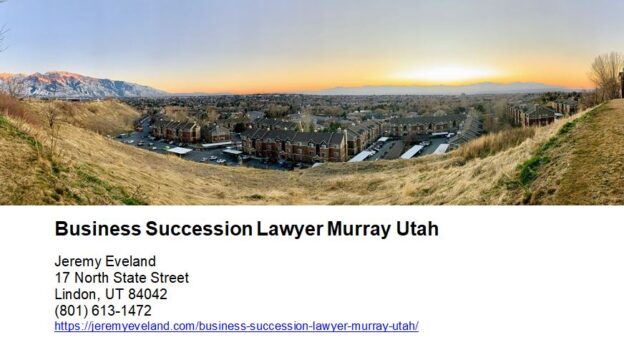
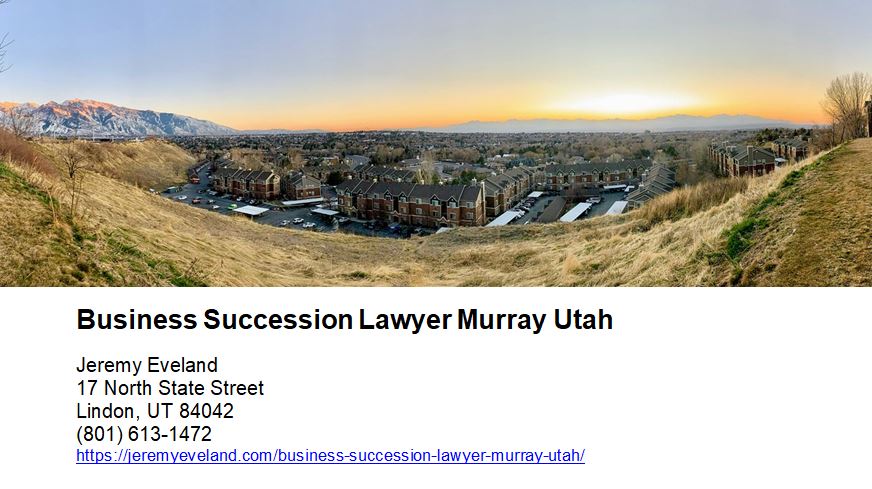
Business succession law in Murray Utah is important for business owners who are looking to ensure their businesses will continue to operate and thrive in the event of an unexpected event. This law helps business owners plan for the future of their businesses by providing them with the necessary legal tools to do so. Furthermore, business succession law in Utah provides business owners with the necessary legal advice to make sure their succession plans are in accordance with the law and that their rights and interests are protected.

Business Succession Lawyer Murray Utah, business, succession, family, plan, planning, owners, law, state, estate, ownership, city, attorney, owner, businesses, clients, members, transfer, issues, lawyer, time, agreement, process, generation, eveland, plans, laws, property, future, successor, employees, states, tax, bus, death, place, retirement, interests, member, counsel, people, business succession plan, lake city, succession plan, business succession planning, succession planning, business owners, family business succession, family members, eveland bus stop, family business, business succession, family member, next generation, estate planning, united states, buy-sell agreement, family businesses, key employees, business owner, business succession law, key employee, small business owners, family business owners, senior-generation owners, legal services, inheritance succession, business operations, business ownership, legal advice, ownership interests, ownership, salt lake city, utah, lawyer, attorney, bus, usa, lindon, ut, estate planning, salt, lake, employees, assets, probate, utah, neighborhood, buy-sell agreement, tax, llc, city, law, probate, testate, adr, estate planning, grant of probate, intestate succession, utah, utah’s, intestacy, testament, living trust, trust, life insurance, stock, revocable living trusts, irrevocable trusts, sole proprietor, alternative dispute resolution, mediation, wasatch front, wills, limited liability company, law, lawyers, lawyer, practice, countries, attorney, clients, bar, attorneys, court, state, work, states, case, business, client, cases, government, school, firm, profession, courts, advice, individuals, family, services, tax, firms, estate, injury, england, rights, degree, advocates, skills, employment, laws, example, property, years, united states, law school, legal advice, legal profession, practice law, civil law countries, law degree, law firms, law firm, many countries, legal professionals, law schools, american bar association, legal services, bar exam, legal matters, personal injury, legal issues, private practice, legal work, different types, civil law notaries, intellectual property, criminal lawyer, bankruptcy lawyer, rocket lawyer, large number, legal professions, common law countries, in-house counsel, lawyers, attorney, advocates, clients, the united states, civil law, barrister, divorce, skills, bankruptcy, solicitor, jurisdictions, law firms, the bar, profession, law, oath, martindale-hubbell, legal profession, family, legal advice, law degree, client intake, legal professions, separation, solicitor, gre, barrister and solicitor, doctor of jurisprudence, law schools, legal separations, law professor, trial lawyers, admissions, legal assistants, law school in the united states, national conference of bar examiners, license to practice law, practice of law, bar exam, advocate, barristers, counsel, murray, city, center, salt, hotel, school, beds, state, winds, pool, view, park, years, street, county, night, time, day, mph, location, miles, cottonwood, bar, address, post, service, unit, washer, dryer, january, utah, area, water, district, place, neighborhood, food, valley, bars, system, lake city, unit washer, obituary january, salt plate city, murray address, stars hotel, walk-in closets, state street, fitness center pool, average rent, jordan river, high school, outdoor seating delivery, 1-3 beds, salt lake, chic downtown, city center, pdt neighborhood, bedroom apartment, central location, lake county, medical center, salt lake valley, fashion place, central station, pst neighborhood, snow showers, elementary school grades, 1-2 beds, friendly fitness center, utah, hotel, salt lake city, salt lake, dining, recreation, cottonwood, park, murray, ut, smelters, murray city, menu, railroad, takeout, restaurant, jordan river, high school, murray, breakfast, library, lake, salt, murray, murray city, blue line, trax, red line, uta's, murray central station, jordan river, goshute indians, frontrunner south, frontrunner, trax light rail, green line, sr-152, rio grande western (rgw) railway, us-89, utah transit authority (uta), uta, wasatch, shoshone, murray, utah, comfort inn, south jordan, menus, mid-jordan line,

Business succession law in Murray Utah is an integral part of the legal system and the state is home to a number of business lawyers and law firms that specialize in this area. These lawyers and law firms offer valuable legal services such as estate planning, business succession lawyers, and business litigation. Additionally, business succession law in Utah provides business owners with the necessary legal advice to make sure their succession plans are in accordance with the law and that their rights and interests are protected. Business succession law in Utah is an important part of the legal system and provides business owners with the necessary legal tools to ensure their businesses will continue to operate and thrive in the event of an unexpected event.

Business Law Firm

A business law firm is a business entity formed by one or more lawyers to engage in the practice of law. The primary service rendered by a law firm is to advise clients (individuals or corporations) about their legal rights and responsibilities, and to represent this clients in civil or criminal cases, business transactions, and other matters in which legal advice and other assistance are sought.

Business Law Firm Arrangements

Law firms are organized in a variety of ways and different structures, depending on the jurisdiction in which the firm practices. Some common arrangements include:

Sole proprietorship, this is one in which the attorney is the law firm and is responsible for all profit, loss and liability;

General partnership, one in which all the attorneys who are members of the firm share ownership, profits and liabilities;

Professional corporations, this is a structure which issue stock to the attorneys in a fashion similar to that of a business corporation;

Limited liability company, another structure in which the attorney-owners are called “members” but are not directly liable to third party creditors of the law firm (prohibited as against public policy in many jurisdictions but allowed in others in the form of a “Professional Limited Liability Company” or “PLLC”);

Professional association, which operates similarly to a professional corporation or a limited liability company;

Limited liability partnership (LLP), in which the attorney-owners are partners with one another, but no partner is liable to any creditor of the law firm nor is any partner liable for any negligence on the part of any other partner. The LLP is taxed as a partnership while enjoying the liability protection of a corporation.

Restrictions on Ownership Interests in Business Law Firm

Mostly, there is a rule that only lawyers may have an ownership interest in, or be managers of, a law firm. Although some states have revised this or modified it in some way, for the most part, this is true in the United States. Thus, law firms cannot quickly raise capital through initial public offerings on the stock market, like most corporations. They must either raise capital through additional capital contributions from existing or additional equity partners, or must take on debt, usually in the form of a line of credit secured by their accounts receivable.

In Utah, this complete bar to non lawyer ownership has been codified by the American Bar Association as paragraph (d) of Rule 5.4 of the Model Rules of Professional Conduct and has been adopted in one form or another in most jurisdiction. Ownership only by those partners who actively assist the firm’s lawyers in providing legal services, and does not allow for the sale of ownership shares to mere passive non lawyer investors. Law firms have been able to take on a limited number of non-lawyer partners and lawyers have been allowed to enter into a wide variety of business relationships with non-lawyers and non-lawyer owned businesses. This has allowed, for example, grocery stores, banks and community organizations to hire lawyers to provide in-store and online basic legal services to customers which is really necessary and good for business owners (either big or small).

This rule Is very controversial. It is justified by many in the legal profession, notably, most rejected a proposal to change the rule in its Ethics 20/20 reforms, as necessary to prevent conflicts of interest. In the adversarial system of justice, a lawyer has a duty to be a zealous and loyal advocate on behalf of the client, and also has a duty to not bill the client excessively. Also, as an officer of the court, a lawyer has a duty to be honest and to not file frivolous cases or raise frivolous defenses. Many in the legal profession believe that a lawyer working as a shareholder-employee of a publicly traded law firm might be tempted to evaluate decisions in terms of their effect on the stock price and the shareholders, which would directly conflict with the lawyer’s duties to the client and to the courts. Critics of the rule, however, believe that it is an inappropriate way of protecting clients’ interests and that it severely limits the potential for the innovation of less costly and higher quality legal services that could benefit both ordinary consumers and businesses.

Business law firms can vary widely in size. The smallest law firms are lawyers practicing alone, who form the vast majority of lawyers in nearly all areas. Smaller firms tend to focus on particular specialties of the law (e.g. patent law, labor law, tax law, criminal defense, personal injury); larger firms may be composed of several specialized practice groups, allowing the firm to diversify its client base and market, and to offer a variety of services to their clients. Large law firms usually have separate litigation and transactional departments. The transactional department advises clients and handles transactional legal work in the firm, such as drafting contracts, handling necessary legal applications and filings, and evaluating and ensuring compliance with relevant law; while the litigation department represents clients in court and handles necessary matters (such as discovery and motions filed with the court) throughout the process of litigation.

Multinational Law Firms

Law firms operating in multiple countries often have complex structures involving multiple partnerships, which may restrict partnerships between local and foreign lawyers. Some multiple national or regional partnerships form an association in which they share branding, administrative functions and various operating costs, but maintain separate revenue pools and often separate partner compensation structures while other multinational law firms operate as single worldwide partnerships, in which partners also participate in local operating entities in various countries as required by local regulations.

Financial indicators in Business Law Firm

Three financial statistics are typically used to measure and rank law firms’ performance for businesses:

Profits per equity partner (PPEP or PPP): Net operating income divided by number of equity partners. High PPP is often correlated with prestige of a firm and its attractiveness to potential equity partners. However, the indicator is prone to manipulation by re-classifying less profitable partners as non-equity partners.

Revenue per lawyer (RPL): Gross revenue divided by number of lawyers. This statistic shows the revenue-generating ability of the firm’s lawyers in general, but does not factor in the firm’s expenses such as associate compensation and office overhead.

Average compensation of partners (ACP): Total amount paid to equity and nonequity partners (i.e., net operating income plus nonequity partner compensation) divided by the total number of equity and nonequity partners. This results in a more inclusive statistic than PPP, but remains prone to manipulation by changing expense policies and re-classifying less profitable partners as associates.

What Is A Full-Service Law Firm?

A full-service law firm provides legal assistance to a wide variety of clients and is equipped to handle all aspects of a case. For instance, a full-service personal injury firm can handle consultations, settlement talks and litigation proceedings in court. A full-service contract law firm can handle drafting reviews, negotiations and renegotiations. Specialized law firms may cover a specific service or niche. With this, it is necessary and good to have an involvement with a law firm for your business.

Law Firms by Practice Area

There are numerous types of lawyers, broken down by practice area. Choosing one of the many law aspects available can be a way for students or Business owners to frame their careers and establish themselves within a particular area of interest, such as criminal law, tax law, sports law or cybersecurity and business area of interest.

Law Firms by Legal Service

Law firms may limit the services they offer clients. Most law firms offer consultations for legal information and document review. Some firms specialize in helping clients prepare for litigation, and others solely represent clients in out-of-court administrative hearings like arbitration, mediation or contractual signings. Often, smaller firms will choose one or the other while medium and large firms may have two departments pursuing both transactional and litigation cases.

Mergers and Acquisitions Between Law Firms

Mergers, acquisitions, division and reorganizations occur between law firms as in other businesses. The specific books of business and specialization of attorneys as well as the professional ethical structures surrounding conflict of interest can lead to firms splitting up to pursue different clients or practices, or merging or recruiting experienced attorneys to acquire new clients or practice areas. Results often vary between firms experiencing such transitions. Firms that gain new practice areas or departments through recruiting or mergers that are more complex and demanding (and typically more profitable) may see the focus, organization and resources of the firm shift dramatically towards those new departments. Conversely, firms may be merged among experienced attorneys as partners for purposes of shared financing and resources, while the different departments and practice areas within the new firm retain a significant degree of autonomy.

Law firm mergers tend to be assortative, in that only law firms operating in similar legal systems are likely to merge. Though mergers are more common among better economies, slowing down a bit during recessions, big firms sometimes use mergers as a strategy to boost revenue during a recession. Nevertheless, data shows less mergers over time.

Business Succession Lawyer Murray Utah Consultation

When you need legal help with a business succession in Murray Utah, call Jeremy D. Eveland, MBA, JD (801) 613-1472 for a consultation.

Jeremy Eveland
17 North State Street
Lindon UT 84042
(801) 613-1472

Home

Related Posts

Business Succession Lawyer Salt Lake City Utah

The Utah Uniform Partnership Act

The 10 Essential Elements of Business Succession Planning

Utah Business Law

Business Lawyer

Mergers and Acquisitions

Advertising Law

Business Succession Lawyer Taylorsville Utah

Business Succession Lawyer South Jordan Utah

Business Succession Lawyer Lehi Utah

Business Succession Lawyer Millcreek Utah

Business Succession Lawyer Murray Utah

Business Transaction Lawyer

Construction Law

Business Lawyer Salt Lake City Utah

What Is An Express Contract?

Antitrust Law

Business Transaction Lawyer Salt Lake City Utah

Business Succession Lawyer Herriman Utah

What Are The Advantages Of Hiring A Business Lawyer?

Business Succession Lawyer Logan Utah

Buy Sell Agreement

This guide covers Business Succession Lawyer Murray Utah and what you need to know.


From Wikipedia, the free encyclopedia


Murray, Utah
City
Murray City Hall

Murray City Hall
Official seal of Murray, Utah

Location in Salt Lake County and the state of Utah.

Location in Salt Lake County and the state of Utah.
Coordinates: 40°39′9″N 111°53′36″WCoordinates40°39′9″N 111°53′36″W
Country United States
State  Utah
County Salt Lake
Settled 1848
Incorporated January 3, 1903
Named for Eli Houston Murray[1]
Government

 
 • Type Mayor-Council
 • Mayor Brett Hales[2]
Area

 • Total 12.32 sq mi (31.92 km2)
 • Land 12.32 sq mi (31.91 km2)
 • Water 0.00 sq mi (0.01 km2)
Elevation

 
4,301 ft (1,311 m)
Population

 (2020)
 • Total 50,637
 • Density 4,110.15/sq mi (1,532.75/km2)
Time zone UTC−7 (MST)
 • Summer (DST) UTC−6 (MDT)
ZIP codes
84107, 84117, 84121, 84123
Area code(s) 385, 801
FIPS code 49-53230[4]
GNIS feature ID 1443742[5]
Demonym Murrayite
Website www.murray.utah.gov

Murray (/ˈmʌri/) is a city situated on the Wasatch Front in the core of Salt Lake Valley in the U.S. state of Utah. Named for territorial governor Eli Murray, it is the state’s fourteenth largest city. According to the 2020 census, Murray had a population of 50,637.[6] Murray shares borders with TaylorsvilleHolladaySouth Salt Lake and West Jordan, Utah. Once teeming with heavy industry, Murray’s industrial sector now has little trace and has been replaced by major mercantile sectors. Known for its central location in Salt Lake County, Murray has been called the Hub of Salt Lake County. Unlike most of its neighboring communities, Murray operates its own police, fire, power, water, library, and parks and recreation departments and has its own school district.[7] While maintaining many of its own services, Murray has one of the lowest city tax rates in the state.[8]

Thousands of people each year visit Murray City Park for organized sports and its wooded areas. Murray is home to the Intermountain Medical Center, a medical campus that is also Murray’s largest employer. Murray has been designated a Tree City USA since 1977.[7]

[geocentric_weather id=”b0824497-c005-4e06-8eed-3d14d7069c61″]

[geocentric_about id=”b0824497-c005-4e06-8eed-3d14d7069c61″]

[geocentric_neighborhoods id=”b0824497-c005-4e06-8eed-3d14d7069c61″]

[geocentric_thingstodo id=”b0824497-c005-4e06-8eed-3d14d7069c61″]

[geocentric_busstops id=”b0824497-c005-4e06-8eed-3d14d7069c61″]

[geocentric_mapembed id=”b0824497-c005-4e06-8eed-3d14d7069c61″]

[geocentric_drivingdirections id=”b0824497-c005-4e06-8eed-3d14d7069c61″]

[geocentric_reviews id=”b0824497-c005-4e06-8eed-3d14d7069c61″]